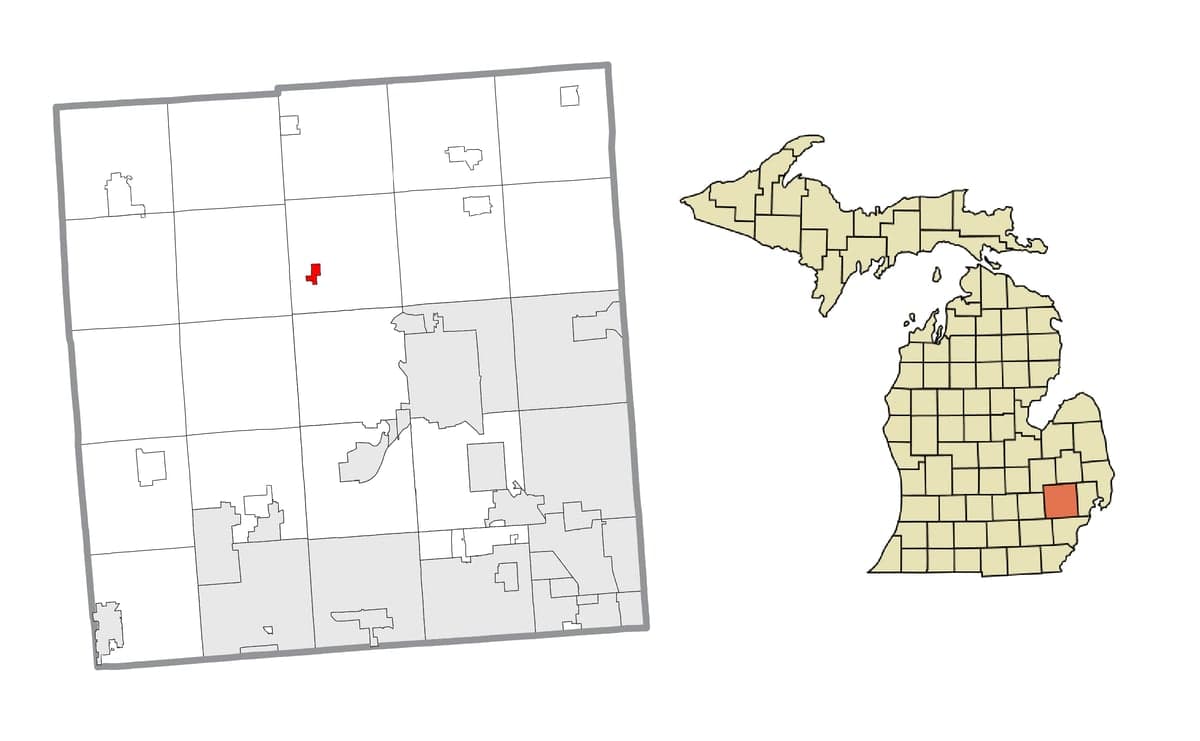
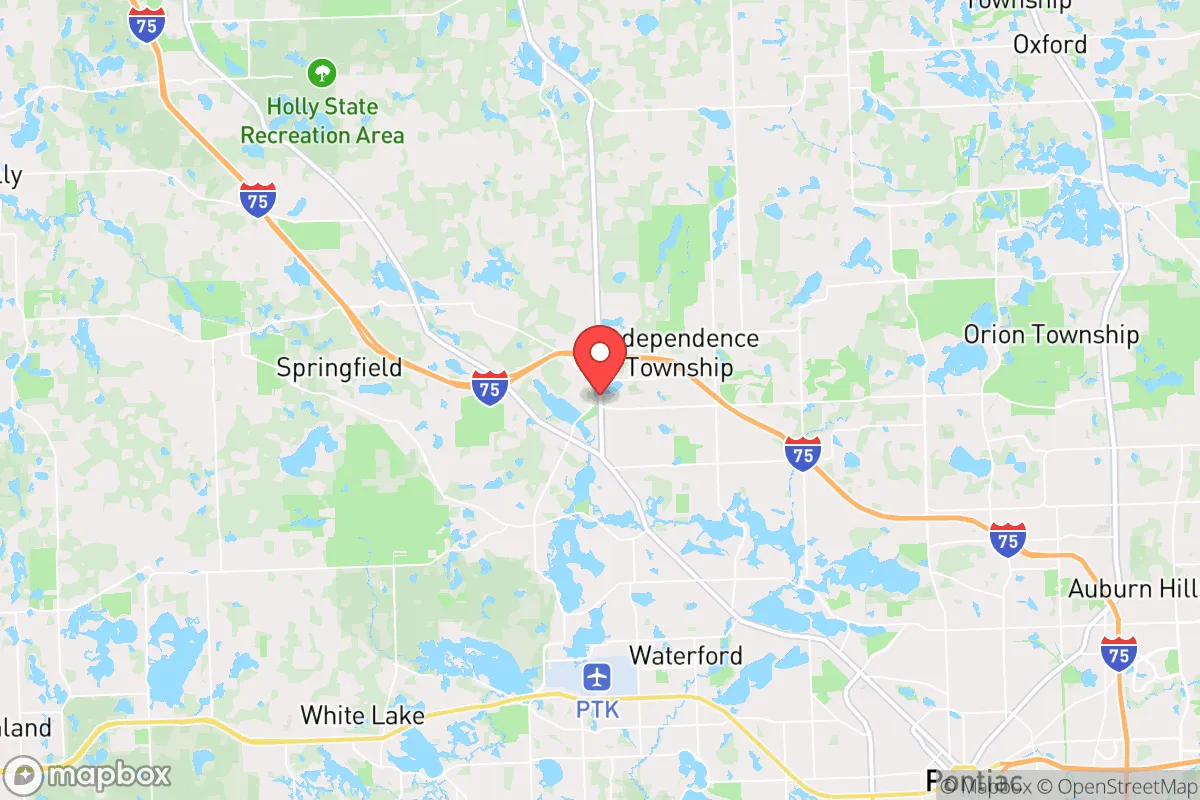
Photo: Wikipedia
Quality of Life in Clarkston, MI
A high quality of life with strong walkability, manageable living costs, healthy neighborhood signals, and solid amenity access.
What does Quality of Life tell us?
Quality of Life blends cost of living, nearby amenities, socioeconomic signals, and neighborhood character. City-level scores represent the whole municipality; individual neighborhoods can differ.
What does this tell us?
Quality of Life blends cost of living, nearby amenities, socioeconomic signals, and neighborhood character. City-level scores represent the whole municipality; individual neighborhoods can differ.
Cost of Living
24% above national average
The Real Cost of Living in Clarkston, MI for 2026
| Tier | Individual | Family (4) |
|---|---|---|
| Survival | $19k | $36k |
| Comfortable | $84k | $124k |
| Luxury | $171k+ | $265k+ |
| Elite (Top 5%) | $226k+ | $350k+ |
76%
The Area Signal
A metric tracking the socioeconomic signals of the area.
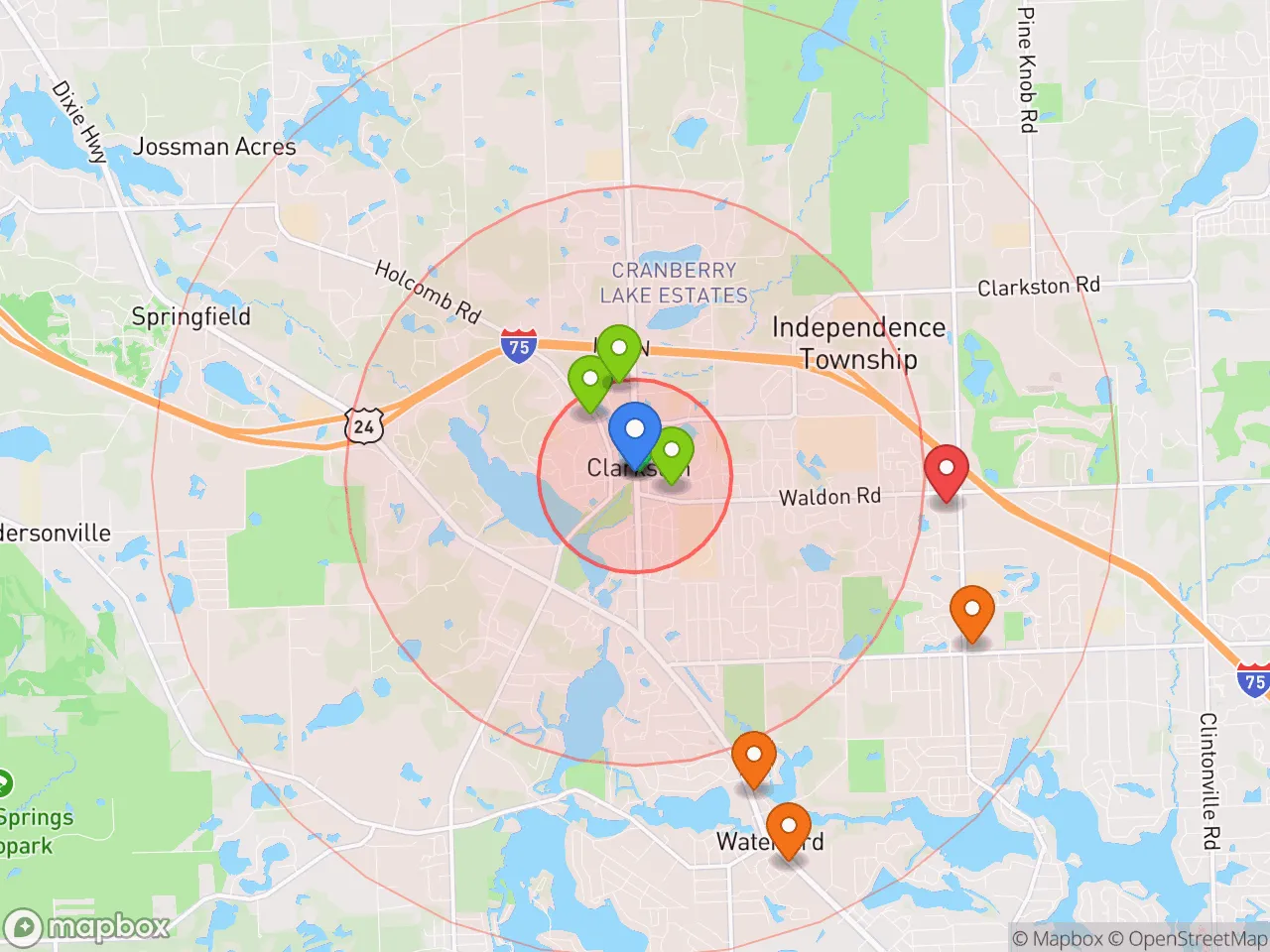
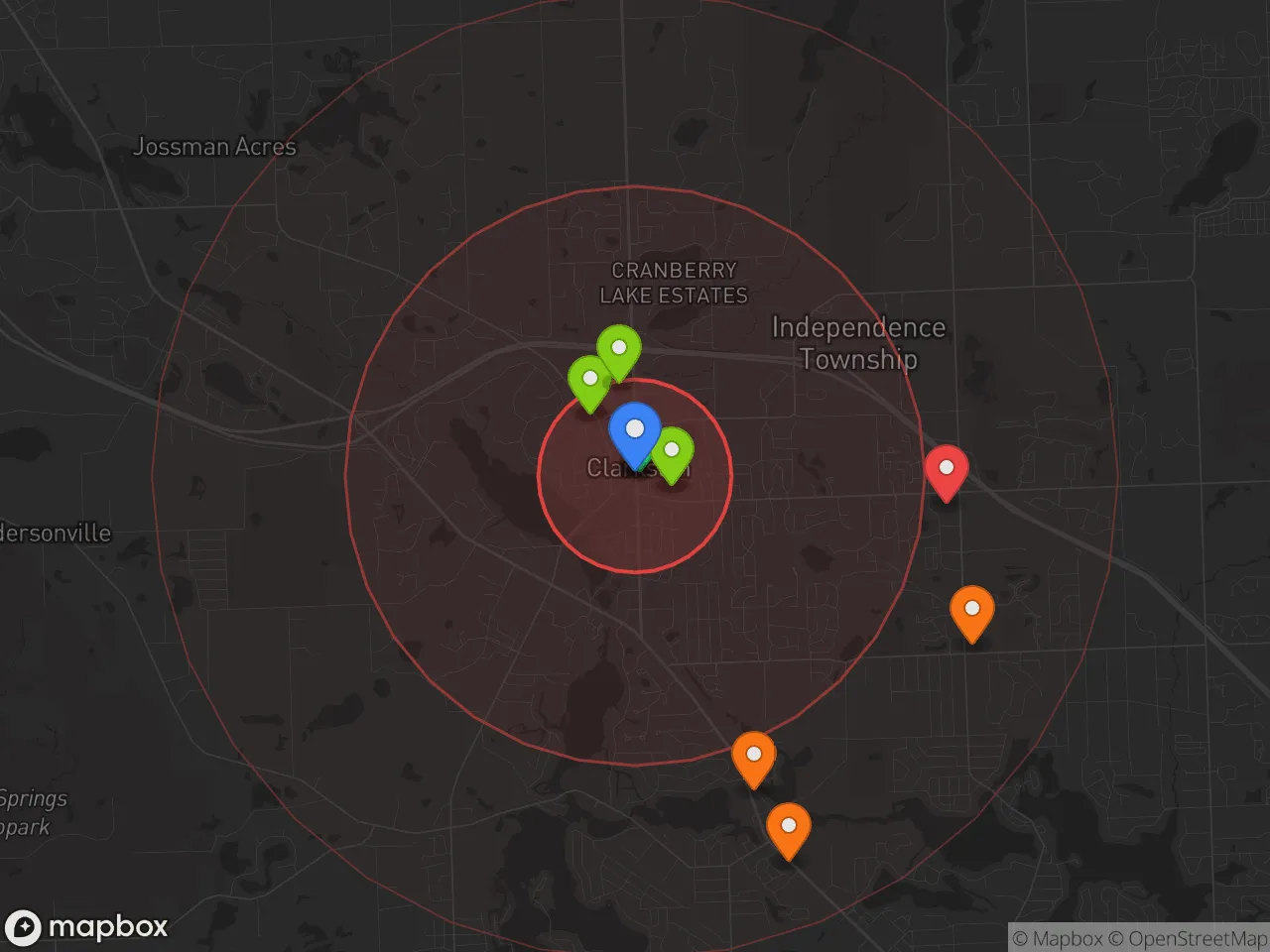
Hobbies
Explore the areaGroceries
4 within 10 miles
Gas
20 within 10 miles
Hospital
12 within 20 miles
Airport
DTW — Detroit Metropolitan Wayne County
Post Office
USPS — Clarkston, MI
Critical Amenities
Quality-of-Life Analysis
Clarkston, Michigan, is an affluent suburban community located about 40 miles northwest of Detroit, known for its historic downtown, strong public schools, and a population that skews toward established professionals, families, and empty-nesters seeking a small-town feel with big-city access. With a cost-of-living index of 124 (100 being the U.S. average), the area commands a premium over nearby communities like Waterford or Pontiac, but remains more affordable than the wealthiest Oakland County enclaves such as Bloomfield Hills or Birmingham. The typical resident is a college-educated homeowner who commutes to professional roles in Detroit, Auburn Hills, or Troy, valuing Clarkston’s tight-knit community identity and lower crime rates relative to the broader metro region.
Cost of living, housing, and how Clarkston compares to nearby towns
Clarkston’s cost-of-living index of 124 is driven primarily by housing, with the median home value sitting at $433,300 — roughly 40% above the national median but notably below the $600,000+ averages seen in Birmingham or Franklin. Renters fare better: the median rent of $1,205 is competitive for Oakland County, undercutting nearby Rochester ($1,450) and Royal Oak ($1,500). Property taxes in Clarkston are typical for Michigan at roughly 1.5–1.8% of assessed value, though residents benefit from the Clarkston Community Schools district’s strong state funding and local millages. For buyers, the trade-off is clear: you pay more than in Waterford (median home $280,000) or Holly ($250,000), but you gain access to a top-rated school system and a walkable downtown that those communities lack. The average commute of 22 minutes is shorter than the Detroit metro average of 27 minutes, a practical advantage for professionals working at nearby employers like General Motors’ Orion Assembly plant, Stellantis’ Auburn Hills tech center, or McLaren Oakland Hospital in Pontiac.
What daily life is like: amenities, schools, and community rhythm
Daily life in Clarkston revolves around its historic downtown, anchored by the Clarkston Union bar and restaurant, the rustic Depot Park, and seasonal events like the Clarkston Farmers Market and the annual Clarkston Car Show. The Clarkston Community Schools district is a primary draw, with Clarkston High School consistently ranking among the top 10% of Michigan high schools for academic performance and extracurricular offerings, including a nationally recognized robotics team. Families spend weekends at nearby Independence Oaks County Park (1,200 acres with hiking and a beach) or at the Clarkston Family Farm for apple picking. The area lacks major shopping malls — those are a 15-minute drive to Great Lakes Crossing in Auburn Hills — but residents value the slower pace, with tree-lined streets, low traffic noise, and a strong sense of neighborly connection. For dining, the scene leans toward upscale casual: the Clarkston Cafe for brunch, FIVE Steakhouse for date nights, and local breweries like the Clarkston Brewing Company. The community’s rhythm is distinctly suburban: school events, youth sports at the Clarkston Sports Center, and volunteer groups like the Clarkston Community Coalition dominate the social calendar.
Clarkston is best suited for families and professionals who prioritize high-rated public schools, a walkable historic downtown, and a short commute to Oakland County’s job centers over urban nightlife or ultra-low housing costs. Empty-nesters and retirees also thrive here, drawn to the low crime rates, access to medical facilities like McLaren Clarkston, and the ability to downsize into newer condos near downtown. Singles and young renters may find the social scene limited compared to Royal Oak or Ferndale, and the housing premium can be a barrier for first-time buyers. For those who can afford the entry price and value a community where neighbors know each other by name, Clarkston offers a quality of life that consistently ranks among the best in southeast Michigan.

Crime in Clarkston, MI
Lower crime rates than 99% of comparable U.S. locations.
Violent CrimeViolent Crime Analysis
Property CrimeProperty Crime Analysis
Crime Analysis
Clarkston, Michigan, is one of the safest communities in the state, reporting a violent crime rate of 0 per 100,000 residents and a property crime rate of 325.7 per 100,000. These figures place the city far below both Michigan and national averages, making it a standout for safety-conscious homebuyers. However, Clarkston sits within Oakland County, which is part of the broader Detroit metropolitan area—a region where progressive prosecutorial policies in some jurisdictions have raised concerns about recidivism and public safety.
Crime in context
Clarkston’s violent crime rate of zero is exceptionally rare, even for a small city. The property crime rate of 325.7 per 100,000 is roughly 60% lower than the national average of about 800 per 100,000. For comparison, nearby Pontiac (10 miles south) reports a violent crime rate of approximately 1,200 per 100,000, and the city of Detroit’s rate exceeds 2,000 per 100,000. Clarkston’s safety profile aligns more with rural outposts than with a metro-adjacent suburb, a direct result of its small population (roughly 1,000 residents) and low-density layout. The city’s police department, supplemented by Oakland County Sheriff’s patrols, maintains a visible presence that contributes to these low numbers.
What residents experience
Residents report that unlocked cars and minor thefts from porches are the most common issues, not violent confrontations. The 325.7 property crime rate translates to roughly 3 property crimes per year in the city proper. This is a stark contrast to the broader metro area, where progressive district attorneys in Wayne and Washtenaw counties have implemented policies like cash bail reform and reduced charging for nonviolent offenses. While Clarkston itself is unaffected by these policies—Oakland County’s prosecutor maintains a more traditional approach—the proximity to jurisdictions with softer-on-crime stances means that offenders released in nearby areas can occasionally drift into Clarkston. Residents should remain vigilant about vehicle and home security, but the day-to-day experience is one of very low fear of crime.
Neighborhood-level variation is minimal due to Clarkston’s small geographic footprint. The downtown village core, with its historic buildings and higher foot traffic, sees slightly more petty theft than the surrounding residential streets. The most expensive homes along Clarkston Road and near the lakefront are not statistically more targeted, as the city lacks the socioeconomic stratification that drives crime in larger suburbs. For families and retirees seeking a safe enclave within commuting distance of Detroit, Clarkston’s numbers are as good as they get—but the shadow of metro-area progressive justice policies means that no suburb is entirely insulated from regional crime trends.
* Values derived from national, state, county, city and local statistics and may differ in a specific area. Last updated: 2026-10-05T03:58:24.000Z
Narrative content on this page is AI-generated and may contain mistakes. Verify any details that matter before acting on them.
ReloMaps may earn a commission from affiliate links at no extra cost to you.

