Photo: Wikipedia
Political ClimatePolitical Climate in Clarkston, MI
District shown is the primary district for this city’s centroid. Cities may span multiple districts.
Local Political AnalysisPolitical Analysis of Clarkston, MI
Clarkston, Michigan, is a reliably conservative pocket in a swing state, with a Cook Partisan Voting Index (PVI) of R+16. That means the area votes about 16 points more Republican than the national average, a stark contrast to the state of Michigan as a whole, which sits at PVI EVEN. This isn't a recent shift; the area has been trending right for decades, driven by a mix of longtime farming families, auto-industry retirees, and newer residents seeking larger lots and lower taxes. The local vibe is less about fiery political rallies and more about quiet, consistent support for conservative candidates and policies, with the occasional surprise when a moderate Democrat wins a county-level seat.
How it compares
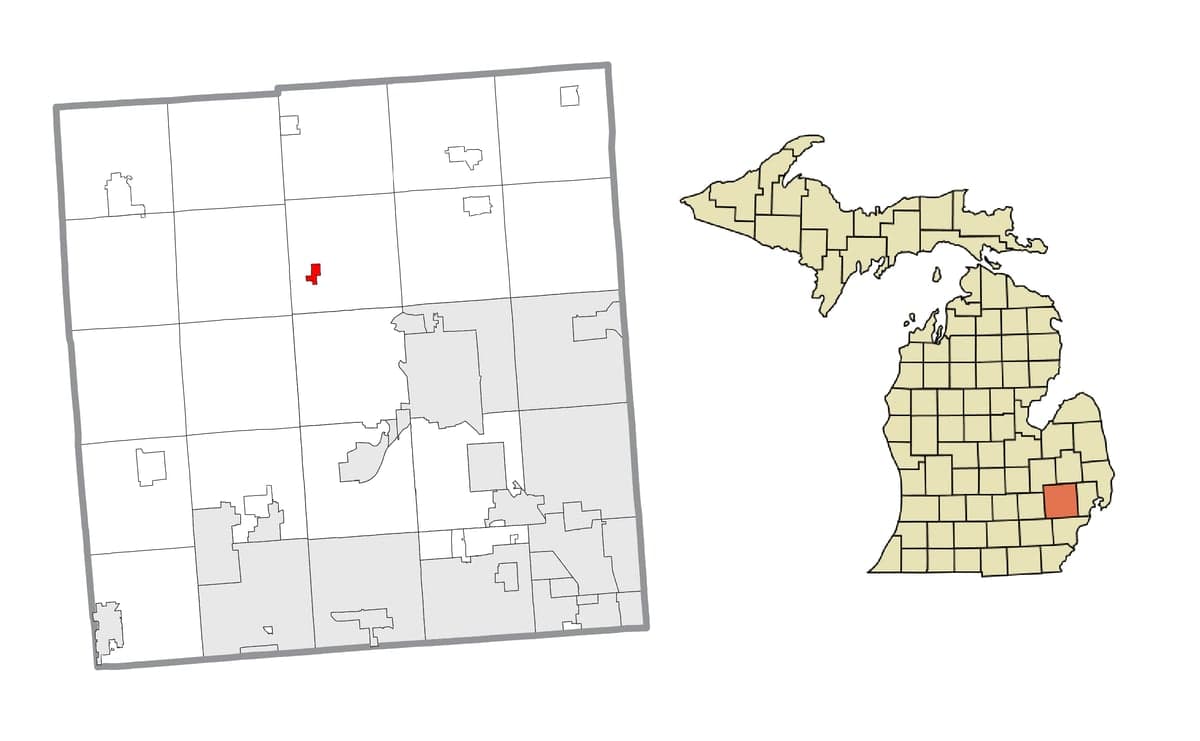
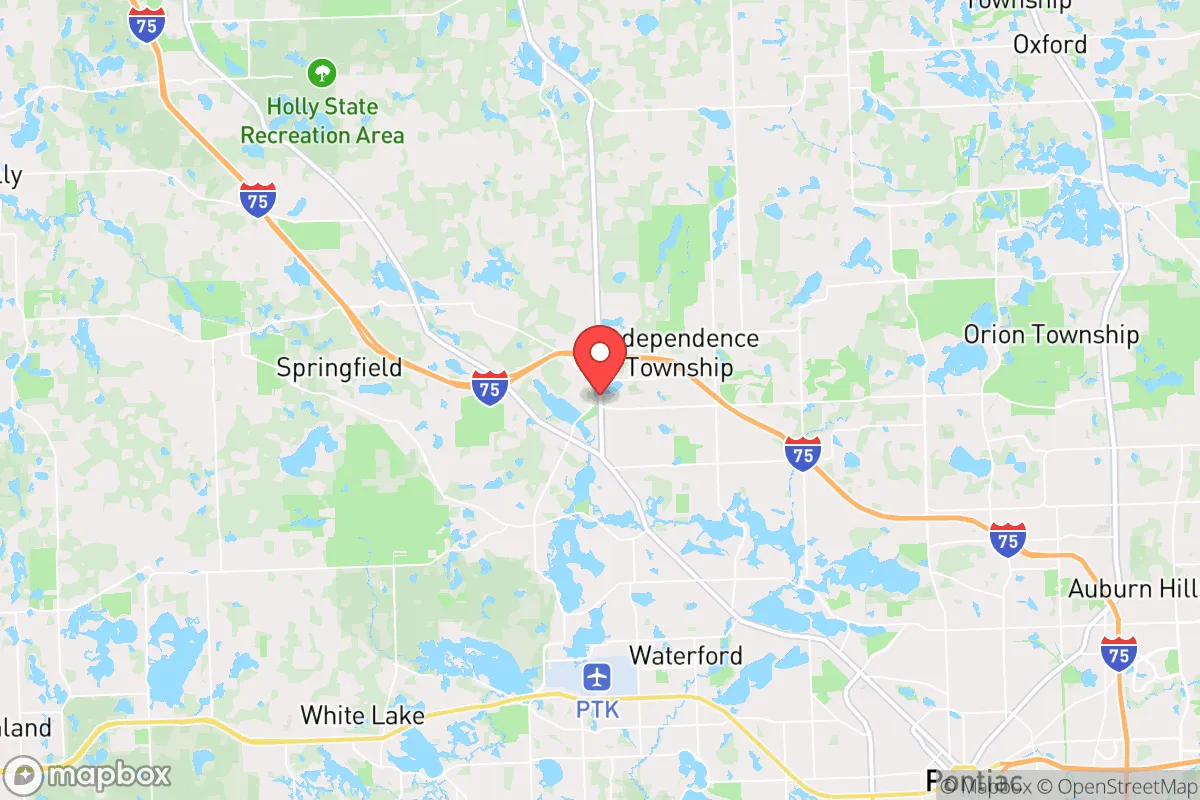
To understand Clarkston's politics, you have to look at its neighbors. Drive ten minutes south to Pontiac or fifteen minutes west to Walled Lake, and you'll find much more Democratic-leaning areas, reflecting the urban and inner-ring suburban trends of Oakland County. Clarkston itself, however, sits in the northern part of the county, where the landscape opens up and the politics shift right. The contrast is sharpest with Ann Arbor (Washtenaw County, D+26) or Detroit (Wayne County, D+30), both about an hour away. Even within Oakland County—which as a whole is a classic swing county (PVI D+2)—Clarkston stands out as a Republican stronghold. The R+16 rating means that in a typical presidential election, the Republican candidate wins Clarkston by a margin of roughly 58% to 40%, while the state as a whole is a coin flip. This isn't just about national races; local school board and township trustee elections here are often won by candidates who emphasize fiscal conservatism and local control.
What this means for residents
For a conservative resident, Clarkston feels like home. You'll see plenty of "Don't Tread on Me" flags and Trump signs in yards, and local businesses often display their political leanings openly. The local Republican Party is active, with regular meetings and strong turnout at the polls. For a liberal resident, the experience is different. You'll likely be in the minority, but it's not hostile. Most people are polite, and you can find like-minded folks at the local coffee shop or through community groups. The real tension isn't about personal beliefs—it's about policy. Debates over school funding, zoning for new development, and tax increases are where the rubber meets the road. A liberal resident might feel frustrated by the lack of support for public transit expansions or affordable housing initiatives, while a conservative resident might worry about property taxes creeping up to fund new schools or parks. The key is that both sides tend to engage in local politics, because that's where decisions actually get made.
One cultural distinction that sets Clarkston apart is its strong sense of local identity. The downtown area, with its historic buildings and independent shops, feels like a small town even though it's part of a major metro area. This fosters a "we take care of our own" mentality that transcends party lines. You'll see neighbors helping neighbors after a snowstorm regardless of their bumper stickers. The political climate here is less about national culture wars and more about practical, day-to-day governance. That said, the area's trajectory is clearly toward deeper conservatism, driven by an influx of people from more liberal parts of the state who are specifically seeking a more conservative environment. If you're moving here, expect a community that values personal responsibility, low taxes, and a slower pace of life—and be ready to engage in local politics if you want your voice heard, because the decisions that shape your daily life are made by your neighbors, not by Lansing or Washington.

State Political ClimatePolitical Climate in Michigan
State Political AnalysisPolitical Environment in the State
Michigan is the ultimate swing state, carrying a Cook PVI of EVEN, meaning it votes almost exactly with the national average. Over the last 20 years, it’s flipped from reliably blue (voting for Kerry, Obama twice) to a genuine battleground that Trump narrowly won in 2016 and then lost by about 3 points in 2020. The state is a perfect political mirror of the country: the dominant coalitions are a union-heavy, diverse urban base in the southeast versus a growing, populist-conservative rural and exurban coalition everywhere else. For a conservative relocator, the key takeaway is that Michigan is not a lost cause—it’s a state where your vote actually matters, and where the political future is genuinely up for grabs.
Urban vs. rural divide
The political map of Michigan is a story of three distinct regions. Wayne County (Detroit) and Washtenaw County (Ann Arbor) are the Democratic strongholds, delivering margins of 60-70% for Democrats. These two counties alone can offset the entire rest of the state’s rural vote. Oakland and Macomb counties in the Detroit suburbs are the true battlegrounds—Oakland has trended left (Biden won it by 14 points), while Macomb remains a bellwether that Trump carried in 2016 and 2020 by single digits. The western side of the state, from Grand Rapids up through Traverse City, is a mix: Grand Rapids itself is moderately conservative but growing more diverse, while the rural counties like Mecosta, Osceola, and Missaukee vote 70%+ Republican. The Upper Peninsula (UP) is ancestrally Democratic but has swung hard right in the Trump era, with counties like Dickinson and Menominee flipping from Obama to Trump. The key geographic divide is the I-75 corridor: everything east of it (metro Detroit, Flint, Saginaw) leans blue; everything west (Grand Rapids, Kalamazoo, the lakeshore) leans red or purple.
Policy environment
Michigan’s policy environment is a mixed bag that reflects its swing-state status. Taxes: the state has a flat 4.25% income tax and a 6% sales tax, with no tax on Social Security benefits—a plus for retirees. Property taxes are moderate but vary wildly by school district. Regulatory posture: Michigan is a right-to-work state (the law was repealed in 2023, but the repeal is being challenged; as of 2026, it’s still in effect). The state has a strong union legacy, but the construction and manufacturing sectors are generally business-friendly. Education: school choice is robust—there are charter schools, inter-district open enrollment, and a thriving homeschooling community. The state’s education funding is per-pupil based, so suburban districts like Forest Hills (Grand Rapids) and Rochester (Oakland County) are well-funded. Healthcare: Michigan expanded Medicaid under the ACA, but the state also has a competitive private insurance market. Election laws: Michigan has no-excuse absentee voting, same-day voter registration, and automatic voter registration—all passed via a 2018 ballot initiative. For conservatives, the election system is a frequent point of concern, but the state has not had major fraud scandals.
Recent policy direction
Michigan’s recent policy direction is a tug-of-war between a Democratic trifecta (2023-2024) and a Republican-leaning electorate. Gun and self-defense law: Michigan is a shall-issue state for concealed carry, with no permit required for open carry. In 2023, Democrats passed universal background checks and safe storage laws, which are being challenged in court. Parental and education rights: the state has a robust school choice system, but the 2023 repeal of the 1931 abortion ban (via a 2022 ballot measure) also included a new law requiring schools to provide comprehensive sex ed—a flashpoint for conservative parents. Speech and privacy: Michigan has no statewide anti-SLAPP law, which is a concern for activists. Medical and bodily autonomy: the 2022 Proposal 3 enshrined abortion rights in the state constitution, making Michigan one of the most protective states for abortion access in the Midwest. Property rights: the state has strong eminent domain protections, but local zoning can be restrictive in liberal cities like Ann Arbor. Taxation: the 2023 budget included a temporary income tax cut to 4.05%, but it’s set to revert. Voting and ballot access: the 2018 Promote the Vote Act made absentee voting easy, but it also created a permanent mail-ballot list—a feature some conservatives distrust.
Civil unrest & political movements
Michigan has been a flashpoint for political movements on both sides. The 2020 Whitmer kidnapping plot and the Operation Gridlock protests (armed protests at the state capitol against COVID-19 lockdowns) put Michigan on the national map for civil unrest. The Wolverine Watchmen militia group was involved in the kidnapping plot, and the state has a visible but small armed-rights movement. On the left, Black Lives Matter protests in Detroit and Grand Rapids in 2020 were large but mostly peaceful. Immigration politics: Michigan is not a border state, but it has sanctuary city policies in Detroit, Ann Arbor, and Kalamazoo, meaning local police don’t cooperate with ICE on routine detentions. Election integrity: the 2020 election saw intense scrutiny, with Trump’s legal challenges failing in court. The state’s Bureau of Elections is nonpartisan, but the controversy has led to a wave of conservative election integrity activists running for local clerk positions. Secession/nullification rhetoric: the Upper Peninsula has a small but vocal secession movement (the “Superior” state idea), but it’s mostly a cultural joke. A new resident would notice the “Let’s Go Brandon” flags in rural areas and the “In This House, We Believe” signs in liberal suburbs—the divide is visible but not violent day-to-day.
Projection
Over the next 5-10 years, Michigan is likely to remain a swing state, but the demographic trends favor a slight rightward shift. In-migration: the state is seeing a net inflow from Illinois and California, but these newcomers tend to be conservative-leaning (looking for lower taxes and more space) or remote workers who don’t change the political balance. The Grand Rapids metro is growing fast and becoming more purple, while Detroit’s population continues to decline. The suburbs of Detroit (Macomb, Livingston, and northern Oakland) are trending redder as blue-collar voters shift right. The UP is solidifying as a red region. The biggest wildcard is college towns like Ann Arbor and East Lansing—if remote work persists, they may lose young voters, weakening the Democratic base. A conservative moving to Michigan now should expect to see the state become more competitive, with the possibility of a Republican governor in 2026 or 2030. The state’s electoral votes (15) will remain a top target for both parties.
For a new resident, the bottom line is that Michigan offers a genuine political battleground where your vote counts. Conservatives will find a welcoming environment in the western half of the state, the UP, and the outer Detroit suburbs, with low taxes, strong school choice, and a growing conservative infrastructure. Liberals will feel at home in the urban cores and college towns, with strong protections for abortion access and union rights. The practical takeaway: if you want to live in a place where your political engagement can actually swing an election, Michigan is one of the few states left where that’s true. Just be prepared for the weather—and the arguments at Thanksgiving dinner.
* Values derived from national, state, county, city and local statistics and may differ in a specific area. Last updated: 2026-10-05T03:58:24.000Z
Narrative content on this page is AI-generated and may contain mistakes. Verify any details that matter before acting on them.
ReloMaps may earn a commission from affiliate links at no extra cost to you.

