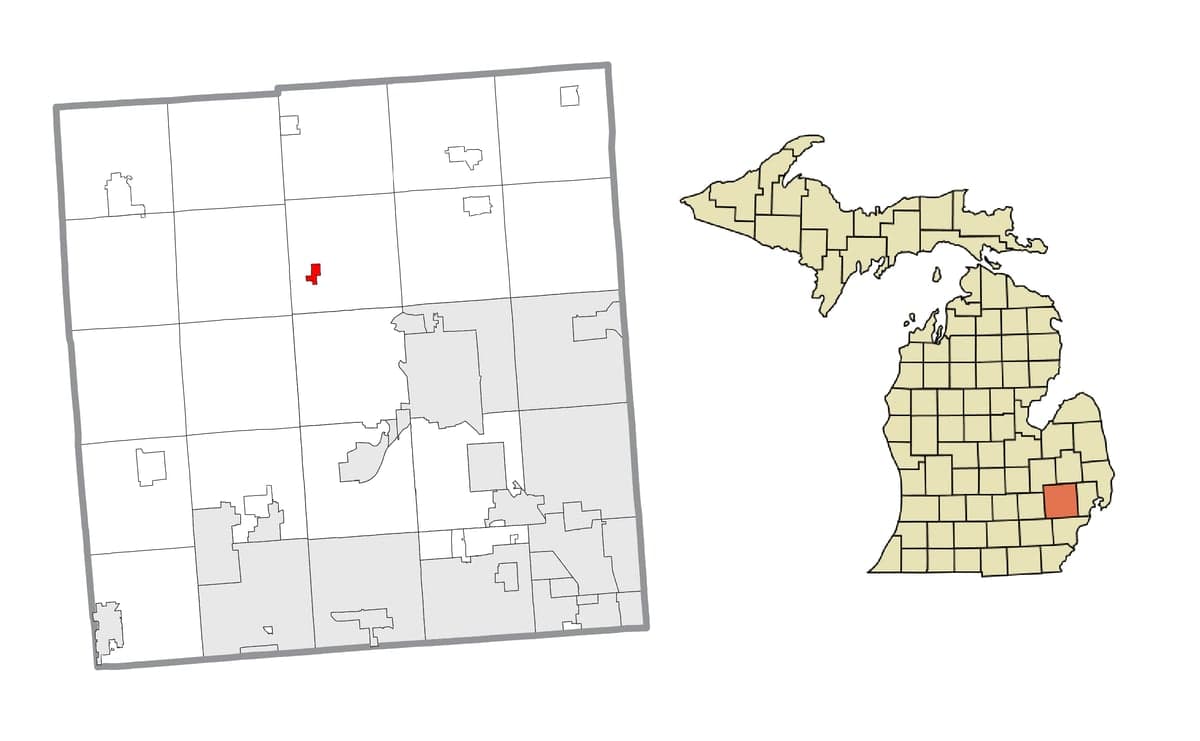
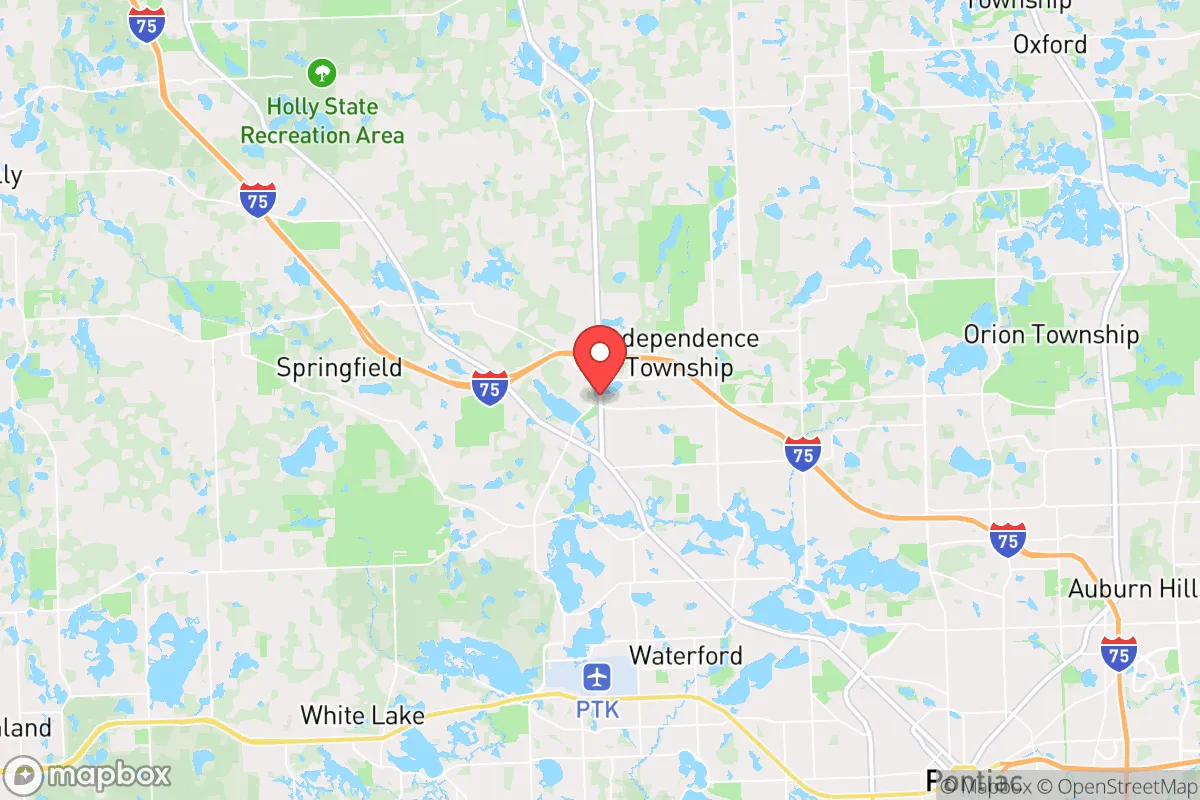
Photo: Wikipedia
Demographics of Clarkston, MI
Affluence Level in Clarkston, MI
An upper-middle-class area. Household wealth, education levels, and homeownership run ahead of national benchmarks.
People of Clarkston, MI
The people of Clarkston, Michigan, today form a small, tight-knit community of roughly 842 residents, characterized by a notably homogenous demographic profile: 94.7% White, with a foreign-born population of 0.0%. This is a highly educated enclave—55.5% of adults hold a college degree—and its identity is rooted in a quiet, family-oriented suburban lifestyle, distinct from the faster growth and diversity of nearby Oakland County suburbs. The city’s human history is one of gradual, stable settlement by European-descended families, with little in-migration from outside the region, creating a community that values continuity and local heritage.
How the city was settled and grew
Clarkston’s founding population arrived in the early 19th century, drawn by the area’s abundant water power from the Clinton River and its fertile, rolling hills. The first permanent settler, Nelson Clark, purchased land in 1830, and the village that grew around his mill became known as Clarkston. The original wave was overwhelmingly of English, Scottish, and German stock, with families migrating from New York and New England states. These early settlers built their homes in what is now the Historic Village District, centered around Main Street and Depot Road, where many original 19th-century structures still stand. The arrival of the Detroit and Milwaukee Railroad in 1856 spurred a second wave of Irish and German laborers, who settled in the Mill Pond area near the railroad depot, working in the mills and on the line. By the early 20th century, the population remained small and overwhelmingly White, with a few families of Polish descent arriving to work in local sawmills and farms, settling in the Clarkston Heights neighborhood along Sashabaw Road. The city was officially incorporated in 1884, and its population hovered around 500 for decades, sustained by agriculture, milling, and later, small manufacturing.
Modern era (post-1965)
After the 1965 Hart-Cellar Act, Clarkston saw virtually no change in its ethnic composition. Unlike many metro Detroit suburbs that experienced significant suburbanization and diversification, Clarkston’s population remained overwhelmingly White and native-born. The 1970s and 1980s brought a wave of domestic in-migration—primarily families from within Oakland County and the Detroit metro area seeking a small-town atmosphere with good schools. These newcomers settled in newer subdivisions like Clarkston Meadows and Deer Run, built on former farmland east of the historic core. The city’s population peaked at around 1,000 in the 1990s, then declined slightly as lot sizes grew and younger families moved to larger, newer developments in adjacent Independence and Springfield townships. The 2000 census recorded 962 residents; by 2020, it had fallen to 842. The foreign-born population has remained at 0.0% in recent decades, and the Hispanic share (2.9%) and Black share (0.5%) are negligible, reflecting the city’s limited housing stock and lack of rental or multi-family development that might attract a more diverse population. The East/Southeast Asian share (0.5%) is similarly minimal, with no Indian-subcontinent population recorded. The Clarkston Village area, a mix of historic homes and newer infill, remains the most desirable neighborhood, while the Clarkston Estates subdivision, built in the 1990s, attracts families seeking larger lots.
The future
Clarkston’s population is projected to remain stable or decline slightly over the next 10–20 years, with little demographic change. The city is landlocked, with no room for major new subdivisions, and its housing stock is dominated by single-family homes on large lots, limiting affordability for younger or more diverse buyers. The population is aging: the median age is 46.3, well above the national average, and the share of residents under 18 has fallen to 20.5%. Without new housing development or an influx of immigrants, the city will likely become older and less diverse. The small Hispanic and Asian populations may grow marginally as second-generation families from nearby communities like Waterford or Pontiac move in, but the overall share will remain low. The cultural identity of Clarkston will likely remain that of a quiet, historically White, family-oriented enclave, with residents valuing its walkable downtown, low crime, and strong school district. For someone moving in now, Clarkston offers a stable, predictable community with deep local roots, but little demographic dynamism or diversity.
Clarkston is becoming a place where continuity, not change, defines the population. For a family or individual seeking a safe, highly educated, and historically rooted small town with minimal ethnic or cultural diversity, it remains a strong choice. Those looking for a more diverse or rapidly evolving community will find that Clarkston’s future looks very much like its past.

* Values derived from national, state, county, city and local statistics and may differ in a specific area. Last updated: 2026-10-05T03:58:24.000Z
Narrative content on this page is AI-generated and may contain mistakes. Verify any details that matter before acting on them.
ReloMaps may earn a commission from affiliate links at no extra cost to you.

