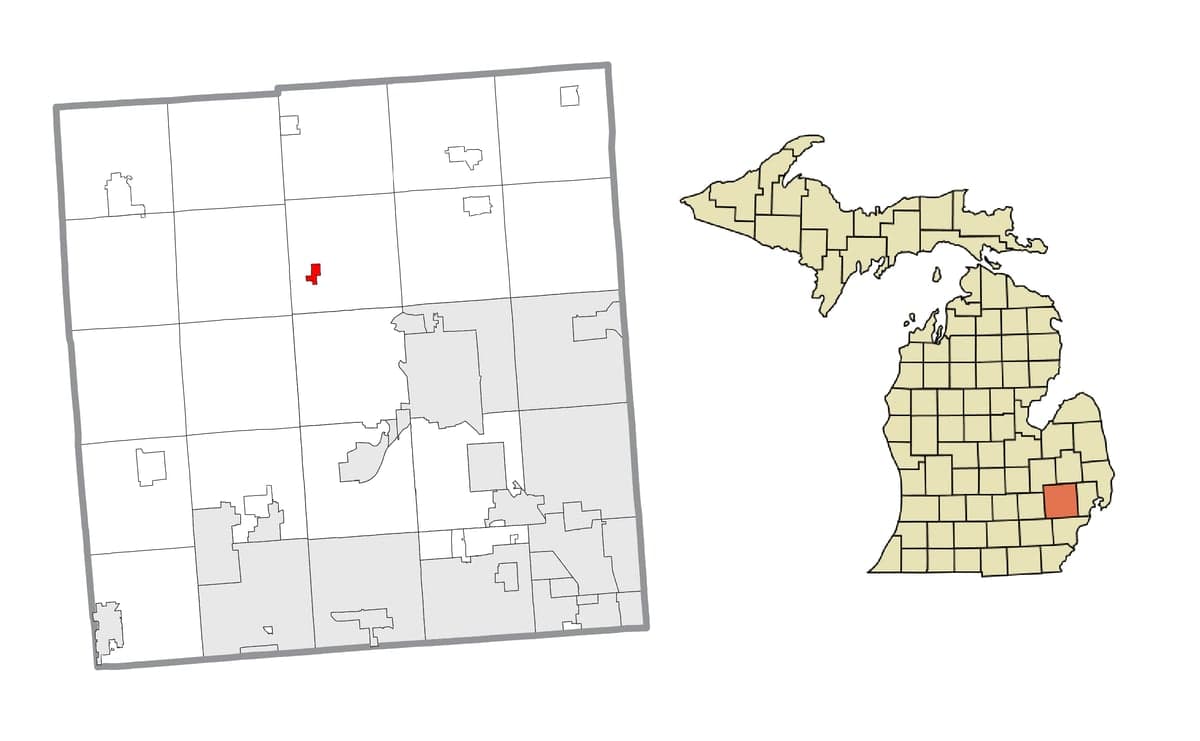
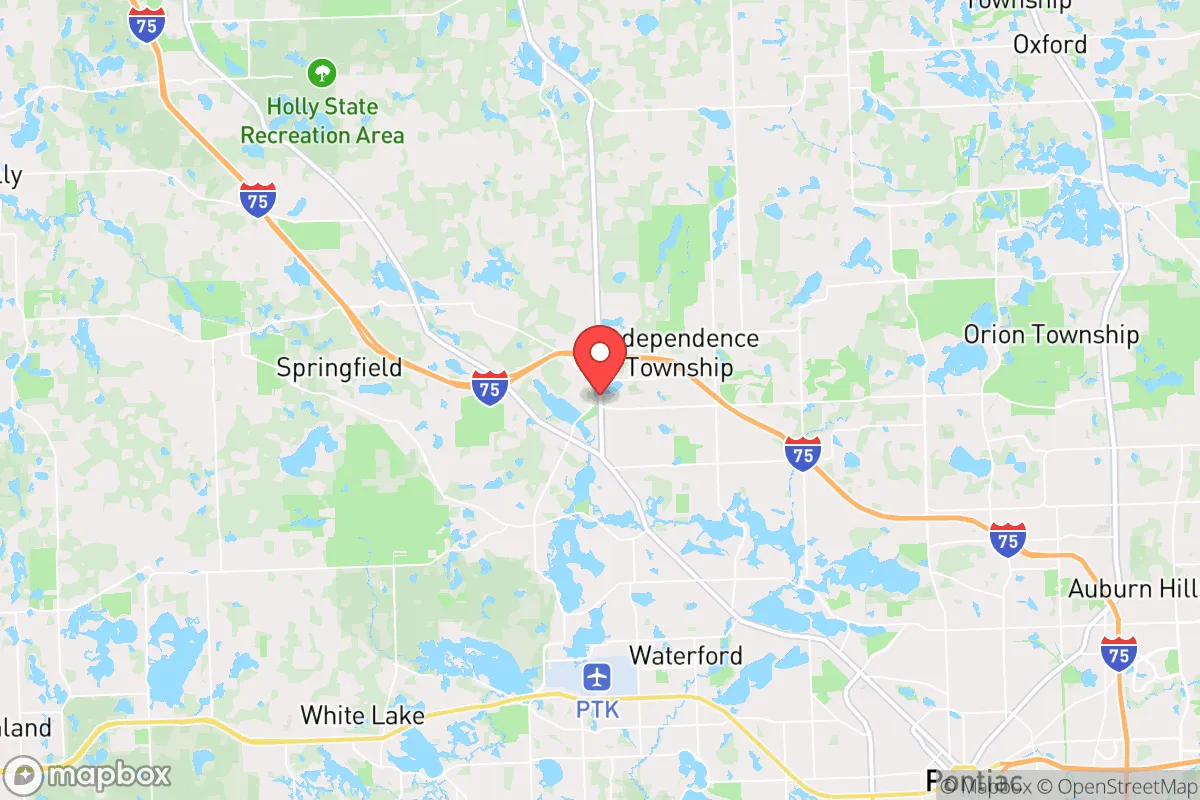
Photo: Wikipedia
Personal Sovereignty in Clarkston, MI
Viable for self-reliance. Generally workable, though some barriers may limit total independence.
What does Personal Sovereignty tell us?
Personal Sovereignty measures your capacity for self-reliance and independence with minimal government friction. Higher scores mean fewer barriers between you and the way you want to live... but it assumes you have the space you need and good neighbors.
What does this tell us?
Personal Sovereignty measures your capacity for self-reliance and independence with minimal government friction. Higher scores mean fewer barriers between you and the way you want to live... but it assumes you have the space you need and good neighbors.
State Policy
Energy independence: Importer (20% of energy produced in-state)
Personal Liberty
Homesteading

Personal Liberty Analysis
Clarkston, Michigan, offers a notably strong personal sovereignty environment for those prioritizing autonomy, self-reliance, and limited government interference, particularly when compared to many suburban enclaves in the highly regulated Southeast Michigan region. The city’s character is shaped by its position within a state that has a mixed record on individual freedoms—Michigan is a shall-issue concealed carry state with no firearm registration, yet it also has a state income tax and a regulatory framework that can feel heavy-handed in certain areas. For a conservative-leaning individual or family, Clarkston provides a meaningful degree of personal liberty, especially in self-defense and property rights, though the tax burden and local zoning codes require careful navigation. The overall sovereignty picture here is one of pragmatic independence: you can live largely as you see fit, but you must work within a system that is not as libertarian as, say, rural Idaho or Texas.
Tax burden and regulatory posture in Clarkston and Oakland County
Michigan’s tax structure presents a moderate but persistent drag on personal sovereignty. The state levies a flat 4.25% personal income tax, which is lower than many neighboring states but still a fixed cost on earnings. Property taxes in Clarkston are a more significant factor: the city sits within Oakland County, where the average effective property tax rate hovers around 1.5% of assessed value, though the Headlee Amendment and Proposal A cap annual increases on taxable value to the lesser of 5% or inflation, providing some predictability for long-term homeowners. For a median-priced home in Clarkston (around $400,000), this translates to roughly $6,000 per year in property taxes—a notable expense but not crippling for a dual-income family. Sales tax is a flat 6%, with no local add-ons. The regulatory posture in Clarkston is moderate: the city enforces standard zoning codes and building permits, but it is not known for aggressive overreach. However, Oakland County’s environmental regulations can be more stringent than in rural Michigan, particularly regarding wetland and shoreline protections around the many lakes in the area. For someone seeking to minimize tax and regulatory burden, Clarkston is a middle-ground choice—better than nearby Ann Arbor or Detroit, but not as light-touch as Michigan’s Upper Peninsula or northern Lower Peninsula counties.
Self-defense rights and gun law specifics in Clarkston
Michigan is a strong shall-issue state for concealed pistol licenses (CPL), and Clarkston residents benefit from this framework. The state does not require a permit to purchase a rifle or shotgun, and there is no firearm registration at the state level. For handguns, a purchase permit or CPL is required, but the process is straightforward through the local sheriff’s office. Clarkston is in Oakland County, where the sheriff’s office processes CPL applications efficiently, typically within the 45-day statutory window. The state also has preemption of local firearm ordinances, meaning Clarkston cannot enact its own gun bans or magazine restrictions—a critical protection for gun owners. Stand-your-ground laws are in effect in Michigan, with no duty to retreat in any place where the individual has a legal right to be. Castle doctrine protections apply to homes and vehicles. For daily carry, Clarkston’s suburban environment means you can legally carry in most public spaces, though schools, churches, and certain government buildings are restricted. The practical reality: a Clarkston resident can own, carry, and use firearms for self-defense with minimal bureaucratic friction, making this one of the strongest areas for personal sovereignty in the region.
Self-reliance and homesteading viability: lot sizes, zoning, and off-grid feasibility
Clarkston’s character as a historic village surrounded by lakes and wooded hills creates some opportunities for self-reliance, but zoning and lot sizes impose clear limits. The typical residential lot in the city proper is 0.25 to 0.5 acres, which is sufficient for a substantial vegetable garden, a small chicken coop, and perhaps a few fruit trees, but not for larger livestock or significant agricultural operations. The city’s zoning code permits accessory structures like sheds and greenhouses, but any building over 200 square feet requires a permit. Off-grid living is effectively impossible within city limits: Clarkston requires connection to municipal water and sewer, and the city enforces building codes that mandate grid-tied electrical systems for new construction. However, the surrounding Independence Township and Springfield Township areas offer larger lots—often 1 to 5 acres—where well and septic systems are standard, and solar panels are permitted with proper permitting. In these townships, you can keep horses, goats, and other livestock, and the regulatory touch is lighter. For a family seeking genuine self-reliance, the rural townships around Clarkston are far more viable than the city itself. The Michigan Right to Farm Act provides some protection for agricultural activities, but it does not override local zoning in residential areas. Overall, Clarkston offers a suburban compromise: you can grow your own food and reduce reliance on grocery stores, but full off-grid independence is not realistic without moving to the more rural fringes.
Personal liberties: parental rights, medical autonomy, speech, and property
Michigan’s legal landscape for personal liberties is a mixed bag, but Clarkston’s local culture leans toward traditional values. Parental rights are generally respected in the Clarkston Community Schools district, which has not adopted controversial curriculum mandates seen in some other Michigan districts. The state does not have a specific parental rights bill, but the Revised School Code gives parents the right to review instructional materials and opt their children out of sex education. Medical autonomy is more constrained: Michigan has a vaccine mandate for school attendance (though exemptions are available for medical, religious, and philosophical reasons), and the state’s COVID-era emergency powers have left a lingering wariness among liberty-minded residents. However, Clarkston’s local health department (Oakland County) has not been as aggressive as Washtenaw County’s in enforcing mandates. Free speech is robustly protected under the First Amendment, and Clarkston has no local ordinances restricting political expression or assembly. Property rights are strong: Michigan is a “right to farm” state, and Clarkston’s zoning is enforced but not capricious. The state’s eminent domain laws are standard, with no recent controversies in the area. For a conservative family, the key takeaway is that Clarkston allows you to raise your children according to your values, practice your faith openly, and use your property as you see fit, within reasonable local codes. The area is not a haven for radical medical freedom, but it is far more permissive than states like California or New York.
In the broader context of personal sovereignty, Clarkston ranks as a solidly above-average choice for the Midwest, particularly for those who value self-defense rights and property autonomy. It is not a low-tax or low-regulation paradise—Michigan’s income tax and Oakland County’s property taxes ensure a steady revenue stream for government services. But for a family or individual who wants to live in a safe, well-maintained community with good schools, while retaining the ability to own firearms, garden, and raise children with minimal government interference, Clarkston delivers. Compared to nearby alternatives, it offers more personal freedom than Birmingham or Royal Oak, and less bureaucratic friction than Ann Arbor. For the liberty-minded relocator, Clarkston represents a pragmatic balance: you won’t have the unfettered freedom of rural Montana, but you also won’t face the hostility to traditional values found in many coastal suburbs.

* Values derived from national, state, county, city and local statistics and may differ in a specific area. Last updated: 2026-10-05T03:58:24.000Z
Narrative content on this page is AI-generated and may contain mistakes. Verify any details that matter before acting on them.
ReloMaps may earn a commission from affiliate links at no extra cost to you.

