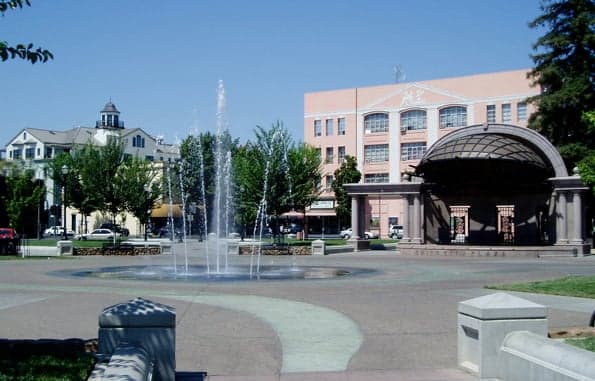
Photo: Wikipedia
Personal Sovereignty in Chico, CA
Viable for self-reliance. Generally workable, though some barriers may limit total independence.
What does Personal Sovereignty tell us?
Personal Sovereignty measures your capacity for self-reliance and independence with minimal government friction. Higher scores mean fewer barriers between you and the way you want to live... but it assumes you have the space you need and good neighbors.
What does this tell us?
Personal Sovereignty measures your capacity for self-reliance and independence with minimal government friction. Higher scores mean fewer barriers between you and the way you want to live... but it assumes you have the space you need and good neighbors.
State Policy
Energy independence: Importer (33% of energy produced in-state)
Personal Liberty
Homesteading

Personal Liberty Analysis
Chico, California, offers a nuanced personal sovereignty environment that balances the state’s heavy regulatory framework with a distinctly independent-minded local culture, particularly in Butte County’s rural and agricultural character. While California’s statewide tax burden and regulatory density are among the highest in the nation, Chico’s lower cost of living relative to the Bay Area or Los Angeles, combined with a strong local tradition of self-reliance, creates a unique autonomy profile for residents who value personal freedom. The city’s position as a regional hub for agriculture, education, and outdoor recreation means that individual choices around property use, self-defense, and lifestyle are shaped more by local norms than by state mandates alone.
Tax burden and regulatory posture in Butte County
California’s state income tax rates range from 1% to 13.3%, and the state sales tax is 7.25%, with Butte County adding a local rate that brings the total to approximately 7.5%. Property taxes are capped at 1% of assessed value under Proposition 13, which provides stability for long-term homeowners but can create disparities for new buyers. Chico’s regulatory posture is heavily influenced by state-level environmental and land-use laws, including the California Environmental Quality Act (CEQA), which can slow development and add costs to property improvements. However, Butte County’s Board of Supervisors and Chico City Council have historically taken a more permissive stance on agricultural and rural land uses compared to coastal counties. For example, the county’s zoning code allows for a range of home-based businesses and small-scale agricultural operations without excessive permitting, though state fire safety regulations—especially after the 2018 Camp Fire—impose strict vegetation management and building codes in high-risk areas. The overall tax burden in Chico is moderate by California standards but high nationally, with the Tax Foundation ranking California 49th in business tax climate. Residents should budget for state income tax, property tax, and a relatively high gas tax (currently 68 cents per gallon, among the highest in the U.S.).
Self-defense and gun law specifics in Chico
California’s gun laws are among the most restrictive in the country, and Chico residents must navigate a complex regulatory environment. The state requires a 10-day waiting period, a Firearm Safety Certificate, and a background check for all firearm purchases. Assault weapons are banned, and magazines are limited to 10 rounds. For concealed carry, Butte County is a “may-issue” jurisdiction, meaning the sheriff’s office has discretion in issuing CCW permits. As of 2026, Butte County Sheriff Kory Honea has maintained a relatively permissive policy compared to urban counties like San Francisco or Los Angeles, with applicants typically needing to demonstrate “good cause” (often interpreted as self-defense) and complete a training course. The county’s CCW issuance rate is higher than the state average, reflecting local support for gun rights. Open carry of handguns is generally prohibited, but long guns can be carried openly in unincorporated areas. Self-defense law in California follows the “stand your ground” doctrine only in limited circumstances—the state requires a duty to retreat if safe to do so, except in one’s own home (the “castle doctrine”). This means that in public confrontations, Chico residents must attempt to de-escalate or retreat before using deadly force, which is a significant limitation compared to states with broader self-defense protections. For those prioritizing self-defense autonomy, Chico offers a more favorable local environment than much of California, but the state-level restrictions remain a major constraint.
Self-reliance and homesteading viability in Chico
Chico’s agricultural roots and surrounding rural areas make it one of the more viable locations in California for homesteading and self-reliance. Within the city limits, residential lot sizes vary widely, with older neighborhoods featuring quarter-acre lots and newer subdivisions offering smaller parcels. However, the unincorporated areas of Butte County—such as Durham, Paradise, and Cohasset—offer larger lots (often 1 to 20 acres) at prices significantly lower than the state average. Zoning in these areas allows for livestock, gardens, and accessory dwelling units (ADUs) with minimal permitting, though state fire codes require defensible space (100 feet of clearance around structures) and may restrict certain off-grid practices like outdoor burning. Off-grid feasibility is limited by state building codes that mandate connection to the electrical grid for new construction, though solar panels with battery storage are permitted and incentivized through net metering. Rainwater catchment is legal but regulated, and well water is common in rural areas, though groundwater rights can be complex. Composting toilets and greywater systems are allowed under state health codes but require permits. The Mediterranean climate (hot, dry summers and mild, wet winters) supports year-round gardening, with a growing season from March to November. For those seeking true self-reliance, Chico’s rural fringe offers a realistic path, but residents must comply with state fire safety, building, and water rights regulations that limit full off-grid independence.
Personal liberties in Chico: parental rights, medical autonomy, speech, and property
California’s progressive state policies shape personal liberties in Chico, but local enforcement and community attitudes can moderate their impact. Parental rights are a contentious area: California mandates comprehensive sexual health education in public schools (the California Healthy Youth Act), and parents cannot opt their children out of LGBTQ+-inclusive curriculum, though they can opt out of specific sex education lessons. School choice is limited, with charter schools available but no voucher program. Medical autonomy is constrained by California’s vaccine mandates for school attendance (including COVID-19 and MMR) and strict scope-of-practice laws for alternative medicine. However, the state protects access to medical cannabis (legal since 1996) and has robust informed consent laws for medical procedures. Free speech is broadly protected under the California Constitution, which provides stronger protections than the First Amendment in some areas (e.g., speech in shopping malls). Chico’s public forums, including Bidwell Park and the downtown plaza, are active spaces for political expression. Property rights are limited by California’s rent control laws (the Costa-Hawkins Rental Housing Act allows local rent control on older units) and by CEQA, which can be used to challenge development. Butte County’s property tax assessment system under Proposition 13 provides stability, but the state’s transfer tax and documentary stamp taxes add costs to real estate transactions. Overall, personal liberties in Chico are a mix of strong protections (speech, cannabis) and significant state-imposed limits (parental rights, medical mandates), with local culture leaning more libertarian than the state average.
Compared to other areas in California, Chico offers a relatively high degree of personal sovereignty, especially for those willing to live in the rural fringe and navigate state regulations pragmatically. The city’s lower cost of living, agricultural heritage, and permissive local gun culture create a more autonomy-friendly environment than the Bay Area or Los Angeles, but it still falls short of the freedom found in states like Texas, Idaho, or Montana, where tax burdens are lower, self-defense laws are broader, and off-grid living is less restricted. For a conservative-leaning individual or family who values self-reliance and is willing to work within California’s regulatory framework, Chico represents one of the better options in the state—a place where local norms and county-level policies can buffer some of the state’s more intrusive mandates, while still providing access to the natural beauty and economic opportunities of Northern California.

* Values derived from national, state, county, city and local statistics and may differ in a specific area. Last updated: 2026-10-30T23:50:37.000Z
Narrative content on this page is AI-generated and may contain mistakes. Verify any details that matter before acting on them.
ReloMaps may earn a commission from affiliate links at no extra cost to you.

