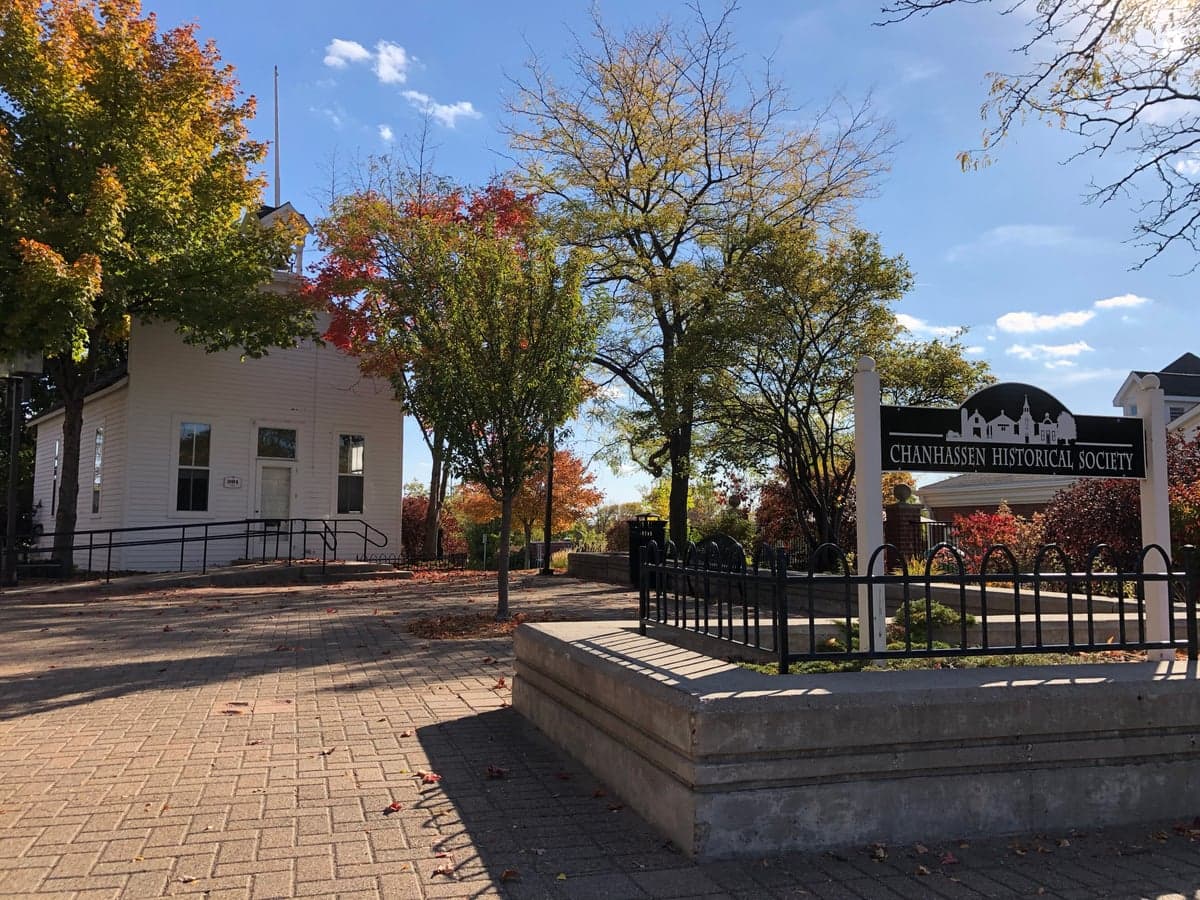
Photo: Wikipedia
Political ClimatePolitical Climate in Chanhassen, MN
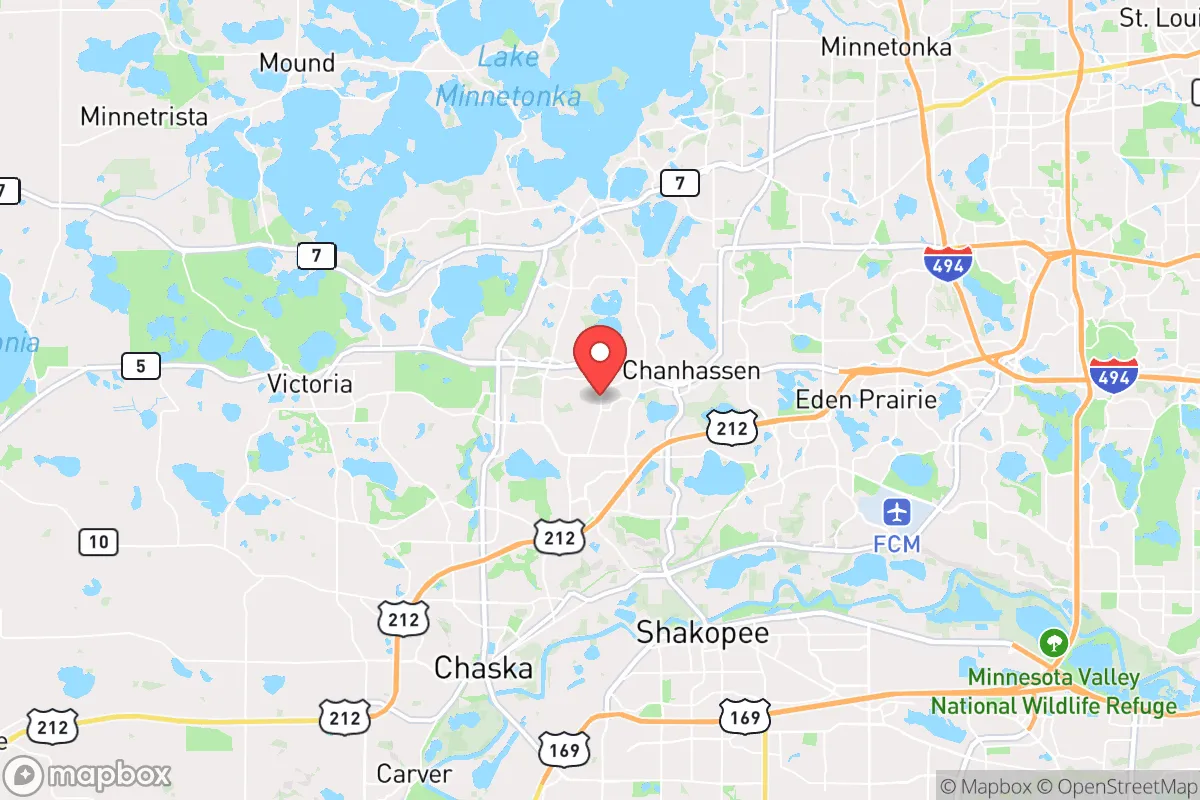
District shown is the primary district for this city’s centroid. Cities may span multiple districts.
Local Political AnalysisPolitical Analysis of Chanhassen, MN
Chanhassen has long been known as a conservative-leaning community within a state that often votes blue, and that's still the case today. The Cook PVI of R+10 puts it roughly ten points more Republican than the national average, which makes it one of the more reliably GOP suburbs in the Twin Cities metro. But over the past decade, I've watched the political flavor here shift ever so slightly toward the center, especially as younger families move in from Edina, Minneapolis, and other areas. The trajectory is one of gradual moderation, not a dramatic flip, but the change is real and noticeable if you've been around long enough to remember when "Chanhassen Republican" was a near given.
How it compares
Minnesota as a whole is a blue-leaning state, with Democrats consistently winning presidential races and controlling the state legislature in recent sessions. Chanhassen sits in Carver County, which is one of the most Republican counties in the metro, and that R+10 rating reflects a solid red base compared to the state's overall purple-to-blue tilt. The contrast is stark when you drive just a few miles east: Eden Prairie, which is only about 10 minutes away, has a Cook PVI of D+1 and a much more mixed political makeup, with a lot of its residents working in tech or finance and leaning moderate to liberal. A little further east, Edina and Minneapolis are deep blue, so the political geography here is a real gradient. West of Chanhassen, places like Waconia and Norwood Young America are even more conservative, so the city sits in a kind of buffer zone, where the national and state-level trends don't always match what you see in local elections. For example, in 2024, Carver County went for Donald Trump by about 12 points, while Minnesota as a whole went for Kamala Harris by about 7 points. That's a 19-point gap, and it's a gap that's been consistent for a while, though it's been narrowing as the county's population grows and diversifies.
What this means for residents
For conservative residents, Chanhassen is a comfortable place to live where local government and school board elections often reflect their values. Property taxes are relatively low by metro standards, and the city has a reputation for fiscal conservatism. For liberal residents, it's a place where you're in the minority, but you're not isolated. There are active Democratic clubs and a visible presence in local politics,

State Political ClimatePolitical Climate in Minnesota
State Political AnalysisPolitical Environment in the State
Minnesota has been a reliably blue state in presidential elections for over a decade, but its political landscape is far more nuanced than the statewide results suggest. The Democratic-Farmer-Labor Party (DFL) holds a trifecta in state government as of 2023, but the state’s overall partisan lean is only about D+1 or D+2 in national averages — a far cry from the deep-blue coasts. Over the past 20 years, Minnesota has shifted slowly leftward, driven by explosive growth in the Twin Cities metro, while greater Minnesota has trended sharply red. For a conservative-leaning relocator, the state offers a mixed bag: strong property rights and gun freedoms in many areas, but a progressive tax structure and increasingly activist state government in St. Paul.
Urban vs. rural divide
The political map of Minnesota is a classic tale of two states. The Twin Cities metro — Hennepin, Ramsey, and Dakota counties — accounts for over half the state’s population and delivers massive Democratic margins. In 2020, Minneapolis’s Hennepin County alone gave Biden a 400,000-vote cushion. Meanwhile, the rest of the state has moved decisively to the right. Greater Minnesota, including the Iron Range — once a DFL stronghold — has flipped Republican in recent cycles. Suburbs like Lakeville and Woodbury are now competitive swing areas, with Lakeville trending redder as families move outward from the core. Outstate cities like Rochester (home to Mayo Clinic) lean blue but are surrounded by deep-red rural townships. The divide is stark: a voter in Duluth lives in a blue city surrounded by a red county, while a voter in St. Cloud sees a similar dynamic in reverse. This geographic split means that the political experience of a new resident depends entirely on where they settle — life in Edina is politically and culturally worlds apart from life in Bemidji.
Policy environment
Minnesota’s state-level policies reflect its recent DFL control. The state has a progressive income tax with rates up to 9.85%, and property taxes are moderate to high depending on the county. There is no state sales tax on groceries or clothing, but the general sales tax is 6.875% with local add-ons. Regulatory posture is generally moderate, but environmental regulations are stricter than neighboring states like Wisconsin or Iowa. Education policy is a DFL priority: the state spends roughly $16,000 per pupil, among the highest in the nation, and has a robust public school system with strong teacher unions. School choice options exist through charter schools and open enrollment, but there is no universal voucher program. Healthcare is heavily regulated; Minnesota expanded Medicaid under the Affordable Care Act and operates MNsure, its own insurance exchange. Election laws are among the most accessible in the country — same-day voter registration, no-excuse absentee voting, and automatic voter registration at DMVs. For a conservative relocator, this environment means higher taxes and more regulation than in many red states, but also well-funded services and infrastructure.
Recent policy direction
Since the DFL regained full control in 2023, the legislature has passed a torrent of major legislation. Gun policy shifted significantly: the state now requires universal background checks on private transfers and enacted a “red flag” extreme risk protection order law. These moves were controversial in rural areas where gun ownership is near-universal. Parental and education rights saw a mixed picture: the state expanded funding for public schools but also passed a “trans refuge” law protecting gender-affirming care for minors, a move that frustrated many conservative parents. Reproductive and bodily autonomy was codified into law after the Dobbs decision, with the Protect Reproductive Options Act enshrining abortion rights. Privacy and surveillance — the state passed a law limiting law enforcement’s use of facial recognition without a warrant. Property rights remain relatively strong, but zoning preemption battles are ongoing, especially around Minneapolis’s 2040 plan to eliminate single-family zoning. Taxation saw a new tiered income tax bracket for high earners, and a new paid family and medical leave program funded by payroll taxes. Voting access was expanded further with automatic voter registration and pre-registration for 16- and 17-year-olds. For a conservative relocator, the direction is clear: the state is moving left on social issues and public spending, but gun rights — while eroded — remain stronger than in coastal states.
Civil unrest & political movements
Minnesota has been a flashpoint for national political movements. The 2020 murder of George Floyd in Minneapolis sparked the largest protests in the state’s history and led to a sustained push for police reform, including the failed 2021 ballot initiative to replace the Minneapolis Police Department. Conservative backlash was equally strong: the “Back the Blue” movement is deeply rooted in suburban and rural areas, and Anoka and Sherburne counties became Republican strongholds. Immigration politics are a live issue: Minneapolis is a de facto sanctuary city, and the state has a “driver’s license for all” law for undocumented immigrants, passed in 2023. Election integrity controversies erupted after the 2020 election, with some Republicans questioning the security of Minnesota’s mail-in voting system, though no widespread fraud was found. The state also saw a brief but notable “secession” movement in 2021, with a few rural counties passing symbolic resolutions to explore joining South Dakota or Idaho — these were largely rhetorical but reflected deep frustration. A new resident will notice stark political polarization: “Trump 2024” signs and “This Is a Gun-Free Zone” signs coexist uneasily on the same highways.
Projection
Over the next 5-10 years, Minnesota’s political trajectory points toward further polarization. The Twin Cities metro continues to grow faster than the rest of the state, driven by professional immigration and younger demographics, which will likely cement the DFL’s hold on statewide offices. However, the state’s rural and exurban areas are also growing, especially in the St. Cloud and Rochester corridors, and these areas are becoming more reliably Republican. The net effect is a state that remains competitive at the presidential level — it voted for Biden by only 7 points in 2020, closer than many assume. The 2024 election will be a key test. If current trends hold, the DFL will maintain power in St. Paul, but the legislature could flip back to divided control. In-migration patterns are mixed: some conservatives are moving to Texas or Florida, but others are drawn to Minnesota’s strong economy and quality of life. A relocator moving in now should expect to live in a state where the political ground shifts beneath their feet — one election cycle can bring a red wave or a blue wave, but the underlying blue tilt will likely persist.
For a new resident — especially one with conservative leanings — the bottom line is that Minnesota offers a high quality of life with a strong job market, excellent schools, and abundant outdoor recreation, but it comes at a cost: higher taxes, more progressive social policies, and a political environment that can feel adversarial. If you’re comfortable living in a purple state where your vote matters and your neighbors may disagree with you, Minnesota can be a great place to raise a family. If you want a state that reflects your values in every policy, you may find yourself frustrated. The best approach is to choose your location carefully — Woodbury and Lakeville offer suburban comfort with a more conservative tilt, while Minneapolis and St. Paul are deeply progressive. Know the terrain, and you’ll know what you’re getting into.
* Values derived from national, state, county, city and local statistics and may differ in a specific area. Last updated: 2026-07-25T13:31:54.000Z
Narrative content on this page is AI-generated and may contain mistakes. Verify any details that matter before acting on them.
ReloMaps may earn a commission from affiliate links at no extra cost to you.

