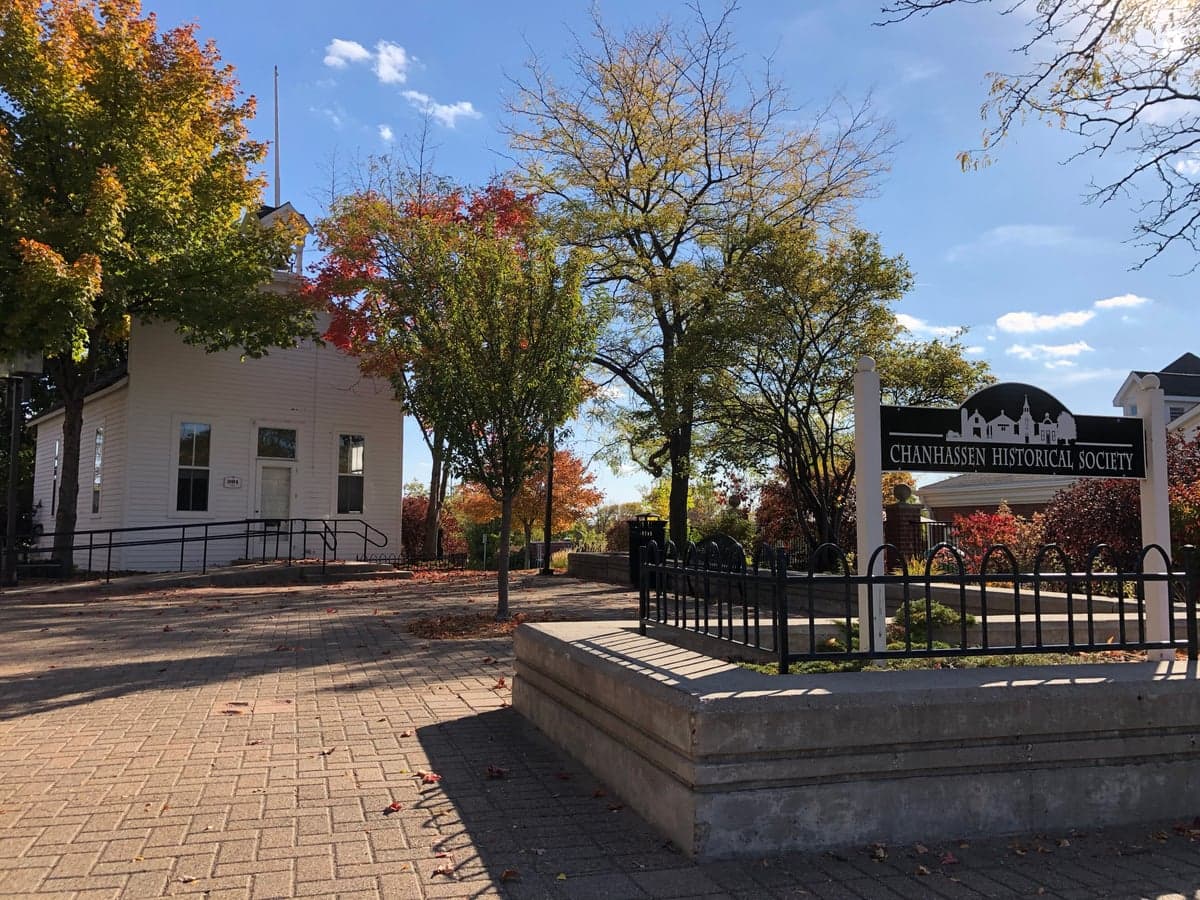
Photo: Wikipedia
Personal Sovereignty in Chanhassen, MN
Viable for self-reliance. Generally workable, though some barriers may limit total independence.
What does Personal Sovereignty tell us?
Personal Sovereignty measures your capacity for self-reliance and independence with minimal government friction. Higher scores mean fewer barriers between you and the way you want to live... but it assumes you have the space you need and good neighbors.
What does this tell us?
Personal Sovereignty measures your capacity for self-reliance and independence with minimal government friction. Higher scores mean fewer barriers between you and the way you want to live... but it assumes you have the space you need and good neighbors.
State Policy
Energy independence: Importer (20% of energy produced in-state)
Personal Liberty
Homesteading

Personal Liberty Analysis
Chanhassen, Minnesota, offers a notably high degree of personal sovereignty relative to the immediate Twin Cities metro, anchored by Carver County's consistently light-touch regulatory approach and a state-level political environment that balances individual liberties with progressive mandates. For a single individual or family prioritizing autonomy, the city delivers a practical middle ground: suburban infrastructure and services without the heavy-handed governance often found in Minneapolis or St. Paul. The local culture leans toward self-reliance, with Carver County voting +16 Republican in the 2024 presidential race, and the city's zoning and tax structures allow for genuine independence in housing and lifestyle choices, though with firm limits on truly off-grid living.
How Minnesota's tax structure and regulatory posture affect Chanhassen residents
Chanhassen's overall tax burden lands in the middle of the metro area, but the local regulatory environment is notably business-friendly and property-rights-oriented compared to the core cities. Carver County levies one of the lowest county property tax rates in the metro — roughly 0.95% of assessed value for residential properties, which on a median home value near $480,000 translates to about $4,560 annually. The city adds a modest municipal levy of about 0.35%, keeping total property taxes competitive with nearby Eden Prairie and Chaska. Minnesota's state income tax is progressive, topping out at 9.85% on income over $200,000 for single filers, which is a meaningful consideration for high-earning households; there is no capital gains tax break beyond the federal rate. Sales tax in Chanhassen is 7.025% — the state's 6.875% plus a 0.15% county transit tax — which is standard for the metro. Regulatory posture is generally permissive: the city does not impose rent control, business licensing is straightforward, and home-based businesses are allowed by conditional use permit in most residential zones. Minnesota is a "right-to-work" state in practice only — it has no right-to-work law, meaning union membership can be required in unionized workplaces, which is a factor for job seekers in construction, manufacturing, and school districts. The overall message: state-level taxes are a real burden, but the local county and city governments in Chanhassen keep regulatory friction low.
Self-defense and gun law specifics in Chanhassen and Minnesota
Minnesota is a shall-issue state for both concealed carry and permit to purchase, and Chanhassen residents benefit from Carver County's efficient processing through the Sheriff's Office. A permit to carry a handgun is issued by the county sheriff upon completion of an approved training course and a background check, with no discretionary denials — the decision is ministerial. The application fee is $100 for a five-year permit, and turnaround in Carver County typically runs two to three weeks. A permit to purchase (required for buying a handgun from a dealer or private party) is also shall-issue, valid for one year, and costs $10. Long guns — rifles and shotguns — can be purchased from a dealer with a simple federal background check (NICS) and no state permit, though private sales of long guns have no background check requirement. Minnesota has a "red flag" or Extreme Risk Protection Order (ERPO) law enacted in 2023, which allows law enforcement to seek a temporary firearm removal order based on a showing of risk; Carver County has seen very few ERPO petitions filed, and use of the law is infrequent in this jurisdiction. The state also has a preemption statute that prevents cities and counties from enacting stricter firearm ordinances than state law, so Chanhassen cannot add its own gun bans or waiting periods. Stand-your-ground is not codified in Minnesota, but the state's self-defense caselaw follows a "duty to retreat" standard outside the home, with a castle doctrine inside the dwelling. In practice, Carver County prosecutors are generally conservative on self-defense claims, and the county's political climate supports the right to carry. For a gun owner, Chanhassen offers a permissive environment by state standards, with the primary limitation being the duty to retreat in public spaces.
Self-reliance and homesteading viability: lot sizes, zoning, and off-grid feasibility
Chanhassen's zoning framework supports a high degree of self-reliance for a suburban city, but true off-grid living is constrained by municipal utility requirements in most neighborhoods. The city's land use is divided into several residential districts: R-1 (single-family) lots typically range from 0.25 to 0.5 acres in older subdivisions, while the R-2 and R-3 districts and the "Rural Residential" zone allow lots of 1 to 5 acres, particularly in the western part of the city near the Minnesota River bluffs. There are areas with enough acreage for a substantial garden, small livestock (chickens, rabbits, and up to two goats per acre are allowed with a permit), and even a private well and septic system in the rural residential zone. However, the city code requires connection to municipal water and sewer for any new construction within 200 feet of a main line, which covers the vast majority of buildable lots. Off-grid energy systems — solar panels with battery storage — are permitted and common, but the city requires a building permit and interconnection agreement with the utility (Xcel Energy) for grid-tied

* Values derived from national, state, county, city and local statistics and may differ in a specific area. Last updated: 2026-07-25T13:31:54.000Z
Narrative content on this page is AI-generated and may contain mistakes. Verify any details that matter before acting on them.
ReloMaps may earn a commission from affiliate links at no extra cost to you.

