Photo: Wikipedia
Political ClimatePolitical Climate in Carrollton, GA
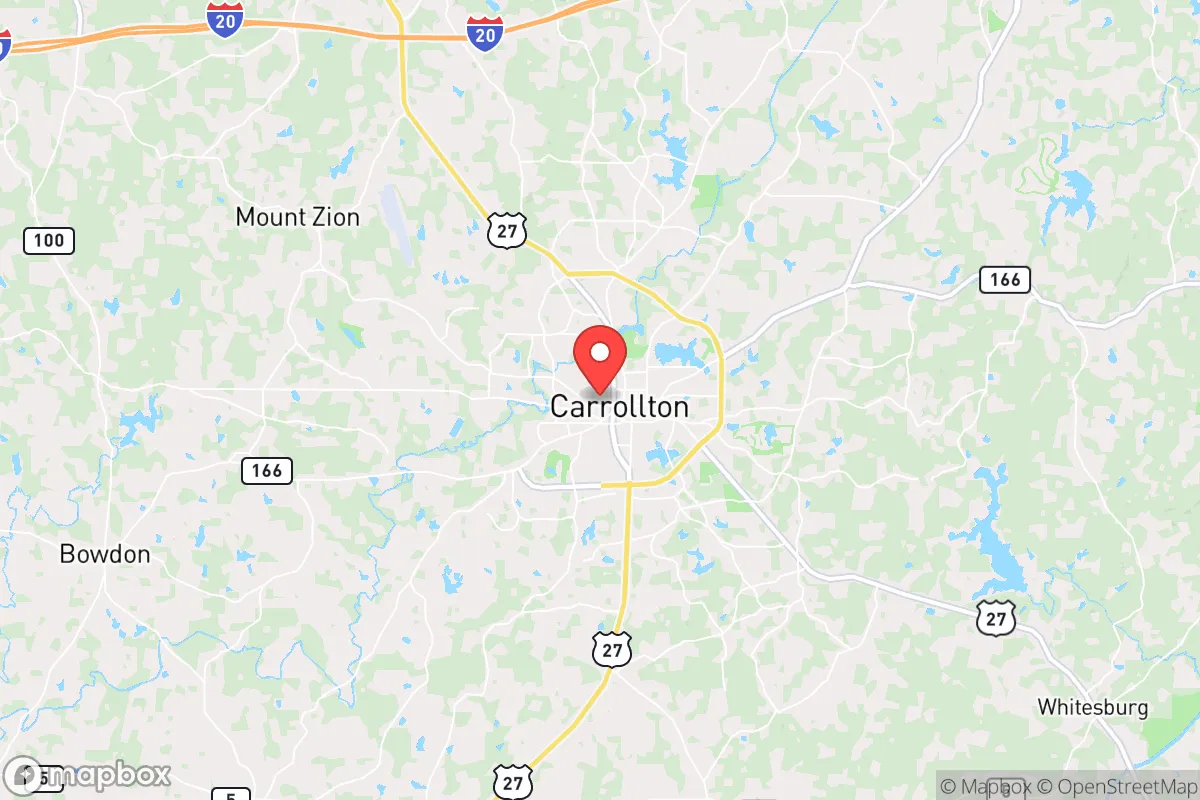
District shown is the primary district for this city’s centroid. Cities may span multiple districts.
Local Political AnalysisPolitical Analysis of Carrollton, GA
Carrollton is a reliably conservative area, with a Cook Partisan Voting Index of R+15, meaning it votes about 15 points more Republican than the national average. That’s a solid red lean, and it’s been that way for a while—though the flavor of that conservatism has shifted as the city has grown. You’ll find a mix of old-school Southern Democrats who’ve become Republicans, newer transplants from Atlanta’s western suburbs looking for more space, and a steady base of folks tied to the University of West Georgia and local manufacturing. The trajectory is toward a more suburban, slightly more moderate Republicanism, but the core remains deeply conservative.
How it compares
Georgia as a whole is a purple state that’s been trending blue in presidential races—think 2020 and 2024, where it was decided by razor-thin margins. Carrollton, by contrast, is a red island in that purple sea. Drive 30 minutes east to Douglasville, and you’ll hit a more mixed political vibe, with a stronger Democratic presence thanks to its proximity to Atlanta. Head south to LaGrange, and you’ll find a similar conservative tilt, but with a heavier industrial base. The real contrast is with Atlanta itself, which is overwhelmingly Democratic and culturally worlds apart. In Carrollton, you’re more likely to hear talk about property taxes, school funding, and Second Amendment rights than about transit expansion or city ordinances on short-term rentals. The state’s unknown PVI for Georgia as a whole masks this internal split: Carrollton is a reliable Republican stronghold in a state that’s become a national battleground.
What this means for residents
For conservative residents, this is comfortable ground. Local elections are dominated by Republicans, so you’ll see policies that align with lower taxes, limited regulation, and a strong law-and-order stance. The city council and county commission are reliably red, and issues like zoning for new subdivisions or school board decisions tend to reflect that. For liberal residents, it’s a different story. You won’t find a lot of overt hostility, but you’ll be in the minority. There’s a small but active Democratic presence, often centered around the university and some of the older neighborhoods near downtown. You can still engage in local politics—there are progressive groups that meet at the library or at local coffee shops—but you’ll need to be comfortable with being outvoted on most issues. The practical effect is that Carrollton feels more like a small Southern town than a progressive enclave: church attendance is high, gun ownership is common, and political conversations tend to stay polite but firm.
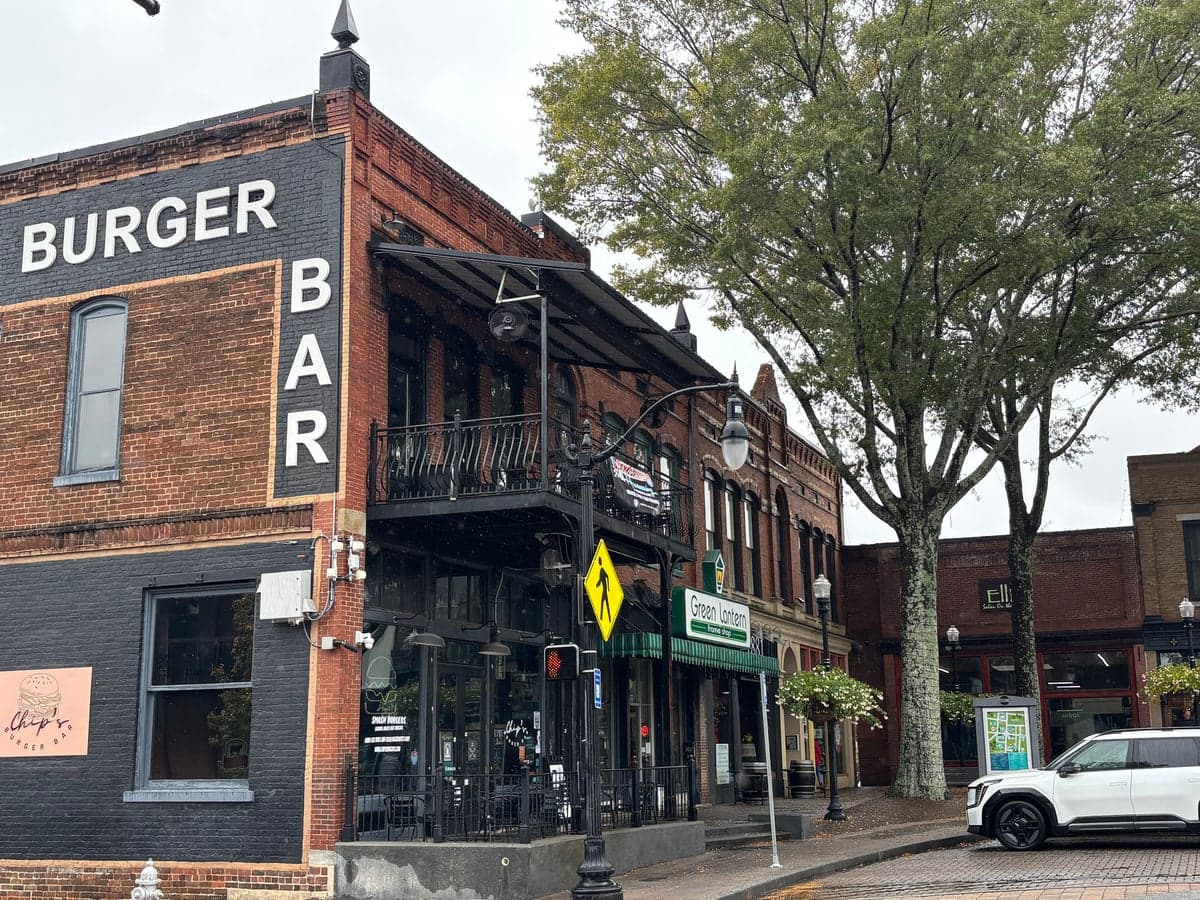
Culturally, Carrollton has a few distinctions that set it apart from the rest of Georgia. It’s home to the University of West Georgia, which brings a more educated, slightly more liberal population than the surrounding rural areas. The city has a historic downtown square that’s been revitalized with local restaurants and shops, giving it a more progressive, walkable feel than many towns its size. But the county-wide politics remain conservative, and you’ll see that in things like alcohol sales restrictions (though they’ve loosened over the years) and a strong emphasis on faith-based community events. The long-term trajectory is toward more growth and more diversity, which could nudge the politics a bit toward the center, but don’t expect Carrollton to flip blue anytime soon. It’s a place where the political reality is clear, and most residents—on both sides—have learned to live with it.

State Political ClimatePolitical Climate in Georgia
State Political AnalysisPolitical Environment in the State
Georgia has transformed from a reliably Republican stronghold into the nation’s most closely watched swing state, with a partisan lean that now sits at roughly R+3 after a decade of rapid demographic change. The state’s 16 electoral votes flipped for Joe Biden in 2020 by fewer than 12,000 votes, and both Senate seats went Democratic in the 2021 runoffs, yet Republicans still control the governorship, the legislature, and every statewide office except the Public Service Commission. What you’re seeing is a state where the old coalition of white rural and suburban voters is being steadily offset by a growing, increasingly Democratic-leaning population in metro Atlanta, particularly among younger, college-educated, and non-white residents. The trajectory over the last 20 years is unmistakable: Georgia went from a safe red state that gave George W. Bush a 17-point win in 2004 to a true battleground where margins are measured in the low single digits.
Urban vs. rural divide
The political map of Georgia is a study in stark contrasts. Metro Atlanta, home to roughly 60% of the state’s population, is the engine of Democratic growth. Fulton County (Atlanta proper) and DeKalb County are among the most reliably Democratic jurisdictions in the South, routinely delivering 80%+ margins for Democratic candidates. The suburban ring has shifted dramatically: Cobb County, once a Republican bastion that voted for George W. Bush by 20 points in 2000, went for Biden by 14 points in 2020. Gwinnett County flipped from red to blue even earlier, driven by a surge in Asian American and Hispanic voters. Meanwhile, the rest of the state remains deeply Republican. Rural south Georgia, from Valdosta to Albany, and the northern mountain counties like Fannin and Union routinely deliver 70-80% Republican margins. The exurban counties on Atlanta’s fringe—Forsyth, Cherokee, Paulding—are still solidly red but have seen their margins shrink as Atlanta’s growth spills outward. The result is a state where statewide elections are decided by turnout in the Atlanta suburbs, particularly in the “collar counties” of Cobb, Gwinnett, and Henry.
Policy environment
Georgia’s policy environment reflects its divided politics: a Republican-controlled legislature that passes conservative bills, but a governor’s office that often takes a more business-friendly, incremental approach. The state has a flat income tax of 5.49% (down from 6% in 2022, with a scheduled phase-down to 4.99% by 2029), and a state sales tax of 4% that local governments can add to. Property taxes are relatively low, with a median effective rate of about 0.87% of home value. The state is a “right-to-work” state with a strong anti-union posture. Education policy has been a flashpoint: Georgia has a robust school voucher program (the Georgia Promise Scholarship Act, passed in 2024) that allows students in low-performing schools to use state funds for private school tuition, and it has a charter school commission that authorizes statewide charters. On healthcare, Georgia did not expand Medicaid under the Affordable Care Act, leaving roughly 300,000 low-income adults in the coverage gap. The state’s election laws have been a national focus: the 2021 Election Integrity Act (SB 202) added a voter ID requirement for absentee ballots, limited drop boxes, and made it a crime to hand out food or water to voters waiting in line. Gun laws are permissive: Georgia is a permitless carry state (since 2022), with no state-level red flag law and a “stand your ground” statute.
Recent policy direction
The last three years have seen a clear conservative shift on several fronts, even as the state’s electorate has become more competitive. On gun and self-defense law, the 2022 permitless carry law (HB 218) allows any legal gun owner to carry a concealed firearm without a license, and the state has preempted local governments from enacting their own gun restrictions. On parental and education rights, the 2023 “Parents’ Bill of Rights” (SB 88) requires schools to notify parents of any changes to a student’s health or well-being, effectively limiting the ability of schools to support transgender students without parental consent. The state also banned instruction on “divisive concepts” related to race in public schools (HB 888, 2022). On medical and bodily autonomy, Georgia’s 2019 “heartbeat” abortion law (HB 481) bans abortion after six weeks, with limited exceptions for rape, incest, and medical emergencies; it was enforced after the Dobbs decision in 2022. On property rights, the state has strong eminent domain protections and no statewide rent control. On voting and ballot access, SB 202 shortened the runoff period from nine weeks to four, added a photo ID requirement for absentee ballots, and made it a felony for non-election officials to mail absentee ballot applications to voters. The overall direction is one of conservative governance on social and cultural issues, tempered by a business-friendly posture that keeps corporate interests engaged.
Civil unrest & political movements
Georgia has been a focal point for political activism on both sides. The 2020 election cycle saw massive protests in Atlanta following the murder of George Floyd, with the city becoming a center of the Black Lives Matter movement. The 2021 Senate runoffs drew unprecedented national attention and spending, with both parties pouring hundreds of millions into the state. On the right, the “Stop the Steal” movement had a strong presence, particularly in rural areas, and the state’s election integrity laws were a direct response to that pressure. Immigration politics are less visible than in border states, but Georgia has a 2011 law (HB 87) that allows police to check immigration status during lawful stops and penalizes those who transport or harbor undocumented immigrants. There are no sanctuary cities in Georgia; state law explicitly prohibits them. The Atlanta area has seen periodic protests over the “Cop City” training facility, with activists arguing it militarizes policing, while supporters see it as necessary for public safety. Election integrity remains a live issue: the 2024 election saw a record number of poll watchers and legal challenges, though no widespread fraud was found. A new resident would notice the intensity of political engagement, especially in the Atlanta suburbs, where yard signs and campaign events are a constant feature of election years.
Projection
Over the next 5-10 years, Georgia is likely to become even more competitive, with a slight tilt toward Democrats if current demographic trends hold. The Atlanta metro area continues to grow rapidly, adding roughly 100,000 people per year, and the new arrivals are disproportionately young, diverse, and college-educated—all groups that lean Democratic. The exurban counties like Forsyth and Cherokee are seeing their Republican margins shrink as Atlanta’s diversity spreads outward. However, the rural and small-town vote remains deeply Republican, and the state’s legislative maps are gerrymandered to protect Republican majorities in the General Assembly. The wild card is whether the Democratic coalition can maintain its turnout advantage in non-presidential years; the 2022 midterms saw Governor Brian Kemp win re-election by 7.5 points, even as Senator Raphael Warnock won his runoff by 3 points. What a relocator should expect is a state where statewide elections will be decided by 1-3 points for the foreseeable future, with control of the legislature remaining Republican through at least 2030 due to redistricting. The policy environment will likely remain conservative on social issues—abortion restrictions, gun rights, school choice—but may see incremental shifts on economic issues like Medicaid expansion if the political math changes.
For a new resident, the bottom line is that Georgia offers a conservative policy environment on most fronts—low taxes, permissive gun laws, school choice, and restrictions on abortion—but with the political energy and cultural amenities of a swing state. You’ll find a Republican-dominated state government that is actively conservative on social and cultural issues, but you’ll also live in a state where your vote in a presidential or Senate election genuinely matters. The practical takeaway: if you’re looking for a state where conservative policies are locked in and unlikely to change, Georgia is not that—the politics are fluid, and the direction will depend on who shows up to vote. If you’re comfortable with that uncertainty and want to be in a state that feels politically alive, Georgia is a compelling choice.
* Values derived from national, state, county, city and local statistics and may differ in a specific area. Last updated: 2026-10-17T00:06:09.000Z
Narrative content on this page is AI-generated and may contain mistakes. Verify any details that matter before acting on them.
ReloMaps may earn a commission from affiliate links at no extra cost to you.

