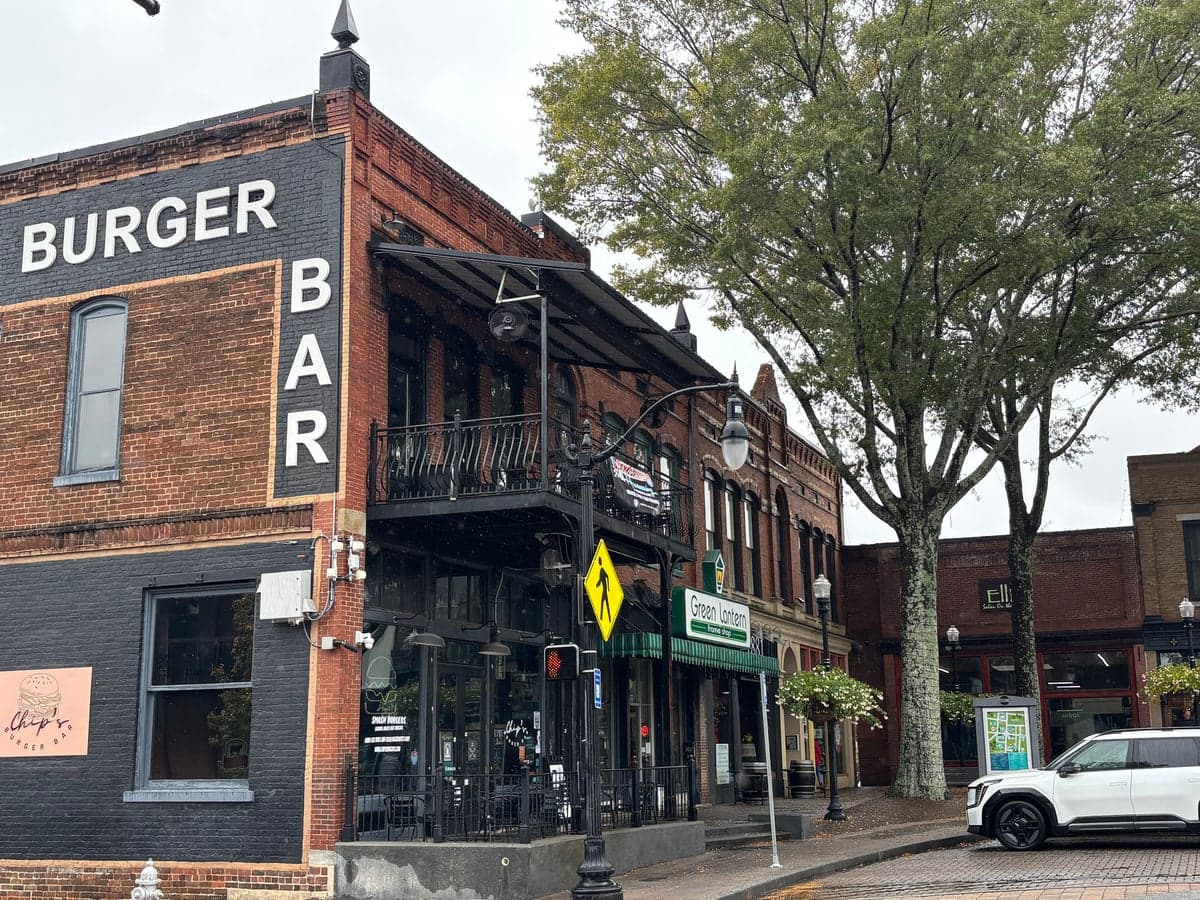
Photo: Wikipedia
Demographics of Carrollton, GA
Affluence Level in Carrollton, GA
A middle-class area roughly in line with national averages across income, home values, education, and employment.
People of Carrollton, GA
The people of Carrollton, Georgia, today form a community of roughly 27,000 residents defined by a near-even split between White (49.3%) and Black (36.9%) populations, a growing Hispanic presence (9.4%), and a small but notable foreign-born share of 5.7%. This is a city with a distinctly Southern character, shaped by its history as a textile and manufacturing hub, and now transitioning toward a more diverse, college-educated workforce anchored by the University of West Georgia. With a college attainment rate of 33.2%, Carrollton balances its small-town roots with the energy of a regional university town, creating a community that is both traditional and evolving.
How the city was settled and grew
Carrollton was founded in 1829 as the seat of Carroll County, carved from Creek Indian territory ceded in the 1825 Treaty of Indian Springs. The earliest White settlers were primarily yeoman farmers from the Piedmont regions of Virginia and the Carolinas, drawn by cheap land grants in the Georgia Gold Rush era. The city’s first major growth spurt came after the Civil War, when the railroad arrived in the 1870s, connecting Carrollton to Atlanta and enabling the rise of cotton textile mills. By the early 1900s, mills like the Mandeville Mills and Carrollton Manufacturing Company drew rural White families from surrounding counties into neighborhoods such as Mill Village (the historic mill-worker district near the railroad tracks) and West Carrollton, where company housing clustered. A smaller but significant Black population, largely descended from enslaved families who worked the antebellum cotton plantations, settled in the Northside and East Carrollton neighborhoods, establishing churches, schools, and a tight-knit community around Maple Street and the historic Zion Hill Baptist Church. By 1950, Carrollton was a segregated mill town of roughly 7,000, overwhelmingly native-born and White, with a Black minority of about 25%.
Modern era (post-1965)
The post-1965 era brought profound demographic change. The Immigration and Nationality Act of 1965 had a modest direct effect on Carrollton—the foreign-born share remains low at 5.7%—but the city’s growth was driven primarily by domestic migration. The expansion of the University of West Georgia (enrollment grew from 3,000 in 1970 to over 13,000 today) attracted faculty, staff, and students from across the Southeast and beyond, diversifying the professional class. Suburbanization from Atlanta, about 50 miles east, began in earnest in the 1990s, as families seeking lower housing costs and smaller schools moved into subdivisions like Oak Mountain and Hunter’s Ridge in the city’s northern and western edges. The Hispanic population, now 9.4%, grew rapidly after 2000, driven by construction and poultry-processing jobs in the broader region. This community concentrated in the South Carrollton area, near the industrial parks and along Highway 27, where Latino-owned tiendas, restaurants, and churches have become visible. The Black population, which had been largely stable at around 25-30% through the 1980s, increased to 36.9% by 2020, partly due to Black professionals moving from metro Atlanta into established neighborhoods like Northside and newer subdivisions in East Carrollton. The East/Southeast Asian share (0.3%) and Indian-subcontinent share (0.5%) remain tiny, largely tied to university faculty and medical professionals at Tanner Health System.
The future
Carrollton’s population is heading toward greater diversity, though at a measured pace. The White share has declined from roughly 60% in 2000 to 49.3% today, while the Hispanic share is projected to reach 12-14% by 2035, driven by family formation and continued migration into South Carrollton and newer developments near the Carrollton Bypass. The Black population is expected to remain stable or grow slightly, as the city’s affordability and university presence attract Black professionals from the Atlanta metro. The foreign-born share, while low, will likely rise to 7-8% as the university recruits internationally and the healthcare sector expands. Newer subdivisions like Fairfield Plantation (a large golf-course community on the city’s southwest edge) are drawing a mix of retirees and families, but these remain predominantly White. The cultural identity of Carrollton is evolving from a historically binary Black-White Southern town into a tri-ethnic community with a growing Hispanic influence, though the pace of change is slower than in Atlanta’s closer-in suburbs. For a newcomer, this means a community that retains its Southern manners and conservative leanings but is increasingly accustomed to diversity in its schools, churches, and downtown restaurants.
Carrollton is becoming a more diverse, college-educated small city that still feels deeply rooted in its Southern past. For someone moving in now, it offers a stable, family-oriented environment where the cost of living is low, the university provides cultural and economic anchors, and the demographic shifts are gradual enough that the community’s character remains recognizable from decade to decade. It is not a place of rapid transformation, but of steady, manageable change.

* Values derived from national, state, county, city and local statistics and may differ in a specific area. Last updated: 2026-10-17T00:06:09.000Z
Narrative content on this page is AI-generated and may contain mistakes. Verify any details that matter before acting on them.
ReloMaps may earn a commission from affiliate links at no extra cost to you.

