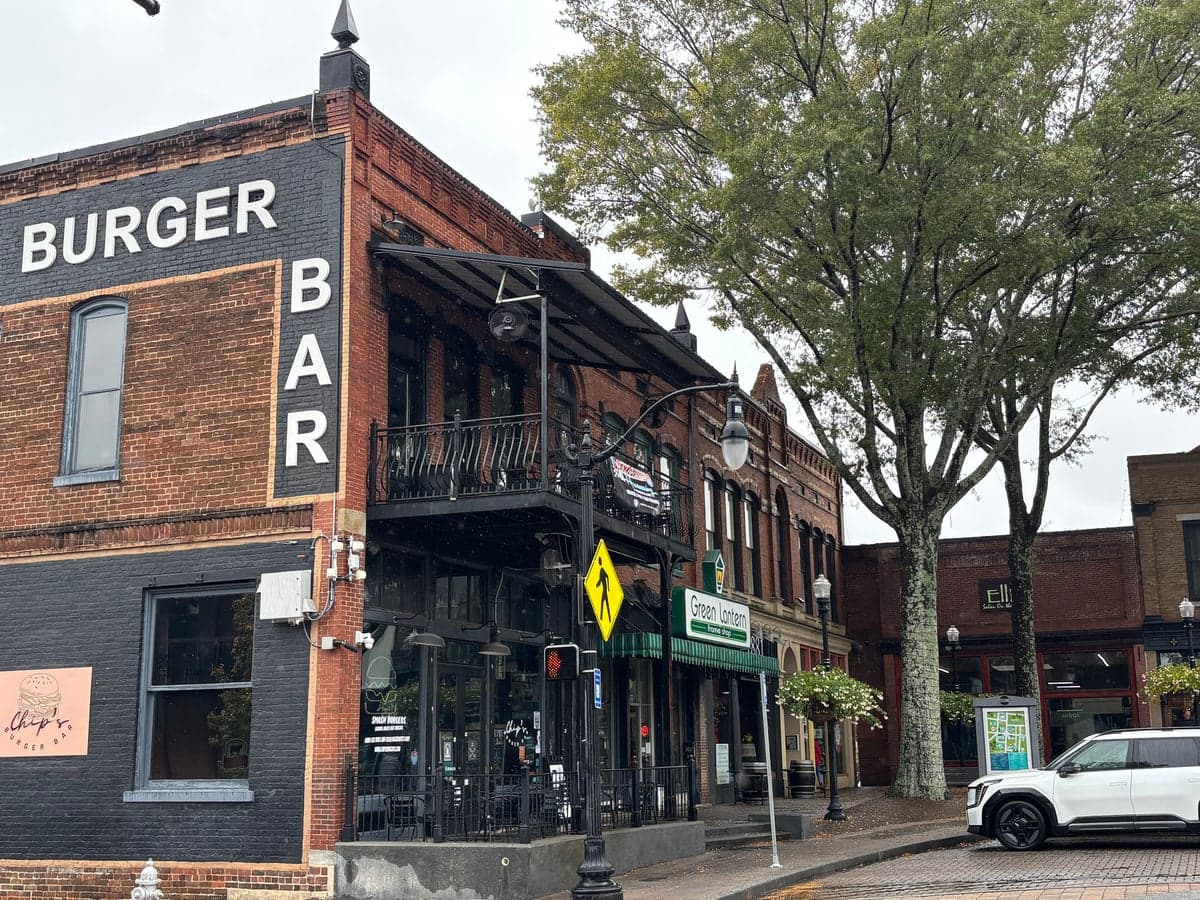
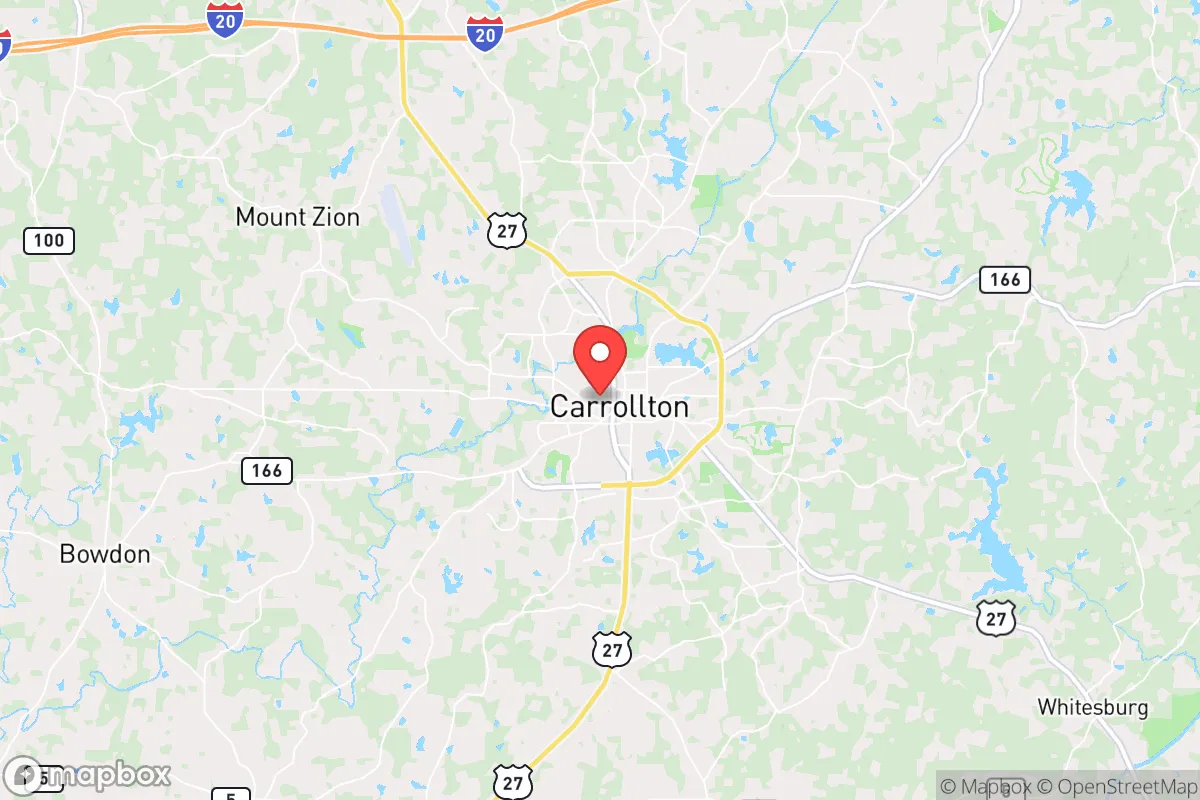
Photo: Wikipedia
Personal Sovereignty in Carrollton, GA
Viable for self-reliance. Generally workable, though some barriers may limit total independence.
What does Personal Sovereignty tell us?
Personal Sovereignty measures your capacity for self-reliance and independence with minimal government friction. Higher scores mean fewer barriers between you and the way you want to live... but it assumes you have the space you need and good neighbors.
What does this tell us?
Personal Sovereignty measures your capacity for self-reliance and independence with minimal government friction. Higher scores mean fewer barriers between you and the way you want to live... but it assumes you have the space you need and good neighbors.
State Policy
Energy independence: Importer (12% of energy produced in-state)
Personal Liberty
Homesteading

Personal Liberty Analysis
Carrollton, Georgia, offers a personal sovereignty environment shaped by Georgia’s broader legal framework and local enforcement culture, where state-level protections for gun rights, property use, and parental authority create a baseline of autonomy that is generally more permissive than in many coastal or urban jurisdictions. The city itself, as the seat of Carroll County, balances a small-city feel with proximity to Atlanta (about 45 miles east), meaning residents can access metropolitan resources without the heavier regulatory hand often found in the metro core. For a relocation audience prioritizing independence, the key question is not whether Carrollton is a libertarian enclave—it is not—but whether the local and state posture allows individuals to live with minimal interference in their daily choices, finances, and self-defense decisions. The answer leans yes, with specific caveats around zoning and land use that matter for homesteaders and off-grid aspirants.
Tax burden and regulatory posture in Carrollton and Carroll County
Georgia’s state-level tax structure is relatively light compared to the national average, and Carrollton benefits directly from this. The state imposes a flat income tax rate of 5.49% (as of 2026), with no local income tax, meaning residents keep more of their earnings than in states with progressive brackets or high local levies. Sales tax in Carrollton is 8%, which includes state, county, and local option taxes—moderate by Georgia standards but higher than rural counties. Property taxes are the real story: Carroll County’s millage rate for 2025 was approximately 12.5 mills for the unincorporated area, with Carrollton city adding roughly 3–4 mills, totaling around 16–17 mills for city residents. On a $250,000 home, that translates to about $4,000–$4,250 annually, which is competitive with suburban Atlanta counties but not dirt-cheap. The regulatory posture at the city level is moderate: building permits are required for most structural changes, and the city enforces a standard zoning code that separates residential, commercial, and industrial uses. However, there is no county-wide stormwater utility fee or overly burdensome environmental overlay district, and the city’s planning department is known for being responsive rather than obstructionist. For a business owner or independent contractor, Georgia’s lack of a state-level occupational tax and minimal licensing requirements for most trades (outside of regulated professions like healthcare or construction) means starting a small operation in Carrollton is straightforward. The overall regulatory climate is best described as light-touch with predictable rules—not a free-for-all, but not a maze of red tape either.
Self-defense and gun law specifics in Carrollton and Georgia
Georgia is a strong Second Amendment state, and Carrollton reflects that culture. The state operates under permitless carry (constitutional carry) for anyone 21 or older who can legally possess a firearm, meaning no permit is required to carry a concealed handgun in most public spaces. This went into effect in 2022 and remains in force. For those who still want a permit—useful for reciprocity when traveling to other states—Carroll County’s probate court issues Georgia Weapons Carry Licenses with a typical turnaround of 30–60 days, and the process is straightforward: a background check, fingerprints, and a $74 fee. Stand-your-ground laws apply statewide, with no duty to retreat in any place where a person is lawfully present. Castle doctrine protections extend to vehicles and occupied structures. Local law enforcement in Carrollton is generally supportive of lawful gun ownership; there are no city-specific ordinances that restrict magazine capacity, ban specific firearm types, or impose waiting periods beyond state law. The only notable restriction is that carrying in government buildings, courthouses, and schools is prohibited unless you have a specific exemption. For self-defense-minded residents, Carrollton offers one of the most permissive legal environments in the Southeast, with no local overrides of state preemption. The Carroll County Sheriff’s Office also runs a firearms safety course and does not discourage responsible carry. If you prioritize the ability to defend yourself without bureaucratic hurdles, this area is a clear positive.
Self-reliance and homesteading viability: lot sizes, zoning, and off-grid feasibility
Homesteading and self-reliance in Carrollton depend heavily on whether you are inside city limits or in the unincorporated county. Inside Carrollton, standard residential lots range from 0.25 to 0.5 acres in established neighborhoods, with newer subdivisions offering slightly larger parcels. City zoning restricts keeping livestock—chickens are allowed with a permit and specific coop requirements, but goats, pigs, or cattle are generally prohibited on lots under 2 acres. Gardening is unrestricted, and rain barrels are allowed, but the city does require connection to municipal water and sewer in most areas, meaning full off-grid water independence is not feasible within city limits. The real opportunity lies in Carroll County’s unincorporated areas, particularly south and west of the city. There, minimum lot sizes for agricultural zoning are 3–5 acres, and many parcels of 5–20 acres are available for $10,000–$20,000 per acre (as of 2025–2026). On these larger tracts, residents can keep livestock, build barns, install septic systems, and drill wells without city interference. Off-grid solar is legal and common, though you must still comply with state electrical codes if connecting to the grid; fully off-grid systems are permitted as long as they meet safety standards. The county does not have a specific “off-grid” prohibition, but building permits are still required for habitable structures, and you must meet minimum square footage requirements (typically 600–800 sq ft for a dwelling). For someone wanting to live largely self-sufficiently, the unincorporated areas around Carrollton are viable and affordable, with a regulatory environment that is permissive but not lawless. The main constraint is proximity to Atlanta: land prices rise as you get closer to I-20, so deeper rural parcels offer better value.
Personal liberties: parental rights, medical autonomy, speech, and property
Georgia law provides strong protections for parental rights, and Carrollton’s local culture aligns with that. The state’s Parents’ Bill of Rights (enacted in 2022) affirms that parents have the fundamental right to direct the upbringing, education, and healthcare of their minor children. This means parental consent is required for most medical treatments, and schools must notify parents of any changes in a student’s services or mental health support. Carrollton City Schools and Carroll County Schools both have policies that defer to parental authority on issues like curriculum objections and opt-outs for sex education. Medical autonomy is more mixed: Georgia has not expanded Medicaid, and the state’s regulatory environment for alternative medicine is moderate—naturopaths and direct-primary-care practices operate, but they are not as common as in states like Oregon or Arizona. Vaccine mandates are not enforced at the state level for adults, and school vaccine exemptions exist for medical and religious reasons (though philosophical exemptions are not recognized). Free speech is robustly protected under the Georgia Constitution, and Carrollton has no local ordinances restricting signs, leafleting, or public assembly beyond standard time-place-manner rules. Property rights are strong: Georgia is a “right-to-farm” state, meaning agricultural operations are protected from nuisance lawsuits if they were established before nearby residential development. Eminent domain is limited to public projects, and there is no statewide rent control or rent stabilization. Overall, personal liberties in Carrollton are well-guarded by state law, with local enforcement that rarely overreaches. The main area where autonomy is constrained is in healthcare choices—access to direct-pay or concierge medicine is limited compared to larger metros, and telehealth is the primary option for some alternative providers.
In the broader context of the Southeast, Carrollton offers a solid balance of personal sovereignty and practical governance. It is not as libertarian as rural north Idaho or as permissive as parts of Texas for off-grid living, but it outperforms most of the Northeast and West Coast on tax burden, gun rights, and parental authority. For a conservative-leaning individual or family who wants a low-hassle environment with good schools and access to a major city, Carrollton ranks well—especially for those willing to live just outside city limits to maximize land use and self-reliance. The regulatory touch is light enough to allow independent living, but heavy enough to maintain property values and basic order. If your priority is maximum autonomy with minimal government presence, the unincorporated county is the better bet; if you want a walkable small town with decent services and still strong personal freedoms, the city itself works fine. Either way, Carrollton delivers a sovereignty profile that is above average for the U.S. and competitive within Georgia.

* Values derived from national, state, county, city and local statistics and may differ in a specific area. Last updated: 2026-10-17T00:06:09.000Z
Narrative content on this page is AI-generated and may contain mistakes. Verify any details that matter before acting on them.
ReloMaps may earn a commission from affiliate links at no extra cost to you.

