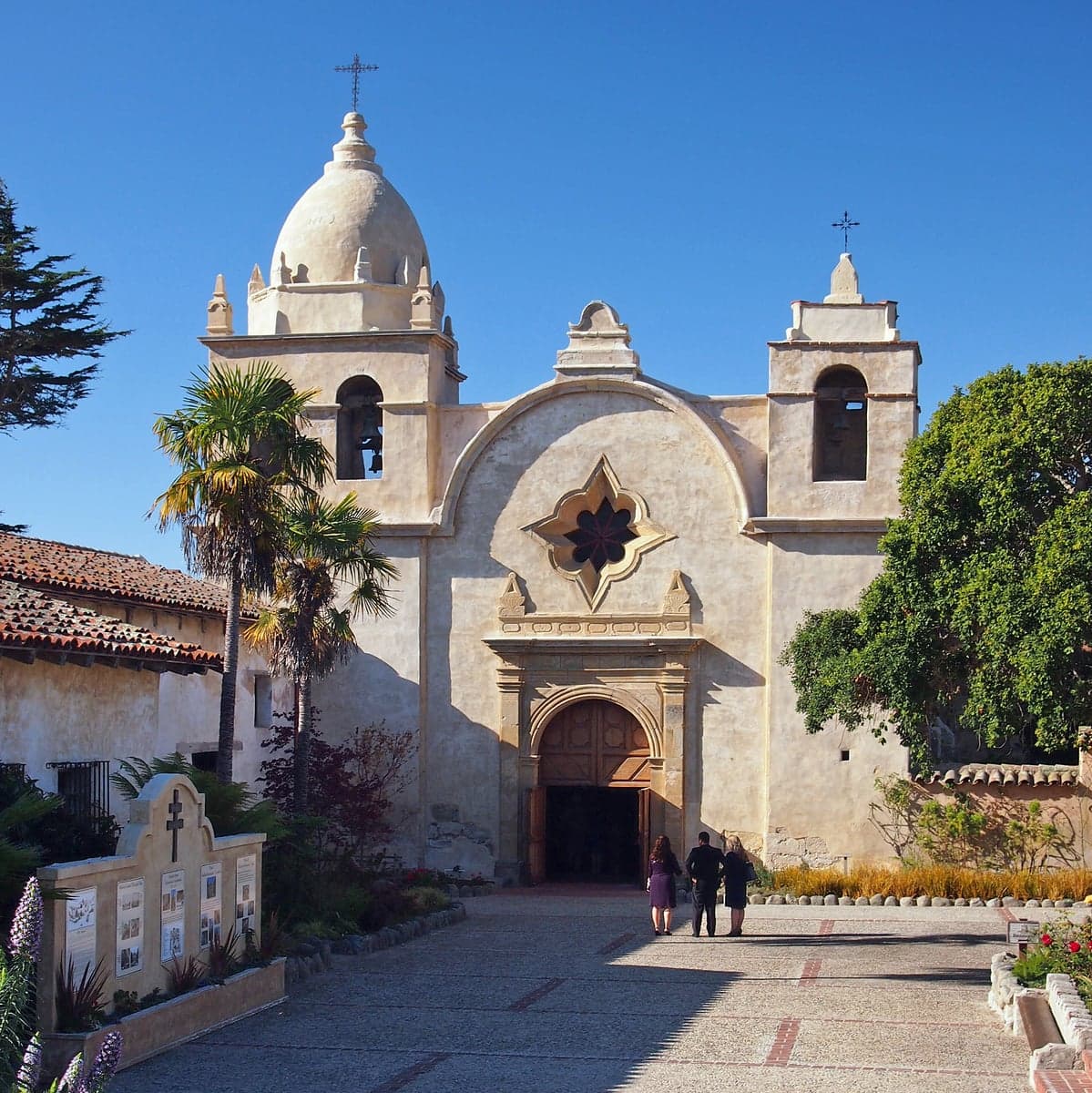
Photo: Wikipedia
Personal Sovereignty in Carmel-by-the-Sea, CA
Viable for self-reliance. Generally workable, though some barriers may limit total independence.
What does Personal Sovereignty tell us?
Personal Sovereignty measures your capacity for self-reliance and independence with minimal government friction. Higher scores mean fewer barriers between you and the way you want to live... but it assumes you have the space you need and good neighbors.
What does this tell us?
Personal Sovereignty measures your capacity for self-reliance and independence with minimal government friction. Higher scores mean fewer barriers between you and the way you want to live... but it assumes you have the space you need and good neighbors.
State Policy
Energy independence: Importer (33% of energy produced in-state)
Personal Liberty
Homesteading

Personal Liberty Analysis
Carmel-by-the-Sea presents a paradox for the freedom-minded individual: a fiercely independent local character wrapped in some of California's densest state-level regulation. While the village's small-town charm and historic resistance to chain stores suggest a live-and-let-live ethos, the practical reality for anyone prioritizing personal sovereignty is shaped overwhelmingly by Sacramento's heavy hand. For a relocation researcher, the key takeaway is that personal autonomy here is a matter of navigating state constraints while leveraging local quirks—not a blank slate for self-directed living.
Tax burden and regulatory posture: what you pay and what you can't do
California's tax burden is the single largest constraint on personal sovereignty in Carmel-by-the-Sea. The state's top marginal income tax rate of 13.3% applies to income over $1 million, but even moderate earners face rates around 9-10%. Combined with a state sales tax rate of 7.25% (local add-ons push Carmel's total to about 9.25%), the cost of earning and spending is among the highest in the nation. Property taxes, capped at roughly 1% of assessed value under Proposition 13, offer some predictability, but home prices in Carmel—median above $2 million—mean annual tax bills often exceed $20,000. The regulatory posture is similarly heavy: California's California Environmental Quality Act (CEQA) can delay or block even modest home renovations, and the California Coastal Commission exerts tight control over any construction near the shoreline. Locally, Carmel's famously strict sign ordinances and ban on chain restaurants reflect a community that values aesthetic control over commercial freedom. For a conservative-leaning reader, this means the state's regulatory apparatus will feel intrusive, though the village's small scale keeps the local bureaucracy relatively accessible.
Self-defense and gun law specifics: what's allowed and what's not
California's firearm laws are among the most restrictive in the nation, and Carmel-by-the-Sea offers no local exceptions. The state requires a 10-day waiting period, a Firearm Safety Certificate, and a background check for all purchases, including private transfers. "Assault weapons" are banned by name and feature, and magazines holding more than 10 rounds cannot be purchased or imported (existing ones must be possessed only if acquired before the 2016 ban). For concealed carry, California is a "may-issue" state, and Monterey County—where Carmel sits—is historically restrictive; permits are rarely granted without a specific, documented threat. Open carry is prohibited entirely. The state's "red flag" law allows courts to temporarily seize firearms from individuals deemed a risk, and ammunition purchases now require a background check and a $1 fee per transaction. For a self-defense-minded individual, the practical outcome is that carrying a firearm for personal protection is effectively impossible without a difficult-to-obtain permit, and home defense options are limited to compliant firearms. Pepper spray and non-lethal options remain legal, but the regulatory environment clearly prioritizes state control over individual self-defense rights.
Self-reliance and homesteading viability: lot sizes, zoning, and off-grid feasibility
Carmel-by-the-Sea's dense, historic layout makes traditional homesteading nearly impossible. Typical lot sizes range from 5,000 to 10,000 square feet, with many homes built to the property lines. Zoning is almost exclusively residential, with no agricultural or rural designations within the village limits. Keeping chickens is allowed with a permit, but goats, pigs, or larger livestock are prohibited. Gardening is feasible on most lots, but water restrictions—California's drought-prone climate and local conservation ordinances—limit the ability to grow food at scale. Off-grid living is effectively illegal: all homes must connect to the municipal water and sewer systems, and solar panels require building permits and utility approval. The California Building Standards Code mandates strict energy efficiency and fire safety measures that make self-built or unconventional housing difficult. For a reader seeking self-reliance, the nearby rural areas of Carmel Valley or Big Sur offer more viable options, but within Carmel-by-the-Sea itself, the regulatory and physical constraints make homesteading a non-starter. The village's charm comes at the cost of any meaningful independence from municipal services.
Personal liberties: parental rights, medical autonomy, speech, and property
California's progressive state laws heavily shape personal liberties in Carmel-by-the-Sea. On parental rights, the state mandates comprehensive sex education in public schools (parents can opt out), and recent laws have expanded minors' access to gender-affirming care without parental consent in certain circumstances. School choice is limited by geography, though Carmel Unified School District is highly rated. Medical autonomy is constrained by California's single-payer-like regulatory environment: the state mandates health insurance coverage, and while alternative treatments are legal, they are often not covered by insurance. The state's vaccine mandates for school attendance and healthcare workers are among the strictest nationally. Free speech is protected under the First Amendment, but California's anti-discrimination laws and hate speech statutes create a legal environment where certain expressions can lead to civil liability. Property rights are significantly curtailed: the California Coastal Commission has veto power over development near the coast, and rent control laws (though limited in Carmel) reflect a state-level preference for tenant protections over landlord autonomy. For a conservative-leaning reader, the cumulative effect is a state that actively manages personal choices in education, healthcare, and property use, leaving less room for individual discretion than in states like Texas or Florida.
In the broader context of personal sovereignty, Carmel-by-the-Sea ranks low compared to states in the Mountain West or Southeast. The village's local character—its walkability, natural beauty, and resistance to corporate homogenization—offers a certain kind of freedom from commercial sprawl, but this is offset by California's heavy tax burden, restrictive gun laws, and pervasive regulatory oversight. For a reader who prioritizes low taxes, self-defense rights, and the ability to live independently of government systems, Carmel-by-the-Sea is likely a poor fit. However, for someone who values aesthetic and environmental controls and is willing to trade personal autonomy for coastal living and a tight-knit community, the trade-offs may be acceptable. The key is to recognize that personal sovereignty here is not about independence from the state, but about navigating a highly regulated environment with grace—a very different kind of freedom.

* Values derived from national, state, county, city and local statistics and may differ in a specific area. Last updated: 2026-09-02T22:09:17.000Z
Narrative content on this page is AI-generated and may contain mistakes. Verify any details that matter before acting on them.
ReloMaps may earn a commission from affiliate links at no extra cost to you.

