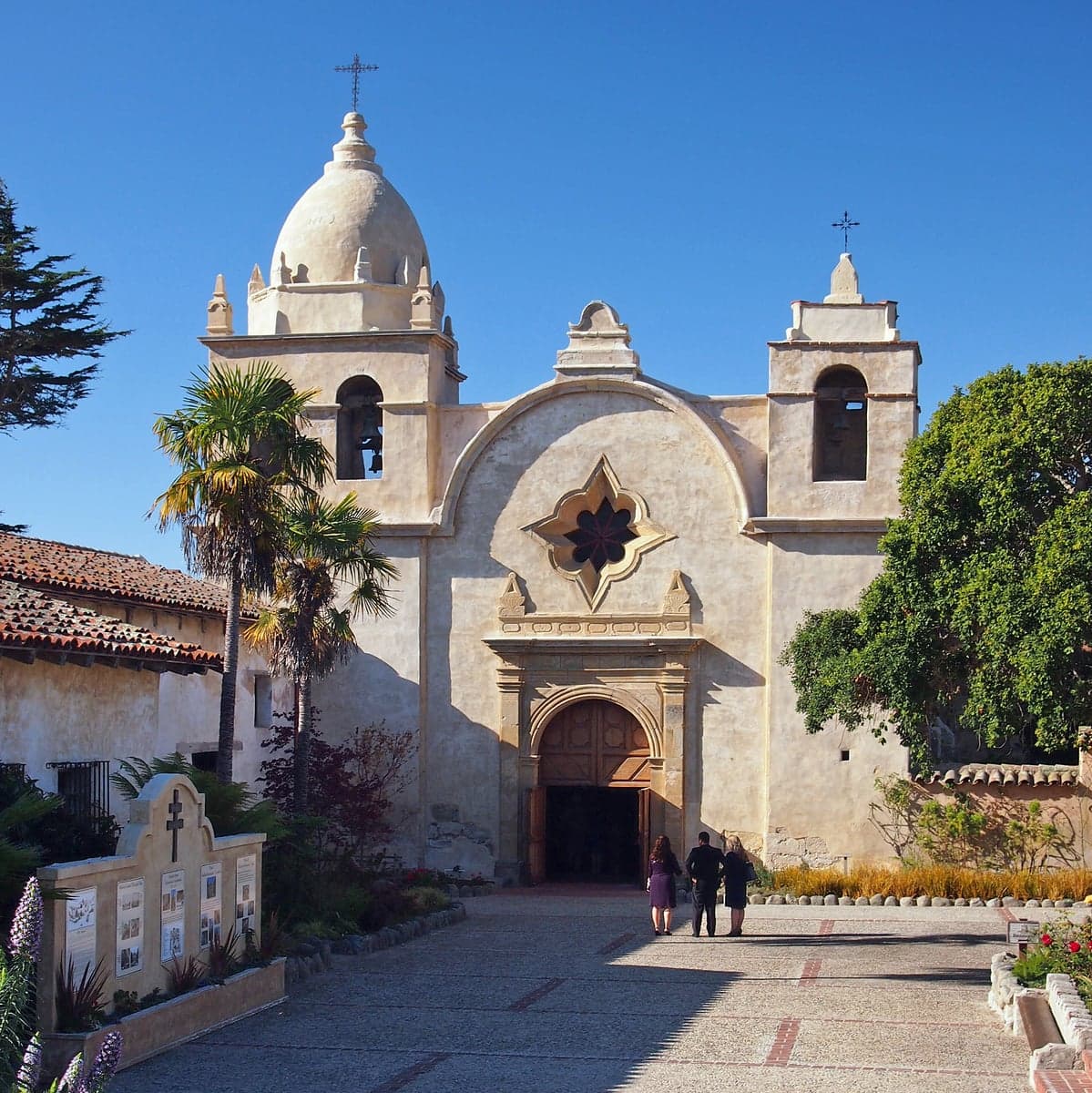
Photo: Wikipedia
Demographics of Carmel-by-the-Sea, CA
Affluence Level in Carmel-by-the-Sea, CA
A wealthy area with high-earning, well-educated households. Incomes, home values, and educational attainment meaningfully outpace national averages.
People of Carmel-by-the-Sea, CA
Today, Carmel-by-the-Sea is a small, affluent enclave of 3,186 residents with a notably homogeneous character. The population is 86.6% white, highly educated (76.0% hold a college degree), and older than the national median, with a foreign-born share of just 7.7%. Its distinctive identity is shaped by a legacy of artists, writers, and wealthy retirees who have long prized the city’s scenic coastline, strict zoning laws (no street addresses, no chain stores), and a fiercely preserved small-town atmosphere.
How the city was settled and grew
Carmel-by-the-Sea was not a product of the Spanish mission or Gold Rush eras. It was founded in 1902 as a planned seaside arts colony by developer Frank Powers, who subdivided the land into small lots and marketed it to San Francisco’s bohemian set. The first wave of settlers were painters, poets, and writers—including Robinson Jeffers and Jack London—who built rustic cottages in what is now the Historic Arts District around Ocean Avenue and San Carlos Street. By the 1910s, a second wave of wealthy San Franciscans arrived, constructing summer homes in the Hatton Fields neighborhood (named for an early developer), drawn by the temperate climate and the newly completed Carmel-San Simeon Highway. The city incorporated in 1916, and through the 1920s and 1930s, the population remained small and overwhelmingly white, with a mix of artists, retired professionals, and service workers. The post-World War II era brought a third wave: returning veterans and their families, many of whom settled in the Mission Fields area near the Carmel Mission, where modest single-family homes were built on larger lots. By 1960, the population had reached roughly 4,500, but the city’s strict building codes and lack of developable land kept growth minimal.
Modern era (post-1965)
The 1965 Hart-Cellar Act had little direct effect on Carmel’s demographics; the city’s high home prices and restrictive zoning discouraged large-scale immigration. Instead, the post-1965 period saw a steady domestic in-migration of affluent retirees and second-home buyers from the San Francisco Bay Area and Southern California. The Carmel Woods neighborhood, a mid-century subdivision of ranch-style homes, absorbed many of these newcomers in the 1970s and 1980s. The city’s Hispanic population grew modestly from near zero to 3.8% today, concentrated among service and hospitality workers, many of whom live in the Carmel Point area (a small coastal neighborhood with older, more affordable rental units). The East/Southeast Asian share (1.6%) and Indian subcontinent share (0.8%) are very small, reflecting the city’s lack of ethnic enclaves and high cost of entry. The Black population remains negligible at 0.8%. Overall, Carmel’s modern era is defined not by diversification but by economic stratification: the wealthy white retiree and second-home owner population has grown, while younger families and middle-income workers have been priced out. The city’s college-educated share (76.0%) is more than double the national average, underscoring its role as a destination for the highly educated and financially secure.
The future
Carmel-by-the-Sea’s population is projected to remain stable or decline slightly over the next 10–20 years, constrained by a near-zero vacancy rate and a median home price exceeding $2 million. The city is becoming less diverse in relative terms: the white share (86.6%) is higher than the county average (Monterey County is 47% white), and the small Hispanic and Asian populations are unlikely to grow significantly without new affordable housing—which the city has resisted. Younger families are increasingly moving to nearby areas like Monterey or Seaside, where housing is more attainable. The cultural identity is evolving from a bohemian arts colony to a luxury retirement and tourism hub, with the Downtown Village (the commercial core along Ocean Avenue) shifting from galleries to high-end boutiques and restaurants. For a new resident, this means moving into a community that is stable, wealthy, and culturally insular—ideal for those seeking quiet, natural beauty, and a like-minded social circle, but challenging for those seeking age or ethnic diversity.
In short, Carmel-by-the-Sea is becoming an increasingly exclusive, predominantly white, and older enclave—a place where demographic change is measured in decades, not years. For a mover today, the city offers a high-quality, low-crime lifestyle in a stunning setting, but with little room for population growth or significant diversification.

* Values derived from national, state, county, city and local statistics and may differ in a specific area. Last updated: 2026-09-02T22:09:17.000Z
Narrative content on this page is AI-generated and may contain mistakes. Verify any details that matter before acting on them.
ReloMaps may earn a commission from affiliate links at no extra cost to you.

