
Photo: Wikipedia
Personal Sovereignty in San Luis Obispo County
Moderate friction. Expect trade-offs in some aspect of personal liberty and independence.
What does Personal Sovereignty tell us?
Personal Sovereignty measures your capacity for self-reliance and independence with minimal government friction. Higher scores mean fewer barriers between you and the way you want to live... but it assumes you have the space you need and good neighbors.
What does this tell us?
Personal Sovereignty measures your capacity for self-reliance and independence with minimal government friction. Higher scores mean fewer barriers between you and the way you want to live... but it assumes you have the space you need and good neighbors.
State Policy
Energy independence: Importer (33% of energy produced in-state)
Personal Liberty
Homesteading

Personal Liberty Analysis
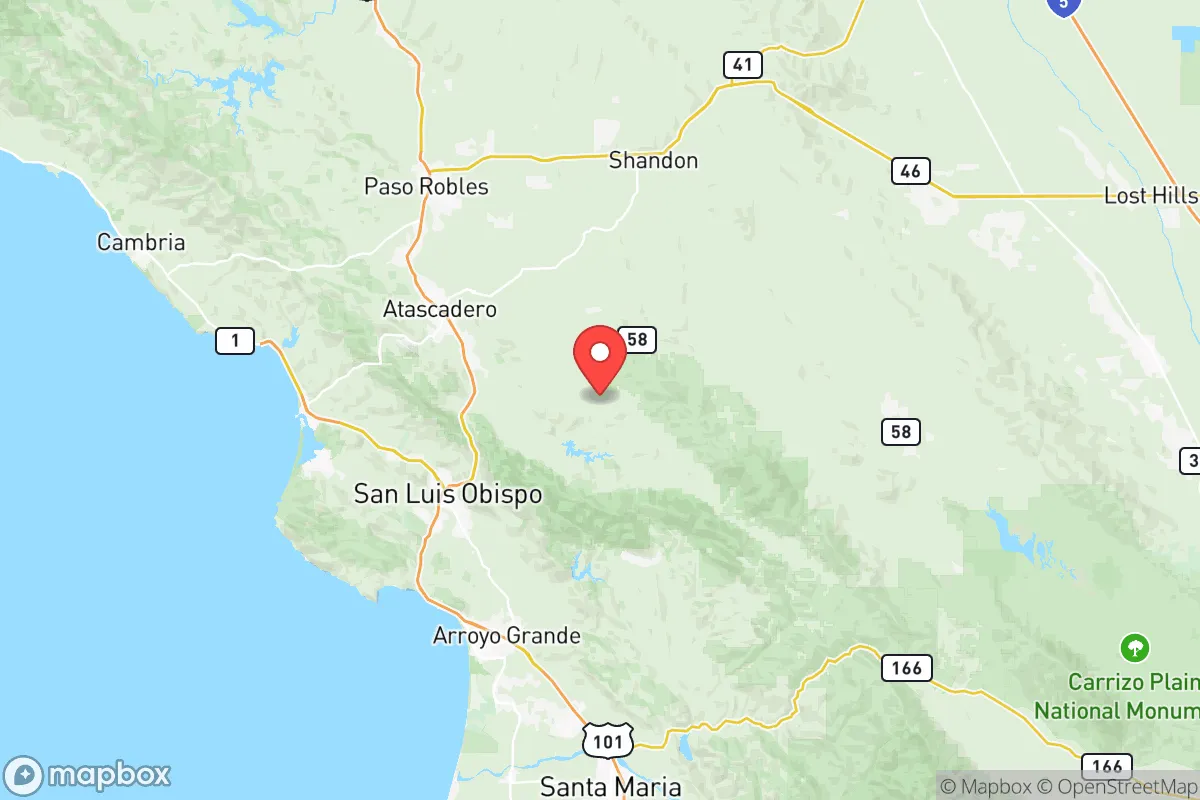
San Luis Obispo County offers a mixed personal sovereignty environment where state-level constraints on taxes, self-defense, and property rights intersect with a locally pragmatic, rural-leaning culture that often prioritizes individual autonomy. While California’s overall regulatory framework is among the nation’s most restrictive, the county’s geography and political diversity create meaningful pockets of freedom—particularly in its inland agricultural and mountain communities. For a conservative-leaning individual or family weighing relocation, the key is understanding where within the county the trade-offs tilt toward personal control versus collective oversight.
Tax burden and regulatory posture across the county
California’s state income tax (top marginal rate of 13.3%) and sales tax (San Luis Obispo County base rate of 7.25%, plus local add-ons reaching 8.75% in cities like San Luis Obispo and Paso Robles) are fixed realities. However, Proposition 13 caps annual property tax increases at 2% of assessed value, providing long-term predictability for homeowners. The county’s regulatory posture varies sharply by jurisdiction. The city of San Luis Obispo enforces a strict urban growth boundary and aggressive climate-action mandates, including natural gas bans on new construction and high impact fees for development. In contrast, unincorporated areas like Templeton and Atascadero operate under lighter county-level oversight, with fewer zoning hurdles for home-based businesses and agricultural uses. The county’s general plan emphasizes agricultural preservation, which limits subdivision density but also protects rural character—a trade-off that appeals to those seeking to avoid suburban sprawl. Business licensing is straightforward for most sole proprietors, though environmental review (CEQA) can add months to any construction project, even for a backyard shed in Los Osos.
Self-defense and gun law specifics in San Luis Obispo County
California’s strict firearm laws—including an assault weapons ban, 10-day waiting period, and ammunition purchase background checks—apply uniformly. However, San Luis Obispo County is a relative outlier in the state for its permissive carry-license issuance. The San Luis Obispo County Sheriff’s Office has historically issued concealed carry permits (CCWs) on a “shall-issue” basis, with approval rates above 90% for applicants who complete training and pass background checks. This stands in contrast to coastal counties like Santa Barbara or Los Angeles, where issuance is far more restrictive. The county’s gun culture is strongest in the rural north and east: Paso Robles and Atascadero host multiple gun shops and shooting ranges, and the annual Paso Robles Gun Show draws regional attendance. In San Luis Obispo city, firearm ownership is less visible but legally protected. Self-defense law in California does not recognize a “stand your ground” doctrine; residents have a duty to retreat if safely possible before using deadly force. Castle doctrine protections apply inside one’s home. For a freedom-minded resident, the practical takeaway is that while state law imposes significant hoops, local enforcement in SLO County is among the most accommodating in California.
Self-reliance and homesteading viability: lot sizes, zoning, and off-grid feasibility
Homesteading viability in San Luis Obispo County depends heavily on location. The county’s agricultural zoning (AG) allows for livestock, crop production, and accessory dwellings on parcels as small as 5 acres in some areas, though 20-acre minimums are common in the Paso Robles wine country and Shandon grasslands. In the North County—including Atascadero and Santa Margarita—rural residential zoning permits chickens, goats, and small-scale farming on 1- to 5-acre lots. Off-grid living is legally challenging: California’s building code requires connection to utility grid or approved alternative systems (solar with battery storage, propane, and permitted septic), and rainwater catchment is legal but must comply with state water rights. The county’s environmental health department enforces strict septic system standards, which can cost $15,000–$30,000 for a new installation. Los Osos, a coastal community, has faced decades of sewer moratoriums that limit new development, making existing off-grid properties there rare and expensive. For those serious about self-reliance, Templeton and Creston offer the best balance of affordable rural land (prices around $20,000–$40,000 per acre) and permissive county zoning for agricultural and residential use. Water access is a critical variable: wells in the Paso Robles Groundwater Basin are subject to pumping fees and sustainability plans, adding regulatory complexity to homesteading.
Personal liberties: parental rights, medical autonomy, speech, and property
California law generally prioritizes state authority over local or parental control in several domains. Parental rights are constrained by mandatory vaccination requirements for school attendance (though medical and personal belief exemptions exist for some vaccines) and by state oversight of homeschooling (parents must file a private school affidavit or enroll in a public charter). Medical autonomy is limited: California has some of the nation’s strictest vaccine mandates for healthcare workers and schoolchildren, and the state’s public health officer retains broad emergency powers. However, San Luis Obispo County’s Board of Supervisors has shown resistance to state overreach—in 2021, it voted to oppose certain COVID-19 mandates, and local health officials have sometimes taken a more measured approach than counterparts in urban counties. Speech and assembly rights are robust, with the county hosting regular political rallies and public comment periods at board meetings. Property rights are the most contested area: California’s coastal commission and local planning departments exert strong control over land use, including short-term rental restrictions in San Luis Obispo city and Morro Bay. In unincorporated areas, property owners face fewer restrictions on fences, sheds, and home occupations, but any structural addition triggers county review. For a family seeking to raise children with minimal government interference, the North County communities—particularly Atascadero and Templeton—offer a more hands-off environment than the coastal or urbanized zones.
Overall, San Luis Obispo County ranks as a moderate-to-high sovereignty area within California, but low relative to states like Texas or Idaho. The county’s inland and northern communities provide a meaningful buffer against the state’s most intrusive policies, particularly on self-defense and land use. For a conservative-leaning individual or family, the best strategy is to target unincorporated areas or small towns like Templeton, Atascadero, or Santa Margarita, where local culture and enforcement practices tilt toward personal autonomy. The trade-off is accepting California’s high tax burden and regulatory baseline in exchange for a mild climate, strong local economy, and a community that largely respects individual choice. For those unwilling to compromise on gun rights, property control, or tax freedom, the county will feel constraining; for those seeking a California location where personal sovereignty is still a living value, it is among the best options in the state.

* Values derived from national, state, county, city and local statistics and may differ in a specific area. Last updated: 2026-09-08T01:46:51.000Z
Narrative content on this page is AI-generated and may contain mistakes. Verify any details that matter before acting on them.
ReloMaps may earn a commission from affiliate links at no extra cost to you.

