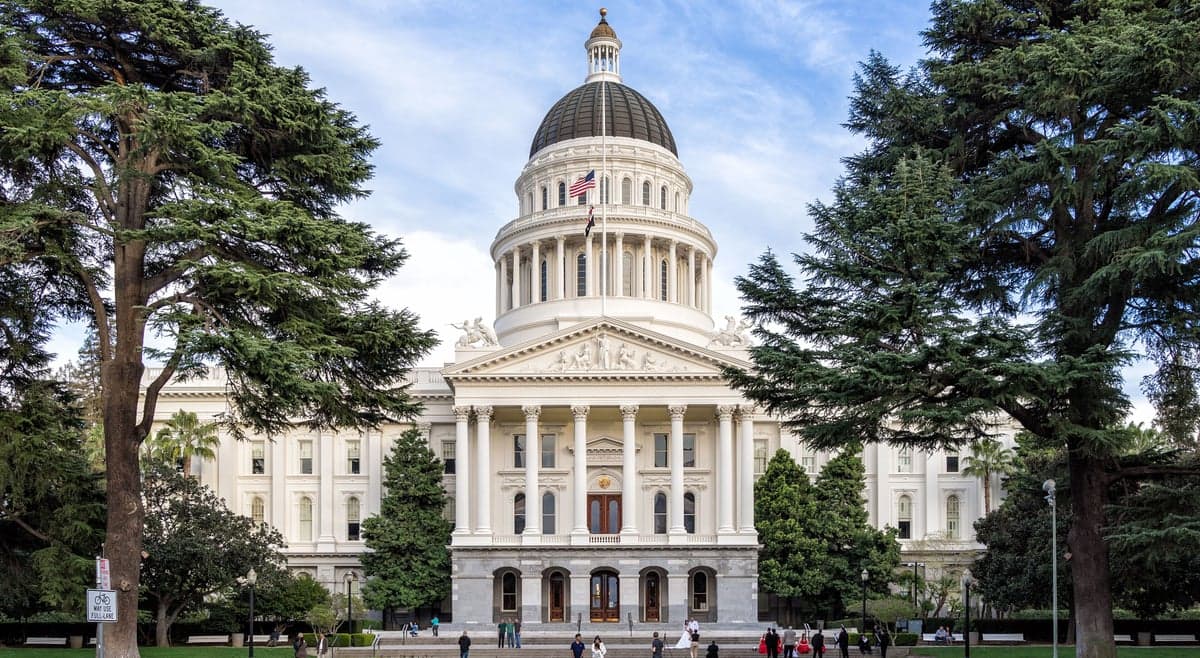
Photo: Wikipedia
Political ClimatePolitical Climate in Sacramento County
Showing district-level results — no local-only data available.
Local Political AnalysisPolitical Analysis of Sacramento County
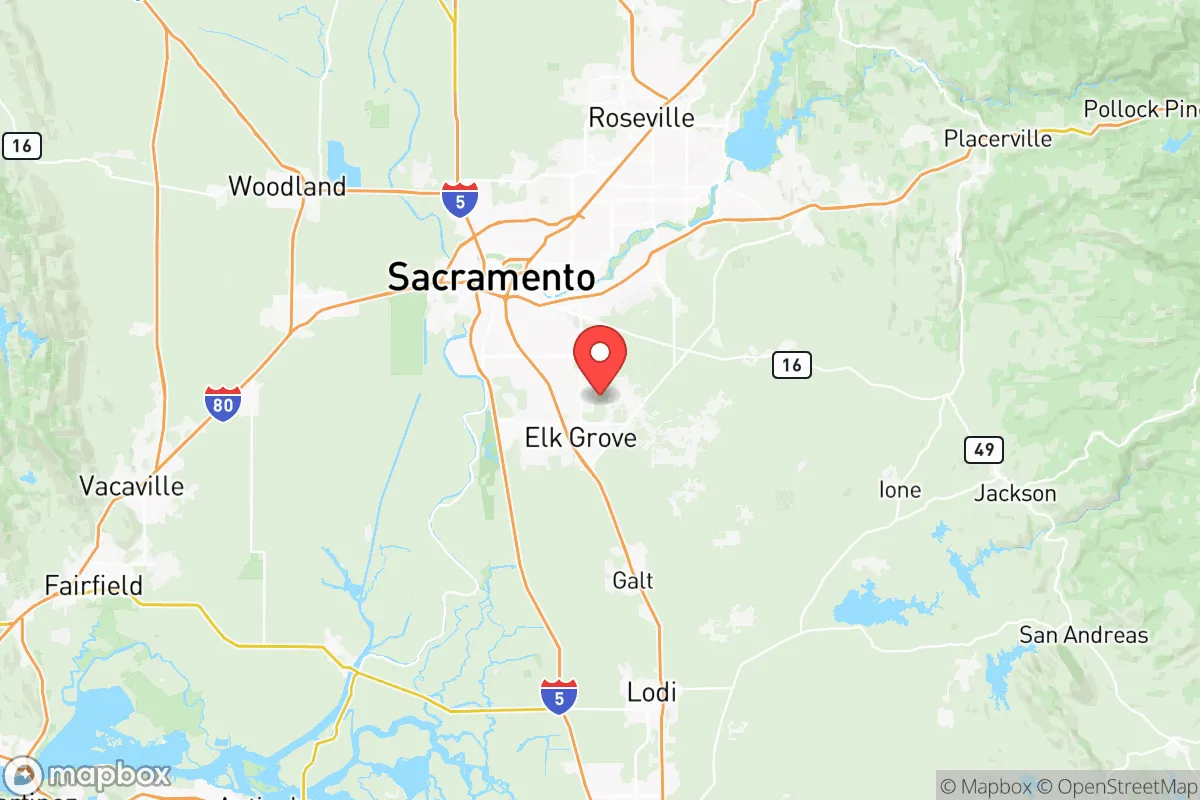
Sacramento County is a solidly Democratic stronghold, with a Cook Partisan Voting Index (PVI) of D+16, making it significantly more liberal than California as a whole, which sits at D+12. This isn't a recent shift; the county has been trending blue for decades, driven by a large public-sector workforce, a growing and diverse urban core, and a strong union presence. While the county as a whole reliably votes Democratic, the margins have tightened slightly in some suburban and rural pockets over the last two presidential cycles, reflecting a broader national trend of urban-rural polarization.
How it compares
The D+16 rating places Sacramento County roughly four points to the left of the state average, a gap that feels wider in practice. This is most apparent in the city of Sacramento itself, where precincts in Midtown, Land Park, and East Sacramento routinely deliver 70-80% of the vote for Democratic candidates. In contrast, the county's more conservative areas—like the unincorporated communities of Elk Grove's southern fringes, the rural outskirts of Wilton, and the foothill-adjacent neighborhoods of Citrus Heights—often vote closer to the state average or even slightly to the right of it. The swing precincts are largely concentrated in the suburban corridor along Highway 50, particularly around Rancho Cordova and Gold River, where a mix of tech workers and military-affiliated families can produce more competitive races. Compared to deep-blue coastal counties like San Francisco (D+45) or Alameda (D+30), Sacramento County is more moderate, but it is still decisively left of the state's overall partisan balance.
What this means for residents
For liberal residents, the political climate is broadly comfortable. Local governance—from the county Board of Supervisors to the Sacramento City Council—is reliably progressive, with strong support for public transit expansion, affordable housing initiatives, and environmental regulations. Conservative residents, however, are not entirely without representation. The county's Republican minority is most visible in the Folsom and El Dorado Hills border areas, where local school board and city council races can be genuinely competitive. In practice, this means a conservative family living in Orangevale might feel out of step with countywide elections but still find their neighborhood's values reflected in local zoning debates or tax measures. The county's political lean also shapes daily life: higher property taxes and a robust social safety net are the norm, but so are traffic congestion and a high cost of living relative to inland California.
Culturally, Sacramento County stands apart from the rest of California in a few key ways. It is the state capital, so politics is a major industry—lobbyists, legislative staff, and state workers form a large, politically engaged middle class. This gives the area a more pragmatic, policy-focused vibe than the activist-driven politics of the Bay Area. The county also has a notable agricultural heritage, particularly in the southern delta towns like Walnut Grove and Isleton, where farming families often hold more conservative views. Over the next decade, expect the county to continue its leftward drift as the urban core densifies and younger, more diverse residents move into suburbs like Natomas and North Sacramento. The wildcard is the growing tech sector in Folsom and Rancho Cordova, which could introduce a more libertarian-leaning electorate that might moderate the county's Democratic dominance on certain fiscal issues.

State Political ClimatePolitical Climate in California
State Political AnalysisPolitical Environment in the State
California leans heavily Democratic, with a Cook PVI of D+12, meaning the state typically votes about 12 points more Democratic than the national average. The dominant coalition — built on coastal urban centers, the tech corridor, and a growing Latino electorate — has consolidated power over the last two decades, pushing the state from a competitive swing state in the 1990s and early 2000s to one of the most reliably blue states in the country. For a conservative relocator, that trajectory means living in a state where your vote carries less weight in presidential elections, where state policy is set by Sacramento Democrats, and where local political power varies widely by county.
Urban vs. rural divide
California's political geography is a sharp coastal-inland split. The Democratic base runs along the coast: San Francisco, Los Angeles, the East Bay, and San Diego deliver huge vote margins. Orange County, once a national symbol of suburban conservatism, flipped decisively blue — Hillary Clinton won it in 2016, and it has stayed Democratic since, driven by Asian American and Latino voters and a growing professional class. Inland, the Central Valley and far north are the GOP's remaining strongholds. Bakersfield (Kern County) votes reliably red — Trump won it by about 20 points in 2024. Redding in Shasta County is another conservative hub, where local clashes over mask mandates and election integrity have been intense. The Inland Empire around Riverside and San Bernardino is more purple, swinging between parties depending on turnout and candidate quality. The practical takeaway: where you live in California determines your political experience more than almost any other state. A conservative in Fresno can find like-minded neighbors and local GOP representation; a conservative in Palo Alto is surrounded by progressive tech culture.
Policy environment
California’s policy posture is the most progressive among large states, which matters deeply for a relocator’s daily life. The state has a graduated income tax that tops out at 13.3% for high earners — the highest in the nation — along with a state sales tax (base 7.25%, often higher with local add-ons) and some of the highest gas taxes. Proposition 13 still limits property tax increases to 2% annually, which rewards long-term homeowners but creates a regressive structure where new buyers pay much more. The regulatory environment is famously dense: California imposes its own environmental review (CEQA), building codes, agricultural worker rules, and vehicle emissions standards that often go beyond federal requirements. Education policy is dominated by the California Teachers Association, a powerful union; school funding is high but outcomes are uneven, with wealthy coastal districts performing well and Central Valley districts struggling. Healthcare policy includes a state-run exchange (Covered California) and expansions of Medi-Cal coverage to most low-income adults regardless of immigration status. Election laws are among the most liberal: universal vote-by-mail (every registered voter gets a ballot), same-day registration, and no-excuse early voting. The state also permits "ballot harvesting" — anyone can return a completed ballot for another voter — a practice conservatives frequently criticize for weak chain-of-custody protections.
Recent policy direction
The last five years have pushed California further left on most fronts, with a few notable exceptions. On gun and self-defense law, the state passed SB 2 (2023), which sharply restricts where concealed carry permits are valid — including bars, parks, and most public gatherings — and SB 1384, which expands California's "red flag" law allowing courts to temporarily remove firearms from individuals deemed a threat. These build on the state's existing assault weapons ban (Roberti-Roos Act, 1989) and the 10-day waiting period. On parental and education rights, the most controversial recent move was AB 1955 (2024), which prohibits school districts from requiring staff to notify parents if a child changes their gender identity — effectively overriding local parental notification policies in conservative districts like Temecula and Chino Valley. On speech and privacy, the California Consumer Privacy Act (CCPA, 2018) and its expansion (CPRA) give residents strong data privacy protections, but the state has also considered laws targeting online hate speech and disinformation, raising free speech concerns for some. On medical and bodily autonomy, voters enshrined abortion access in the state constitution via Proposition 1 (2022), and California has positioned itself as a sanctuary for out-of-state patients seeking gender-affirming care for minors — a flashpoint in national politics. On property rights, AB 1482 (2019) capped annual rent increases at 5% plus inflation statewide, and recent proposals have targeted single-family zoning in favor of higher density, particularly near transit. On voting and ballot access, the Voter's Choice Act (2016) expanded mail voting and drop boxes, while SB 450 (2016) codified ballot harvesting. The net direction: California is moving aggressively to expand state control over guns, local education decisions, and landlord property discretion, while simultaneously expanding personal privacy rights and medical autonomy.
Civil unrest & political movements
California has been a major stage for civil unrest on both sides. The 2020 George Floyd protests in Los Angeles, Oakland, and San Francisco were among the largest and most destructive in the country, with widespread property damage and clashes with police. The state's homeless encampment crisis — concentrated in San Francisco's Tenderloin, Los Angeles's Skid Row, and Sacramento's W/X corridors — has spawned local movements pushing for encampment sweeps and treatment mandates, with the state legislature recently passing stricter encampment clearance laws. Immigration politics are a constant flashpoint: California's sanctuary law (SB 54, 2017) limits local law enforcement from cooperating with federal immigration authorities, and several counties including Riverside and Orange have attempted to opt out or resist. There is a small but persistent secessionist movement — "Calexit" — though it has
* Values derived from national, state, county, city and local statistics and may differ in a specific area. Last updated: 2026-06-24T23:08:21.000Z
Narrative content on this page is AI-generated and may contain mistakes. Verify any details that matter before acting on them.
ReloMaps may earn a commission from affiliate links at no extra cost to you.

