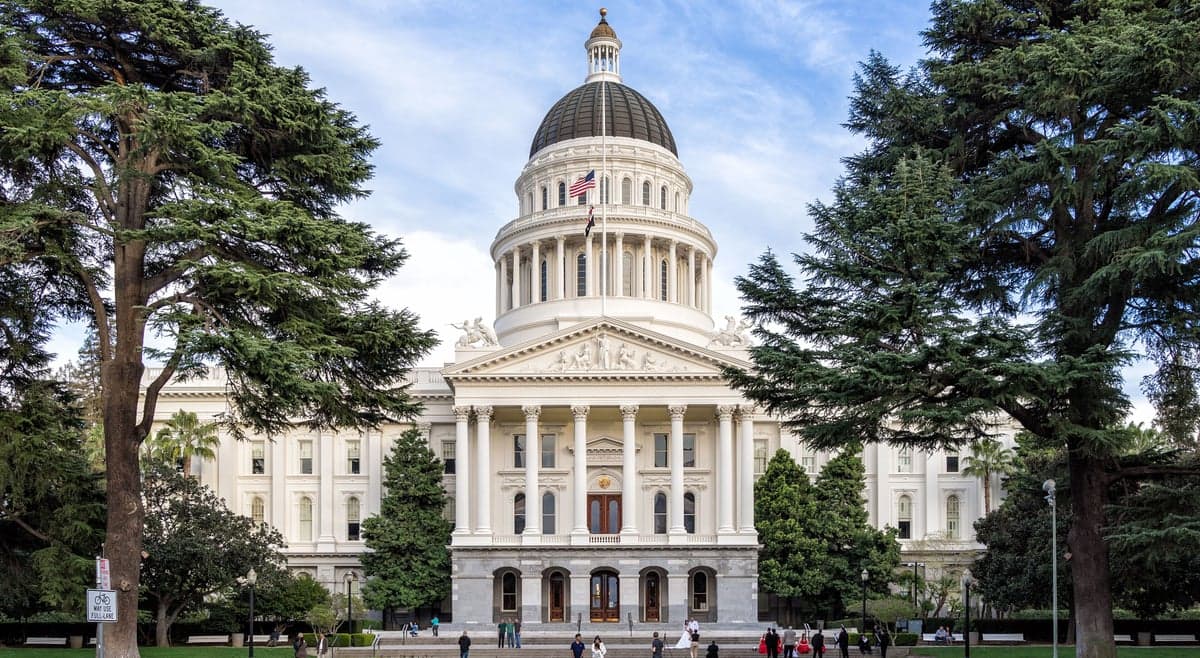
Photo: Wikipedia
Personal Sovereignty in Sacramento County
Viable for self-reliance. Generally workable, though some barriers may limit total independence.
What does Personal Sovereignty tell us?
Personal Sovereignty measures your capacity for self-reliance and independence with minimal government friction. Higher scores mean fewer barriers between you and the way you want to live... but it assumes you have the space you need and good neighbors.
What does this tell us?
Personal Sovereignty measures your capacity for self-reliance and independence with minimal government friction. Higher scores mean fewer barriers between you and the way you want to live... but it assumes you have the space you need and good neighbors.
State Policy
Energy independence: Importer (33% of energy produced in-state)
Personal Liberty
Homesteading

Personal Liberty Analysis
Sacramento County presents a mixed picture for personal sovereignty, where state-level constraints on taxes, gun rights, and land use intersect with local pockets of self-reliance and a generally moderate regulatory posture compared to coastal California. The county's autonomy environment is shaped by a high state tax burden and progressive gun laws, but tempered by relatively permissive zoning in unincorporated areas and a growing homesteading movement in its rural eastern and southern reaches. For a conservative-leaning individual or family weighing relocation, the key trade-off is between the economic and cultural freedoms found in places like Sloughhouse, Wilton, and Herald versus the denser, more regulated experience of Sacramento city proper, Citrus Heights, or Rancho Cordova.
Tax burden and regulatory posture: what you pay and what you can do
California's state income tax, which tops out at 13.3%, and its 7.25% base sales tax (higher in Sacramento city at 8.75%) create a heavy baseline burden that Sacramento County cannot opt out of. Property taxes are capped at 1% of assessed value under Proposition 13, but annual increases and local parcel taxes add to the load. The county's regulatory posture is moderate by California standards: the Sacramento County Planning and Environmental Review Department enforces state environmental and building codes, but unincorporated areas like Sloughhouse and Herald face fewer land-use restrictions than cities. For example, accessory dwelling units (ADUs) are permitted by right statewide, but Sacramento County's zoning code allows for larger lot sizes and fewer conditional use permits than in Rancho Cordova or Elk Grove. Business owners face a 8.84% corporate income tax and a complex permitting process, though the county's "Permit Sacramento" portal has streamlined some steps. Overall, the tax and regulatory environment is heavy relative to Texas or Florida, but lighter than the Bay Area or Los Angeles County.
Self-defense and gun law specifics: what you can own and where you can carry
California's strict gun laws apply fully in Sacramento County, including a ban on assault weapons, a 10-day waiting period, and a requirement for a Firearm Safety Certificate to purchase. The county is a "may-issue" jurisdiction for concealed carry permits (CCWs), meaning the sheriff has discretion; Sacramento County Sheriff Jim Cooper has historically been more permissive than urban counterparts, with approval rates around 70-80% for applicants who complete training and demonstrate good cause. However, the 2022 Supreme Court decision in NYSRPA v. Bruen has pressured the state to loosen "good cause" requirements, and as of 2025, Sacramento County processes CCW applications within 90-120 days. Open carry is prohibited. Self-defense in the home is legally protected under the state's "castle doctrine," but there is no "stand your ground" law; a duty to retreat applies in public spaces. Gun-friendly culture is strongest in rural areas like Wilton and Herald, where shooting ranges and hunting are common, while Sacramento city and Citrus Heights have more restrictive local ordinances on discharge of firearms. Magazine capacity is limited to 10 rounds statewide.
Self-reliance and homesteading viability: lot sizes, zoning, and off-grid feasibility
Homesteading viability varies dramatically across Sacramento County. In unincorporated areas zoned AG (Agricultural) or AR (Agricultural Residential), minimum lot sizes range from 1 to 20 acres, with Sloughhouse and Herald offering 5-20 acre parcels suitable for small-scale farming, livestock, and gardening. The county allows for keeping chickens, goats, and up to two cows on parcels of 1 acre or more, though permits are required for structures like barns. Off-grid living is legally challenging: California's building code requires connection to the electrical grid or a permitted solar/battery system, and water must come from a permitted well or municipal supply. Composting toilets are allowed under state Title 22 regulations, but septic systems require county health department approval. Wilton and Rancho Murieta have active homesteading communities with shared resources like tool libraries and seed swaps. In contrast, Sacramento city, Elk Grove, and Rancho Cordova have suburban lot sizes of 0.1-0.25 acres, restrictive HOA covenants, and bans on livestock. For those seeking true self-reliance, the eastern and southern edges of the county are the only viable options.
Personal liberties: parental rights, medical autonomy, speech, and property
Parental rights in California are protected under state law but limited by mandates: children must attend school from age 6 to 18, and homeschooling requires filing a private school affidavit or enrolling in a public charter school. Sacramento County has a robust network of charter schools and homeschool co-ops, particularly in Fair Oaks and Orangevale, offering flexibility for families. Medical autonomy is constrained by California's vaccine mandates for school attendance and healthcare workers, though exemptions exist for medical reasons. The state's "Right to Die" law (End of Life Option Act) allows medical aid in dying for terminally ill patients. Free speech is broadly protected, though Sacramento County has local ordinances restricting camping on public property and aggressive panhandling. Property rights are strong under Proposition 13's tax protections, but the state's coastal commission and environmental review processes can delay development. The county's rent control ordinance, passed in 2019, caps annual rent increases at 5% plus inflation for older units, limiting landlord autonomy. Overall, personal liberties in Sacramento County are moderate: less constrained than in San Francisco, but more regulated than in most of the Mountain West or Texas.
Compared to other areas of California, Sacramento County offers a relatively balanced sovereignty environment — heavier taxes and gun restrictions than the Central Valley's more rural counties like Yuba or Sutter, but more homesteading and self-defense flexibility than the Bay Area or Los Angeles. For a conservative-leaning individual or family, the best path to personal autonomy lies in the county's unincorporated eastern and southern communities, where larger lots, a gun-friendly culture, and a growing self-reliance movement provide a tangible escape from the state's regulatory reach. The trade-off is accepting California's high tax burden and progressive state laws in exchange for proximity to jobs, schools, and healthcare in a region that still allows room to live on your own terms.

* Values derived from national, state, county, city and local statistics and may differ in a specific area. Last updated: 2026-06-24T23:08:21.000Z
Narrative content on this page is AI-generated and may contain mistakes. Verify any details that matter before acting on them.
ReloMaps may earn a commission from affiliate links at no extra cost to you.

