
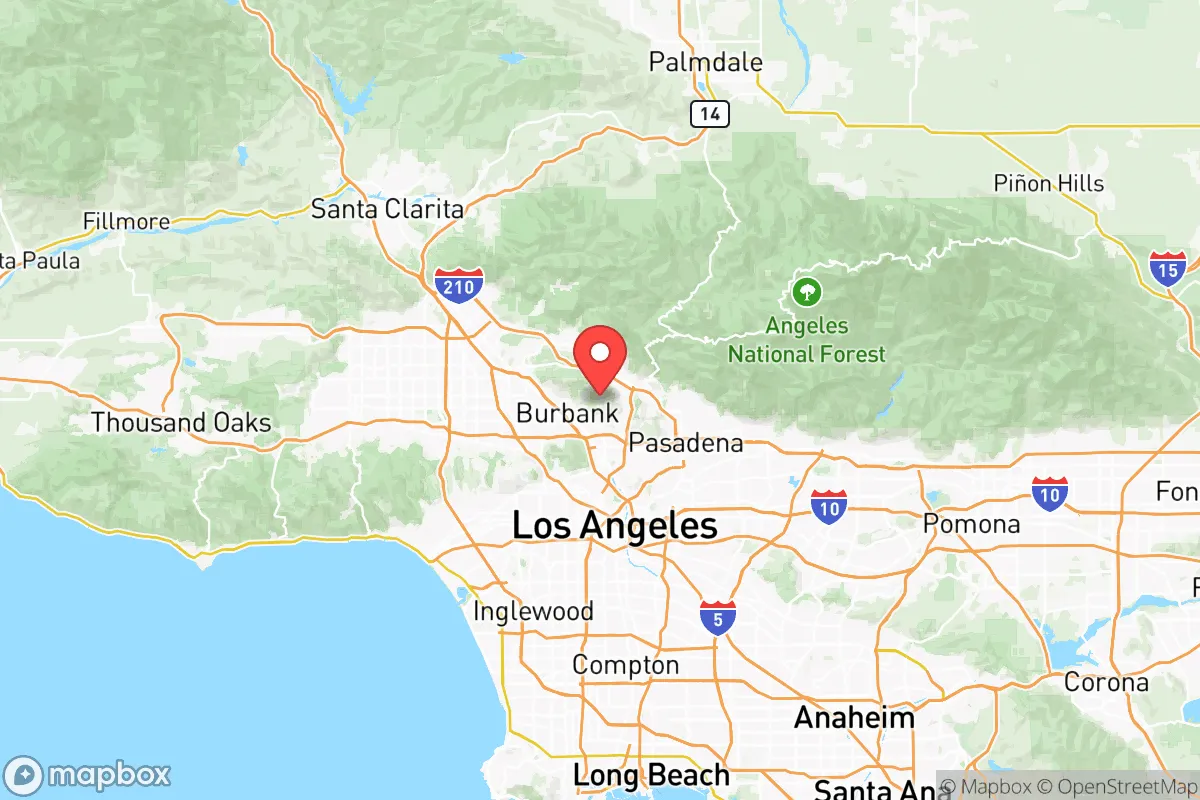
Photo: Wikipedia
Personal Sovereignty in Los Angeles County
Viable for self-reliance. Generally workable, though some barriers may limit total independence.
What does Personal Sovereignty tell us?
Personal Sovereignty measures your capacity for self-reliance and independence with minimal government friction. Higher scores mean fewer barriers between you and the way you want to live... but it assumes you have the space you need and good neighbors.
What does this tell us?
Personal Sovereignty measures your capacity for self-reliance and independence with minimal government friction. Higher scores mean fewer barriers between you and the way you want to live... but it assumes you have the space you need and good neighbors.
State Policy
Energy independence: Importer (33% of energy produced in-state)
Personal Liberty
Homesteading

Personal Liberty Analysis
Los Angeles County presents one of the most heavily regulated and high-tax environments for personal sovereignty in the United States, with a dense web of state and local controls that significantly constrain individual autonomy in housing, business, self-defense, and daily life. The county's 10 million residents operate under California's strictest county-level enforcement of building codes, environmental regulations, and land-use restrictions, creating a landscape where personal freedom is often secondary to collective governance. For a relocation-minded individual or family prioritizing independence, the trade-offs are stark: access to economic opportunity and cultural amenities comes at the cost of navigating one of the nation's most intrusive regulatory systems.
Tax burden and regulatory posture across Los Angeles County
California's state income tax tops out at 13.3% on high earners, and Los Angeles County adds a 0.25% sales tax on top of the state's 7.25% base, pushing combined rates to 10.25% in most cities like Los Angeles, Long Beach, and Glendale. Property taxes are capped at 1% of assessed value under Proposition 13, but effective rates can climb with Mello-Roos community facility districts and parcel taxes, particularly in newer developments in Santa Clarita and Palmdale. The county's regulatory posture is among the densest nationally: obtaining a building permit for a simple addition in unincorporated areas or cities like Santa Monica can take 6-12 months due to environmental review requirements under the California Environmental Quality Act (CEQA). Business formation requires navigating state-level franchise taxes ($800 minimum annually) and county-level business licenses that vary by city — Los Angeles city charges a gross receipts tax that can exceed $5,000 for mid-sized enterprises. The regulatory burden is lighter in outlying cities like Lancaster and Palmdale, where local governments have pursued more business-friendly policies, but state-level constraints on housing production and land use remain uniform across the county.
Self-defense rights and gun law specifics in Los Angeles County
California's gun laws are among the strictest in the nation, and Los Angeles County enforces them with particular rigor. The county requires a 10-day waiting period for all firearm purchases, a state-mandated safety certificate, and registration with the California Department of Justice. The county's sheriff, Robert Luna, has maintained a "may issue" policy for concealed carry permits (CCWs) that, while somewhat liberalized after the Supreme Court's Bruen decision in 2022, still imposes 16 hours of training, a live-fire qualification, and a good cause statement that is more restrictive than in rural California counties. As of 2025, the county's CCW issuance rate remains below 1% of adults, compared to over 5% in counties like Tulare or Shasta. The county also bans the possession of assault weapons and large-capacity magazines (over 10 rounds) under state law, with local ordinances in Los Angeles city and Santa Monica adding further restrictions on where firearms can be carried, including parks and public buildings. Self-defense with a firearm in the home is legally protected under California's "castle doctrine," but the state's "duty to retreat" in public spaces — even for CCW holders — significantly limits defensive options outside the home. For those prioritizing armed self-defense, the regulatory environment in Los Angeles County is among the most restrictive in the country, with only San Francisco and New York City imposing comparable barriers.
Self-reliance and homesteading viability: lot sizes, zoning, and off-grid feasibility
Homesteading and off-grid living are effectively impossible within most of Los Angeles County due to extreme zoning density and building code requirements. Minimum lot sizes in incorporated cities like Los Angeles, Burbank, and Pasadena are typically 5,000 to 7,500 square feet for single-family homes, with many areas zoned for multi-family development that precludes agricultural use. The county's building code requires connection to municipal water and sewer systems in virtually all urbanized areas, making off-grid water collection or septic systems illegal without variances that are rarely granted. In the Antelope Valley cities of Lancaster and Palmdale, however, larger lots of 1 to 5 acres are available in rural residential zones, and some properties in unincorporated areas like Acton, Agua Dulce, and the high desert near Littlerock allow for well water and septic systems with county health department approval. Raising livestock — chickens, goats, or bees — is permitted in most unincorporated areas and in cities like Lancaster with agricultural zoning, but Los Angeles city and most coastal suburbs prohibit farm animals entirely. Solar panel installation is widely permitted but requires building permits and interconnection agreements with utilities like LADWP or Southern California Edison, and battery storage for true off-grid capability is heavily regulated under fire codes. For serious homesteading, the Antelope Valley and northern county areas offer the best prospects, but even there, state water rights laws and county health regulations impose significant hurdles to full self-sufficiency.
Personal liberties: parental rights, medical autonomy, speech, and property
California law grants broad parental rights in education, including the ability to opt children out of sex education and homeschool under the state's private school affidavit system, which requires filing with the California Department of Education but no direct county oversight. Los Angeles County's school districts, including LAUSD and Long Beach Unified, have implemented LGBTQ+ inclusive curricula and gender identity support policies that some parents find conflict with their values, though parental opt-out rights for specific lessons remain legally protected. Medical autonomy is constrained by California's mandatory vaccination laws for school attendance — only medical exemptions are permitted, with no personal belief exemptions — and by the state's strict regulation of alternative medicine and supplement sales. Free speech protections are robust under the California Constitution, but Los Angeles County enforces content-neutral time, place, and manner restrictions on public demonstrations, and the city of Los Angeles requires permits for gatherings of 50 or more people in public parks. Property rights are significantly limited by the California Coastal Commission's jurisdiction over development within the coastal zone (much of western LA County), and by local rent control ordinances in Los Angeles, Santa Monica, and West Hollywood that restrict landlords' ability to set market rates. The county's tenant protection laws — including just-cause eviction requirements and relocation assistance mandates — further constrain property owners' autonomy. For those who value maximum personal liberty in medical decisions, property use, and parental control, Los Angeles County ranks among the most restrictive jurisdictions in the United States.
Overall, Los Angeles County offers one of the lowest levels of personal sovereignty of any major metropolitan area in the country, comparable to New York City and San Francisco in its regulatory density and tax burden. For a relocation-minded individual or family prioritizing independence, the county's outlying areas — particularly the Antelope Valley cities of Lancaster and Palmdale, and unincorporated high desert communities like Acton and Agua Dulce — provide marginally more room for self-reliance, with larger lots, fewer zoning restrictions, and more permissive attitudes toward firearms and homesteading. However, even these areas remain subject to California's state-level constraints on taxes, gun laws, and land use, meaning that true personal sovereignty is better found in states like Texas, Idaho, or Arizona. Los Angeles County is best suited for those who value economic opportunity, cultural diversity, and progressive governance over individual autonomy and self-determination.

* Values derived from national, state, county, city and local statistics and may differ in a specific area. Last updated: 2026-07-17T02:38:06.000Z
Narrative content on this page is AI-generated and may contain mistakes. Verify any details that matter before acting on them.
ReloMaps may earn a commission from affiliate links at no extra cost to you.

