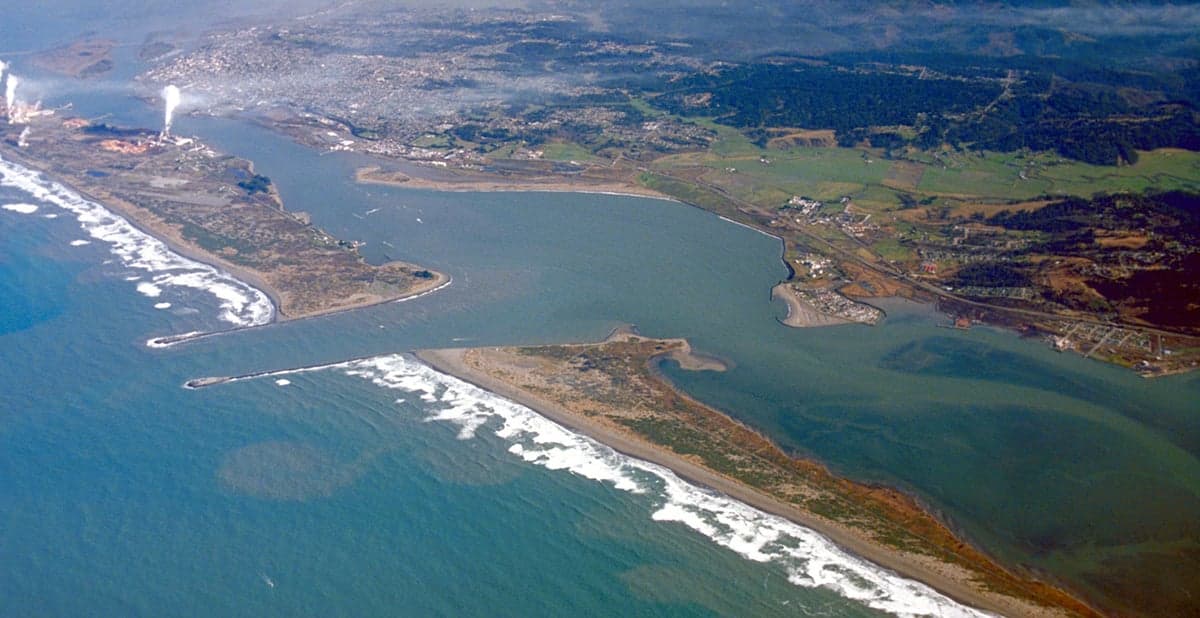
Photo: Wikipedia
Political ClimatePolitical Climate in Humboldt County
Showing district-level results — no local-only data available.
Local Political AnalysisPolitical Analysis of Humboldt County
Humboldt County is a deep blue stronghold in a deep blue state, carrying a Cook Partisan Voting Index of D+24 that makes it one of the most reliably Democratic areas in California. But that blanket label hides a more complicated reality: the county's politics are split sharply between the liberal coastal towns and the more conservative inland communities, and the overall trajectory has been a slow, steady shift leftward over the past two decades. If you're moving here, you need to understand that the "Humboldt" you see on a map isn't one political animal — it's several, and they don't always get along.
How it compares
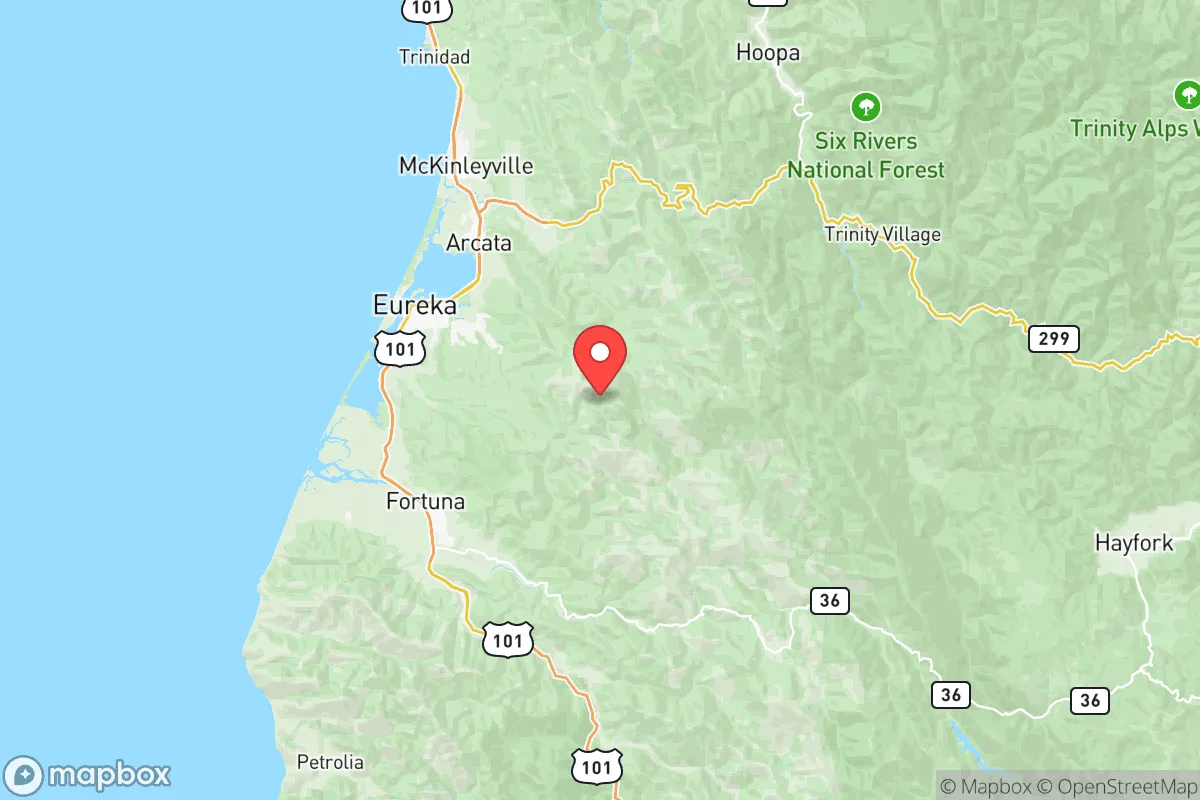
Compared to California as a whole, Humboldt County is significantly more Democratic than the state average. While California's statewide PVI is roughly D+13, Humboldt's D+24 puts it in the same league as San Francisco (D+26) or Marin County (D+23). But the comparison gets interesting when you look inside the county. Arcata is the epicenter of progressive politics, home to Humboldt State University (now Cal Poly Humboldt) and a student-heavy population that regularly votes 80%+ Democratic. Eureka, the county seat, is more moderate but still reliably blue, with working-class and government-employee voters who lean Democratic but aren't as far left as Arcata. Fortuna and Rio Dell are the conservative outliers, often voting 55-60% Republican in local races, driven by timber industry families and rural ranching communities. The swing precincts are in the unincorporated areas around McKinleyville and the rural coastal strip south of Eureka, where independent voters can tip a close race. In 2024, the county voted for the Democratic presidential candidate by about 35 points, but the Fortuna City Council races were won by Republicans by single digits.
What this means for residents
For liberal residents, Humboldt County offers a comfortable political home where progressive policies on housing, environmental regulation, and cannabis legalization are the norm. The county government has been a national leader in marijuana regulation, and local initiatives on rent control and coastal protection pass easily. For conservative residents, the political reality is more challenging. You'll find your views are a minority in countywide elections, but you'll have strong local representation in Fortuna and Rio Dell, and the county's Republican Party is active and vocal. The practical impact is that property taxes remain relatively low by California standards (the county has a lower effective rate than the state average), and the timber industry still has significant influence over land-use decisions in the eastern part of the county. The biggest cultural friction point is cannabis: the industry is a major economic driver and politically untouchable in Arcata and Eureka, but it's a source of resentment in Fortuna, where residents complain about odor, crime, and water usage from large grows.
The most distinctive political feature of Humboldt County is its fierce independence from Sacramento. Voters here are deeply skeptical of state government, even when they agree with its policies. You'll hear locals complain about state water regulations, housing mandates, and environmental rules from both sides of the aisle. The county's Board of Supervisors has a long history of defying state orders on everything from timber harvesting to homeless encampment sweeps. This isn't a place where party labels tell you everything — it's a place where local identity and a "don't tread on me" attitude cut across the usual partisan lines. If you're moving here, expect a political culture that's proudly weird, stubbornly local, and far more nuanced than the D+24 label suggests.

State Political ClimatePolitical Climate in California
State Political AnalysisPolitical Environment in the State
California is a deeply blue state where Democrats hold every statewide office and supermajorities in both legislative chambers, but its reputation as a monolithic liberal monolith oversimplifies a far more complex reality. The state hasn’t voted Republican in a presidential race since 1988, and in 2024, Kamala Harris carried it by roughly 20 points. However, that top-line number masks a decade-long rightward drift in many inland and rural areas, even as coastal metros have hardened their progressive stances. For a conservative-leaning relocator, the practical takeaway is that California offers starkly different political experiences depending on where you land—from deep-blue San Francisco and Los Angeles to purple-leaning San Diego and the increasingly red interior around Bakersfield and Redding.
Urban vs. rural divide
The political map of California is a tale of two states. The coastal corridor from San Francisco down through Los Angeles and San Diego generates the bulk of Democratic votes, with San Francisco County delivering 85% of its vote to Biden in 2020 and Los Angeles County around 71%. In contrast, the Central Valley and inland regions—places like Bakersfield (Kern County) and Redding (Shasta County)—vote reliably Republican, often by 20-30 point margins. The Inland Empire around Riverside and San Bernardino has become a key battleground; these counties flipped from blue to red in the 2020s as working-class and Latino voters shifted right, with San Bernardino County voting for Trump in 2024 after backing Clinton in 2016. Even within blue metros, suburbs like Orange County—once a GOP stronghold—have trended purple, with Democrats now holding most congressional seats there, though the county still elects Republican supervisors in its more conservative southern cities like Mission Viejo.
Policy environment
California’s state-level policies are among the most progressive in the nation, which directly impacts daily life for residents. The state has a progressive income tax with a top marginal rate of 13.3% (the highest in the U.S.), a statewide sales tax of 7.25% (with local add-ons pushing it to 10.25% in many cities), and some of the highest gas taxes in the country—currently about 68 cents per gallon. Property taxes are capped at 1% of assessed value plus inflation under Proposition 13, but recent measures like Proposition 19 (2020) have tightened inheritance exemptions, making it harder to pass property tax breaks to heirs. On education, California spends roughly $23,000 per student (above the national average) but ranks near the bottom in test scores; school choice is limited, with charter school growth stalled by recent legislation. Healthcare is heavily regulated, with the state running its own insurance exchange (Covered California) and expanding Medi-Cal to all low-income adults regardless of immigration status. Election laws are among the most accessible in the country: universal mail-in voting was made permanent in 2021, same-day registration is available, and the state has no voter ID requirement—a point of contention for conservatives who argue it undermines election integrity.
Recent policy direction
Over the past five years, California has moved decisively left on several fronts that matter to relocators weighing personal freedoms. On gun rights, the state already had some of the strictest laws in the nation, but 2023’s SB 2 effectively banned carrying firearms in most public places, including parks and hospitals, and raised the minimum age for concealed carry to 21—a law currently tied up in federal court. On parental rights, AB 1955 (2024) prohibits school districts from requiring staff to notify parents if a child changes their gender identity, a direct response to conservative school board protests. On speech, the state has passed laws targeting hate speech and disinformation, but also faced criticism for AB 587 (2023), which requires social media platforms to report their content moderation policies—a law critics call a backdoor to censorship. Medical and bodily autonomy is broadly protected: California enshrined abortion rights in the state constitution via Proposition 1 (2022) and has become a sanctuary for transgender youth, with laws blocking out-of-state subpoenas for gender-affirming care. Property rights are constrained by strict rent control (AB 1482 caps annual increases at 5% plus inflation) and a housing crisis that has led to state preemption of local zoning in some cases. On taxation, voters rejected a split-roll property tax increase in 2020 (Proposition 15), but the state continues to explore wealth taxes on high-net-worth individuals. Ballot access remains wide open, with no voter ID and automatic voter registration, though conservatives point to concerns about non-citizen voting in local elections (San Francisco and Oakland now allow it for school board).
Civil unrest & political movements
California has been a flashpoint for both left- and right-wing activism. The 2020 George Floyd protests in Los Angeles and Oakland were among the largest and most destructive in the nation, with billions in property damage and ongoing debates over police reform. The state’s sanctuary laws—SB 54 (2017) limits local law enforcement cooperation with federal immigration authorities—have made it a target for conservative criticism, especially after the 2023 surge in border crossings. On the right, the “State of Jefferson” movement in far-northern counties like Shasta and Siskiyou continues to advocate for secession, though it remains a fringe effort. Election integrity controversies flared in 2020 and 2022, with Republican activists challenging mail-in ballot procedures in court, but no widespread fraud was ever proven. More recently, the 2024 recall attempt against Governor Gavin Newsom failed to gather enough signatures, but the 2021 recall (which he survived by a 62-38 margin) showed that even in a blue state, a Republican could come close in a low-turnout election. A new resident would notice visible homelessness encampments in every major city—a direct result of policy battles over housing and mental health—and frequent protests outside state buildings in Sacramento on issues from abortion to water rights.
Projection
Over the next 5-10 years, California’s political trajectory points toward continued Democratic dominance at the state level, but with growing internal friction. Demographic trends—an aging white population, declining birth rates among native-born residents, and continued immigration from Asia and Latin America—favor Democrats, but the state is also losing net domestic migrants to Texas, Arizona, and Nevada, many of whom are moderate or conservative. This out-migration is concentrated among middle-class families and small-business owners, which could further skew the electorate leftward. However, the rightward shift in the Central Valley and Inland Empire suggests that Republicans may gain a few more congressional seats in 2026 and 2028, especially if the state’s independent redistricting commission draws fair maps. The biggest wildcard is housing: if the state fails to build enough units, the cost of living will continue to drive out moderates, leaving a more polarized electorate. A new resident moving in now should expect to live under a unified Democratic government for the foreseeable future, but with a legislature that is increasingly divided between coastal progressives and inland moderates—meaning some policies (like rent control or environmental regulations) may see more compromise than headlines suggest.
For a conservative-leaning relocator, the bottom line is that California offers a high degree of personal freedom in some areas (medical autonomy, privacy, speech) but heavy regulation in others (taxes, gun rights, property use). You can find a political community that matches your values—whether that’s a red enclave like Bakersfield or a purple suburb like San Diego—but you will be living under state laws that are often at odds with those values. The practical takeaway: if you can afford the cost of living and are comfortable with a blue state government that leaves local pockets of red alone, California can work. But if you want a state where your vote consistently aligns with the majority, you’ll need to look elsewhere.
* Values derived from national, state, county, city and local statistics and may differ in a specific area. Last updated: 2026-09-08T18:54:06.000Z
Narrative content on this page is AI-generated and may contain mistakes. Verify any details that matter before acting on them.
ReloMaps may earn a commission from affiliate links at no extra cost to you.

