Photo: Wikipedia
Demographics of Humboldt County
Affluence Level in Humboldt County
A middle-class area roughly in line with national averages across income, home values, education, and employment.
People of Humboldt County
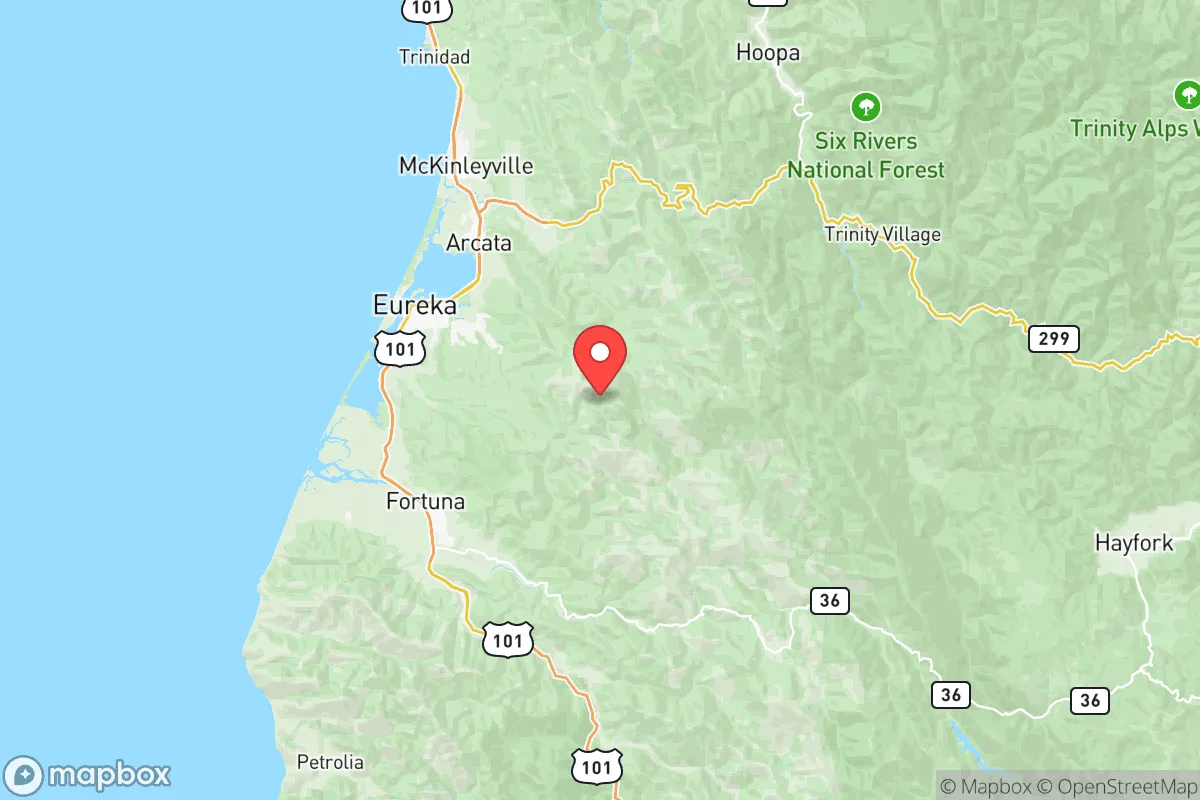
Humboldt County’s 135,418 residents today form one of California’s most distinctive populations: overwhelmingly white (70.2%) and native-born (only 3.0% foreign-born), with a significant Hispanic minority (13.8%) and small but visible East/Southeast Asian (2.7%) and Black (1.1%) communities. The county is simultaneously rural and countercultural, shaped by a legacy of timber, fishing, and cannabis economies, and marked by a deep strain of environmentalism and libertarian independence. Its people are notably less diverse than California as a whole, and the population has been essentially flat for decades, creating a stable but aging demographic profile centered on the cities of Eureka, Arcata, and Fortuna.
Settlement & growth (pre-1960)
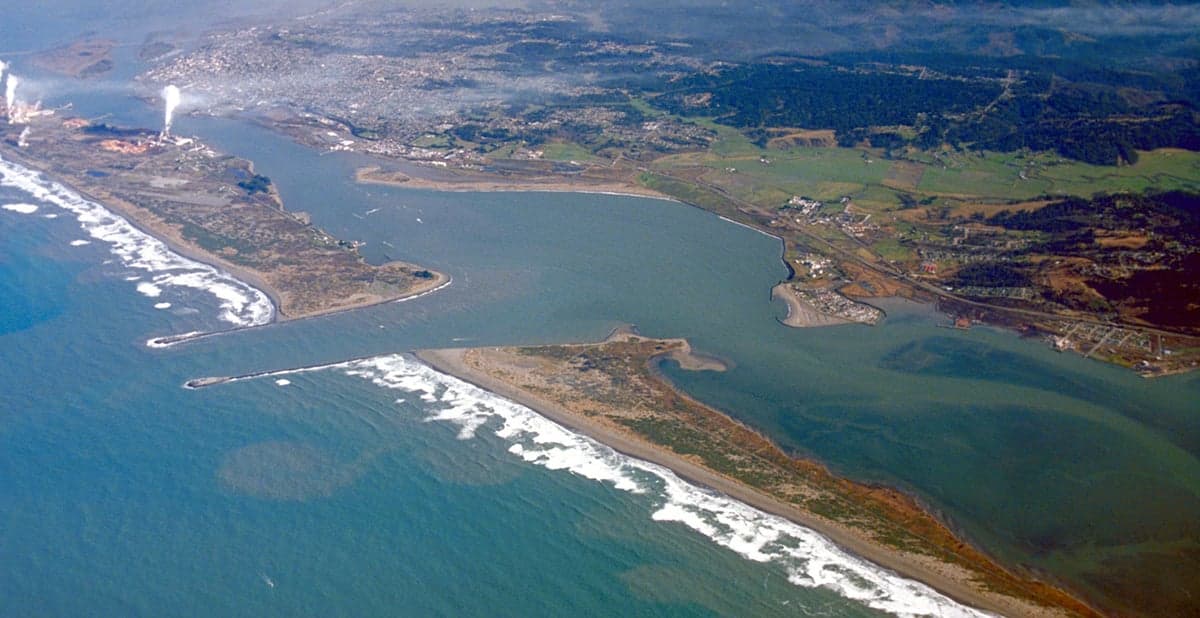
Long before European contact, Humboldt County was home to the Wiyot, Yurok, Hupa, Karuk, and Tolowa peoples, who lived in permanent villages along the coast and rivers for thousands of years. The Wiyot centered their territory around Humboldt Bay, including the site of present-day Eureka and the Indian Island massacre of 1860, while the Yurok and Hupa controlled the Klamath and Trinity river drainages. Spanish and Mexican colonization barely touched this region—the first non-Native settlement came with the 1849 California Gold Rush, which drew white American miners into the Trinity River watershed, founding the town of Weaverville (now in Trinity County) and the short-lived mining camp of Trinidad on the coast.
The real settlement wave began in the 1850s with the establishment of Humboldt Bay as a supply port for the inland mines. The town of Eureka was laid out in 1850, quickly becoming the region’s commercial hub. The first major non-Native arrivals were white Americans from the Midwest and Northeast—farmers, merchants, and speculators—followed by a significant influx of Portuguese fishermen from the Azores, who settled in Eureka and Crescent City (now in Del Norte County) and dominated the commercial fishing industry through the early 1900s. Chinese laborers, originally brought for railroad construction and mining, formed a small Chinatown in Eureka until anti-Chinese violence in 1885 drove most out. By 1900, the county’s population had reached 27,104, overwhelmingly white and native-born, with timber replacing mining as the economic engine.
The 1910s through 1940s saw the arrival of Dust Bowl migrants from Oklahoma, Arkansas, and Texas—white families fleeing the Great Plains drought—who found work in the redwood lumber mills of Fortuna, Rio Dell, and Scotia. These “Okie” communities remained culturally distinct for generations, shaping the county’s working-class, rural-conservative character. Meanwhile, the completion of U.S. Route 101 in the 1920s connected Humboldt to the rest of California, but the county remained isolated and insular. The post-World War II era brought a modest expansion of the timber industry and the founding of Humboldt State College (now Cal Poly Humboldt) in Arcata in 1913, which began attracting a small but growing number of faculty and students from outside the region. By 1960, the population had reached 104,892, still nearly all white, with the largest communities in Eureka, Arcata, and Fortuna.
Modern era (post-1965)
The 1965 Hart-Cellar Act had minimal direct impact on Humboldt County—its foreign-born population remains just 3.0% today, far below the national average. Instead, the county’s modern demographic story is one of domestic migration and cultural transformation. Starting in the late 1960s, a wave of back-to-the-land hippies and environmental activists—mostly white, college-educated young people from urban California—moved into the county’s rural areas, particularly the Mattole Valley and the Honeydew area of southern Humboldt. This countercultural influx clashed with the established timber-and-fishing culture but eventually became a dominant political force, especially in Arcata, which emerged as a progressive college town with a strong environmentalist identity.
The 1970s and 1980s saw the rise of the illegal cannabis industry, which drew a new wave of domestic migrants—again mostly white—from across the United States, including former urban professionals, Vietnam veterans, and counterculture refugees. This “green rush” concentrated in the rural interior, especially around Garberville, Redway, and the Lost Coast region, creating a semi-clandestine economy that reshaped local demographics and politics. The Hispanic population began growing in the 1990s, driven by agricultural labor in the dairy and cannabis industries, and now stands at 13.8%, with concentrations in Eureka and Fortuna. The East/Southeast Asian population (2.7%) is largely Hmong and Vietnamese families who arrived as refugees in the 1980s and 1990s, settling primarily in Eureka and Arcata. The Black population (1.1%) and Indian-subcontinent population (0.3%) remain very small, with no distinct enclaves.
Since 2000, the county’s population has been essentially stagnant—growing from 126,518 in 2000 to 135,418 in 2024—as the timber industry collapsed, cannabis legalization squeezed small growers, and high housing costs in coastal towns deterred new arrivals. The college population in Arcata has become more diverse, but the county as a whole has not experienced the rapid diversification seen in urban California. The white share has declined from roughly 85% in 1990 to 70.2% today, almost entirely replaced by Hispanic growth, while the Asian and Black shares have increased only marginally.
The future
Humboldt County’s population is projected to remain flat or decline slightly over the next decade, as out-migration of young adults seeking jobs offsets any new arrivals. The county is becoming slightly more diverse, but almost entirely through Hispanic growth—the white share will continue to fall, while the Black, Asian, and Indian shares are likely to remain very small. The college population in Arcata may become more diverse as Cal Poly Humboldt expands its enrollment, but the county’s rural interior and coastal towns will likely remain overwhelmingly white and native-born. The cannabis industry’s contraction since legalization has reduced one of the few draws for new migrants, and the high cost of housing in Eureka and Arcata relative to local wages discourages working-class families from moving in.
For a prospective resident, Humboldt County offers a stable, insular community with a strong sense of place but limited demographic change. The population is aging, the economy is narrow, and the cultural divide between the progressive college towns and the conservative rural areas remains sharp. Someone moving in now should expect a county that is becoming slightly more Hispanic but remains one of California’s least diverse regions, where the dominant cultural identity is still shaped by the timber-and-counterculture legacy of the 20th century.

* Values derived from national, state, county, city and local statistics and may differ in a specific area. Last updated: 2026-09-08T18:54:06.000Z
Narrative content on this page is AI-generated and may contain mistakes. Verify any details that matter before acting on them.
ReloMaps may earn a commission from affiliate links at no extra cost to you.

