
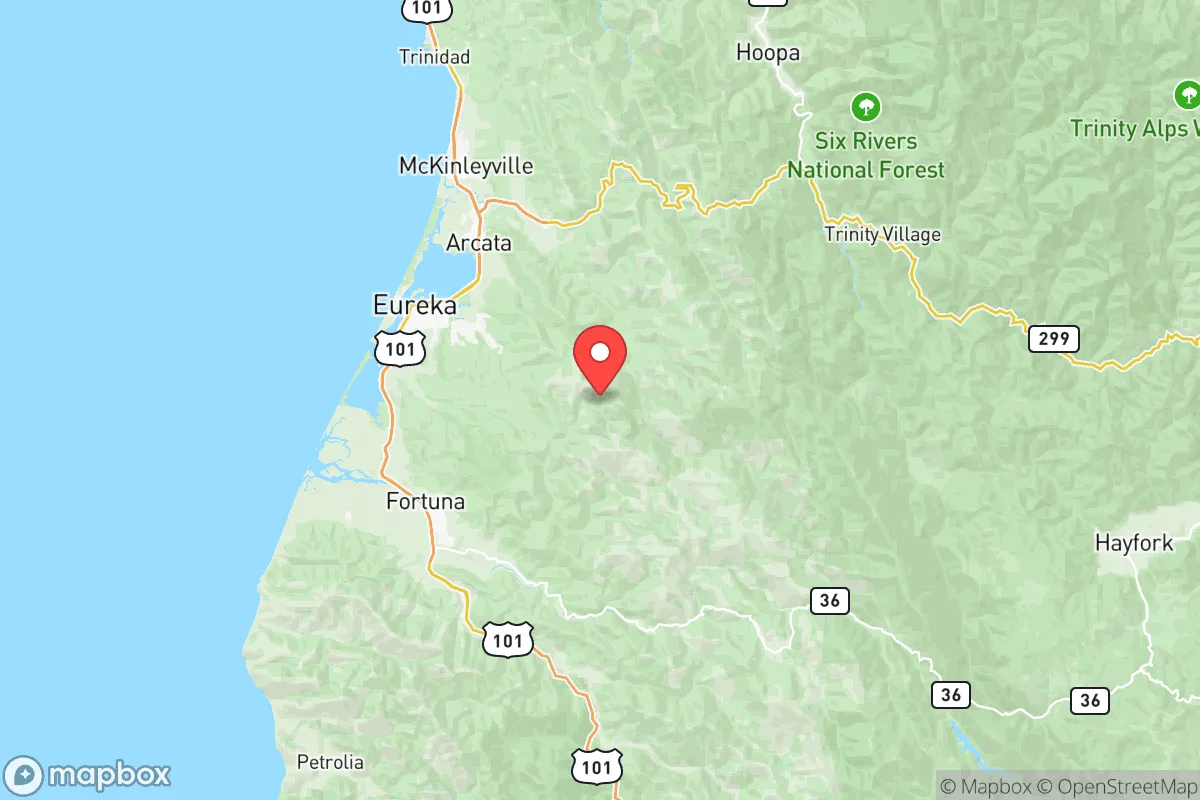
Photo: Wikipedia
Personal Sovereignty in Humboldt County
Viable for self-reliance. Generally workable, though some barriers may limit total independence.
What does Personal Sovereignty tell us?
Personal Sovereignty measures your capacity for self-reliance and independence with minimal government friction. Higher scores mean fewer barriers between you and the way you want to live... but it assumes you have the space you need and good neighbors.
What does this tell us?
Personal Sovereignty measures your capacity for self-reliance and independence with minimal government friction. Higher scores mean fewer barriers between you and the way you want to live... but it assumes you have the space you need and good neighbors.
State Policy
Energy independence: Importer (33% of energy produced in-state)
Personal Liberty
Homesteading

Personal Liberty Analysis
Humboldt County presents a complex and often contradictory environment for personal sovereignty, where deep-rooted traditions of self-reliance and libertarian-leaning independence clash with California’s heavy state-level regulatory apparatus. For the freedom-minded individual or family, the county offers genuine pockets of autonomy—particularly in remote areas like Honeydew, Petrolia, and Garberville—but those freedoms are constantly mediated by the state’s high tax burden, strict gun laws, and expansive land-use codes. The net effect is a sovereignty profile that is far more permissive than urban California but still significantly more constrained than states like Texas, Idaho, or Montana.
Tax burden and regulatory posture: what you pay and what you can build
California’s state-level tax burden is among the highest in the nation, and Humboldt County residents are not exempt. The state income tax tops out at 13.3%, and sales tax in the county ranges from 7.5% to 8.5% depending on the municipality—Eureka and Arcata sit at the higher end. Property taxes, however, are relatively predictable thanks to Proposition 13, which caps annual increases at 2% and keeps effective rates around 0.77% of assessed value. This creates a bifurcated reality: newcomers buying at current market prices face a higher tax burden than long-term residents. On the regulatory side, Humboldt County’s building and zoning codes are less onerous than those in the Bay Area but still require permits for most structural changes. In unincorporated areas like McKinleyville and Fortuna, the county planning department enforces setback requirements and septic system standards that can complicate off-grid builds. The state’s California Environmental Quality Act (CEQA) adds another layer, often triggering review for any development near waterways or sensitive habitats—a common issue in the county’s forested and coastal zones. For those seeking minimal regulatory interference, the remote interior communities near Hoopa or Willow Creek offer more de facto freedom, though formal compliance remains a legal requirement.
Self-defense and gun law specifics: what you can carry and where
California’s firearm laws are among the strictest in the nation, and Humboldt County operates fully within that framework. The state requires a 10-day waiting period, a Firearm Safety Certificate, and a background check for all purchases. Assault weapons are banned, magazine capacity is limited to 10 rounds, and concealed carry permits (CCWs) are issued at the county level. The Humboldt County Sheriff’s Office is generally considered shall-issue in practice, meaning applicants who complete the required training and background check typically receive a permit—though the process can take several months. This stands in contrast to more restrictive counties like Los Angeles or San Francisco. Open carry of handguns is prohibited in most circumstances, and carrying on school grounds or in government buildings is strictly forbidden. For the self-defense-minded, the practical reality is that owning a firearm for home protection is straightforward, but carrying one outside the home requires a CCW and adherence to California’s complex transportation laws. In rural areas like Garberville or Petrolia, where law enforcement response times can exceed 30 minutes, many residents keep firearms for personal security, but they do so within a legal framework that demands careful compliance.
Self-reliance and homesteading viability: lot sizes, zoning, and off-grid feasibility
Humboldt County is one of the most viable places in California for homesteading and off-grid living, but the feasibility varies dramatically by location. In the remote southern reaches near Garberville and Redway, large parcels of 5 to 40 acres are common, and many properties operate with solar power, rainwater catchment, and septic systems. The county’s zoning code allows for “rural residential” and “agricultural” designations that permit livestock, gardens, and accessory dwellings. However, state law requires that any habitable structure meet Title 24 building codes, and off-grid systems must comply with county health department standards for water and waste. In practice, many long-term residents in areas like Honeydew and Petrolia have built homes without formal permits, but this carries risk of fines or forced removal if discovered. The county’s cannabis industry has also shaped the regulatory landscape—growing marijuana is legal under state law but requires a county permit, and unlicensed grows are subject to enforcement. For the homesteader, the key trade-off is between the freedom of remote, unincorporated land and the legal exposure of non-compliant structures. Fortuna and Eureka offer more conventional suburban lots (typically 0.25 to 1 acre) with full utility hookups, making them easier for a legal off-grid transition but less private.
Personal liberties: parental rights, medical autonomy, speech, and property
California’s state-level policies on parental rights and medical autonomy are among the most progressive in the country, which can conflict with the values of a conservative-leaning audience. The state mandates that public schools allow students to use names and pronouns matching their gender identity without parental notification, and it prohibits schools from requiring parental consent for certain health services. Humboldt County’s school districts—including Eureka City Schools and Arcata School District—follow these laws, though some rural districts like Southern Humboldt Unified have seen local pushback. Medical autonomy is similarly constrained: California requires all children to be vaccinated for school attendance, with only medical exemptions allowed. On the positive side, the county has a strong tradition of free speech and property rights. Public meetings are generally open, and the county’s remote character means that property owners in unincorporated areas enjoy substantial de facto privacy. The state’s rent control laws (AB 1482) apply to most rental properties, limiting annual increases to 5% plus inflation, which affects landlords but not owner-occupied properties. For those who value medical freedom, the county’s cannabis culture provides access to a wide range of alternative treatments, but the state’s strict pharmaceutical regulations limit other options.
Overall, Humboldt County offers a sovereignty profile that is best described as pragmatic autonomy within a state-level framework. For the individual or family willing to navigate California’s high taxes, strict gun laws, and progressive education mandates, the county provides genuine opportunities for self-reliance—particularly in its remote interior and southern regions. Compared to states like Texas or Arizona, where property taxes are lower and gun laws more permissive, Humboldt County requires more legal compliance and financial commitment. But relative to urban California or the Bay Area, it is a haven of personal freedom, where a determined homesteader or freedom-minded retiree can carve out a life with minimal daily interference. The key is choosing the right location—Petrolia for true off-grid isolation, Garberville for a balance of community and privacy, or Fortuna for a more conventional but still rural lifestyle—and accepting that California’s state-level constraints are the price of admission.

* Values derived from national, state, county, city and local statistics and may differ in a specific area. Last updated: 2026-09-08T18:54:06.000Z
Narrative content on this page is AI-generated and may contain mistakes. Verify any details that matter before acting on them.
ReloMaps may earn a commission from affiliate links at no extra cost to you.

