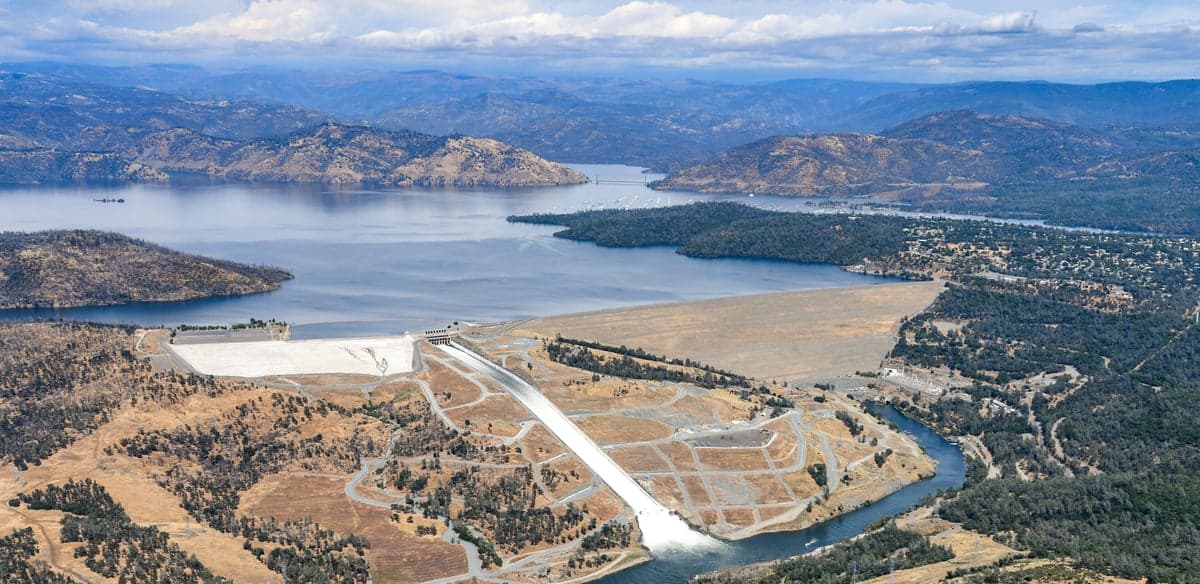
Photo: Wikipedia
Political ClimatePolitical Climate in Butte County
Showing county-level results — no local-only data available.
Lean and PVI are calculated from this county’s 2020 and 2024 presidential results, Cook-style.
Political rankings in California
- Most Conservative Cities in California
- Most Liberal Cities in California
- Best Conservative-Leaning Towns on the West Coast
- Affordable Small Towns for Conservatives
- Most Affordable Liberal-Leaning Small Towns in the U.S.
- Safest Liberal-Leaning Cities in the U.S.
- Most Conservative Counties in California
- Most Liberal Counties in California
Local Political AnalysisPolitical Analysis of Butte County
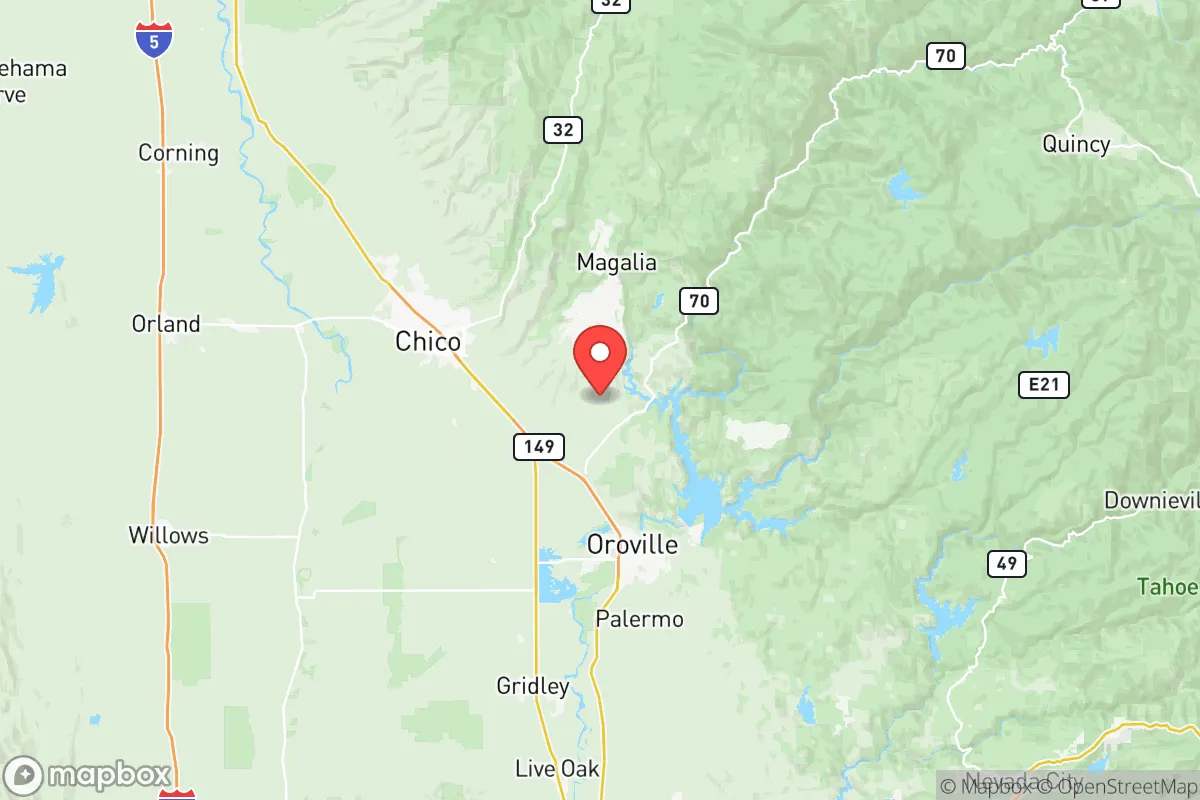
Butte County, California, is a classic example of a rural Northern California region that has been steadily shifting rightward, now carrying a Cook Partisan Voting Index of R+12. While the state of California as a whole remains a solidly Democratic stronghold, Butte County’s trajectory has been moving in the opposite direction for over a decade, driven by a combination of population changes, economic concerns, and cultural values. The county’s political heart beats strongest in its unincorporated areas and smaller towns, but there are notable pockets of blue that keep the overall picture from being a simple red monolith.
How it compares
Compared to California’s statewide lean, Butte County is an outlier. The state’s Cook PVI is not officially calculated for the entire state in the same way as congressional districts, but California consistently votes Democratic by double digits in presidential elections—often by 20 to 30 points. Butte County’s R+12 rating means it is roughly 30 to 40 points more Republican than the state average. This gap has widened noticeably since the 1990s, when the county was more of a swing area. The shift is most visible in places like Oroville and Gridley, which have become reliably red, while Chico remains the county’s liberal anchor. Chico, home to California State University, Chico, consistently votes Democratic, often by margins of 15 to 20 points in local races. The swing precincts are largely found in the suburban fringe of Chico—areas like Durham and Paradise—where moderate voters can tip a close election. In 2024, for example, the county voted for Donald Trump by roughly 12 points, while the state went for Kamala Harris by about 20 points. That’s a 32-point gap between county and state, which is among the largest in California.
What this means for residents
For conservative residents, Butte County offers a rare sense of political alignment within a blue state. Local government, from the Board of Supervisors to the sheriff’s office, is dominated by Republicans, and policies around land use, water rights, and public safety tend to reflect conservative priorities. Gun rights are broadly respected, and there is little appetite for the kind of strict environmental regulations that pass in Sacramento. For liberal residents, especially in Chico, the experience is more of an island. They can find community in the university area and downtown, but they face an uphill battle in countywide elections. Progressive ballot measures—like rent control or sanctuary city policies—often pass in Chico but fail countywide. The practical effect is that liberal residents must engage in constant coalition-building to achieve even modest policy wins, while conservatives can rely on a built-in majority. Both sides, however, share a common frustration with state-level mandates, particularly around housing and wildfire prevention, which often feel imposed from afar.
Culturally, the divide is visible in everyday life. In Chico, you’ll find farmers’ markets, bike lanes, and a lively arts scene that leans progressive. Drive 20 minutes south to Oroville, and the vibe shifts to hunting, fishing, and a strong evangelical church presence. The 2018 Camp Fire, which devastated Paradise, actually accelerated the political realignment, as many displaced residents relocated to more conservative areas like Magalia or out of the county entirely, while new arrivals from the Bay Area settled in Chico, reinforcing its blue lean. Looking ahead, Butte County is likely to stay R+12 or even move slightly redder as the state’s Democratic majority grows, but the county’s internal polarization—between a blue Chico and a red everywhere else—will only deepen. For anyone moving here, the key is knowing which town you’re in: your neighbors’ politics will change dramatically depending on whether you’re on a street in Chico’s Barber neighborhood or a ranch outside of Bangor.

State Political ClimatePolitical Climate in California
State Political AnalysisPolitical Environment in the State
California is a deeply blue state, with Democrats holding every statewide office and supermajorities in both legislative chambers, but that monolithic label hides a fractured reality. The state’s overall partisan lean has been solidly Democratic for three decades—no Republican has won a statewide election since 2006—yet the margin has tightened slightly in presidential races, from a 30-point Biden win in 2020 to a 20-point Harris win in 2024. Over the last 10-20 years, the dominant coalition has shifted from a broad, moderate-labor alliance to a more progressive, coastal, and diverse base, while the interior and rural areas have swung hard right, creating one of the most geographically polarized electorates in the country.
Urban vs. rural divide
The political map of California is a tale of two states. The coastal metros—Los Angeles, San Francisco, San Diego, and San Jose—drive the Democratic supermajority, with San Francisco County delivering 85% of its vote to Biden in 2020 and Los Angeles County providing over 4 million Democratic votes alone. Inland, the story flips: Bakersfield, Fresno, and Redding are Republican strongholds, with Kern County (Bakersfield) voting +16 R in 2024 and Shasta County (Redding) going +30 R. The Central Valley is a battleground within the state—Modesto and Stockton have competitive House districts that flip between parties, while Orange County, once a GOP bastion, has trended purple-to-blue since 2018, with its suburban voters shifting on social issues and immigration. The divide isn’t just urban vs. rural; it’s coastal vs. interior, with the Sierra foothills and far north behaving more like Idaho than California.
Policy environment
California’s policy environment is defined by high taxes, heavy regulation, and expansive public services. The state has a progressive income tax with a top rate of 13.3% (the highest in the nation), a 7.25% sales tax floor (with local add-ons pushing it to 10.25% in many cities), and property taxes capped at 1% of assessed value under Proposition 13, though reassessment on sale can spike bills. Regulatory posture is aggressive: California sets its own vehicle emissions standards (waived by the EPA), mandates renewable energy at 60% by 2030, and enforces strict labor laws (overtime at 8 hours, paid sick leave, $16/hour minimum wage). Education policy is centralized, with the state funding schools through a formula that favors low-income districts, but test scores rank near the bottom nationally. Healthcare is heavily regulated, with a state-run exchange (Covered California) and a push toward single-payer that hasn’t passed. Election laws are among the most liberal: universal mail-in ballots, same-day registration, and no-excuse absentee voting, with voter turnout consistently above 60% in presidential years.
Recent policy direction
Recent legislation shows California doubling down on progressive priorities, but with notable friction. On gun and self-defense law, the state passed SB 2 (2023), banning concealed carry in most public places (churches, parks, hospitals) and raising the permit age to 21—currently tied up in federal court. Parental and education rights saw a flashpoint with AB 1955 (2024), which prohibits school districts from requiring parental notification when a child changes gender identity, sparking backlash in conservative suburbs like Murrieta and Temecula. Speech is broadly protected under the state constitution, but AB 587 (2022) requires social media platforms to report hate speech moderation, drawing free-speech lawsuits. Privacy and surveillance: the California Privacy Rights Act (CPRA, 2023) expanded consumer data rights, but local police still use license plate readers and drones widely. Medical and bodily autonomy is enshrined: abortion is a constitutional right (Prop 1, 2022), and gender-affirming care for minors is protected, with the state becoming a sanctuary for families fleeing bans elsewhere. Property rights are constrained by rent control (AB 1482, 2019 caps annual increases at 5% plus inflation) and strict environmental review (CEQA), which developers say stifles housing. Taxation is trending upward: a 2024 ballot measure to raise the corporate tax rate failed, but a wealth tax on billionaires is being debated for 2026. Voting access remains expansive, though concerns about ballot harvesting and signature verification persist among conservatives.
Civil unrest & political movements
California has a long history of political movements on both sides. The 2020 George Floyd protests in Los Angeles and Oakland were among the largest and most destructive in the nation, with over $1 billion in damages. The state’s sanctuary law (SB 54, 2017) limits local police cooperation with ICE, leading to flashpoints in San Diego and Riverside counties, where sheriffs have pushed back. The secession movement—Calexit—gained traction after Trump’s 2016 win but fizzled; a 2018 poll showed only 20% support. On the right, the “Recall Newsom” effort in 2021 gathered 1.7 million signatures and came within 4 points of ousting the governor, driven by frustration with COVID lockdowns and homelessness. Election integrity controversies are less visible than in swing states, but conservative groups have sued over mail-in ballot procedures, and the state’s top-two primary system has been criticized for locking out third parties. Immigration politics are a daily reality: border crossings near San Ysidro and Calexico remain high, and the state has spent billions on legal aid for migrants, creating tension with the federal government.
Projection
Over the next 5-10 years, California’s political trajectory points toward a more polarized, but still solidly blue, state. Demographic shifts—declining birth rates among the Latino population, an aging white liberal base in coastal cities, and an outflow of middle-class families to Texas and Arizona—are slowly eroding the Democratic margin. The 2024 election saw the GOP pick up two House seats in the Central Valley (around Bakersfield and Hanford), and the state’s population loss (over 500,000 since 2020) is concentrated in blue counties like Los Angeles and Alameda. However, in-migration from abroad (legal and illegal) and the continued growth of the tech and entertainment sectors in the Bay Area and LA will keep the state blue for the foreseeable future. A conservative relocator moving in now should expect to find a state where their vote matters little in statewide races but can swing local offices in competitive districts—especially in the Central Valley and Inland Empire. The policy direction will likely continue toward higher taxes, stricter gun laws, and expanded social services, but with growing internal resistance from the interior counties that feel ignored by Sacramento.
Bottom line for a new resident: If you’re conservative, you’ll find like-minded communities in places like Bakersfield, Redding, or Murrieta, but you’ll be swimming against a statewide tide on taxes, regulation, and social policy. If you’re liberal, you’ll feel at home in most coastal cities, but be prepared for high costs and a government that’s often slow to deliver on its promises. Either way, California offers unmatched economic opportunity and natural beauty—but the political climate is a constant negotiation between two Californias that barely speak the same language.
* Values derived from national, state, county, city and local statistics and may differ in a specific area. Last updated: 2026-11-08T20:45:11.000Z
Narrative content on this page is AI-generated and may contain mistakes. Verify any details that matter before acting on them.
ReloMaps may earn a commission from affiliate links at no extra cost to you.

