
Photo: Wikipedia
Quality of Life in Butte County
A livable area that tracks near national norms for affordability, walkability, and neighborhood health.
What does Quality of Life tell us?
Quality of Life measures an area by evaluating factors like cost of living, nearby amenities, country club access, airport proximity, socioeconomic signals and neighborhood character. For large states, this is a general average — quality of life can vary dramatically between metro areas, suburbs, and rural communities within the same state.
What does this tell us?
Quality of Life measures an area by evaluating factors like cost of living, nearby amenities, country club access, airport proximity, socioeconomic signals and neighborhood character. For large states, this is a general average — quality of life can vary dramatically between metro areas, suburbs, and rural communities within the same state.
Cost of Living
29% above national average
59%
The Real Cost of Living in Butte County for 2026
| Tier | Individual | Family (4) |
|---|---|---|
| Survival | $22k | $41k |
| Comfortable | $79k | $117k |
| Luxury | $124k+ | $192k+ |
| Elite (Top 5%) | $160k+ | $247k+ |
Quality-of-Life Analysis
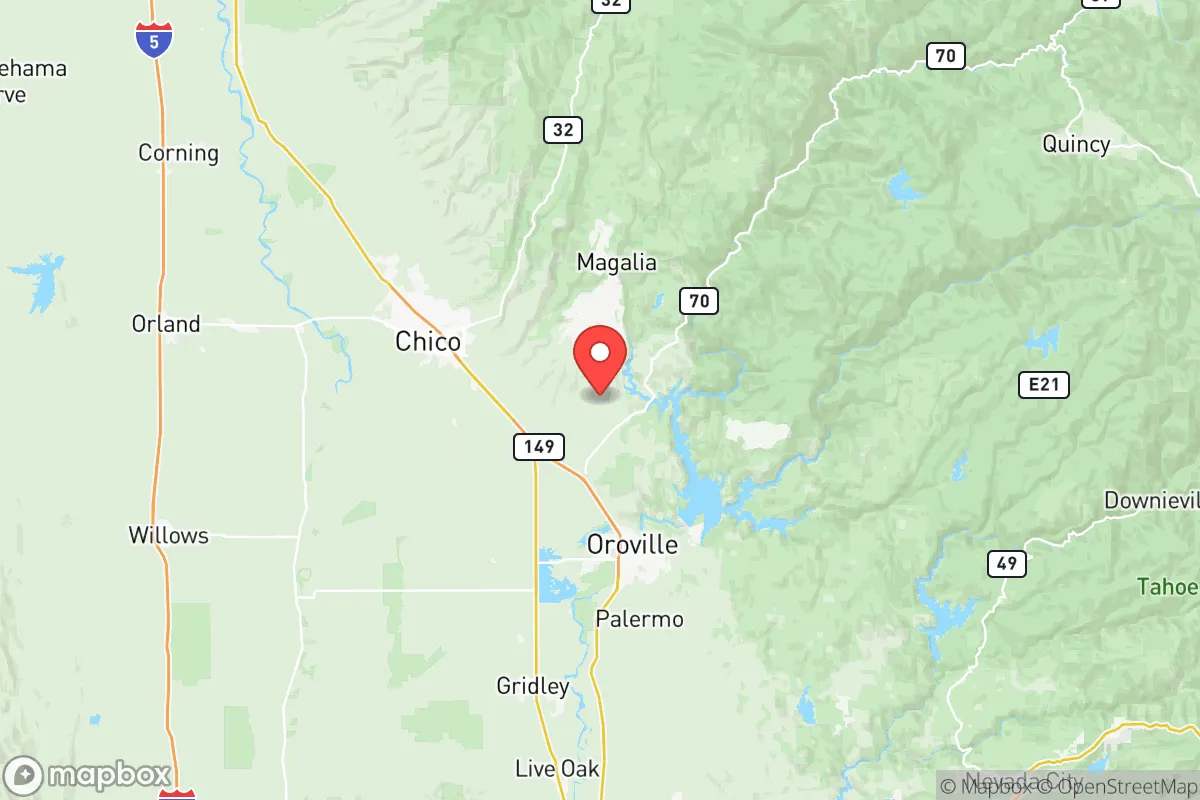
Butte County, California, offers a broad quality-of-life spectrum that ranges from the college-town energy of Chico to the rural quiet of communities like Paradise and Oroville, attracting everyone from students and young professionals to retirees and agricultural workers. The county’s character is defined by this contrast: a vibrant, amenity-rich urban core in the north, set against a more rugged, nature-oriented landscape in the south and east. People drawn to Butte County typically seek a balance between access to outdoor recreation—such as hiking in the Sierra Nevada foothills or boating on Lake Oroville—and the affordability that remains a draw compared to the state’s coastal metros.
Largest town(s) & population centers
Chico is the county’s largest city and undisputed hub, home to California State University, Chico, and roughly 100,000 residents. Daily life here revolves around the university, a walkable downtown with a thriving farm-to-fork restaurant scene, and extensive bike paths along Bidwell Park—one of the largest municipal parks in the nation. The city’s median age is younger than the county average, and its economy is anchored by education, healthcare (Enloe Medical Center is a major employer), and retail. Oroville, the county seat, is smaller (about 20,000 residents) and more working-class, with a historic downtown and a strong connection to the nearby Lake Oroville recreation area. It serves as a gateway to the Feather River canyon and offers a slower pace than Chico, with lower home prices but fewer entertainment options.
Smaller towns & rural pockets
Beyond the two main cities, Butte County includes several distinct smaller communities. Paradise, rebuilt after the devastating 2018 Camp Fire, is a resilient town of roughly 10,000 residents, now featuring newer infrastructure and a tight-knit community feel. Magalia and Concow are unincorporated areas in the foothills, offering heavily wooded lots and a more isolated lifestyle, with limited services and longer drives to Chico for groceries or healthcare. Gridley and Biggs, in the southern part of the county, are agricultural towns where rice and almond farming dominate the landscape; these communities have a strong Hispanic population and a slower, family-oriented rhythm. Durham, just south of Chico, is a small, unincorporated farming community known for its annual Durham Day celebration and a rural feel that still allows a 15-minute commute to the city.
Cost & lifestyle range
The cost of living index in Butte County is 129 (100 = U.S. average), meaning it is about 29% above the national baseline but still significantly cheaper than the California statewide index of roughly 140. The median home value is $408,700, and median rent is $1,369, with the average commute clocking in at just 21 minutes—well below the state average of 30 minutes. At the higher end of the cost spectrum, Chico’s desirable neighborhoods near Bidwell Park or the university command prices above $500,000, while newer subdivisions in Paradise offer mid-range homes in the $350,000–$450,000 range. The most affordable options are in Oroville and the rural south county (Gridley, Biggs), where homes can still be found under $300,000, though these areas have fewer amenities and longer drives to major shopping or medical services. Lifestyle trade-offs are clear: Chico provides walkability, cultural events, and dining, while the foothill communities offer privacy and nature access but require self-reliance for services.
Who thrives in Butte County? Students and academics at Chico State, outdoor enthusiasts who want quick access to lakes and trails, and families seeking affordable homeownership in a smaller-city environment all find a fit here. The county also suits remote workers who value a low commute (the average is just 21 minutes) and a lower cost of living than the Bay Area or Sacramento. However, those seeking dense urban amenities, high-end retail, or a robust public transit system may find the county limiting. Butte County’s strength is its variety: a resident can live on a rural acre in Durham, commute 15 minutes to a downtown Chico office, and spend weekends hiking in the Plumas National Forest—all without the congestion or cost of California’s major metros.

Crime in Butte County
WARNING: The crime statistics are unreliable for this jurisdiction. Local authorities have either not reported or under reported their data to the FBI. This could be due to bad intentions, incompetence or technical issues. Regardless, we suggest skepticism.
Higher crime rates than 72% of comparable U.S. locations.
Violent CrimeViolent Crime Analysis
Property CrimeProperty Crime Analysis
Crime Analysis
Butte County, California, presents a mixed safety picture, with crime rates that significantly exceed both state and national averages. The county's violent crime rate stands at 434.9 incidents per 100,000 residents, while property crime reaches 1,821.5 per 100,000, placing it among the higher-risk areas in the Sacramento Valley. These figures are driven largely by conditions in the county's largest city, Chico, while smaller communities like Paradise, Oroville, and Gridley offer notably different safety profiles. The county's justice system, operating under a progressive district attorney in a state known for lenient sentencing reforms, has struggled to contain property crime and drug-related offenses, a pattern familiar to many Northern California counties.
Crime in context
Butte County's violent crime rate of 434.9 per 100,000 is roughly 25% higher than the California state average and nearly double the national median for non-metropolitan counties. Property crime at 1,821.5 per 100,000 is similarly elevated, running about 30% above the state figure and well above the national rate of approximately 1,950 per 100,000 for similar-sized jurisdictions. These numbers place Butte County in the most dangerous quartile of California's 58 counties for both categories. The county's proximity to the Sacramento Valley's drug trafficking corridors, combined with a housing crisis that has left many residents in transitional living situations, contributes to these elevated figures. California's Proposition 47, which reclassified many drug possession and theft offenses from felonies to misdemeanors, has been cited by local law enforcement as a direct contributor to the county's property crime problem, as repeat offenders face minimal consequences.
What residents experience
Residents' daily safety experience varies dramatically by location within Butte County. Chico, home to California State University, Chico, accounts for the majority of the county's reported crime, with its downtown and areas near the university experiencing high rates of theft, vehicle break-ins, and drug-related incidents. The city's liberal city council and progressive district attorney's office have pursued alternatives to incarceration for non-violent offenders, a policy that has drawn criticism from residents who report feeling unsafe in commercial districts after dark. In contrast, Paradise, rebuilt after the 2018 Camp Fire, has emerged as a safer alternative, with a tight-knit community and lower crime rates, though its small population limits statistical significance. Oroville, the county seat, struggles with property crime rates comparable to Chico, driven by economic hardship and a transient population near the Feather River. Gridley and Biggs, smaller agricultural communities in the county's southern reaches, consistently report the lowest crime rates, with violent crime nearly absent and property crime limited to occasional agricultural theft. Magalia, a foothill community north of Paradise, offers a middle ground with moderate crime rates but limited law enforcement presence due to its rural nature.
Neighborhood-level variation is most pronounced in Chico, where the Barber neighborhood and areas near the downtown transit center see the highest concentrations of reported incidents, while the upper Bidwell Park area and newer subdivisions on the city's east side remain relatively safe. In Oroville, the historic downtown and Southside neighborhoods experience elevated crime, while the Thermalito area and newer developments near the Oroville Dam are quieter. The county's progressive judicial policies, including the district attorney's emphasis on restorative justice and diversion programs, have been a point of contention, with critics arguing they fail to deter repeat offenders. For those considering relocation, the safest choices within Butte County are the smaller communities of Gridley, Biggs, and the rebuilt sections of Paradise, while Chico and Oroville require careful neighborhood selection and heightened property crime awareness.
* Values derived from national, state, county, city and local statistics and may differ in a specific area. Last updated: 2026-11-08T20:45:11.000Z
Narrative content on this page is AI-generated and may contain mistakes. Verify any details that matter before acting on them.
ReloMaps may earn a commission from affiliate links at no extra cost to you.

