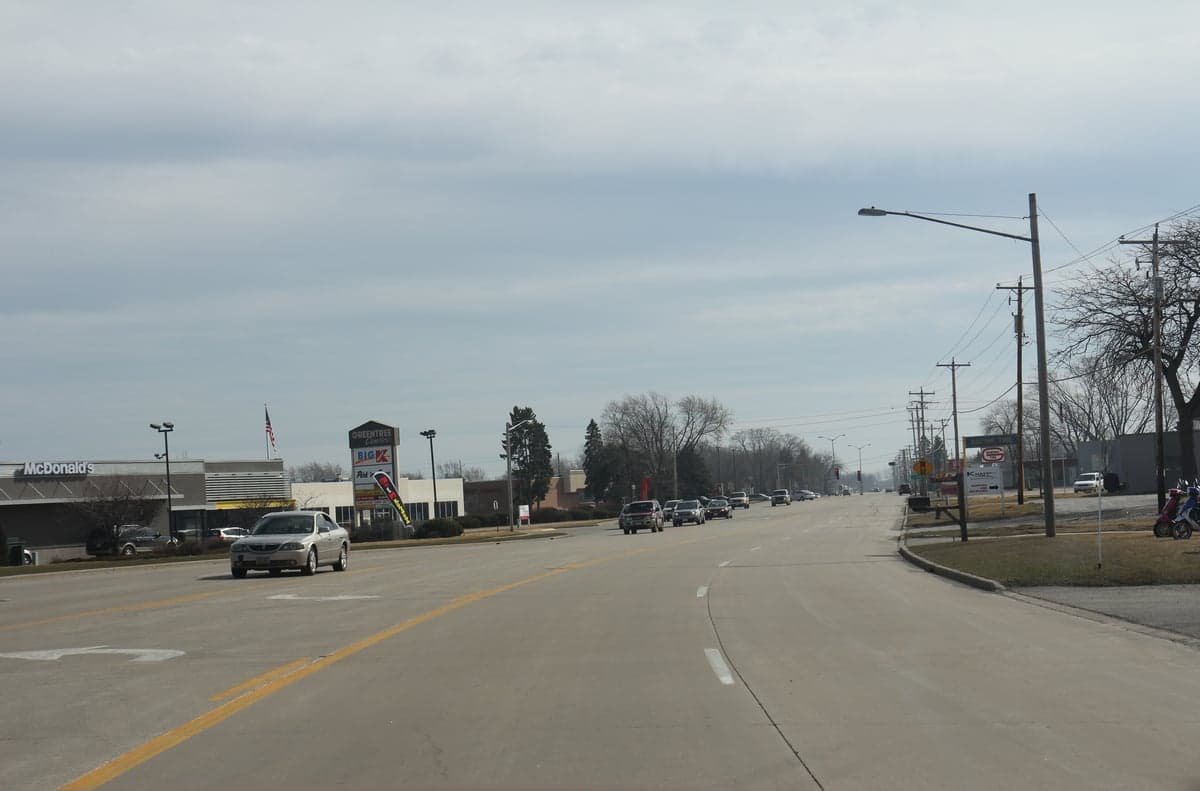
Photo: Wikipedia
Political ClimatePolitical Climate in Caledonia, WI
District shown is the primary district for this city’s centroid. Cities may span multiple districts.
Local Political AnalysisPolitical Analysis of Caledonia, WI
Caledonia, Wisconsin, has long been a reliably conservative community, and while the political winds have shifted a bit in recent years, the village still leans solidly to the right. The Cook Partisan Voting Index (PVI) of R+2 tells the story: this is a place where Republican candidates can generally count on a win, but the margin isn't what it used to be. If you talk to folks who've been here for decades, they'll tell you that the old, rock-ribbed conservatism—the kind that kept government small and out of your business—is still the dominant vibe, but you can feel the pressure from the more progressive areas creeping in from Milwaukee and Racine.
How it compares
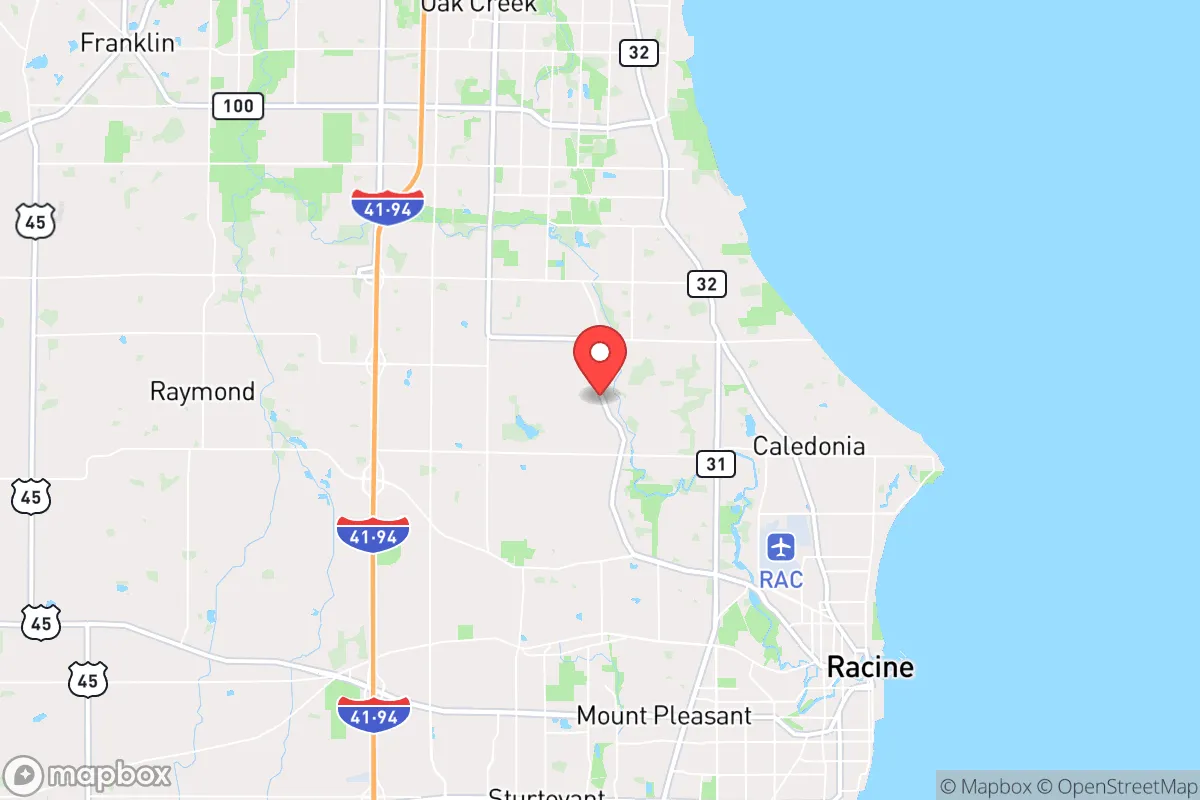
To really understand Caledonia's politics, you have to look at its neighbors. Head south into Racine city proper, and you're in a very different world—a Democratic stronghold where the PVI flips hard to the left. That contrast is stark and immediate. Meanwhile, a short drive west to the more rural towns of Burlington or Waterford, and you'll find communities that are even more conservative, often voting R+10 or deeper. Caledonia sits right on that suburban-rural fault line, which is why you get this R+2 split. It's a buffer zone, absorbing some of the progressive pressure from the lakefront cities while still holding onto its traditional values. The real concern for long-time residents isn't that Caledonia will flip blue overnight, but that the steady creep of county-level policies from Racine County—which has seen its own internal battles—could start to erode local control.
What this means for residents
For the average family in Caledonia, the political climate directly affects your wallet and your freedoms. The local school board and village board races are where the rubber meets the road. You've got a community that generally wants low taxes, sensible zoning, and a hands-off approach to how you live your life. The R+2 lean means that, for now, you're not seeing the kind of government overreach that plagues places like Madison or Milwaukee—no heavy-handed mandates on small businesses, no overreaching health orders, and a general respect for property rights. But the margin is tight enough that every election matters. A shift of just a few hundred votes could bring in candidates who see government as a tool for social engineering rather than a protector of your liberties. That's the quiet worry: that the progressive ideas from the city will keep washing over the border, and if we're not paying attention, we'll wake up with the same kind of red tape and lost freedoms that our neighbors to the east are dealing with.
Culturally, Caledonia still feels like a place where you can raise a family without the constant buzz of political correctness. The local churches are full, the Fourth of July parade is a big deal, and people generally mind their own business. That said, the policy distinctions are worth noting: the village has resisted some of the more aggressive "equity" initiatives that have popped up in Racine Unified School District, and there's a strong push to keep law enforcement well-funded and respected. The long-term trajectory depends on who shows up to vote. If the conservative base stays engaged, Caledonia will remain a solid, sensible community. If they get complacent, well, you can look at what happened to Kenosha or Racine proper to see the alternative. It's a good place, but it's not a given—it's something you have to fight to keep.

State Political ClimatePolitical Climate in Wisconsin
State Political AnalysisPolitical Environment in the State
Wisconsin has long been a classic swing state, but over the past decade it has become a political battleground where the fight between traditional Midwestern values and progressive overreach is fought in every precinct. The state leans roughly 50-50 in statewide elections, but the trajectory is concerning for conservatives: the 2020 presidential election saw Joe Biden win by just over 20,000 votes, while the 2022 gubernatorial race saw incumbent Tony Evers win by a similar margin. The 10-20 year arc shows a slow but steady leftward drift in the Milwaukee and Madison metros, while the rest of the state has hardened into a reliably red stronghold. For a conservative looking to relocate, the key question is whether the state’s rural and suburban backbone can hold the line against the progressive tide coming from its two largest cities.
Urban vs. rural divide
The political map of Wisconsin is a textbook case of the urban-rural split. Milwaukee County is the Democratic engine, delivering massive margins for the left—Biden won it by over 200,000 votes in 2020. Dane County, home to Madison and the state’s progressive university apparatus, is even more lopsided, with Biden winning by over 150,000 votes. These two counties alone account for nearly 40% of the state’s population and effectively cancel out the votes of the rest of Wisconsin. Meanwhile, the Fox Valley region—cities like Appleton, Oshkosh, and Green Bay—has shifted rightward over the past decade, with Brown County flipping from blue to red in 2016 and staying there. The WOW counties (Waukesha, Ozaukee, Washington) surrounding Milwaukee remain the state’s most reliably conservative suburban strongholds, with Waukesha County delivering Trump a 30-point margin in 2020. The rural northwoods and western Wisconsin, once a mix of blue-collar Democrats and independents, have trended sharply red since 2010, with counties like Rusk and Price flipping from Obama to Trump. The divide is stark: drive 30 minutes outside Madison or Milwaukee, and you’re in a different political universe.
Policy environment
Wisconsin’s policy environment is a mixed bag for conservatives. On the plus side, the state has a flat income tax of 4.4% (down from 7.75% in 2011), and the Republican-controlled legislature has passed right-to-work legislation and constitutional carry for firearms. Property taxes are moderate, and the state has no inheritance tax. However, Governor Tony Evers has used his veto power to block conservative priorities, including a 2023 bill that would have banned abortion after 14 weeks. The state’s education system is dominated by powerful teachers’ unions, and Madison’s school district has embraced critical race theory and gender ideology curricula. Election laws are a flashpoint: Wisconsin uses drop boxes and has no voter ID requirement for absentee ballots, though a 2022 state Supreme Court ruling banned most drop boxes. The legislature has passed parental rights bills requiring schools to notify parents of curriculum changes, but Evers vetoed them. For a conservative, the policy environment is a tug-of-war: the legislature is solidly red, but the governor’s veto pen and the state Supreme Court (which flipped to a 4-3 liberal majority in 2023) are constant obstacles.
Trajectory & freedom
On the freedom front, Wisconsin is a state in flux. The good news: constitutional carry became law in 2011, and the state has strong property rights protections, including a 2017 law limiting eminent domain for private development. The legislature passed a parental bill of rights in 2023 (vetoed by Evers) and a school choice expansion that now serves over 50,000 students. The bad news: the liberal Supreme Court majority is expected to redraw legislative maps before 2024, potentially flipping the Assembly and Senate to Democratic control. Medical autonomy took a hit in 2022 when Evers signed a law banning conversion therapy for minors, and the state’s COVID-19 response saw Evers issue a mask mandate and business closures that the legislature fought in court. Gun rights are secure for now, but the new court could revisit the state’s “safe storage” laws. The trajectory is concerning: every election cycle brings new battles over election integrity, with the 2020 election marred by Zuckerberg-funded grants to Milwaukee and Madison that Republicans argue tilted the race. The state is becoming less free for conservatives who value limited government and personal responsibility.
Civil unrest & political movements
Wisconsin has been a flashpoint for political unrest. The 2020 Kenosha riots following the Jacob Blake shooting saw businesses burned and two people killed, with the state’s Democratic leadership slow to deploy the National Guard. The 2021 Waukesha Christmas parade attack, where a man drove an SUV through a crowd killing six, was a stark reminder of the consequences of progressive bail reform policies. On the right, the Wisconsin Grassroots Network and Turning Point USA (headquartered in Milwaukee) are active, organizing election integrity efforts and school board takeovers. The 2022 election integrity protests in Madison drew thousands, and the state’s voter ID law remains a constant target of left-wing lawsuits. Immigration politics are less heated than in border states, but the influx of migrants to Milwaukee has strained city services. The sanctuary city debate is live: Milwaukee County has a policy limiting cooperation with ICE, and the legislature has passed bills to ban such policies (vetoed by Evers). For a new resident, the political temperature is high—you’ll see yard signs, bumper stickers, and heated local news coverage everywhere.
Projection
Looking 5-10 years out, the trend is not favorable for conservatives. Demographic shifts are driving the change: Madison and Milwaukee are growing faster than the rest of the state, and in-migration from Illinois and Minnesota brings progressive voters. The 2023 state Supreme Court election, won by liberal Janet Protasiewicz on a platform of abortion rights and redistricting, signals that the left is winning the messaging war. If the court redraws legislative maps, Republicans could lose their Assembly majority as early as 2024, giving Democrats full control of state government. The Fox Valley and WOW counties are aging, and younger voters in the suburbs are trending left. However, the rural northwoods and western Wisconsin are likely to remain red, and the state’s constitutional carry and school choice gains are probably safe for now. The realistic projection: Wisconsin will become a blue state within a decade unless conservatives can win back the suburbs and stop the Madison-Milwaukee machine. For someone moving in now, expect to spend the next few years fighting for every inch of ground.
Bottom line for a new resident: If you’re a conservative looking for a place where your values are the norm, Wisconsin’s rural areas and the WOW counties are your best bet. But be prepared for constant political warfare—the state is a battleground, and the left is well-funded and organized. You’ll need to get involved in local politics, school boards, and election integrity efforts to have a voice. The state’s natural beauty, strong economy, and low crime in most areas are real draws, but the political climate is a fight you can’t afford to ignore. Choose your county carefully, and don’t expect the state to stay purple for long.
* Values derived from national, state, county, city and local statistics and may differ in a specific area. Last updated: 2026-04-21T10:21:38.000Z
Narrative content on this page is AI-generated and may contain mistakes. Verify any details that matter before acting on them.
ReloMaps may earn a commission from affiliate links at no extra cost to you.

