 Popular
Photo: Wikipedia
Political ClimatePolitical Climate in Burlington, VT
District shown is the primary district for this city’s centroid. Cities may span multiple districts.
Inherited from parent state — no local data available.
Local Political AnalysisPolitical Analysis of Burlington, VT
Burlington has long been one of the most reliably progressive cities in New England, and that hasn’t changed. With a Cook Partisan Voting Index (PVI) of D+17, the city votes about 17 points more Democratic than the national average—a number that puts it in the same league as Berkeley or Cambridge. That D+17 score is identical to Vermont’s statewide PVI, which might surprise folks who think of the state as a rural Republican holdout. In reality, Vermont’s political center of gravity has shifted left over the past two decades, and Burlington is both a driver and a reflection of that shift. The city hasn’t elected a Republican mayor since 1989, and the last time Chittenden County went red in a presidential race was 1988. If you’re looking for a place where progressive policies aren’t just debated but enacted—think paid family leave, ranked-choice voting, and a $15 minimum wage before most states—this is it.
How it compares
Burlington’s D+17 PVI is identical to Vermont’s statewide PVI, but that doesn’t mean the city and the state are politically identical. The difference is in the texture. Vermont’s rural towns—places like Newport, St. Johnsbury, and much of the Northeast Kingdom—still lean Republican, often by double digits. In 2024, for example, Essex County voted about 20 points more Republican than the state average. Burlington, by contrast, is a deep-blue island surrounded by a purple-to-red rural ring. The city’s politics are shaped by a dense, young, and highly educated population—the University of Vermont and Champlain College alone bring in thousands of out-of-state students who tilt the electorate left. Meanwhile, towns like Colchester and South Burlington, just a 10-minute drive away, are more moderate: they vote Democratic but with less intensity, often splitting tickets in local races. So while the PVI numbers match, the lived political reality is different. In Burlington, you’re in a place where the city council has a Socialist caucus; in much of the rest of Vermont, you’re in a place where the local representative might be a Republican who votes for gun rights and against carbon taxes.
What this means for residents
For liberal residents, Burlington is about as comfortable as it gets. You’ll find city-funded social programs, a strong environmental agenda (the city aims for net-zero emissions by 2030), and a general cultural consensus around issues like LGBTQ+ rights, housing as a human right, and police reform. Conservative residents, on the other hand, often feel like a minority in their own city. It’s not that they can’t participate—there are active Republican and Libertarian groups, and the local GOP still fields candidates—but they’re swimming against a strong current. In practice, this means conservative homeowners might grumble about property taxes (Burlington’s are among the highest in the state) or zoning rules that slow development, but they’re unlikely to see their views reflected in city policy. The real friction isn’t between left and right, though—it’s between the city’s progressive ideals and the practical challenges of a small city with limited resources. You’ll hear as much debate among Democrats about how to fund affordable housing as you will about whether the city should be more conservative.
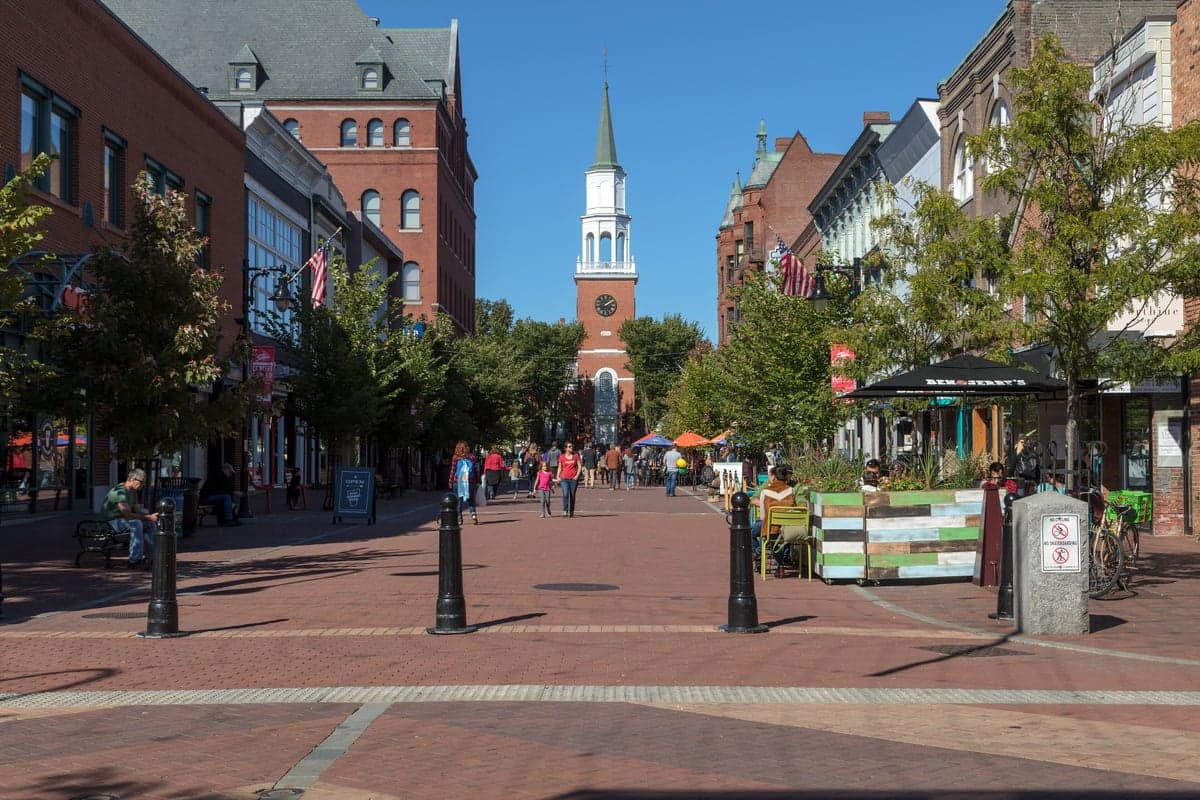
Culturally, Burlington wears its politics on its sleeve. The Church Street Marketplace is a pedestrian mall where you’ll see Bernie Sanders bumper stickers next to “Black Lives Matter” signs, and the local paper, Seven Days, covers city council meetings with the same intensity as a high school football game. The city’s identity is tied to its activism—there’s a long tradition of protest and community organizing, from the anti-war marches of the 2000s to the climate strikes of the 2020s. That can feel invigorating if you’re on board, or exhausting if you’re not. One policy distinction worth noting: Burlington has a strong rent-control ordinance (one of the few in New England), which keeps housing costs lower than in comparable college towns but also creates a tight rental market. It’s a classic example of the city’s progressive values colliding with real-world trade-offs. Looking ahead, the political trajectory seems stable—Burlington will stay blue, and Vermont will stay blue overall, but the rural-urban divide will likely widen as the city’s population grows younger and more diverse while the rest of the state ages and holds steady.

State Political ClimatePolitical Climate in Vermont
State Political AnalysisPolitical Environment in the State
Vermont is one of the most reliably Democratic states in the country, with a Cook PVI of D+17, meaning it votes about 17 points more Democratic than the national average in presidential elections. The state hasn't backed a Republican for president since George H.W. Bush in 1988, and Democrats have held the governorship for all but four of the last 30 years. That said, the political reality is far more nuanced than the statewide numbers suggest — Vermont has a strong libertarian streak, a fiercely independent electorate, and a deep rural-conservative tradition that often clashes with the progressive dominance of its population centers.
Urban vs. rural divide
The political map of Vermont is a textbook study in urban-rural polarization. The Democratic stronghold is Chittenden County, anchored by Burlington (the state's largest city) and its suburbs like South Burlington and Winooski. These areas vote 70-80% Democratic and drive the state's overall lean. The second major blue cluster is the Upper Valley region around Hanover and Norwich, home to Dartmouth College and a highly educated, affluent population. In contrast, the rural Northeast Kingdom — counties like Orleans, Essex, and Caledonia — votes reliably Republican, often by 20-30 points. Towns like Newport and St. Johnsbury are classic examples of rural conservative Vermont: pro-gun, anti-tax, and skeptical of Montpelier. The divide isn't just about population density; it's cultural. The rural towns are working-class, often reliant on logging, dairy farming, and tourism, while the urban cores are driven by education, healthcare, and tech. A telling detail: in the 2022 gubernatorial race, Republican Phil Scott won 70% of the vote in the Northeast Kingdom but only 30% in Chittenden County. The state's independent streak means many rural voters register as "Unaffiliated" (the largest voting bloc) but consistently vote Republican down-ballot.
Policy environment
Vermont's policy environment is shaped by a progressive legislature in Montpelier and a moderate Republican governor, Phil Scott, who has vetoed dozens of bills since taking office in 2017. The result is a state that is high-tax and high-service but with a pragmatic brake on the most ambitious progressive proposals. The state income tax is progressive, with a top rate of 8.75% on income over $213,150, and property taxes are among the highest in the nation — the statewide average is about $2.50 per $100 of assessed value, funding a school system that spends over $20,000 per pupil annually. There is no sales tax on most goods, though a 6% tax applies to meals, rooms, and alcohol. The regulatory environment is generally business-friendly for small enterprises but hostile to extractive industries — fracking is banned, and new large-scale developments face lengthy Act 250 permitting reviews. Education policy is centralized: the state has a single school funding formula, and there are no charter schools. Healthcare is dominated by the University of Vermont Medical Center in Burlington, and the state runs a public health insurance option (Vermont Health Connect). Election laws are among the most accessible in the country: same-day voter registration, no-excuse absentee voting, and automatic voter registration at the DMV. Gun laws are relatively strict: universal background checks, a 24-hour waiting period for handgun purchases, and a red flag law. There is no permit requirement for concealed carry, but open carry is restricted in certain public places.
Recent policy direction
Over the past five years, Vermont has moved decisively left on several fronts, though Governor Scott's vetoes have moderated the pace. In 2023, the legislature passed Act 47, a sweeping housing bill that preempts local zoning to allow denser development near town centers — a significant property rights shift. In 2024, the legislature overrode Scott's veto to pass Act 181, which creates a statewide land-use planning framework that environmental groups say protects natural resources but critics call a backdoor expansion of Act 250. On education, the state passed Act 173 in 2022, which eliminated proficiency-based graduation requirements and gave local school boards more control over curriculum — a rare win for local control advocates. On gun rights, the 2023 session saw a failed attempt to ban "assault weapons" and high-capacity magazines; the bill died in committee after Scott signaled a veto. On medical freedom, Vermont was an early adopter of telehealth expansion and maintains a robust medical marijuana program (recreational cannabis has been legal since 2018). On parental rights, the state passed Act 1 in 2023, which requires schools to notify parents if a student changes their name or pronouns — a compromise between LGBTQ advocates and parental rights groups. On taxation, the 2024 budget included a new 3% surcharge on capital gains over $500,000, aimed at funding child care subsidies. The overall direction is toward higher taxes on high earners, more state control over land use, and a cautious expansion of social services — but with a Republican governor who has successfully blocked a carbon tax, a single-payer healthcare system, and a wealth tax.
Civil unrest & political movements
Vermont is not known for large-scale civil unrest, but there have been notable flashpoints. The most visible recent movement is the Yellow Vests, a loosely organized group of rural conservatives who protested COVID-19 mandates in 2020-2021, often gathering at the Statehouse in Montpelier. Their numbers were modest (a few hundred at peak), but they drew attention for their anti-government rhetoric and occasional confrontations with counter-protesters. On the left, the Burlington chapter of Black Lives Matter organized protests in 2020 following the murder of George Floyd, drawing thousands in a city of 45,000. The protests were largely peaceful, though there were isolated incidents of property damage. Immigration politics are relatively quiet — Vermont has no sanctuary city policies, but Burlington has a "Welcoming City" resolution that limits cooperation with ICE. The state has a small immigrant population (about 5% foreign-born), concentrated in the dairy industry and in Burlington's refugee resettlement programs. Election integrity has not been a major controversy; Vermont uses paper ballots and has a strong track record of clean elections. The most persistent political movement is the Vermont Progressive Party, which holds seats in the legislature and has pushed for a state-level Green New Deal, rent control, and a public bank. Their influence is strongest in Burlington, where they've held the mayor's office for most of the last 20 years. A new resident would notice the ubiquity of "Scott for Governor" signs in rural areas and "Bernie Sanders" bumper stickers in town centers — the state's political identity is a constant negotiation between these two poles.
Projection
Over the next 5-10 years, Vermont's political trajectory points toward continued Democratic dominance at the statewide level, but with a growing rural backlash that could flip a few legislative seats. The key demographic driver is in-migration: since 2020, Vermont has seen a net inflow of remote workers from New York, Boston, and California, many of whom are younger, wealthier, and more progressive. This is pushing Chittenden County and the Upper Valley further left, while rural towns are aging and shrinking. The Northeast Kingdom is losing population, which means its political weight is declining. However, the state's independent streak means that a moderate Republican like Phil Scott could win a fifth term in 2026, especially if the Democratic legislature overreaches on taxes or land use. The most likely scenario is a continuation of the current dynamic: a progressive legislature passing ambitious bills, a Republican governor vetoing the most extreme ones, and a series of override battles that produce incremental change. On specific issues: expect a carbon tax to be proposed again, but likely vetoed; expect further expansion of Act 250; and expect a growing debate over school consolidation as enrollment declines. For a conservative relocator, the bottom line is that Vermont will remain a high-tax, high-regulation state with strong gun laws and a progressive social agenda — but with enough rural space and local autonomy to live largely as you choose, as long as you don't expect the state government to be on your side.
For a new resident, the practical takeaway is that Vermont's political climate is a trade-off. You get clean air, safe streets, and a strong sense of community, but you pay for it with high taxes and a state government that is often at odds with conservative values. If you're moving to the Northeast Kingdom or a rural town like St. Albans or Randolph, you'll find neighbors who share your political views and a local culture that values self-reliance. If you're moving to Burlington or Montpelier, you'll be in a progressive bubble where your views may be in the minority. The state's independent streak means that political arguments are common but rarely hostile — Vermonters tend to respect each other's space, even when they disagree. The bottom line: Vermont is a good fit for conservatives who value natural beauty, low crime, and community over low taxes and political alignment. It's a poor fit for anyone who wants a state government that reflects their values or who is sensitive to high costs of living.
* Values derived from national, state, county, city and local statistics and may differ in a specific area. Last updated: 2026-06-13T22:02:58.000Z
Narrative content on this page is AI-generated and may contain mistakes. Verify any details that matter before acting on them.
ReloMaps may earn a commission from affiliate links at no extra cost to you.

