 Popular
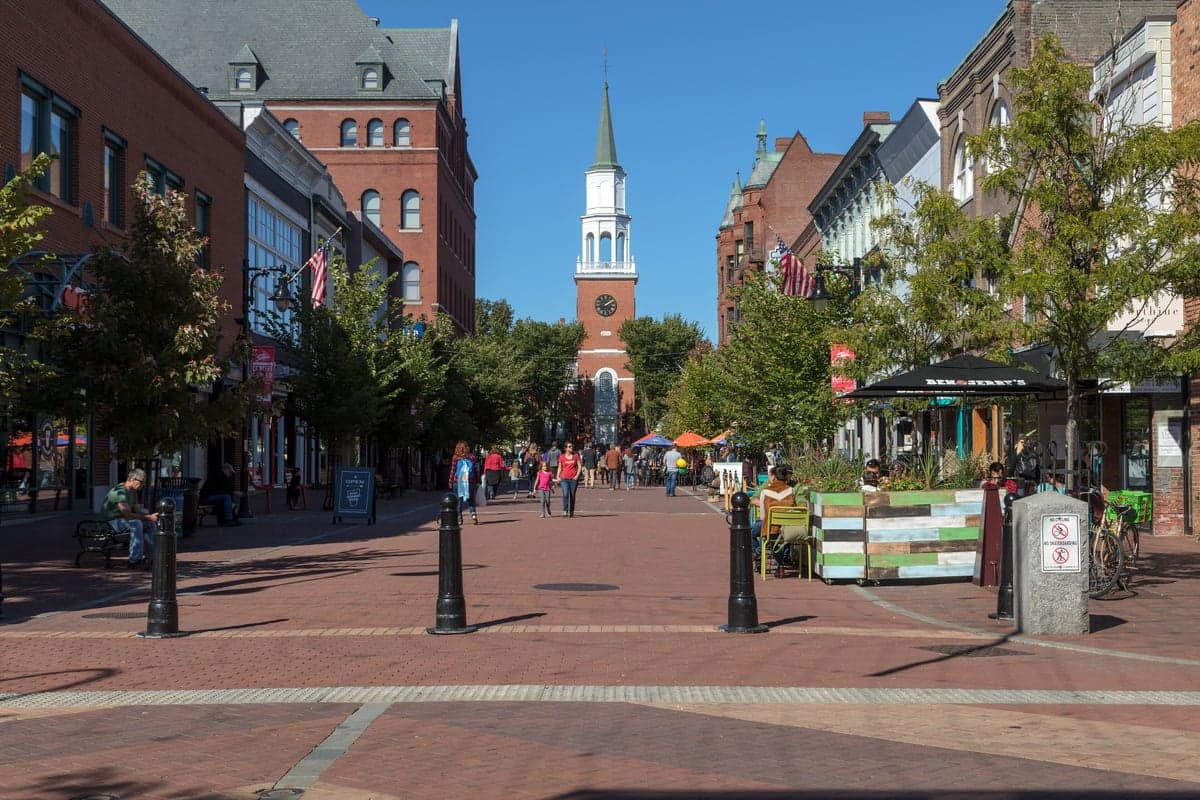
Photo: Wikipedia
Personal Sovereignty in Burlington, VT
Moderate friction. Expect trade-offs in some aspect of personal liberty and independence.
What does Personal Sovereignty tell us?
Personal Sovereignty measures your capacity for self-reliance and independence with minimal government friction. Higher scores mean fewer barriers between you and the way you want to live... but it assumes you have the space you need and good neighbors.
What does this tell us?
Personal Sovereignty measures your capacity for self-reliance and independence with minimal government friction. Higher scores mean fewer barriers between you and the way you want to live... but it assumes you have the space you need and good neighbors.
State Policy
Energy independence: Importer (15% of energy produced in-state)
Personal Liberty
Homesteading

Personal Liberty Analysis
Burlington, Vermont, presents a complex environment for personal sovereignty, where a strong progressive political culture coexists with a deep-rooted New England tradition of self-reliance. The city’s autonomy landscape is defined by a high degree of social regulation and taxation, which can feel restrictive to those prioritizing individual freedom, yet it also offers unique opportunities for self-sufficiency, particularly in food production and community resilience. For a relocation-minded individual or family with a slightly conservative-leaning perspective, the trade-offs are significant: you gain access to a physically beautiful, ecologically-minded community with strong local food systems, but you must navigate some of the nation’s most stringent gun laws, a high state and local tax burden, and a regulatory environment that actively shapes personal choices in housing, energy, and health.
Tax burden and regulatory posture in Burlington and Vermont
Vermont’s tax burden is among the highest in the United States, and Burlington sits at the center of this reality. The state imposes a progressive income tax with rates ranging from 3.35% to 8.75%, and Burlington adds a local option tax of 1% on sales, meals, and rooms, bringing the total sales tax to 7%. Property taxes are notably high, driven by school funding; the statewide average effective property tax rate is roughly 1.8%, but in Burlington, it can exceed 2.0% of assessed home value, placing a significant annual cost on homeownership. The regulatory posture is similarly heavy-touch. Vermont has a statewide land-use law, Act 250, which imposes rigorous permitting on development, including many residential projects. In Burlington, the city’s zoning code is detailed and actively enforced, with strict rules on short-term rentals, building heights, and energy efficiency standards (including mandatory weatherization upon sale). The state also mandates a renewable energy standard that effectively requires homeowners to consider solar or other renewables. For a reader prioritizing low taxes and minimal regulatory interference, this environment will feel constraining. However, the high tax base funds robust public services, including well-regarded schools and a strong social safety net, which some families may value as a form of collective self-reliance.
Self-defense and gun law specifics in Burlington and Vermont
Vermont has undergone a dramatic shift in gun policy since 2018, and Burlington’s local ordinances add further layers. The state now requires universal background checks for all firearm sales, including private transactions, and imposes a waiting period of up to 72 hours for handgun purchases. Magazine capacity is limited to 15 rounds for handguns and 10 for long guns. The state also has a “red flag” law (Extreme Risk Protection Order) that allows law enforcement or family members to petition a court to temporarily remove firearms from an individual deemed a risk. Burlington has gone further: the city council passed an ordinance banning the carry of firearms in city parks, libraries, and municipal buildings, and it has explored additional restrictions on storage. Open carry is legal in Vermont without a permit, but Burlington’s local bans effectively limit where it can be practiced. For a reader who views self-defense as a fundamental personal right, these laws represent a significant erosion of sovereignty. Vermont does not require a permit to carry a concealed firearm, but the state-level restrictions on magazine capacity and the red flag law are among the most restrictive in New England. The practical effect is that owning and carrying a firearm for self-defense is legally possible but heavily circumscribed, particularly within city limits.
Self-reliance and homesteading viability in Burlington and Chittenden County
Burlington offers surprisingly strong opportunities for self-reliance, especially for an urban area, though it comes with specific constraints. The city’s zoning code allows for backyard chickens (hens only, no roosters) on lots of any size, and beekeeping is permitted with registration. Vegetable gardens are unrestricted, and the city actively supports community gardening through the Burlington Community Garden Program, which manages over a dozen sites. Lot sizes in Burlington’s residential neighborhoods are typically small—often 0.1 to 0.25 acres—limiting the scale of homesteading. For larger-scale self-sufficiency, you would need to look to the surrounding towns in Chittenden County, such as Williston, Hinesburg, or Charlotte, where lot sizes of 1 to 5 acres are common and zoning is less restrictive. Off-grid living is legally challenging in Vermont. The state building code requires connection to the electrical grid for new construction, and Burlington’s municipal water and sewer are mandatory for properties within city limits. However, solar panels are widely encouraged, and net metering allows you to offset your electricity use. Rainwater collection for outdoor use is legal, but using it for indoor potable water requires a permit and is rare. Wood heating is common and legal, though Burlington’s air quality regulations restrict the use of older, non-EPA-certified wood stoves. For a family seeking a semi-self-sufficient lifestyle, Burlington itself is best viewed as a base for urban homesteading (chickens, gardens, solar), while the surrounding rural areas offer more room for true off-grid or large-scale homesteading.
Personal liberties in Burlington: parental rights, medical autonomy, speech, and property
Burlington’s approach to personal liberties is distinctly progressive, which creates both protections and constraints. Parental rights are a notable area of tension. Vermont has some of the nation’s most expansive laws regarding gender-affirming care for minors, including a “shield law” that protects providers and families from out-of-state legal actions. The state also mandates comprehensive sex education in public schools. For parents who prioritize traditional values or medical decision-making autonomy, this can feel like a direct challenge to parental authority. Medical autonomy is generally respected, with Vermont being one of the first states to legalize assisted suicide (Patient Choice and Control at End of Life Act) and maintaining a robust medical cannabis program. However, vaccine mandates are strong: Vermont has some of the highest childhood vaccination rates in the country, and the state eliminated the philosophical exemption for school vaccine requirements in 2019, leaving only medical exemptions. Free speech is protected under the First Amendment, but Burlington’s city council has passed resolutions condemning certain types of speech, and the city’s public spaces are subject to permit requirements for demonstrations. Property rights are heavily regulated, as noted, with Act 250 and local zoning imposing significant limits on what you can do with your land. For a reader who values maximum personal autonomy, Burlington’s environment will feel like a trade-off: you have strong protections for certain lifestyle choices (e.g., cannabis, end-of-life care) but face significant restrictions on others (e.g., firearms, parental opt-outs from school curricula, property development).
Overall, personal sovereignty in Burlington is best understood as a constrained autonomy within a highly regulated, community-oriented framework. Compared to areas like rural New Hampshire or much of the Midwest, Burlington imposes a heavier hand on individual choices regarding taxation, self-defense, and property use. However, it offers a unique form of sovereignty rooted in ecological self-reliance and community resilience—you can grow your own food, heat with wood, and participate in a tight-knit local economy. For a relocation-minded individual or family who values low taxes, minimal gun laws, and broad parental rights, Burlington will likely feel restrictive. For those who prioritize environmental sustainability, local food systems, and a strong social contract, the city’s regulatory environment may feel like a reasonable price for the benefits it provides. The key is to recognize that Burlington’s version of freedom is collective and ecological, not individualistic and laissez-faire.

* Values derived from national, state, county, city and local statistics and may differ in a specific area. Last updated: 2026-06-13T22:02:58.000Z
Narrative content on this page is AI-generated and may contain mistakes. Verify any details that matter before acting on them.
ReloMaps may earn a commission from affiliate links at no extra cost to you.

