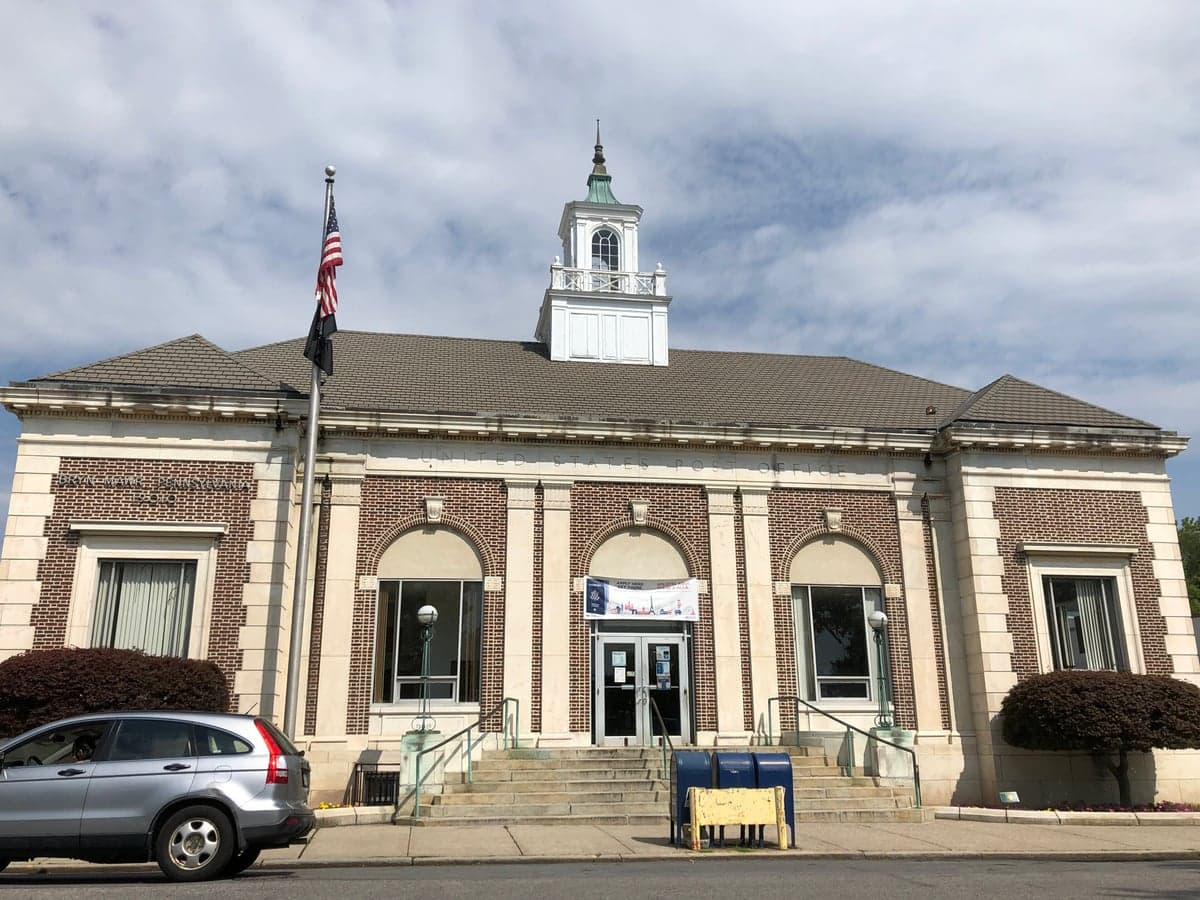
Photo: Wikipedia
Strategic Assessment of Bryn Mawr, PA
Meaningful friction. Expect exposure to either population pressure, blast zones, or natural disaster risk. Consider buying a retreat property.
What does the Strategic Assessment tell us?
Our Strategic Assessment grades tactical survivability of an area. Major population centers, military targets, fallout zones, natural disasters, and border exposure all drive risk — lower exposure means a more defensible position in a crisis.
This is heavily inspired by Joel Skousen's Strategic Relocation book. Highly recommended you checkout the book ($)What does this tell us?
Our Strategic Assessment grades tactical survivability of an area. Major population centers, military targets, fallout zones, natural disasters, and border exposure all drive risk — lower exposure means a more defensible position in a crisis.
This is heavily inspired by Joel Skousen's Strategic Relocation book. Highly recommended you checkout the book ($)Strategic Pillars
Key Distances
Regional Safe Places
Below is our recommended "safe zones" in Pennsylvania and the surrounding area based on our strategic heuristics. For most people, it's unrealistic to live in a “safe zone” full-time due to work, family or other personal reasons. They tend to be more rural. However, many of these areas are perfect for second homes and retreat properties that double as a vacation home or even a short-term rental.
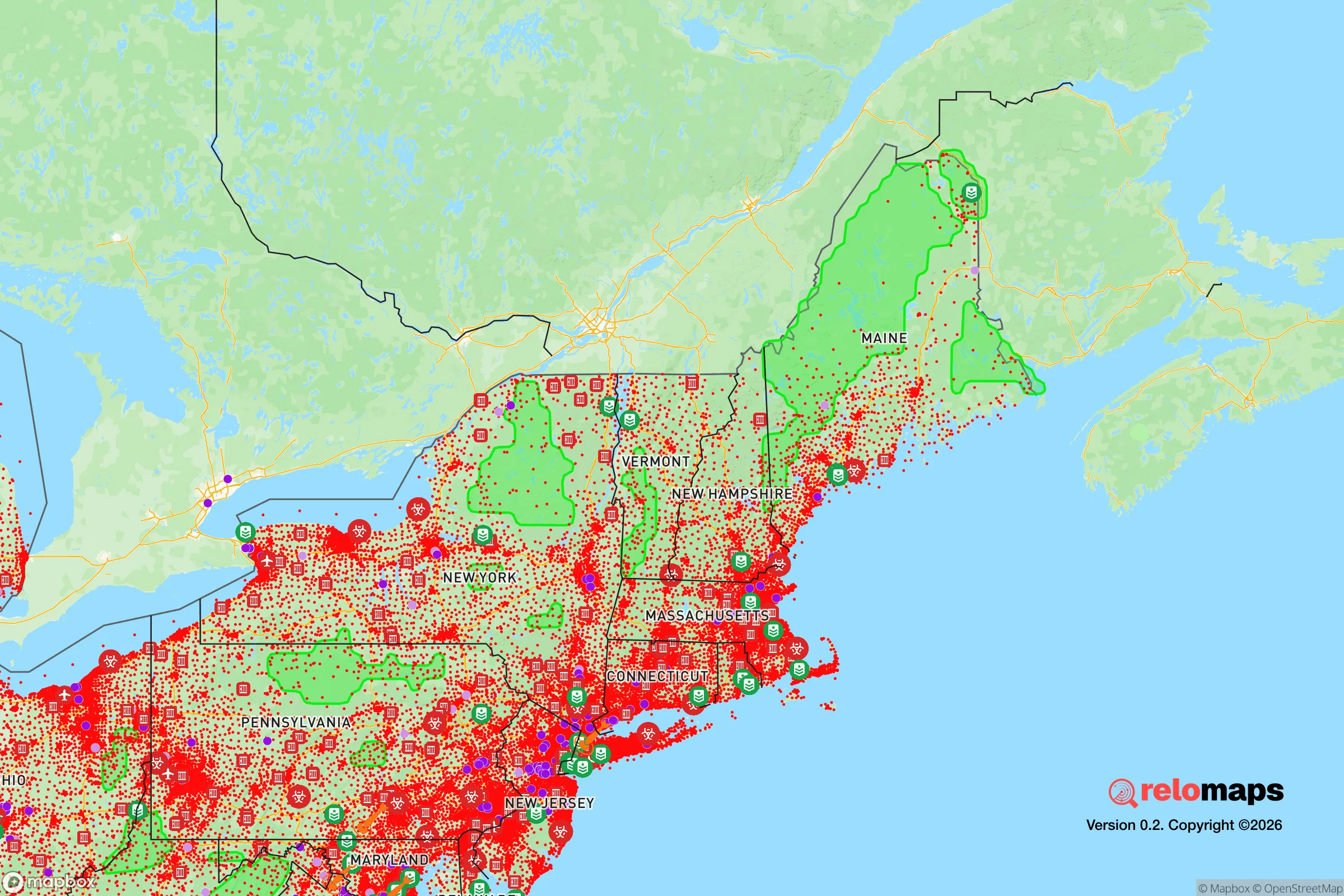
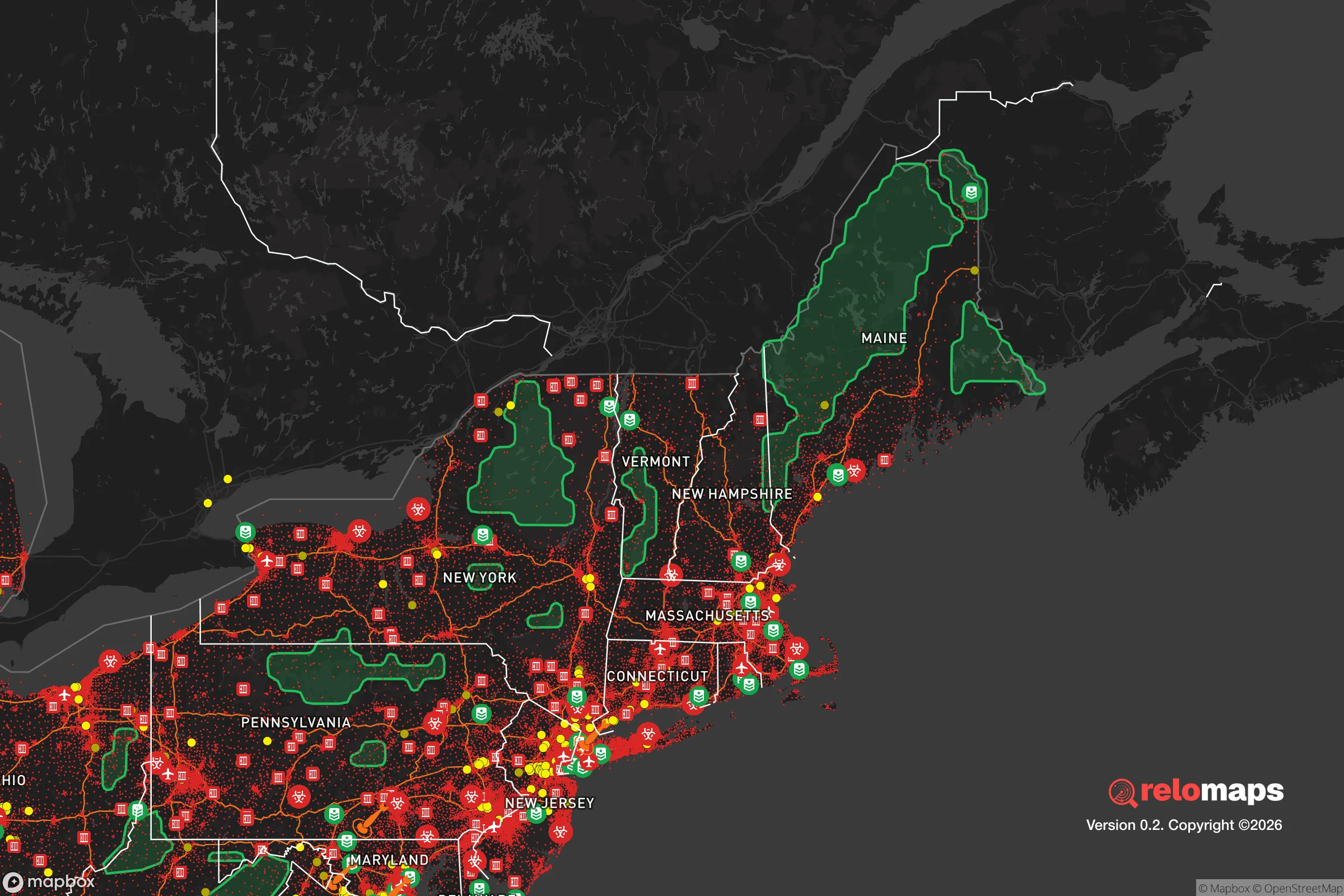


Important Note: For informational purposes only. This does not mean nothing bad ever happens in the green zones. Please use common sense. This is based on public data and modeled with AI. We tried to take a conservative approach but mistakes happen. We update this regularly as new information becomes available.
Solar Generator Recommendations
Backup power matters more here than in safer locations. We've picked three solar generators across budgets and capacity tiers — start with the budget unit if you only need a few essentials, or step up if you want to run a fridge and HVAC for days at a time.
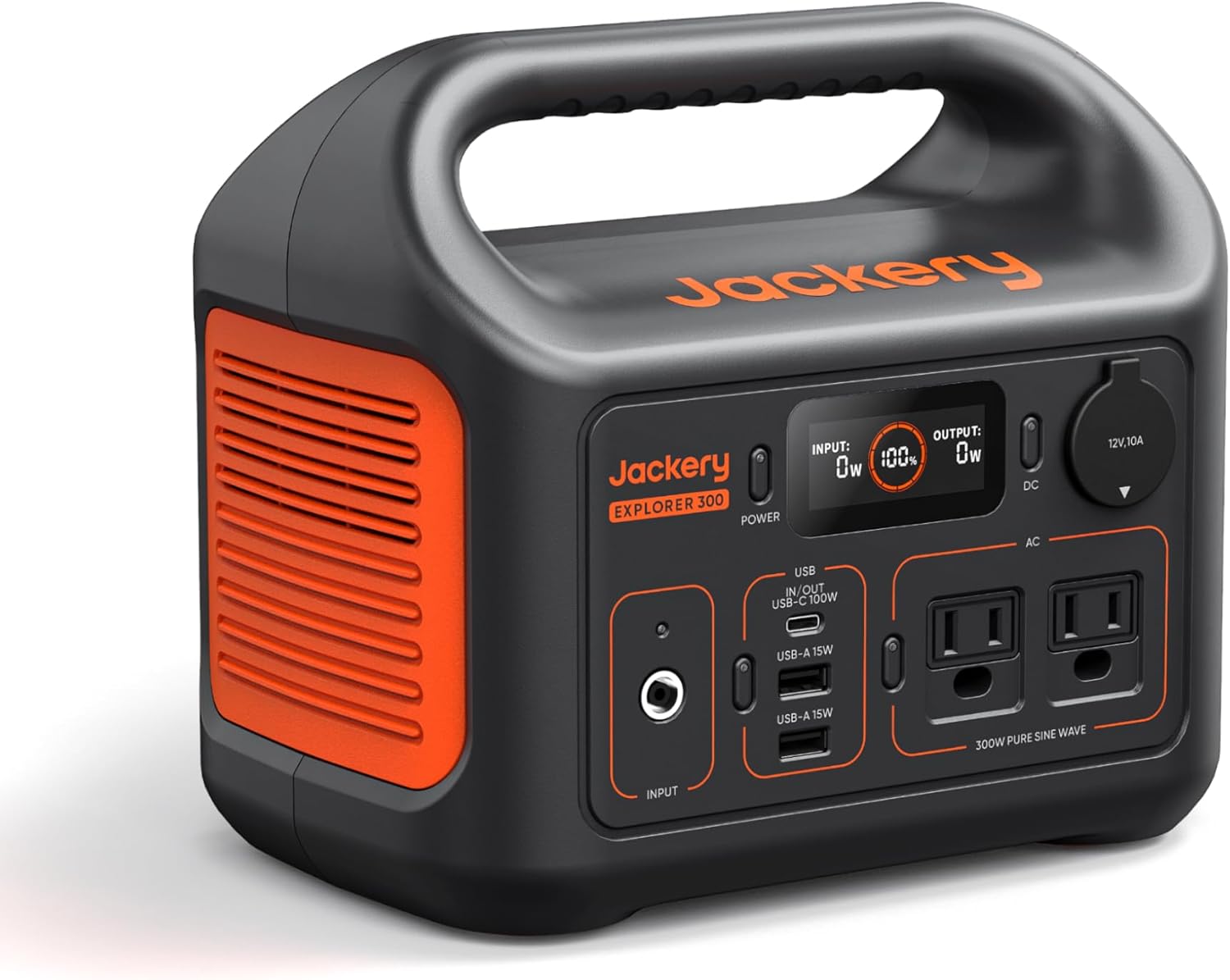
Jackery Portable Power Station Explorer 300
Budget OptionPower on the Go: Weighing only 11 lbs, it's convenient to set up and store with book-sized foldable solar panels

BLUETTI Portable Power Station AC180
Designed for both indoor and outdoor scenarios, AC180 is highly capable as it has a robost capacity and continuous output power.

EF ECOFLOW DELTA Pro Ultra Power Station
Upgraded PickEcoFlow DELTA Pro Ultra is a whole-home energy system designed to grow with your family. Integrated with the Smart Home Panel 2, it scales to meet your evolving energy needs — keeping your home powered, intelligent, and secure through every stage of life.
We earn a commission, at no additional cost to you.
Strategic Assessment Analysis
Bryn Mawr, Pennsylvania, occupies a unique strategic position that balances proximity to a major metropolitan center with the tangible advantages of the suburban Main Line corridor. For a relocator prioritizing disaster readiness and self-sufficiency, the area offers a mixed picture: strong institutional infrastructure and community cohesion, but significant exposure to the risks that come with being a wealthy, high-profile suburb of Philadelphia, a city with multiple potential target characteristics. The key to a realistic assessment is understanding that Bryn Mawr’s resilience is not about rugged isolation, but about leveraging its dense network of resources, educated population, and access to regional supply chains while acknowledging its vulnerability to cascading failures from a major urban disruption.
Geographic position and natural advantages for long-term stability
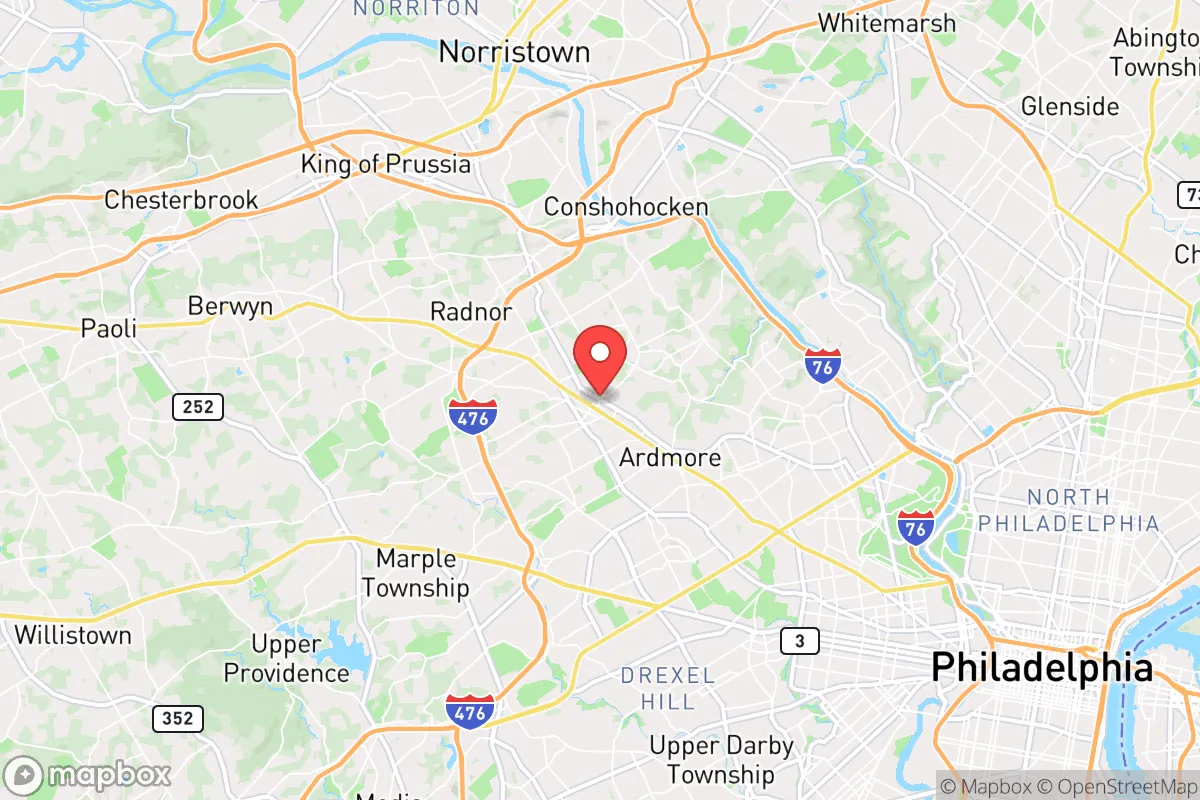
Bryn Mawr sits on the Piedmont Plateau, roughly 12 miles northwest of Center City Philadelphia, placing it in a zone that benefits from the moderating influence of the Atlantic Ocean while being far enough inland to avoid direct hurricane storm surge. The area’s elevation, generally between 300 and 400 feet above sea level, provides a natural advantage against the flooding that plagues lower-lying parts of the Delaware Valley. The underlying geology is primarily Wissahickon Formation schist and gneiss, which offers stable foundations and good drainage, reducing risks from landslides or soil liquefaction that might affect areas with more sedimentary soils. The region’s temperate climate, with four distinct seasons, supports a reliable growing season of roughly 170 days, which is a meaningful advantage for anyone considering food self-sufficiency. The nearby Schuylkill River and its tributaries, including the smaller creeks that run through the area, provide a consistent freshwater source, though access is not as immediate as in more rural settings. The Main Line’s historic development along the railroad corridor means the area is well-connected by road (US-30, I-476) and rail (SEPTA’s Paoli/Thorndale line), which is a double-edged sword: excellent for supply movement in normal times, but a potential evacuation chokepoint in a crisis. The natural topography—rolling hills and wooded areas—offers some visual screening and microclimate buffering, but it is not defensible terrain in any military sense. The area’s greatest natural advantage is its position in a region with abundant rainfall (averaging 45 inches annually) and a deep water table, which mitigates the risk of prolonged drought that could cripple more arid regions.
Risks, exposures, and proximity to fallout-relevant landmarks
The most significant risk for Bryn Mawr is its proximity to Philadelphia, a city that ranks as a high-probability target for a range of man-made disasters, from a terrorist attack on its ports or refineries to a broader geopolitical conflict involving the Northeast Corridor. Bryn Mawr lies within the 20-mile radius of Philadelphia’s urban core, which means it would be within the zone of significant fallout dispersion from a nuclear detonation at the city center or at the Philadelphia Naval Shipyard. The prevailing westerly winds in this region would carry fallout from a Philadelphia event directly over the Main Line, making Bryn Mawr a downwind exposure zone. Additionally, the area is within 30 miles of the Limerick Generating Station, a nuclear power plant in Pottstown, and within 40 miles of the Peach Bottom plant in Delta, Pennsylvania. While the probability of a nuclear plant incident is low, the consequence is severe, and Bryn Mawr’s location places it within the 10-mile emergency planning zone for Limerick, meaning it would be subject to evacuation orders or shelter-in-place directives in a worst-case scenario. The area also sits near major transportation arteries that could be targets: I-76 (the Schuylkill Expressway) and the Amtrak Northeast Corridor, which runs through nearby Paoli. A chemical spill or derailment on these lines could disrupt supply chains and contaminate local water sources. Natural risks are less dramatic but real: the area is in a moderate seismic zone (small earthquakes are possible but rare), and severe thunderstorms with damaging winds and hail occur several times a year. The risk of a direct hurricane hit is low, but the remnants of tropical systems can produce prolonged flooding in low-lying areas near the Schuylkill. The area’s dense tree canopy also creates a significant risk from falling limbs and trees during ice storms or high winds, which can knock out power for days. For a relocator, the key takeaway is that Bryn Mawr’s risks are overwhelmingly man-made and tied to its urban proximity, not natural disasters. This makes it a location where preparedness must focus on cascading infrastructure failures, supply chain disruptions, and the potential for civil unrest in nearby Philadelphia, rather than on surviving a hurricane or earthquake.
Practical resilience for a relocator: food, water, energy, and defensibility
For a relocator serious about self-sufficiency, Bryn Mawr presents a challenging but not impossible environment. The area’s affluence means that local grocery stores, including a large Whole Foods and a Wegmans in nearby King of Prussia, maintain robust supply chains, but these would be among the first to empty in a crisis. The concentration of wealth also means that many residents have the resources to stockpile, but the suburban layout means that most homes are on quarter-acre to half-acre lots, limiting space for significant food production. Community gardens exist, but they are small and not designed for survival-level output. Water is a more favorable factor: the area is served by Aqua Pennsylvania, which draws from the Schuylkill River and a network of reservoirs. However, a prolonged power outage would disable electric pumps, making well water (available in some older homes) a critical advantage. For a relocator, a property with a private well and a backup generator is a significant resilience multiplier. Energy resilience is mixed. The grid is reliable under normal conditions, but the area is prone to outages from storms and high demand. Solar potential is moderate—the region gets about 200 sunny days per year—but many homes in Bryn Mawr have large trees that shade roofs, reducing solar yield. Natural gas is widely available for heating and cooking, which is a resilience advantage over all-electric homes. Defensibility is the weakest category. Bryn Mawr is a dense suburb with multiple access points, a transient population (students at Bryn Mawr College and commuters), and no natural chokepoints. In a breakdown of civil order, the area would be difficult to secure. The local police force is professional but small, and reliance on county or state police for backup would be slow in a widespread crisis. The best defensive strategy for a relocator here is not to fortify a single property, but to build strong relationships with neighbors—the area’s high social capital and community organizations (neighborhood watches, civic associations) are a genuine resilience asset. For food storage, the many basements in older Main Line homes provide cool, dark spaces ideal for long-term pantry stocking. For energy, a dual-fuel generator with a 200-gallon propane tank is a practical investment, as propane delivery is reliable in this area. For water, a Berkey filter or similar gravity-fed system can handle the municipally supplied water if treatment plants go offline. The bottom line: Bryn Mawr is not a bug-out location, but it can be a viable stay-in-place option for someone who is well-prepared, networked, and willing to invest in backup systems.
The overall strategic picture for Bryn Mawr is that of a high-resource, high-exposure location. It offers excellent access to medical care (Bryn Mawr Hospital is a Level II trauma center), a dense network of educated and capable neighbors, and proximity to regional food and energy hubs. But these advantages come with the clear liability of being a prime suburban target for looting or fallout in a major Philadelphia event. For a relocator who values community and infrastructure over isolation, and who is willing to invest in backup power, water, and food storage, Bryn Mawr can be a defensible and comfortable base. For someone seeking true rural self-sufficiency, it is too connected, too visible, and too close to a major city. The wise relocator will treat Bryn Mawr as a location to be lived in with eyes open—enjoying its strengths while preparing for its vulnerabilities, rather than assuming its affluence provides automatic safety. The area’s resilience is not inherent; it must be built, one generator, one pantry, and one neighborly relationship at a time.

* Values derived from national, state, county, city and local statistics and may differ in a specific area. Last updated: 2026-11-05T02:23:43.000Z
Narrative content on this page is AI-generated and may contain mistakes. Verify any details that matter before acting on them.
ReloMaps may earn a commission from affiliate links at no extra cost to you.

