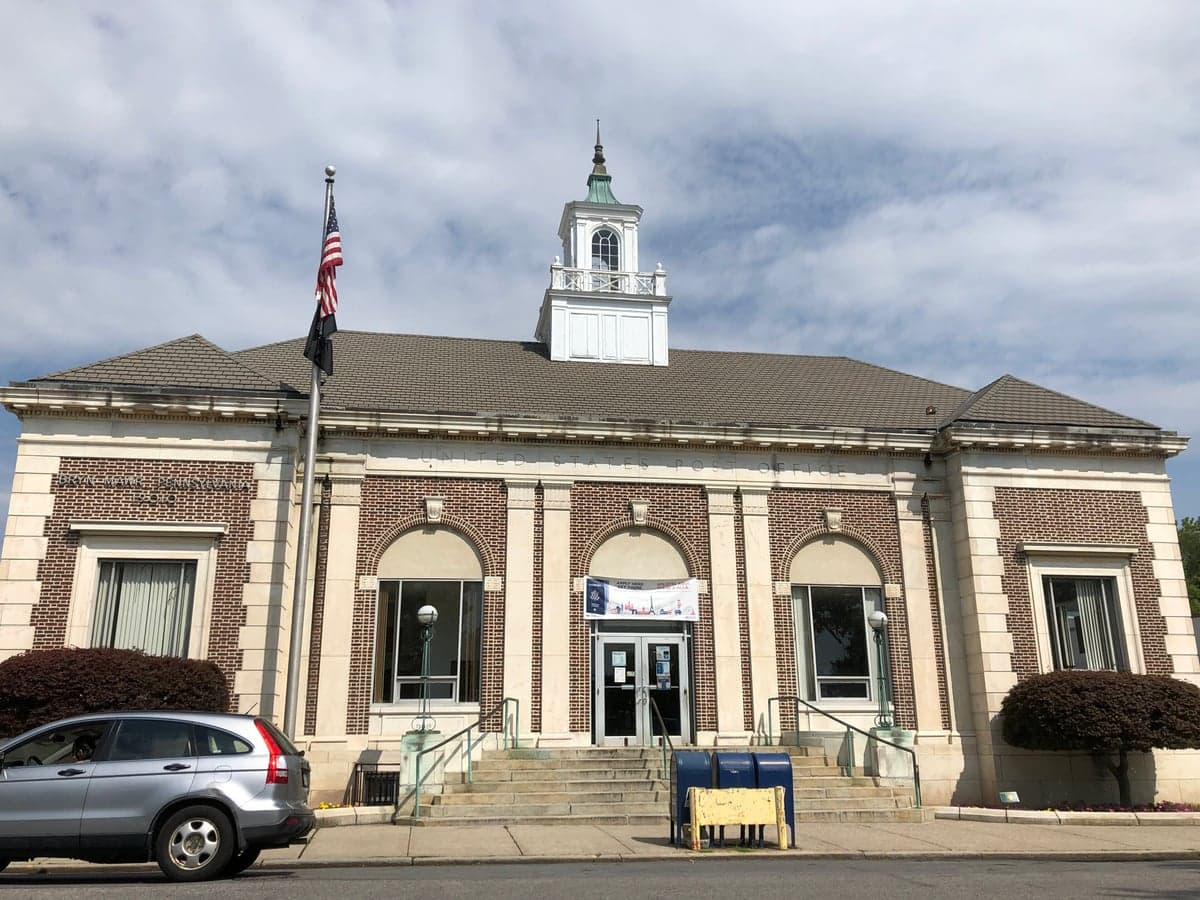
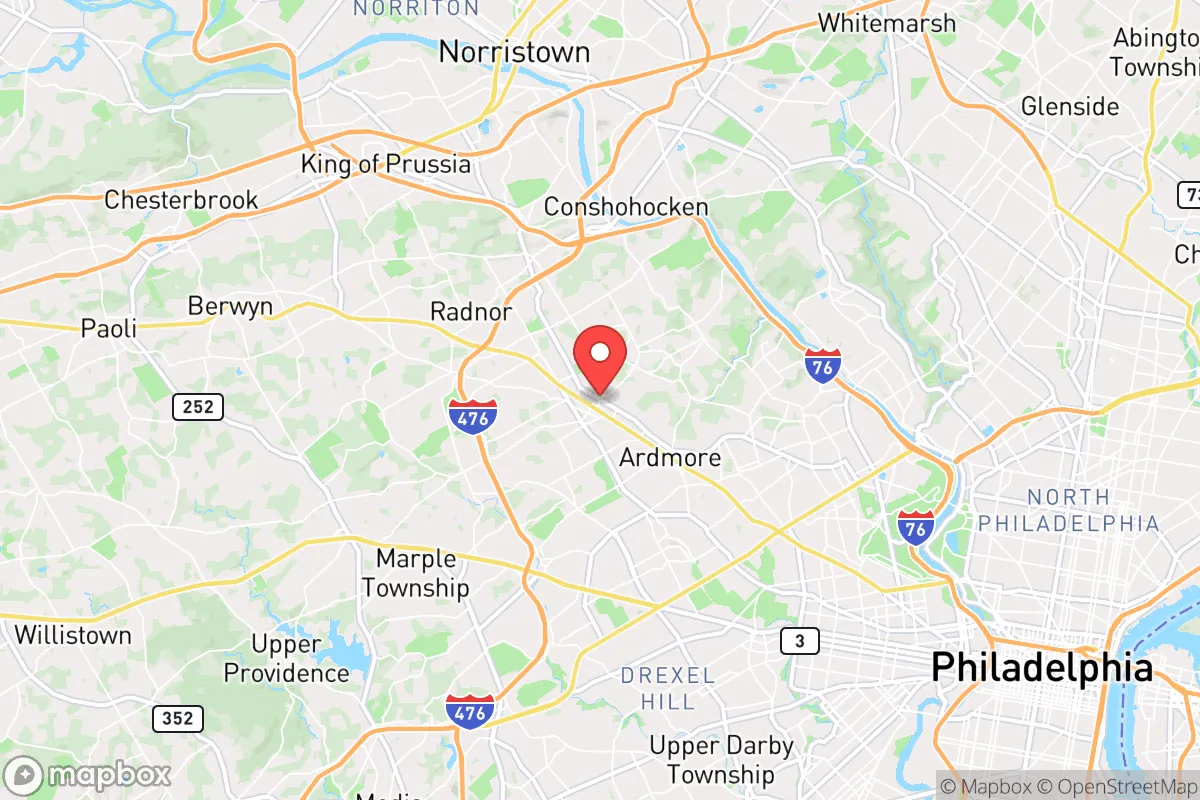
Photo: Wikipedia
Demographics of Bryn Mawr, PA
Affluence Level in Bryn Mawr, PA
A middle-class area roughly in line with national averages across income, home values, education, and employment.
People of Bryn Mawr, PA
Bryn Mawr, Pennsylvania, is a census-designated place of 5,777 residents that blends historic Main Line affluence with growing diversity. The population is 70.0% white, 9.5% Hispanic, 8.7% Black, 4.7% East/Southeast Asian, and 2.1% Indian (subcontinent), with 61.2% holding a college degree. A relatively low foreign-born share of 6.0% reflects a community shaped more by domestic migration and long-term family roots than by recent international arrivals. The area retains a distinctly suburban, family-oriented character, anchored by Bryn Mawr College and a historic downtown that serves as a social and commercial hub.
How the city was settled and grew
Bryn Mawr’s population history begins with the Lenni Lenape people, who inhabited the region before European settlement. In the late 17th century, Welsh Quakers were granted land in the Welsh Tract, establishing farms and meetinghouses that gave the area its early cultural identity. The arrival of the Pennsylvania Railroad in the mid-19th century transformed Bryn Mawr from a rural crossroads into a commuter suburb for Philadelphia’s elite. Wealthy families built large estates in neighborhoods like Bryn Mawr Park and North Bryn Mawr, while the area around the train station became a commercial and institutional center. The founding of Bryn Mawr College in 1885 drew faculty, staff, and students, adding an academic layer to the population. Through the early 20th century, the population remained overwhelmingly white and Protestant, with a small number of Irish and Italian domestic workers and tradespeople living in modest housing near the railroad corridor.
Modern era (post-1965)
After the 1965 Hart-Cellar Act, Bryn Mawr saw modest diversification, though the pace was slower than in nearby Philadelphia. The college’s faculty and student body became more diverse, attracting East/Southeast Asian and Indian academics and professionals. By the 1980s and 1990s, Black and Hispanic families began moving into neighborhoods like Bryn Mawr Terrace and the area around Lancaster Avenue, drawn by good schools and relative affordability compared to the Main Line’s pricier enclaves. The Indian subcontinent population, now 2.1%, concentrated near the college and along the Montgomery Avenue corridor, where a small cluster of South Asian-owned businesses emerged. East/Southeast Asian residents (4.7%) settled more broadly, with many working in healthcare and tech at nearby employers like Main Line Health and Villanova University. The Hispanic population (9.5%) grew steadily, with families moving into apartments and older homes in the Bryn Mawr Village area and along the eastern edge of the CDP. Despite these shifts, Bryn Mawr remains majority-white and highly educated, with the college-educated share (61.2%) far exceeding both the Pennsylvania average (33%) and the national average (34%).
The future
Bryn Mawr’s population is slowly becoming more diverse, though the pace is gradual. The white share has declined from roughly 80% in 2000 to 70.0% today, while Hispanic and Asian-origin groups have grown steadily. The Indian subcontinent population, while small, is likely to increase as professionals are drawn to the region’s strong job market in healthcare, biotech, and education. East/Southeast Asian communities are expected to grow modestly, particularly in the Bryn Mawr Station area, where new apartment construction near the train line is attracting younger professionals. The Hispanic population is dispersing across the CDP rather than concentrating in a single neighborhood, reflecting rising incomes and broader housing choices. The overall population is projected to remain stable or grow slightly, as redevelopment of older commercial properties along Lancaster Avenue adds housing units. The cultural identity of Bryn Mawr is evolving from a traditional WASP enclave into a more pluralistic, college-town suburb, though it retains its historic character and high property values.
For someone moving in now, Bryn Mawr offers a safe, well-educated community with strong schools and easy access to Philadelphia. The population is becoming more diverse but remains predominantly white and affluent, with a culture shaped by the college, historic estates, and commuter families. New residents will find a place that values tradition while slowly adapting to demographic change, making it a stable choice for families and professionals seeking a classic Main Line suburb.

* Values derived from national, state, county, city and local statistics and may differ in a specific area. Last updated: 2026-11-05T02:23:43.000Z
Narrative content on this page is AI-generated and may contain mistakes. Verify any details that matter before acting on them.
ReloMaps may earn a commission from affiliate links at no extra cost to you.

