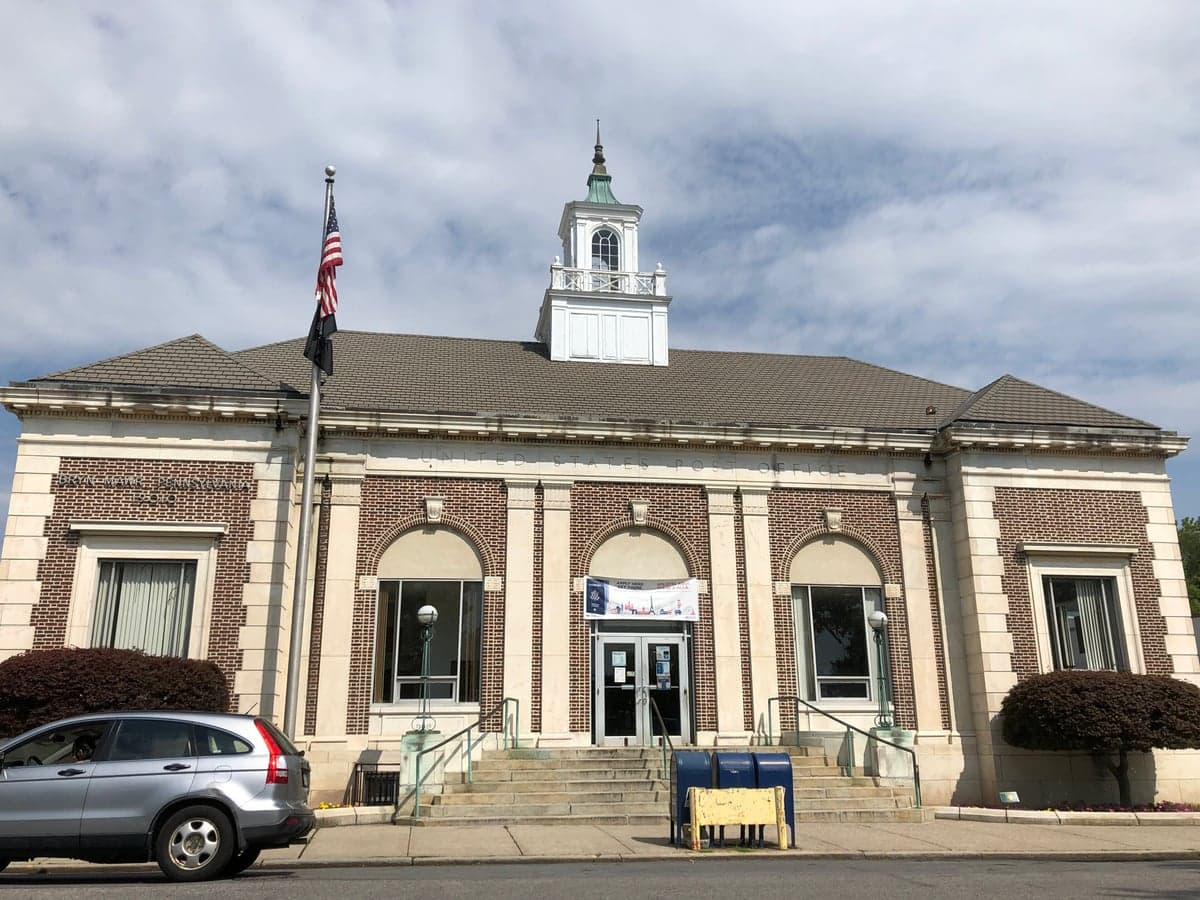
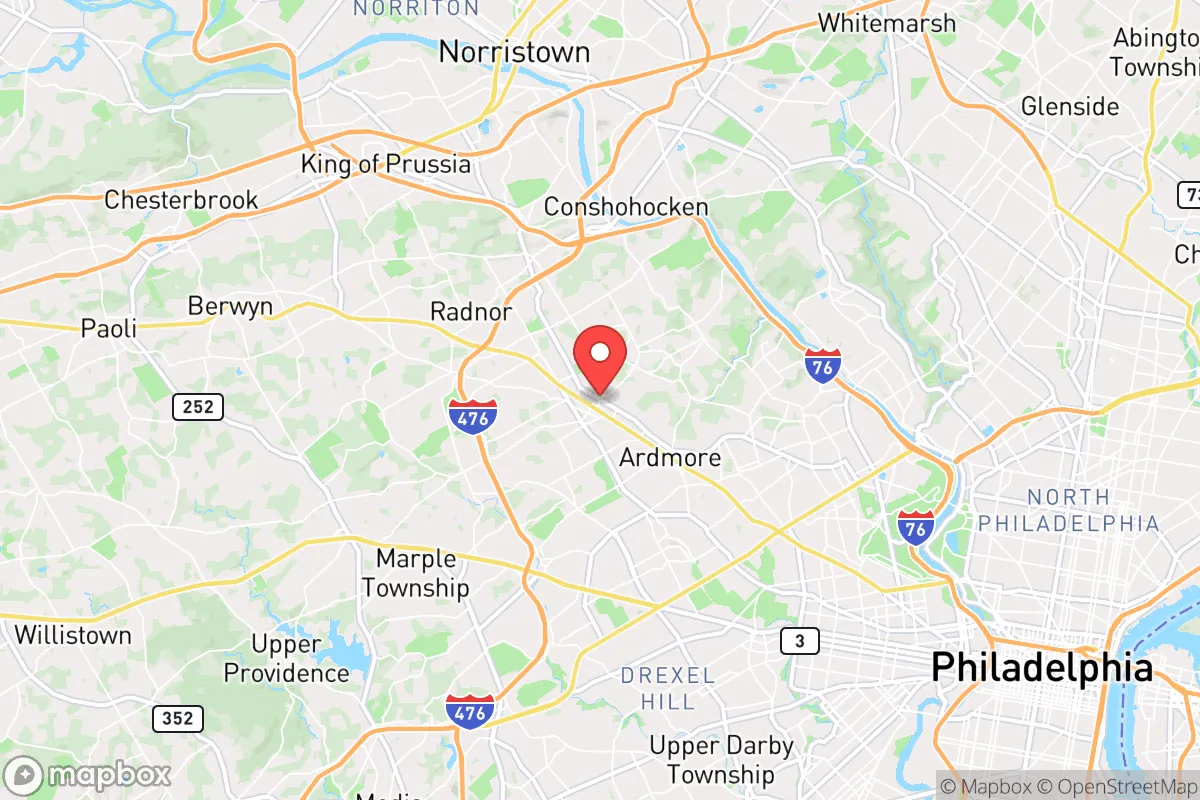
Photo: Wikipedia
Personal Sovereignty in Bryn Mawr, PA
Strong independent fundamentals that actively favor personal liberty and low regulation.
What does Personal Sovereignty tell us?
Personal Sovereignty measures your capacity for self-reliance and independence with minimal government friction. Higher scores mean fewer barriers between you and the way you want to live... but it assumes you have the space you need and good neighbors.
What does this tell us?
Personal Sovereignty measures your capacity for self-reliance and independence with minimal government friction. Higher scores mean fewer barriers between you and the way you want to live... but it assumes you have the space you need and good neighbors.
State Policy
Energy independence: Net exporter (274% of energy produced in-state)
Personal Liberty
Homesteading

Personal Liberty Analysis
Bryn Mawr, Pennsylvania, presents a nuanced personal sovereignty environment shaped by its location in the affluent Philadelphia suburbs and the broader legal framework of a commonwealth state. While the area offers strong protections for property rights and self-defense under state law, residents navigate a relatively high tax burden and a moderately regulated local landscape that can constrain certain forms of self-reliance. For individuals and families prioritizing autonomy, Bryn Mawr’s appeal lies in its legal predictability and community stability, but the cost of that stability is a heavier hand from both county and state governments compared to more rural or low-tax jurisdictions.
Tax burden and regulatory posture in Bryn Mawr
Pennsylvania’s tax structure is a mixed bag for those seeking fiscal independence. The state levies a flat 3.07% personal income tax and a 6% sales tax (with Philadelphia adding its own 2% city tax, though Bryn Mawr is outside that zone). Property taxes in Bryn Mawr, part of Lower Merion Township, are among the highest in the state, driven by the highly rated Lower Merion School District. The combined millage rate for township, county, and school taxes typically falls between 25 and 30 mills, meaning a home assessed at $500,000 carries an annual property tax bill of roughly $12,500 to $15,000. This is a significant fixed cost for homeowners and a key consideration for anyone weighing the trade-off between high-quality public services and personal financial freedom. The regulatory posture in Lower Merion Township is moderately interventionist. Zoning is strict, with large minimum lot sizes in many residential districts (often 20,000 to 40,000 square feet) and a lengthy approval process for any structural changes. Building permits, occupancy permits, and code enforcement are actively managed, which protects property values but limits the ability to make rapid, unpermitted modifications to one’s home or land. There is no county-level sales tax, and Pennsylvania does not tax retirement income (Social Security, pensions, 401(k) withdrawals), which is a notable plus for retirees seeking to preserve autonomy over their savings.
Self-defense and gun law specifics in Pennsylvania
Pennsylvania is a shall-issue state for concealed carry permits, meaning that as long as an applicant meets basic criteria (age 21, no felony record, no involuntary mental health commitment), the county sheriff must issue a License to Carry Firearms (LTCF). In Montgomery County, where Bryn Mawr is located, the sheriff’s office processes applications efficiently, with turnaround times typically under 45 days. Open carry is legal without a permit for anyone who can legally possess a firearm, though it becomes restricted in Philadelphia (which borders Bryn Mawr to the east). The state preempts local firearm ordinances, so Lower Merion Township cannot enact its own bans on carry in parks or other municipal spaces. Stand-your-ground laws are not codified in Pennsylvania statute, but the state’s Castle Doctrine provides a strong presumption of reasonable fear of death or serious bodily injury when using force against an intruder in one’s home or vehicle. There is no duty to retreat in one’s dwelling. However, outside the home, Pennsylvania law does impose a duty to retreat if safely possible before using deadly force, which is a meaningful distinction from more permissive states like Texas or Florida. Magazine capacity is not restricted, and there is no state-level assault weapons ban, though some municipalities (notably Philadelphia) have attempted local restrictions that are often challenged in court. For a conservative-leaning resident, Bryn Mawr offers a solid legal foundation for self-defense, but the proximity to Philadelphia’s more restrictive environment and the lack of a full stand-your-ground law outside the home are notable limitations.
Self-reliance and homesteading viability in Bryn Mawr
True homesteading or off-grid living is not viable within Bryn Mawr’s suburban footprint. Minimum lot sizes in the township’s residential zones range from 20,000 to 40,000 square feet (roughly half an acre to just under an acre), which is ample for a large garden, a small orchard, or even a few chickens, but not for significant livestock or self-sufficient agriculture. Zoning permits backyard chickens (hens only, no roosters) with a permit, but larger animals like goats, pigs, or horses are prohibited on lots under two acres. Rainwater collection is not explicitly regulated by the township, but Pennsylvania’s Department of Environmental Protection has guidelines that discourage it as a primary water source due to concerns about groundwater recharge and contamination. Off-grid solar is legally permissible, but net metering policies with PECO (the dominant utility) are designed for grid-tied systems; going fully off-grid would require battery storage and likely a special exemption from the township’s building code, which mandates connection to the electrical grid for new construction. Composting toilets are not recognized as a primary sanitation method under township code, and any dwelling must connect to public sewer and water. For those seeking a high degree of self-reliance, Bryn Mawr is a poor fit. The regulatory environment is built around suburban convenience and public infrastructure, not individual independence from utilities or local government. However, for families who want a large garden, some backyard livestock, and the ability to store supplies without interference, the township’s rules are manageable with proper permitting.
Personal liberties: parental rights, medical autonomy, speech, and property
Pennsylvania law provides strong protections for parental rights in education. The state has a robust charter school law, and families in Bryn Mawr can homeschool under the state’s Homeschool Law, which requires a notarized affidavit, a portfolio review, and annual standardized testing. There is no vaccine mandate for public school attendance (medical and religious exemptions are available), though the state requires certain immunizations for enrollment unless an exemption is filed. Medical autonomy is generally respected, with Pennsylvania allowing patients to refuse treatment and to access alternative medicine without excessive state interference. However, the state’s medical marijuana program is tightly regulated, and recreational cannabis remains illegal as of 2026, which may be a consideration for those who prioritize bodily autonomy. Free speech is protected under both the U.S. and Pennsylvania constitutions, and Lower Merion Township has not enacted any notable local ordinances restricting speech or assembly. Property rights are well-defined, with Pennsylvania’s eminent domain laws requiring just compensation and a public purpose, though the township’s zoning authority is broad. There is no rent control in Bryn Mawr, and short-term rentals (Airbnb, VRBO) are permitted with a township license and occupancy limits. For a conservative-leaning family, the area offers a solid baseline of personal liberties, particularly in education and property use, but the high tax burden and regulatory oversight on housing modifications can feel intrusive to those accustomed to more laissez-faire environments.
Overall, Bryn Mawr offers a moderate-to-strong personal sovereignty environment when compared to neighboring states like New Jersey or New York, where taxes are higher and gun laws are more restrictive. The area’s legal predictability, strong property rights, and permissive self-defense framework are genuine assets for autonomy-minded individuals. However, the high property taxes, strict zoning, and limited off-grid feasibility mean that Bryn Mawr is best suited for those who value community stability and high-quality public services over maximum personal independence. For a single individual or family who wants a safe, well-regulated suburb with legal freedom to own firearms, educate children as they see fit, and use their property with reasonable flexibility, Bryn Mawr is a solid choice—but it is not a low-regulation haven. The trade-off is clear: you gain legal predictability and excellent schools, but you pay for it in taxes and accept a moderately interventionist local government.

* Values derived from national, state, county, city and local statistics and may differ in a specific area. Last updated: 2026-11-05T02:23:43.000Z
Narrative content on this page is AI-generated and may contain mistakes. Verify any details that matter before acting on them.
ReloMaps may earn a commission from affiliate links at no extra cost to you.

