Photo: Wikipedia
Political ClimatePolitical Climate in Bruce, WI
District shown is the primary district for this city’s centroid. Cities may span multiple districts.
Local Political AnalysisPolitical Analysis of Bruce, WI
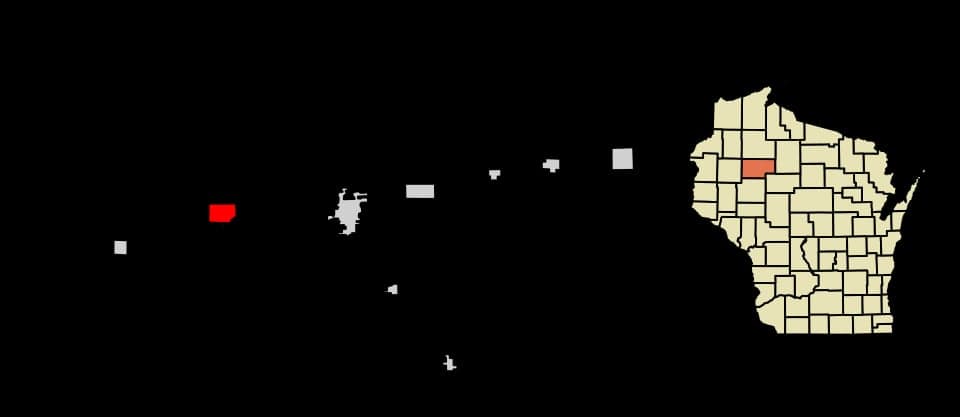
Bruce, Wisconsin, leans solidly Republican, with a Cook Partisan Voting Index (PVI) of R+11, meaning the area votes about 11 points more Republican than the national average. That puts it in a different political universe than the state of Wisconsin as a whole, which sits at a Cook PVI of EVEN—a perfect toss-up. In practice, that means Bruce and the surrounding Rusk County area are a reliable red anchor in a state that regularly flips between parties in presidential and statewide races.
How it compares
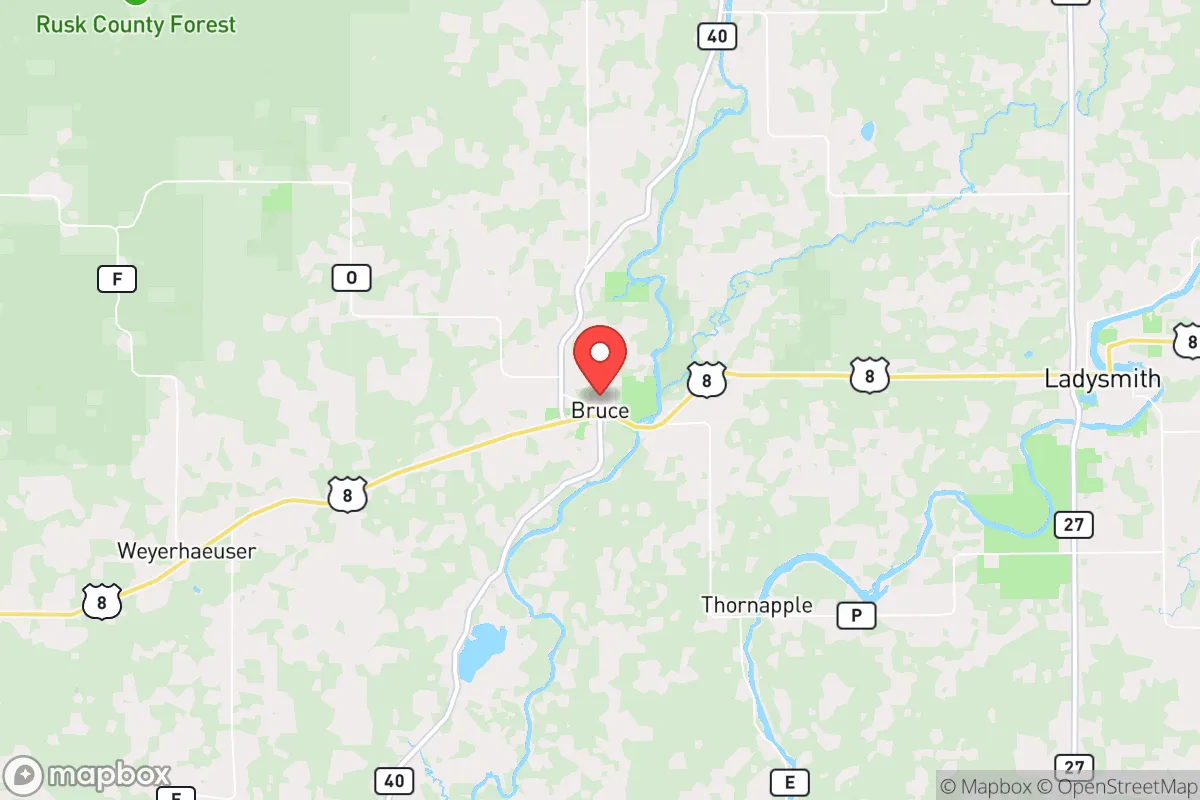
To understand Bruce's politics, you have to look at the contrast with the rest of Wisconsin. The state's EVEN rating reflects a razor-thin balance between the Democratic strongholds of Madison and Milwaukee and the Republican-leaning rural and exurban regions. Bruce sits firmly in the latter camp. Rusk County, where Bruce is located, has voted Republican in every presidential election this century, often by margins of 20 points or more. That's a stark difference from places like Ladysmith, the county seat just a few miles south, which is more politically mixed—it has a working-class, union-heavy history that occasionally breaks for Democrats in local races. Further afield, Eau Claire, about an hour southwest, is a college town that has trended blue in recent cycles, while Chippewa Falls, to the south, leans Republican but with a more moderate, business-friendly flavor than Bruce's rural conservatism.
What this means for residents
For conservative residents, Bruce's political climate means their values are largely reflected in local government, from the county board to the sheriff's office. Gun rights, property rights, and a general skepticism of state-level mandates are mainstream positions here. You'll see plenty of Trump signs in yards during election season, and the local GOP is well-organized. For liberal residents, the reality is different—you're likely in the minority, and you may find yourself biting your tongue at the gas station or the feed mill. That said, it's not hostile. Most folks here are neighborly and judge you by your work ethic, not your bumper stickers. The bigger frustration for progressives is practical: their votes rarely matter in statewide outcomes, and they have to drive to Eau Claire or even Madison to find a like-minded political community.
What this means for the future
Looking ahead, Bruce's political trajectory is unlikely to shift dramatically. The area's population is aging and slowly declining, which tends to reinforce conservative voting patterns. There's no major in-migration of new residents that would change the calculus, unlike some parts of northern Wisconsin that are seeing an influx of remote workers from the Twin Cities. If anything, the rural-urban divide that defines Wisconsin politics is likely to widen. That means Bruce will remain a reliable Republican vote in a state that will continue to be decided by the suburbs of Milwaukee and Madison. For residents, the practical takeaway is this: if you're conservative, you're in a comfortable political bubble; if you're liberal, you're in for a long haul, but you'll find the community itself welcoming even when the politics aren't.

State Political ClimatePolitical Climate in Wisconsin
State Political AnalysisPolitical Environment in the State
Wisconsin is the ultimate swing state, with a Cook PVI of EVEN that perfectly captures its knife-edge political balance. Over the past 20 years, the state has shifted from a reliably blue-leaning battleground (voting for Democrats in every presidential election from 1988 to 2012) to a true toss-up, decided by margins of less than 1% in both 2016 and 2020. The dominant coalitions are a shrinking but still potent union-and-urban base in Milwaukee and Madison, pitted against a growing, energized conservative coalition in the suburban WOW counties (Waukesha, Ozaukee, Washington) and the vast rural north and west. The trajectory is a slow, grinding realignment: the rural areas are getting redder and more populous metros are getting bluer, but the suburbs—especially places like Brown Deer and Mequon—are becoming the decisive battlegrounds where statewide elections are won or lost.
Urban vs. rural divide
The political map of Wisconsin is a study in stark contrasts. Milwaukee County is the Democratic stronghold, delivering margins of 60-70% for the party, powered by the city's Black and Latino voters and a strong union presence. Dane County, home to Madison and the University of Wisconsin, is even more liberal, routinely hitting 75% Democratic—a cultural and policy island of progressive governance in a purple state. In contrast, the WOW counties (Waukesha, Ozaukee, Washington) are the GOP's firewall, routinely delivering 60-65% Republican margins. The rural Northwoods—places like Vilas, Oneida, and Lincoln counties—have shifted hard right over the past decade, driven by opposition to COVID-era restrictions and a cultural backlash against Madison's policies. The Fox Valley (Appleton, Green Bay, Oshkosh) is the true bellwether: Brown County flipped from Obama to Trump and back to Biden, reflecting the region's working-class, Catholic, and manufacturing-heavy electorate that swings on economic and cultural issues.
Policy environment
Wisconsin's policy environment is a patchwork of conservative and liberal impulses, reflecting its divided government. The state has a flat income tax of 4.4% (down from 7.75% in 2011), a 5% state sales tax (with local options up to 0.5%), and property taxes that are above the national average but capped by state law. The regulatory posture is generally business-friendly, with a right-to-work law passed in 2015 and a tort reform system that caps noneconomic damages. Education policy is a flashpoint: the state has a robust school choice program (the oldest in the nation, dating to 1990) that allows vouchers for private and religious schools, but also has some of the highest per-pupil spending in the Midwest. Healthcare is mixed—the state expanded BadgerCare under the Affordable Care Act, but the legislature has resisted a full Medicaid expansion. Election laws are a perennial battleground: Wisconsin has no-excuse absentee voting, same-day voter registration, and voter ID requirements, creating a system that both parties claim advantages from.
Recent policy direction
The last five years have seen Wisconsin lurch rightward on several fronts, then pull back slightly. In 2023, the Republican legislature passed Act 12, which overhauled the state's shared revenue system and imposed new restrictions on Milwaukee's ability to raise local taxes—a clear power play. On gun rights, Wisconsin is a shall-issue state for concealed carry (since 2011) and has a Castle Doctrine law with no duty to retreat. In 2024, the legislature passed a bill allowing constitutional carry (permitless carry), but it was vetoed by Governor Tony Evers. On abortion, the state is in legal chaos: a 1849 law banning abortion was effectively blocked by a 2023 Dane County ruling, but the case is headed to the state Supreme Court, which flipped to a 4-3 liberal majority in 2023. Parental rights have been a hot topic: the legislature passed a bill requiring schools to notify parents of a student's gender identity changes, but Evers vetoed it. On voting, the state banned private grant funding for election administration (2021) and tightened absentee ballot drop box rules, though a 2024 court ruling restored some access. Property rights are generally strong, with no statewide rent control and limited eminent domain abuse. Privacy and surveillance are relatively unregulated—Wisconsin has no comprehensive data privacy law, and law enforcement can access cell phone location data with a warrant.
Civil unrest & political movements
Wisconsin has been a flashpoint for political movements on both sides. The 2020 Kenosha unrest after the Jacob Blake shooting saw two nights of riots, arson, and the killing of two protesters by Kyle Rittenhouse—a case that became a national symbol of self-defense and vigilante justice. The 2020 election integrity controversy was intense: Trump's campaign alleged widespread fraud in Milwaukee and Madison, leading to a partial recount that widened Biden's margin. The 2022 gubernatorial race saw a massive turnout operation from both parties, with the GOP's Tim Michels losing by 3.4 points. On the left, the Indivisible and Wisconsin Working Families Party are active in Milwaukee and Madison. On the right, the Wisconsin Institute for Law & Liberty (WILL) is a powerful conservative legal group that has successfully challenged COVID mandates, election procedures, and school board policies. Immigration politics are relatively muted compared to border states, but the 2023 influx of migrants to Chicago has led to some buses being sent to Milwaukee, sparking local tensions. There is no serious secession or nullification movement, but county-level resolutions declaring "Second Amendment Sanctuary" status have passed in over 30 rural counties.
Projection
Over the next 5-10 years, Wisconsin will likely remain a toss-up state, but the demographic trends favor a slow shift leftward. The Milwaukee metro area is growing modestly, driven by young professionals and immigrants, while the rural north and west are aging and shrinking. The Madison metro is booming, adding 10,000+ residents annually, which will further juice Democratic margins. However, the WOW counties are also growing, and the GOP is making inroads with working-class voters in the Fox Valley. The wild card is the state Supreme Court: with a 4-3 liberal majority, expect rulings on abortion, redistricting, and election laws that could reshape the political landscape. The 2024 presidential election will be a stress test—if Democrats hold the state, the liberal court will likely cement gains; if Trump wins, expect a renewed push for voter ID laws and legislative supermajorities. For a new resident, the bottom line is that Wisconsin will remain a place where your vote truly matters, but the political climate will be perpetually contentious, with no clear majority emerging.
For a conservative relocating to Wisconsin, the practical takeaway is that you'll find a strong, organized conservative infrastructure in the suburbs and rural areas, with low taxes, school choice, and gun-friendly laws—but you'll also face a liberal governor who can veto the most aggressive legislation. For a liberal, you'll have a safe haven in Madison and Milwaukee, with a Democratic governor and a newly friendly state Supreme Court, but you'll be living in a state where the legislature is solidly Republican and likely to remain so after the 2024 redistricting. Either way, you're moving to a state where politics is a contact sport, and your neighbors will have strong opinions about it.
* Values derived from national, state, county, city and local statistics and may differ in a specific area. Last updated: 2026-09-01T03:41:48.000Z
Narrative content on this page is AI-generated and may contain mistakes. Verify any details that matter before acting on them.
ReloMaps may earn a commission from affiliate links at no extra cost to you.

