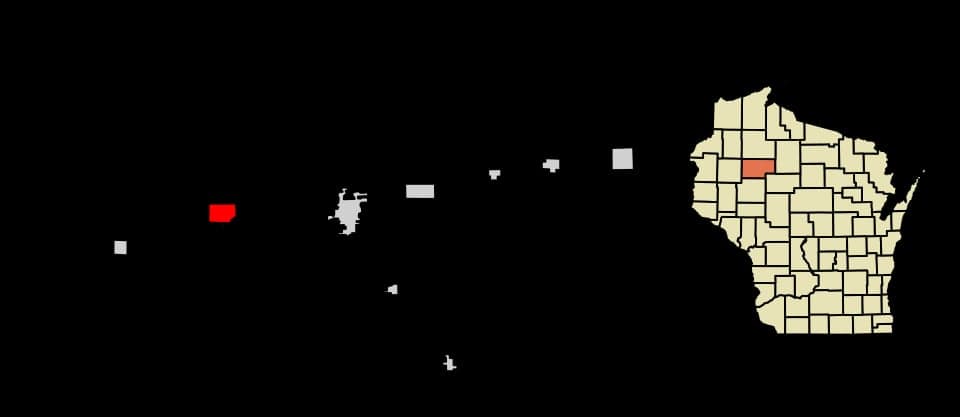
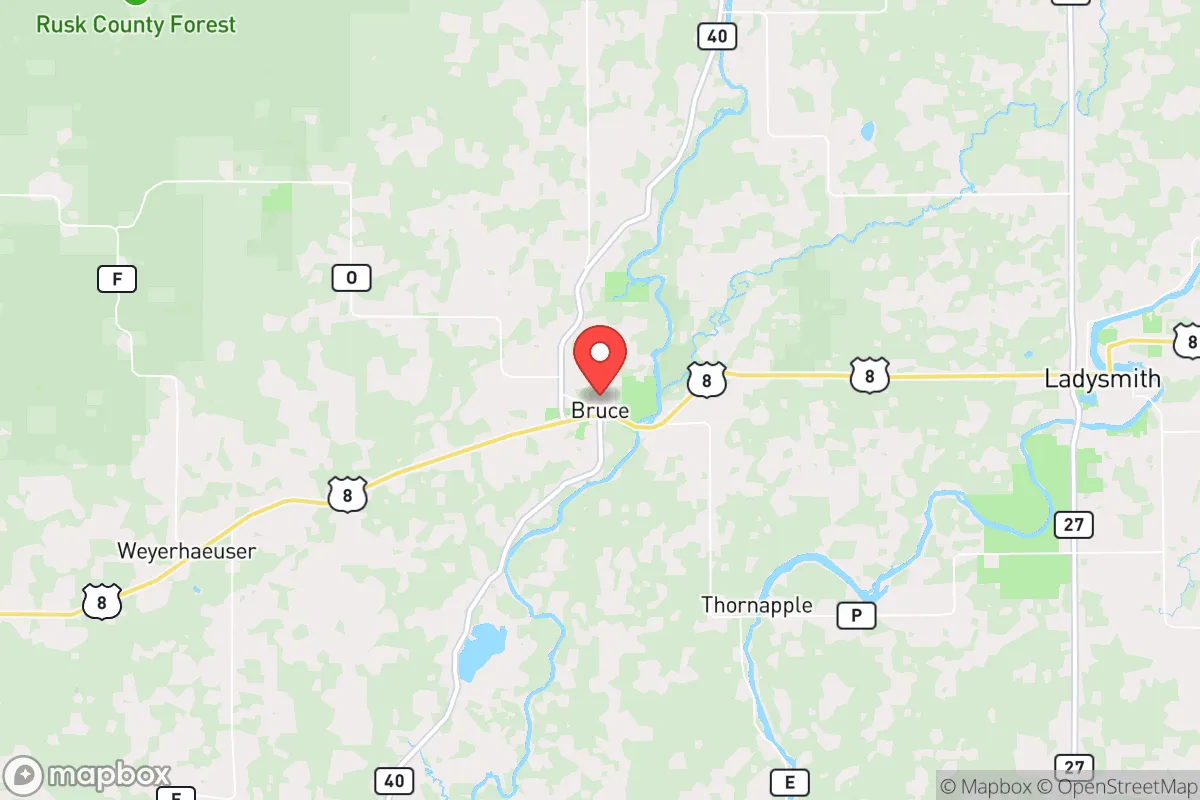
Photo: Wikipedia
Personal Sovereignty in Bruce, WI
Moderate friction. Expect trade-offs in some aspect of personal liberty and independence.
What does Personal Sovereignty tell us?
Personal Sovereignty measures your capacity for self-reliance and independence with minimal government friction. Higher scores mean fewer barriers between you and the way you want to live... but it assumes you have the space you need and good neighbors.
What does this tell us?
Personal Sovereignty measures your capacity for self-reliance and independence with minimal government friction. Higher scores mean fewer barriers between you and the way you want to live... but it assumes you have the space you need and good neighbors.
State Policy
Energy independence: Importer (15% of energy produced in-state)
Personal Liberty
Homesteading

Personal Liberty Analysis
Bruce, Wisconsin, offers a notably high degree of personal sovereignty for a rural Midwest community, but it operates within a state framework that is neither the most libertarian nor the most restrictive in the nation. The autonomy environment here is defined by a light-touch local government, a state with preemption laws that favor gun owners, and a landscape that still supports genuine self-reliance — though property taxes and certain regulatory layers temper the picture. For a single individual or family prioritizing independence, Bruce delivers a workable, if imperfect, balance: low local interference, solid Second Amendment protections, and enough land and distance to make off-grid living practical without being legally hostile.
Tax burden and regulatory posture in Rusk County
Wisconsin’s overall tax burden ranks in the upper-middle nationally, but Bruce’s specific situation is more favorable than the state average suggests. The effective property tax rate in Rusk County typically lands around 1.5% to 1.7% of assessed home value — noticeably lower than the 2.0%+ rates seen in Dane or Milwaukee Counties. A median-priced home in Bruce (roughly $150,000–$180,000) carries an annual property tax bill of about $2,400 to $3,000, which funds local schools, roads, and county services. There is no local income tax in Wisconsin beyond the state’s flat-ish graduated system (4%–7.65% depending on bracket), and Rusk County does not impose a separate sales tax beyond the state’s 5% plus a 0.5% county option, bringing the total to 5.5% — below the 6.5%–7.5% common in neighboring Minnesota.
Regulatory posture in Bruce is decidedly hands-off at the municipal level. The village has no zoning ordinance covering most residential uses, meaning you can park an RV, keep livestock, or run a small repair shop on your property without seeking a conditional-use permit. Rusk County does enforce a county-wide zoning code, but it is permissive for agricultural and rural residential parcels — minimum lot sizes in unincorporated areas are typically 1 to 5 acres, and accessory structures (barns, workshops, greenhouses) rarely require more than a simple building permit. The state’s Department of Natural Resources (DNR) does impose rules on wetland disturbance, septic systems, and shoreline development, so anyone planning a pond or a cabin near a waterway should budget for permitting delays. Compared to states like Oregon or Colorado, where land-use boards wield broad authority, Bruce’s regulatory environment feels closer to “file and proceed” than “apply and appeal.”
Self-defense and gun law specifics in Wisconsin
Wisconsin is a shall-issue state for concealed carry, and Bruce residents benefit from a legal framework that strongly favors individual self-defense. A concealed carry license (CCW) requires an 8-hour training course and a background check, but issuance is mandatory if you meet the criteria — local sheriffs have no discretion to deny based on character judgments. Open carry is legal without a permit for anyone 18 or older who can legally possess a firearm, and vehicle carry without a license is permitted if the firearm is unloaded and encased. The state’s Castle Doctrine, enacted in 2011, removes the duty to retreat in your home, vehicle, or business, and provides civil immunity for lawful self-defense uses — a meaningful protection for someone who might otherwise fear a lawsuit after a defensive shooting.
Stand-your-ground protections in Wisconsin extend beyond the home: you are not required to retreat in any place you are lawfully present, provided you reasonably believe force is necessary to prevent imminent death or great bodily harm. Magazine capacity is unrestricted, and there is no state-level assault weapons ban, so a resident can own a standard AR-15 or a 15-round handgun magazine without special registration. The main friction points are federal: background checks apply to all dealer sales, and private transfers between non-family members technically require a background check through a dealer (a 2015 law that adds a step but does not create a registry). Rusk County’s sheriff’s office processes CCW applications within the statutory 30-day window, and renewal is a simple online form. For a family that views firearms as a baseline right, Bruce’s legal climate is among the more accommodating in the Upper Midwest.
Self-reliance and homesteading viability: lot sizes, zoning, and off-grid feasibility
Homesteading in Bruce is not a romantic ideal — it is a practical, code-permitted reality. The village itself has lots as small as 0.25 acres, but the surrounding Rusk County countryside offers 5-, 10-, and 40-acre parcels at prices ranging from $1,500 to $3,000 per acre, making a 10-acre homestead with a well and septic achievable for under $50,000 in land costs. County zoning allows chickens, goats, pigs, and cattle on parcels of 5 acres or more without a special permit; smaller lots require a simple livestock permit that is routinely approved. There are no county-level restrictions on beekeeping, hoop houses, or roadside farm stands, and Wisconsin’s “Right to Farm” law shields agricultural operations from nuisance lawsuits — a critical protection if your neighbor complains about rooster crow or manure odor.
Off-grid feasibility is genuinely high, with one caveat: Wisconsin requires a licensed plumber to install the septic system, and the DNR mandates a soil test before a mound or conventional system is approved. That process costs $1,500–$3,000 and takes 4–8 weeks, but it is a one-time hurdle. Solar panels, wind turbines, and rainwater collection for irrigation are unregulated at the county level, though the state’s net-metering rules require your utility (typically Xcel Energy or a local co-op) to buy back excess power at a wholesale rate — not a windfall, but enough to offset a battery bank. Wood heat is the default in this region, and Rusk County has no restrictions on cutting your own timber for personal use. The one genuine constraint is winter: off-grid water systems must be frost-proofed (buried lines, heated pump houses), and a failed well pump in January is a $500 emergency, not a weekend project. Still, for someone willing to learn basic plumbing and electrical work, Bruce offers a lower barrier to self-sufficiency than most of the country.
Personal liberties: parental rights, medical autonomy, speech, and property
On personal liberties, Wisconsin’s legal posture is a mixed bag that leans conservative on parental rights and property, but is more interventionist on medical autonomy. Parental rights are strongly protected: Wisconsin has a parental consent law for minors’ abortions, a “Parents’ Bill of Rights” that affirms the right to direct a child’s education and healthcare, and no state mandate requiring schools to adopt LGBTQ-inclusive curricula — though local school boards in Rusk County have not pushed either direction. Homeschooling is lightly regulated: parents file a simple form with the district, must teach a list of core subjects, and are subject to no standardized testing or home visits. Medical autonomy is where the state is heavier-handed: Wisconsin has no religious exemption for childhood vaccination requirements in schools (though philosophical exemptions exist), and the state’s medical marijuana program is limited to a narrow list of conditions — recreational cannabis remains illegal, with possession of under 14 grams a civil forfeiture rather than a criminal charge.
Speech and assembly are protected under the state constitution, and Rusk County has no local ordinances restricting signs, flags, or political expression on private property. Property rights are robust: Wisconsin is a “Dillon’s Rule” state, meaning local governments only have powers explicitly granted by the legislature, and the state has preempted local bans on short-term rentals, plastic bag fees, and minimum wage hikes — so a Bruce resident can run an Airbnb or sell produce from a front-yard stand without municipal interference. The main property friction is the state’s use of eminent domain for utility easements and road widening, but that is rare in a village of this size. For a family that wants to raise children with minimal state entanglement in schooling, healthcare choices, or speech, Bruce’s legal environment is permissive on the issues that matter most to conservative-leaning households, with the notable exception of cannabis policy and vaccine mandates.
Relative to other rural areas in the Upper Midwest, Bruce ranks above average for personal sovereignty — it lacks the county-level land-use restrictions common in Colorado or Washington, the strict gun laws of Illinois or Minnesota, and the high property taxes of New York or New Jersey. It is not a libertarian utopia: Wisconsin’s income tax, DNR permitting, and vaccine rules are real constraints, and the nearest major city (Eau Claire, about 70 miles southwest) will always exert some regulatory gravity. But for a single person or family who wants to own land, carry a firearm, homeschool without harassment, and live with minimal local government interference, Bruce offers a concrete, affordable path to that life — with the caveat that you will need to navigate state-level bureaucracy on a handful of specific issues. The sovereignty here is earned through diligence, not granted by default, and that is precisely the kind of environment a self-reliant person tends to thrive in.

* Values derived from national, state, county, city and local statistics and may differ in a specific area. Last updated: 2026-09-01T03:41:48.000Z
Narrative content on this page is AI-generated and may contain mistakes. Verify any details that matter before acting on them.
ReloMaps may earn a commission from affiliate links at no extra cost to you.

