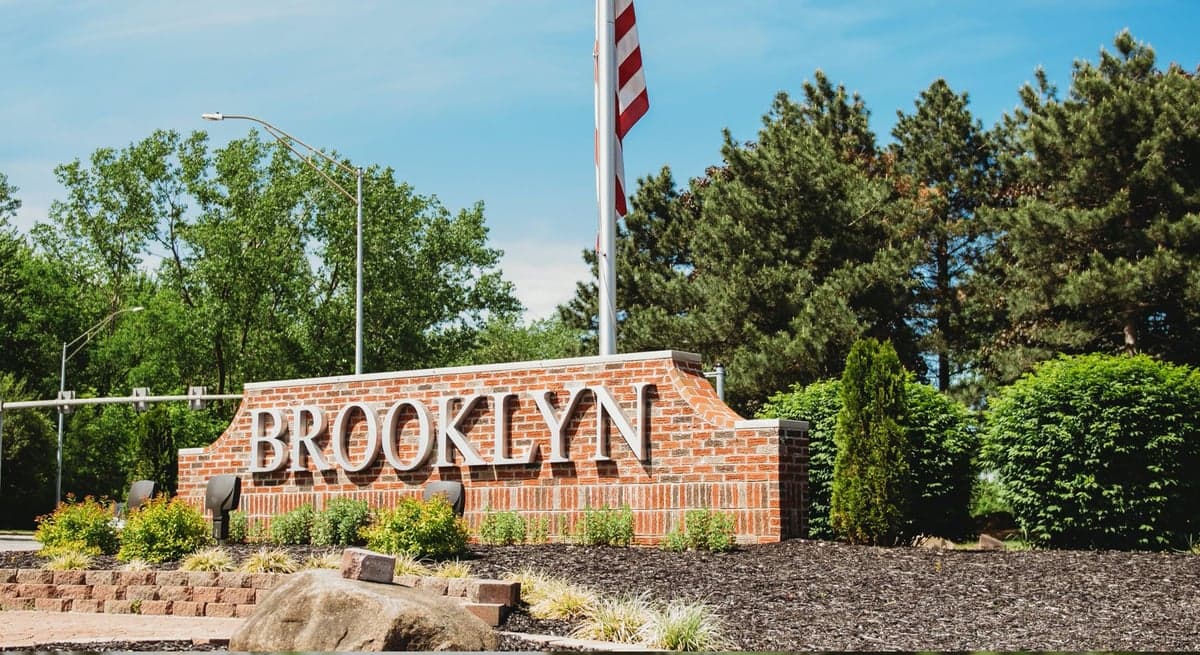
Photo: Wikipedia
Political ClimatePolitical Climate in Brooklyn, OH
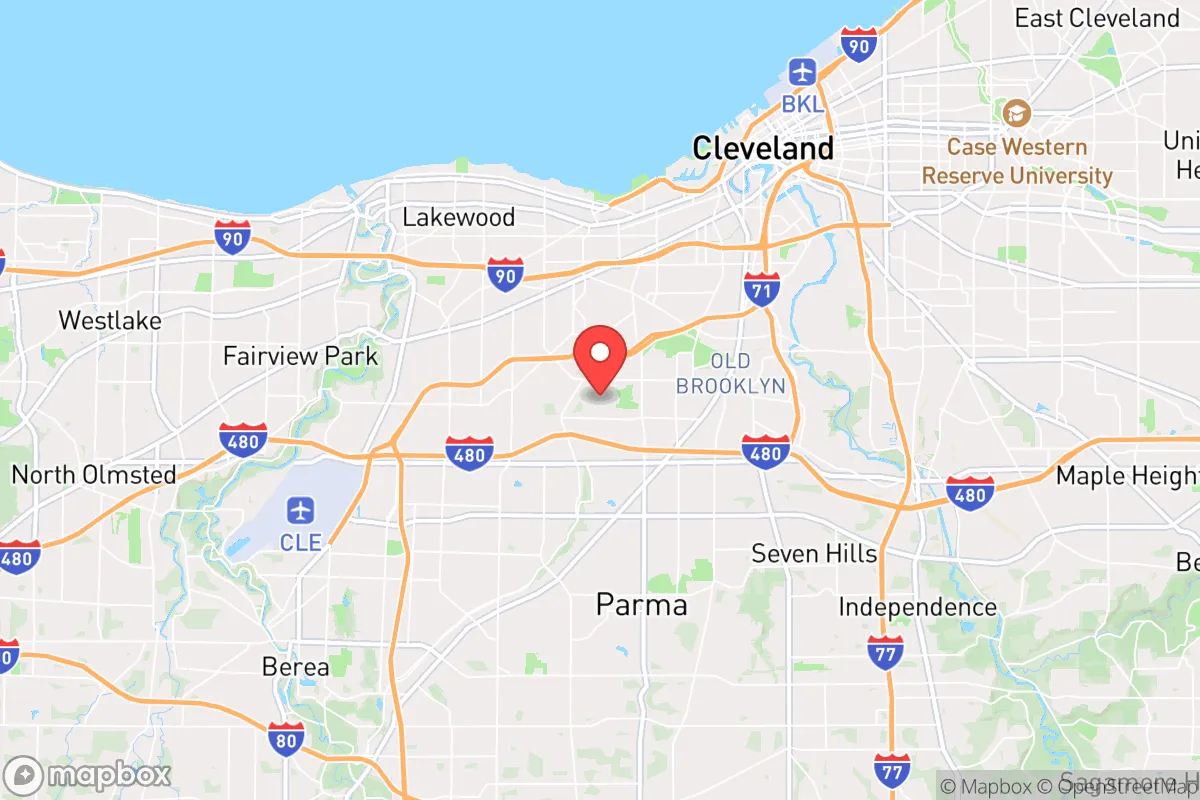
District shown is the primary district for this city’s centroid. Cities may span multiple districts.
Political rankings in Ohio
- Most Conservative Cities in Ohio
- Most Liberal Cities in Ohio
- Best Liberal-Leaning Towns in the Midwest
- Safest Liberal-Leaning Towns in the Midwest
- Safest Conservative-Leaning Towns in the Midwest
- Affordable Small Towns for Conservatives
- Most Affordable Liberal-Leaning Small Towns in the U.S.
- Safest Conservative-Leaning Cities in the U.S.
- Most Conservative Counties in Ohio
- Most Liberal Counties in Ohio
Local Political AnalysisPolitical Analysis of Brooklyn, OH
Brooklyn, Ohio, sits in a reliably Republican corner of Cuyahoga County, with a Cook PVI of R+5 that mirrors the state of Ohio as a whole. That R+5 rating means the area leans about five points more Republican than the national average, a shift that has become more pronounced over the last decade as the surrounding suburbs have drifted rightward. While the city itself isn't a political monolith—you'll find plenty of Democratic-leaning households, especially among older residents who remember the area's union-heavy manufacturing past—the overall trajectory is solidly red, and it's not showing signs of flipping back anytime soon.
How it compares
Brooklyn's R+5 rating puts it in the same bucket as the state of Ohio, which also carries a Cook PVI of R+5. That's a rare alignment: most suburbs in Cuyahoga County, like neighboring Parma or Seven Hills, lean more conservative than the state average, while the city of Cleveland itself is a deep blue outlier (roughly D+30). So Brooklyn sits in a kind of political middle ground—more conservative than the county's urban core but less hardline than exurbs like Strongsville or Brunswick, which often vote R+10 or higher. The contrast is sharpest when you drive ten minutes east into Cleveland proper, where Democratic candidates routinely win by 60-point margins. In Brooklyn, you'll see a mix of Trump signs and quieter Democratic support, but the precinct-level results from 2020 and 2024 show the GOP consistently carrying the city by low-to-mid single digits. It's a place where the national political winds are felt directly, without the buffering you get in deep-blue or deep-red areas.
What this means for residents
For conservative residents, Brooklyn offers a comfortable environment where their views are the local norm. You won't feel out of place at a city council meeting or a neighborhood block party if you lean right, and local elections often reflect that tilt—school board and municipal races tend to favor candidates who emphasize fiscal restraint and traditional values. For liberal residents, the reality is more nuanced. You're not in hostile territory—most people are civil, and the city's diversity (about 15% Black, 10% Hispanic) means you'll find like-minded neighbors—but you'll likely be in the minority on national issues. The practical effect is that progressive policy pushes, like ambitious climate initiatives or police reform measures, rarely gain traction locally. Instead, the city focuses on bread-and-butter issues: maintaining roads, keeping taxes low, and ensuring the schools are safe. Both sides can agree that Brooklyn's politics are pragmatic rather than ideological, which keeps the temperature lower than in many other parts of the country.
Culturally, Brooklyn feels more like a Midwestern small town than a big-city suburb, and that extends to its policy preferences. The city has a strong sense of local identity—residents take pride in the Brooklyn Centre Historic District and the annual Home Days festival—and that localism often trumps partisan loyalty. You'll see bipartisan support for the police department and the fire department, and even liberal residents tend to be more moderate on issues like taxes and zoning. The biggest distinction from the rest of Ohio is that Brooklyn's proximity to Cleveland means residents are more exposed to urban issues like transit and regional economic development, which can create cross-party coalitions. In practice, this means a Republican mayor might champion a light-rail extension, while a Democratic council member pushes for a tax abatement to attract a new warehouse. It's a place where the political label matters less than whether you show up to the community meetings.

State Political ClimatePolitical Climate in Ohio
State Political AnalysisPolitical Environment in the State
Ohio is a classic swing state that has shifted decisively rightward over the past decade, now carrying a Cook PVI of R+5 after voting for Donald Trump by 8 points in both 2016 and 2020 and by a wider 11-point margin in 2024. The state’s political center of gravity has moved from the old Reagan Democrat strongholds of the Mahoning Valley and Southeast Ohio to the fast-growing exurbs of Columbus and Cincinnati, while the once-reliable Democratic base in Cleveland and Toledo has shrunk. Over the last 20 years, Ohio has gone from a pure toss-up (voting for the winner in every election from 1964 to 2016) to a solidly Republican-leaning state, driven by a combination of rural realignment, union-member defections, and the cultural pull of nationalized politics.
Urban vs. rural divide
The political map of Ohio is a textbook study in the urban-rural split. The three major metros — Cleveland, Columbus, and Cincinnati — are Democratic strongholds, but they vary in intensity. Cuyahoga County (Cleveland) delivers margins of 60-65% for Democrats, while Franklin County (Columbus) has become reliably blue as the city’s tech and state-government workforce has grown. Hamilton County (Cincinnati) is more competitive, flipping from red to purple as the city’s core has gentrified and its suburbs have trended left. Meanwhile, the vast rural and small-town expanse — places like Lima, Zanesville, and Steubenville — votes 65-75% Republican. The real story is in the exurbs: Delaware County (north of Columbus) and Warren County (north of Cincinnati) are among the fastest-growing and most Republican counties in the state, with GOP margins exceeding 30 points. The old Democratic strongholds in the Mahoning Valley (Youngstown area) and along the Ohio River have flipped hard; Trumbull County, which voted for Obama twice, went for Trump by 8 points in 2024.
Policy environment
Ohio’s policy environment is broadly conservative but with notable pragmatic exceptions. The state has a flat income tax rate of 3.5% (down from 4.8% in 2020), with a phase-out plan that could eliminate it entirely by 2030. Sales tax is 5.75% at the state level, with local add-ons. Property taxes are moderate but vary wildly by district — expect 1.5-2.5% of assessed value. The state is a right-to-work state in practice, though not by statute; union membership has fallen to about 12% of the workforce. Education policy is a battleground: Ohio has a robust school voucher program (EdChoice) that now covers most families, and a 2023 law banned teaching of “divisive concepts” related to race and gender in K-12 classrooms. Healthcare is mixed — the state expanded Medicaid under the Affordable Care Act, but Republican governors have pushed work requirements and managed-care reforms. Election laws have tightened: a 2023 law requires photo ID for voting, limits drop boxes to one per county, and shortens the absentee ballot window. Gun laws are permissive: permitless carry was enacted in 2022, and the state has “stand your ground” protections.
Recent policy direction
The last three years have seen a sharp conservative turn in state policy. On gun and self-defense law, Ohio passed permitless carry (SB 215) in 2022 and a “stand your ground” law in 2021, eliminating the duty to retreat. On parental and education rights, the 2023 “Parents’ Bill of Rights” (HB 8) requires schools to notify parents of any changes to a student’s health or well-being, effectively restricting transgender accommodations. On speech and privacy, a 2024 law (SB 83) bans TikTok on state devices and restricts foreign ownership of farmland near military installations. On medical and bodily autonomy, the state is a flashpoint: a 2022 law banned abortion after six weeks (the “heartbeat bill”), but voters enshrined abortion rights in the state constitution via Issue 1 in November 2023 with 57% support — a direct rebuke to the legislature. On property rights, Ohio has strong eminent domain protections and a 2021 law (HB 110) that prohibits local governments from banning natural gas hookups. On taxation, the income tax is on a glide path to zero, with the 2025 budget accelerating cuts. On voting and ballot access, the 2023 omnibus election law (HB 458) tightened ID requirements and reduced early voting days, though same-day registration remains unavailable.
Civil unrest & political movements
Ohio has seen its share of political flashpoints. The 2020 protests in Columbus over George Floyd’s death were large but largely peaceful, though the city saw property damage and a controversial police response. The 2023 Issue 1 abortion-rights campaign was the most expensive ballot initiative in state history, drawing massive grassroots organizing from both sides. On the right, the “Ohio Freedom Alliance” and local Moms for Liberty chapters have been active in school board races, particularly in Delaware County and Warren County. Immigration politics are less visible than in border states, but a 2024 law (HB 33) requires local law enforcement to cooperate with ICE detainers. There is no serious secession or nullification movement, though some rural counties have passed symbolic “Second Amendment sanctuary” resolutions. Election integrity controversies flared after 2020, with Republican Secretary of State Frank LaRose conducting a limited audit that found no widespread fraud but leading to the 2023 voter ID law. A new resident would notice the stark cultural divide between the liberal urban cores and the conservative exurbs, but actual civil unrest is rare outside of occasional protests at the Statehouse.
Projection
Over the next 5-10 years, Ohio is likely to become more Republican, but not uniformly. The population is aging and shrinking in the northeast (Cleveland, Youngstown) while growing in the central and southwest exurbs. In-migration is modest compared to Sun Belt states, but the people moving in tend to be conservative-leaning families from the Midwest and Northeast seeking lower taxes and more space. The Democratic base is increasingly concentrated in Columbus and Cleveland, with Cincinnati becoming more competitive. The income tax phase-out will likely be completed by 2030, making Ohio more attractive to high-earners but straining local services. The abortion-rights constitutional amendment will remain a flashpoint, with likely legislative attempts to restrict access through regulation (e.g., clinic licensing, waiting periods). The state’s political trajectory suggests it will settle into a solid R+6 to R+8 lean by 2032, similar to Indiana or Missouri, but with a persistent urban-liberal minority that keeps statewide races competitive for governor and Senate.
For a new resident, the bottom line is this: Ohio offers a conservative policy environment on taxes, guns, and education, with a pragmatic streak on healthcare and a direct-democracy check on social issues. If you’re a conservative, you’ll find a welcoming state with low taxes and strong property rights. If you’re a liberal, you’ll find safe urban enclaves in Columbus, Cleveland, and Cincinnati where your vote matters, but you’ll be outvoted at the state level. The state is stable, affordable, and politically predictable — you won’t see dramatic swings, but you will see a steady rightward drift. The key is choosing your county wisely: Delaware County for conservative exurban comfort, Franklin County for urban progressive energy, or Hamilton County for a purple mix.
* Values derived from national, state, county, city and local statistics and may differ in a specific area. Last updated: 2026-11-27T14:30:42.000Z
Narrative content on this page is AI-generated and may contain mistakes. Verify any details that matter before acting on them.
ReloMaps may earn a commission from affiliate links at no extra cost to you.

