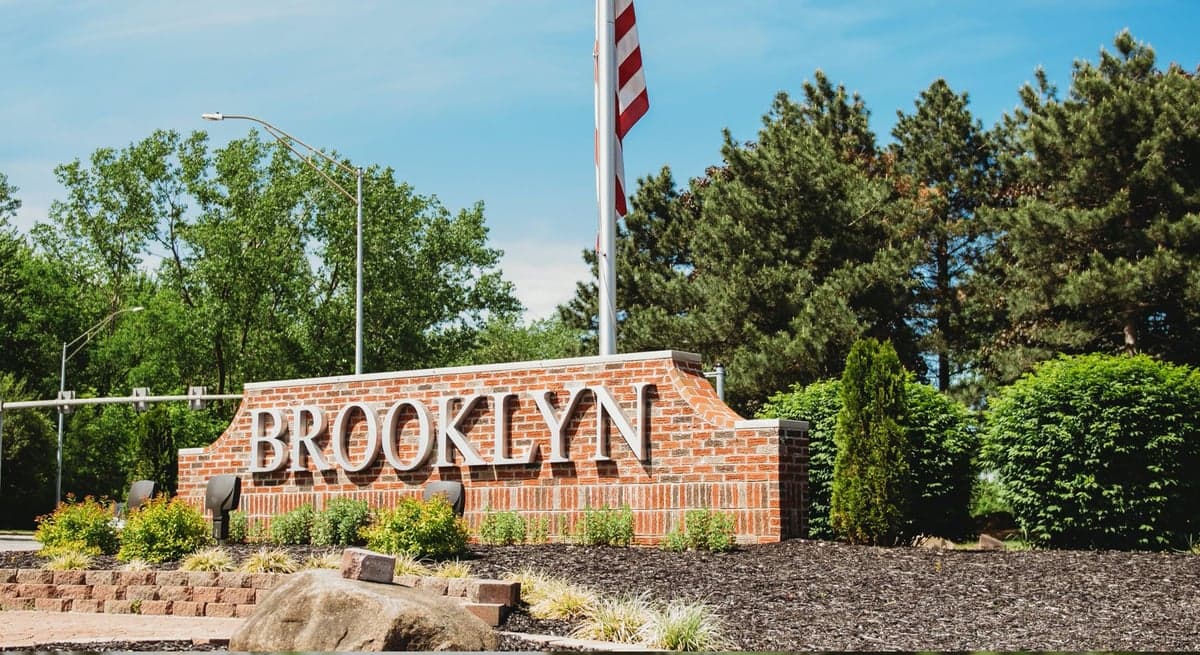
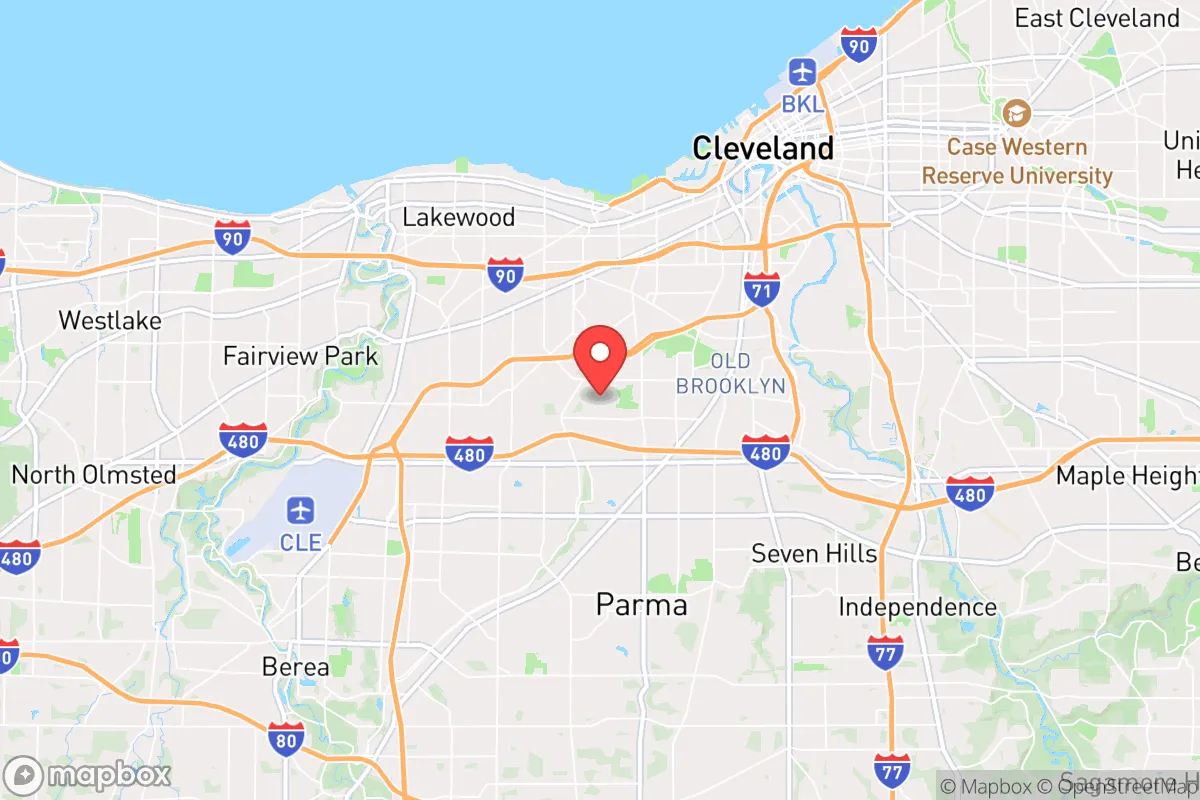
Photo: Wikipedia
Personal Sovereignty in Brooklyn, OH
Strong independent fundamentals that actively favor personal liberty and low regulation.
What does Personal Sovereignty tell us?
Personal Sovereignty measures your capacity for self-reliance and independence with minimal government friction. Higher scores mean fewer barriers between you and the way you want to live... but it assumes you have the space you need and good neighbors.
What does this tell us?
Personal Sovereignty measures your capacity for self-reliance and independence with minimal government friction. Higher scores mean fewer barriers between you and the way you want to live... but it assumes you have the space you need and good neighbors.
State Policy
Energy independence: Self-sufficient (88% of energy produced in-state)
Personal Liberty
Homesteading

Personal Liberty Analysis
Brooklyn, Ohio, offers a moderate level of personal sovereignty that reflects its suburban Cuyahoga County setting within a state that generally respects individual autonomy, but with notable constraints from local and county-level regulations. For a relocation researcher focused on personal freedom, the key takeaway is that Ohio provides a solid baseline of rights—particularly in self-defense and taxation—while Brooklyn itself operates under a more structured, code-heavy municipal framework that limits certain forms of self-reliance. The balance here is between state-level protections and local oversight, making it a viable option for those who value legal clarity over laissez-faire flexibility.
Tax burden and regulatory posture: How heavy is the hand of government?
Ohio’s state-level tax environment is relatively friendly to personal sovereignty, with a flat income tax rate of 3.5% as of 2026 and no tax on Social Security benefits. However, Brooklyn residents face a combined local income tax of 2.5% (city) plus 1.0% for the Cuyahoga County transit authority, totaling a 3.5% local levy on earned income—meaning a resident’s total income tax burden can reach 7.0% when combined with the state rate. Property taxes in Brooklyn are assessed at an effective rate of roughly 2.1% of market value, which is above the national average but typical for Northeast Ohio suburbs. The regulatory posture is best described as moderately interventionist: the city enforces a detailed zoning code, requires permits for most home improvements (including fences and sheds), and maintains a business licensing process that can take 4-6 weeks. For a reader prioritizing minimal government interference, this is a heavier touch than rural Ohio counties but lighter than inner-ring Cleveland suburbs. The city’s reliance on income tax revenue means it has a financial incentive to keep residents employed rather than punitive, but the permitting and code enforcement culture is real and active.
Self-defense and gun law specifics: What are your rights to protect yourself?
Ohio is a “constitutional carry” state, meaning that as of 2022, any law-abiding adult 21 or older can carry a concealed handgun without a permit. Brooklyn does not impose any additional local restrictions beyond state law, so residents enjoy the full scope of Ohio’s self-defense framework. This includes stand-your-ground protections with no duty to retreat in any place where the individual is lawfully present, and a castle doctrine that extends to occupied vehicles. The state also preempts local firearm ordinances, meaning Brooklyn cannot ban carry in parks, libraries, or other public spaces (though private property owners can restrict it). For home defense, there are no magazine capacity limits or “assault weapon” bans at the state or local level. The practical implication: a Brooklyn resident can legally keep a firearm in their home without registration, carry it concealed in most public areas (including the city’s commercial districts along Brookpark Road), and use deadly force if they reasonably believe it’s necessary to prevent imminent death or great bodily harm. The only notable limitation is that Ohio law prohibits carry in certain “sensitive places” like schools, government buildings, and airports—standard restrictions that don’t significantly impact daily life for most residents.
Self-reliance and homesteading viability: Can you live off your own land?
Brooklyn is a densely developed inner-ring suburb with an average lot size of about 0.15 acres, making traditional homesteading—raising livestock, large gardens, or off-grid systems—largely impractical. The city’s zoning code explicitly prohibits keeping chickens, goats, or other farm animals on residential lots, and any garden structures (greenhouses, raised beds over 4 feet tall) require a building permit. Off-grid feasibility is low: the city mandates connection to municipal water and sewer, and solar panel installations must comply with building codes and HOA covenants in many subdivisions. Rainwater collection is technically allowed for non-potable uses (like irrigation) but is limited to 100 gallons per property without a permit, and the city’s stormwater management regulations discourage large cisterns. For a reader seeking self-reliance, Brooklyn is not the place for a homesteading lifestyle. However, the city does have a strong community garden program through the Brooklyn Recreation Department, which offers 10x10-foot plots for $25 per season—a small-scale alternative for those who want to grow some of their own food without the regulatory headaches of a private garden. The broader Cuyahoga County region has several “urban agriculture” initiatives, but these are more about community engagement than personal food independence.
Personal liberties: Parental rights, medical autonomy, speech, and property
Ohio law provides robust protections for parental rights, including a statutory presumption that parents have decision-making authority over their children’s education, healthcare, and religious upbringing. Brooklyn City Schools, like all Ohio districts, must comply with state laws requiring parental notification for any medical or mental health services provided on school grounds (with limited exceptions for emergencies). The state’s “Parents’ Bill of Rights” (enacted in 2023) explicitly affirms that parents have the right to review instructional materials and opt their children out of any curriculum they find objectionable. On medical autonomy, Ohio does not have a state-level vaccine mandate for adults, and while the COVID-19 era saw some local health orders, Brooklyn did not impose any unique restrictions beyond state guidance. Freedom of speech is fully protected under the First Amendment and Ohio’s own constitution, with no local ordinances restricting political expression, signage, or assembly beyond standard time-place-manner regulations. Property rights are more constrained: the city’s zoning code is detailed and enforced, with regular code enforcement patrols for tall grass, unregistered vehicles, and exterior maintenance. Home-based businesses are allowed but require a conditional use permit and cannot generate customer traffic or visible signage. For a reader who values the ability to use their property as they see fit, Brooklyn’s regulatory environment will feel restrictive compared to unincorporated areas of Ohio, but it is predictable and consistently applied.
Overall, Brooklyn, Ohio offers a moderate-to-high level of personal sovereignty when compared to other Northeast Ohio suburbs, but it is not a freedom-maximizing environment. The state’s strong self-defense laws, parental rights protections, and flat income tax create a solid foundation, while the city’s dense zoning, property tax burden, and code enforcement culture impose real limits on self-reliance and property autonomy. For a conservative-leaning individual or family who values legal clarity and predictable rules—and who does not need to keep livestock or build off-grid—Brooklyn provides a workable balance. Those seeking maximum personal sovereignty would find more room in rural Ohio counties like Geauga or Medina, where lot sizes are larger and zoning is lighter. But for a suburban setting with good schools, low violent crime, and a government that respects state-level liberties while maintaining order, Brooklyn is a defensible choice.

* Values derived from national, state, county, city and local statistics and may differ in a specific area. Last updated: 2026-11-27T14:30:42.000Z
Narrative content on this page is AI-generated and may contain mistakes. Verify any details that matter before acting on them.
ReloMaps may earn a commission from affiliate links at no extra cost to you.

