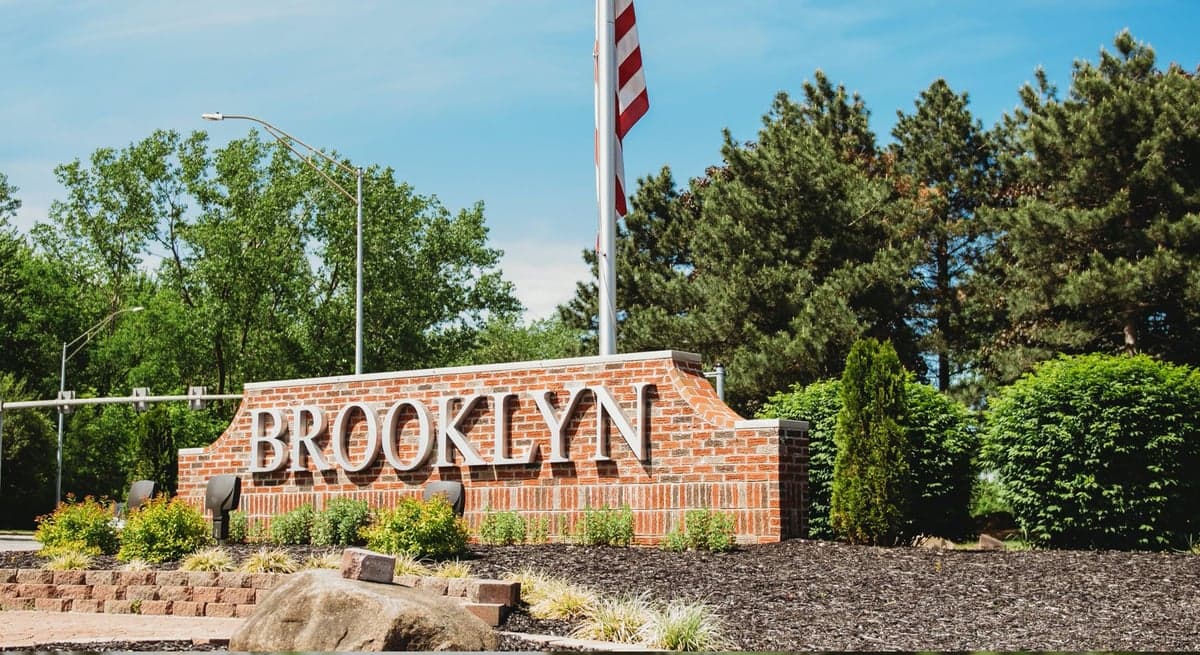
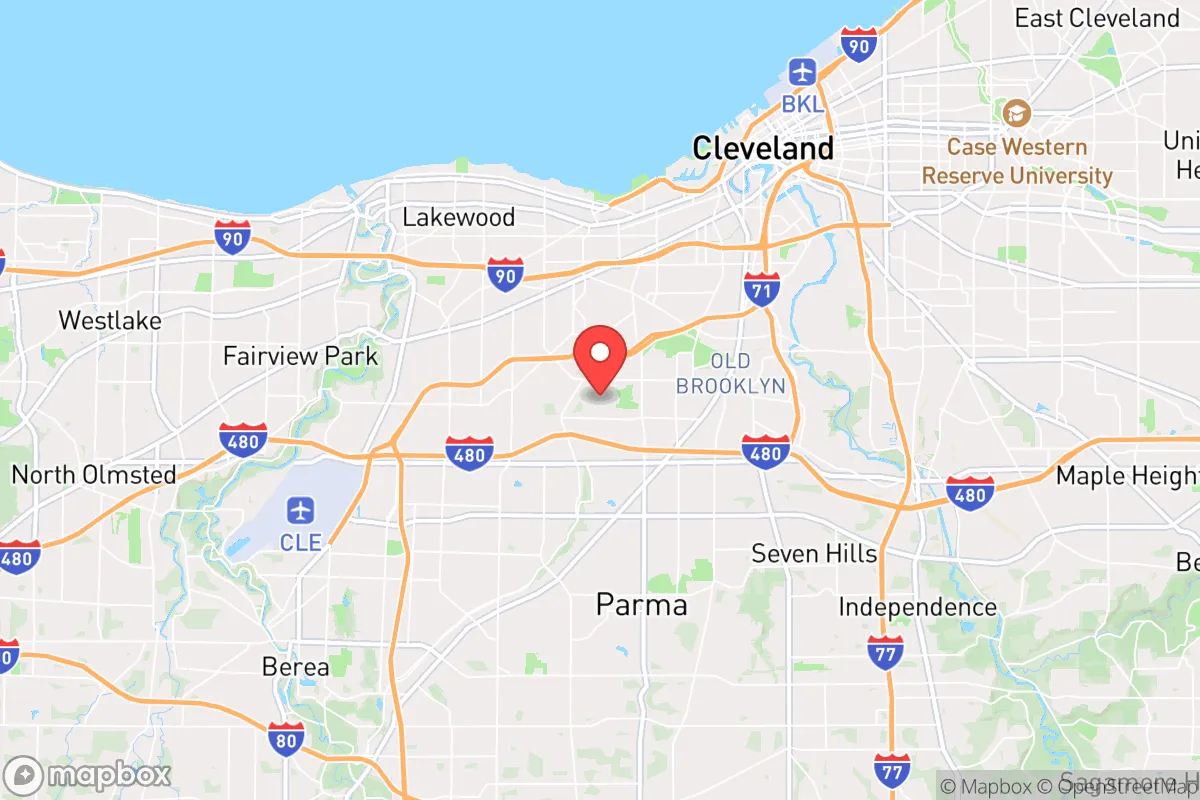
Photo: Wikipedia
Quality of Life in Brooklyn, OH
A livable area that tracks near national norms for affordability, walkability, and neighborhood health.
What does Quality of Life tell us?
Quality of Life blends cost of living, nearby amenities, socioeconomic signals, and neighborhood character. City-level scores represent the whole municipality; individual neighborhoods can differ.
What does this tell us?
Quality of Life blends cost of living, nearby amenities, socioeconomic signals, and neighborhood character. City-level scores represent the whole municipality; individual neighborhoods can differ.
Cost of Living
30% below national average
The Real Cost of Living in Brooklyn, OH for 2026
| Tier | Individual | Family (4) |
|---|---|---|
| Survival | $15k | $28k |
| Comfortable | $30k | $44k |
| Luxury | $90k+ | $140k+ |
| Elite (Top 5%) | $106k+ | $165k+ |
159%
The Area Signal
A metric tracking the socioeconomic signals of the area.
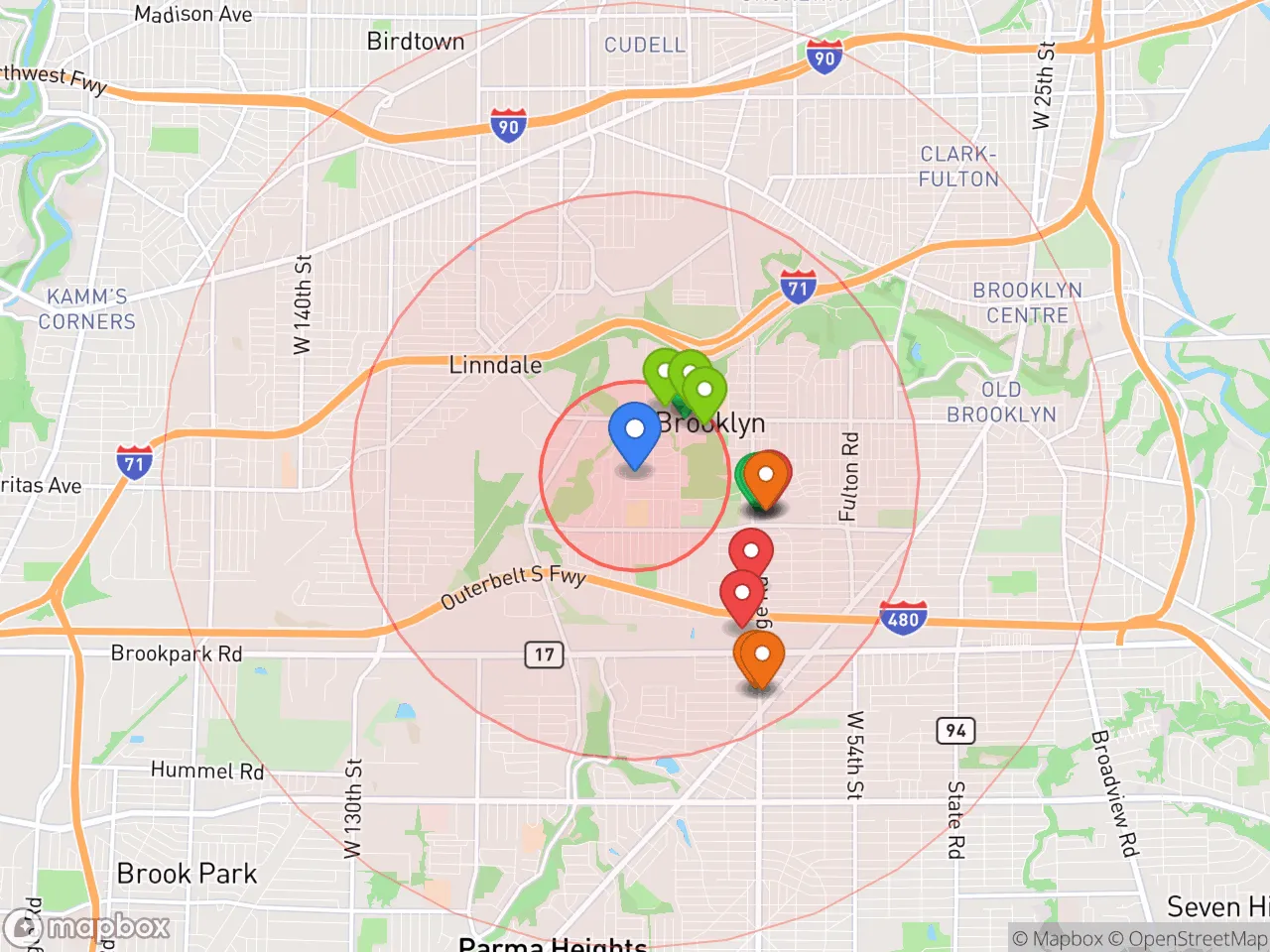
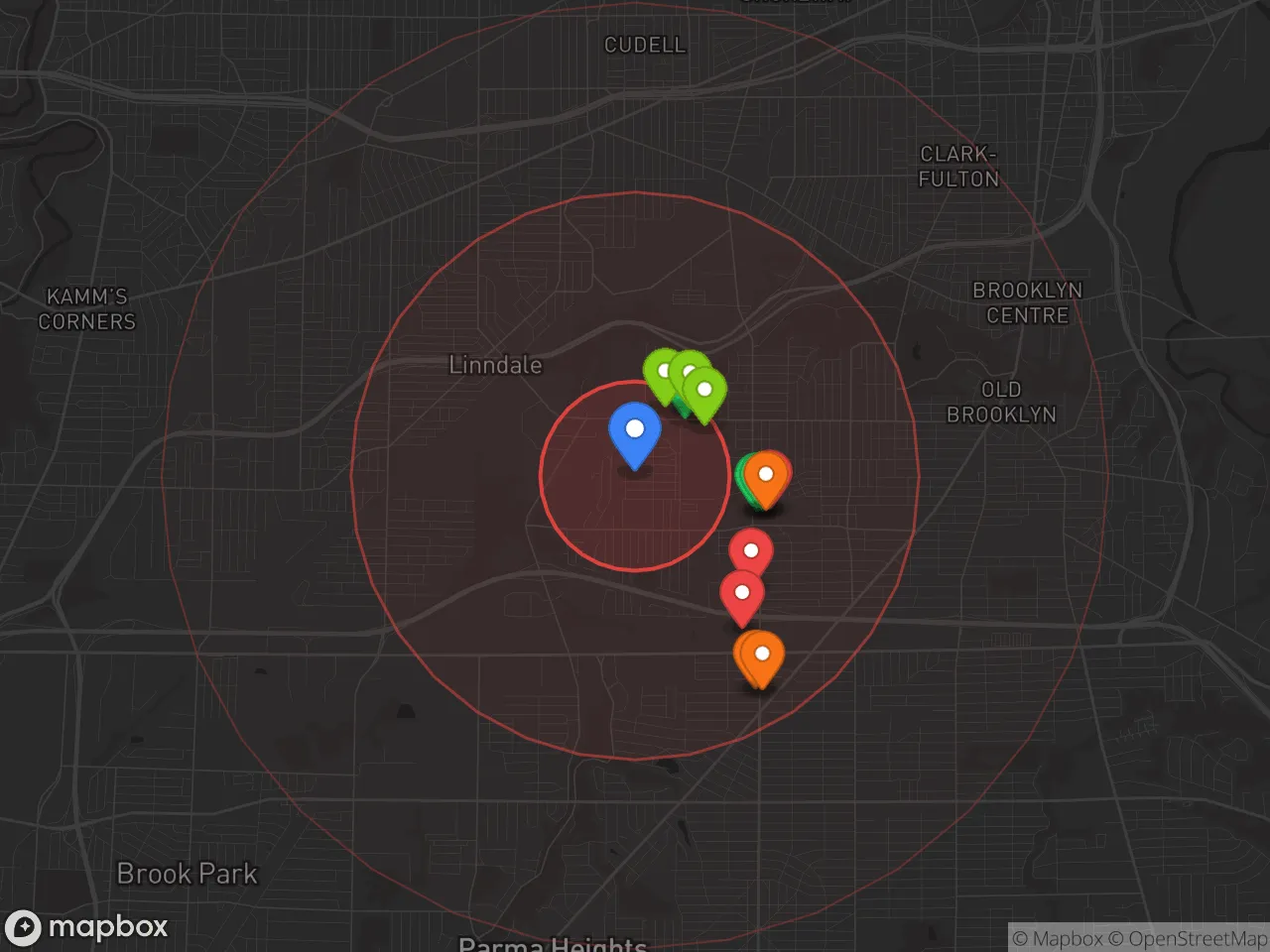
Hobbies
Explore the areaGroceries
0 within 10 miles
Gas
0 within 10 miles
Hospital
0 within 20 miles
Airport
DTW — Detroit Metropolitan Wayne County
Post Office
Critical Amenities
Quality-of-Life Analysis
Brooklyn, Ohio, offers a quality of life defined by its affordability and quiet suburban character, attracting a mix of long-term residents, young families, and Cleveland commuters. With a cost of living index of 70—30% below the U.S. average—the city provides a financially accessible alternative to pricier inner-ring suburbs like Lakewood or Shaker Heights. The population skews toward middle-income households and retirees, drawn by stable property values and a slower pace of life just 10 miles from downtown Cleveland.
Cost of living, housing, and affordability compared to nearby suburbs
Brooklyn’s housing market is a standout for budget-conscious buyers. The median home value sits at $153,000, roughly half the Cuyahoga County median of $210,000 and far below the $300,000+ typical in suburbs like Westlake or Strongsville. Median rent is $944, undercutting the county average of $1,100 and making it one of the most affordable rental markets in the region. The average commute of 22.5 minutes is slightly shorter than the Cleveland metro average of 24 minutes, aided by direct access to I-480 and I-71. Property taxes are moderate for Ohio, at roughly 2.1% of assessed value, though residents should note that Brooklyn does not levy a local income tax on residents—only a 2% tax on those who work within city limits. For comparison, neighboring Parma imposes a 2% resident income tax, while Cleveland’s is 2.5%.
Schools, amenities, and what daily life feels like
Daily life in Brooklyn centers on its well-maintained parks and straightforward retail corridors. The Brooklyn City School District serves about 1,800 students across three schools, with Brooklyn High School earning a state rating of 3.5 out of 5 stars on the Ohio School Report Card. For shopping and dining, the Tiedeman Road corridor offers big-box stores, chain restaurants, and a Walmart Supercenter, while the nearby SouthPark Mall in Strongsville provides additional options. Outdoor recreation includes the 100-acre Brooklyn Memorial Park, which features sports fields, a walking trail, and a community pool. The city’s annual Home Days festival in August draws residents for carnival rides and live music. Commuters appreciate the 20-minute drive to Cleveland Hopkins International Airport and the RTA bus line along Brookpark Road, though car ownership is nearly universal. The neighborhood feel is quiet and residential, with ranch-style homes and post-war bungalows dominating the housing stock.
Who will thrive in Brooklyn, Ohio
Brooklyn is best suited for those prioritizing affordability and convenience over urban excitement. First-time homebuyers, retirees on fixed incomes, and Cleveland workers seeking a short commute will find the housing costs and tax structure particularly attractive. Families with school-age children should weigh the district’s middling academic ratings against the low cost of entry. The city lacks a walkable downtown core or vibrant nightlife, so young professionals or empty-nesters seeking a lively social scene may prefer Lakewood or Ohio City. However, for anyone who values a stable, low-stress suburb with easy highway access and a strong sense of community, Brooklyn delivers a solid, budget-friendly quality of life.

Crime in Brooklyn, OH
Generally safer than 72% of comparable U.S. locations.
Violent CrimeViolent Crime Analysis
Property CrimeProperty Crime Analysis
Crime Analysis
Brooklyn, Ohio, presents a mixed safety profile that demands careful consideration from potential residents. While the city’s violent crime rate of 81.8 incidents per 100,000 residents is notably low—roughly one-third the national average—its property crime rate of 6,207.4 per 100,000 is significantly elevated, nearly double the national figure. This divergence means that while the risk of violent assault is minimal, the likelihood of theft, burglary, or vehicle break-ins is a genuine concern for daily life.
Crime in context
Brooklyn’s violent crime rate of 81.8 per 100,000 places it among the safer suburbs in the Cleveland metropolitan area, far below the Ohio state average of approximately 300 per 100,000 and the national rate of about 380 per 100,000. However, the property crime rate of 6,207.4 per 100,000 is roughly 1.8 times the national average and well above the Ohio state average of around 2,200 per 100,000. This stark contrast suggests that Brooklyn’s law enforcement and community programs have been effective at preventing violent confrontations, but property crimes—often opportunistic—remain a persistent challenge. The city’s location near major highways (I-480 and I-71) and its mix of residential neighborhoods, retail corridors, and industrial zones likely contribute to higher property crime exposure, as transient offenders can easily access and exit the area.
What residents experience
For those living in Brooklyn, the day-to-day reality is one of low personal danger but high vigilance regarding possessions. Residents report that car break-ins, package thefts from porches, and occasional home burglaries are the most common nuisances. The city’s police department maintains a visible presence and offers community programs like neighborhood watch, but the sheer volume of property crime—over 6,200 incidents per 100,000 residents annually—means that a household’s odds of being victimized in a given year are roughly 1 in 16. This is a tangible risk that affects insurance premiums, daily routines (e.g., locking cars and garages), and overall peace of mind. It is also worth noting that Brooklyn falls within Cuyahoga County, which has seen progressive prosecutorial policies in recent years. Critics argue that such approaches, while well-intentioned, can lead to reduced consequences for repeat property offenders, potentially emboldening criminal activity and undermining deterrence. This systemic factor may help explain why property crime rates remain stubbornly high even as violent crime stays low.
Neighborhood-level variation is present but not extreme. The eastern and southern parts of Brooklyn, closer to the industrial zones and highway interchanges, tend to report higher property crime numbers. The western residential areas, particularly near the Cleveland Metroparks and the more established single-family home districts, see somewhat lower rates. However, no neighborhood is immune, and the city’s compact size (about 4 square miles) means that crime patterns shift quickly. Prospective residents should consult the Brooklyn Police Department’s online crime map and speak with neighbors in specific blocks before committing to a rental or purchase. Overall, Brooklyn offers a safe environment for personal safety but demands a proactive approach to securing property—a trade-off that many find acceptable given its affordable housing and convenient location, but one that should not be underestimated.
* Values derived from national, state, county, city and local statistics and may differ in a specific area. Last updated: 2026-11-27T14:30:42.000Z
Narrative content on this page is AI-generated and may contain mistakes. Verify any details that matter before acting on them.
ReloMaps may earn a commission from affiliate links at no extra cost to you.

