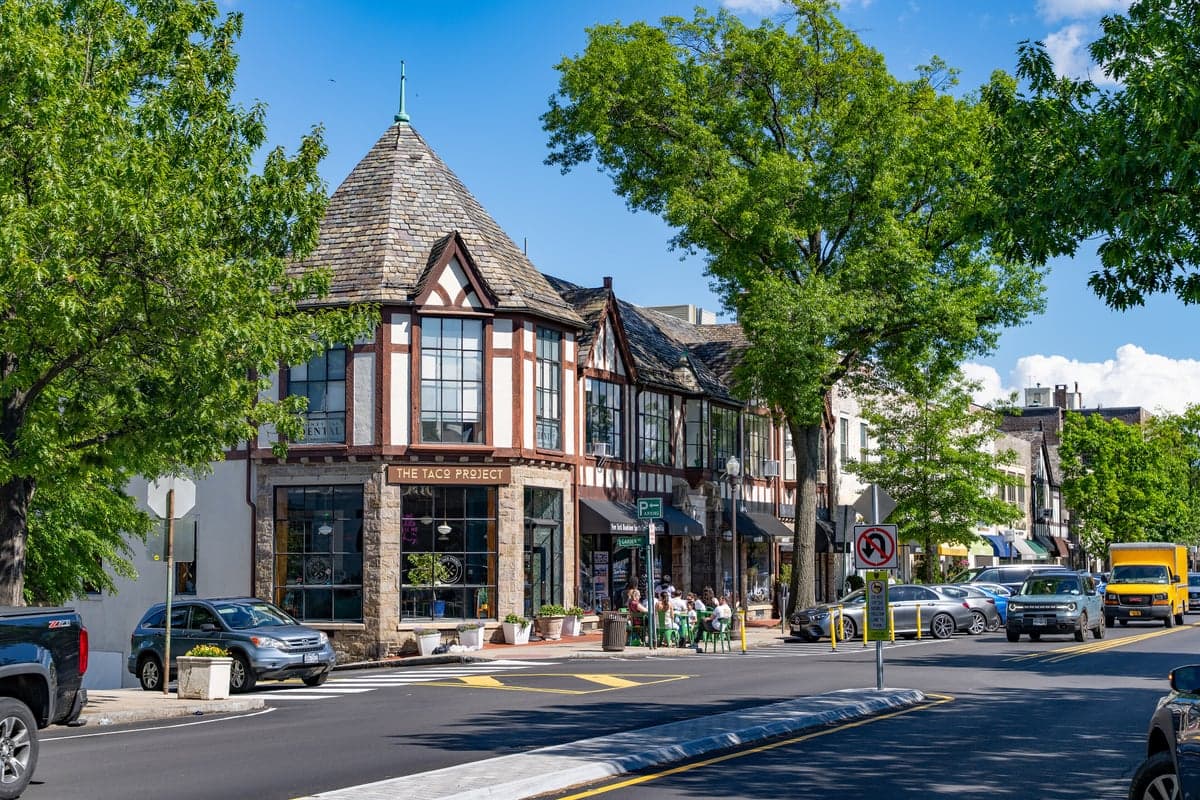
Photo: Wikipedia
Political ClimatePolitical Climate in Bronxville, NY
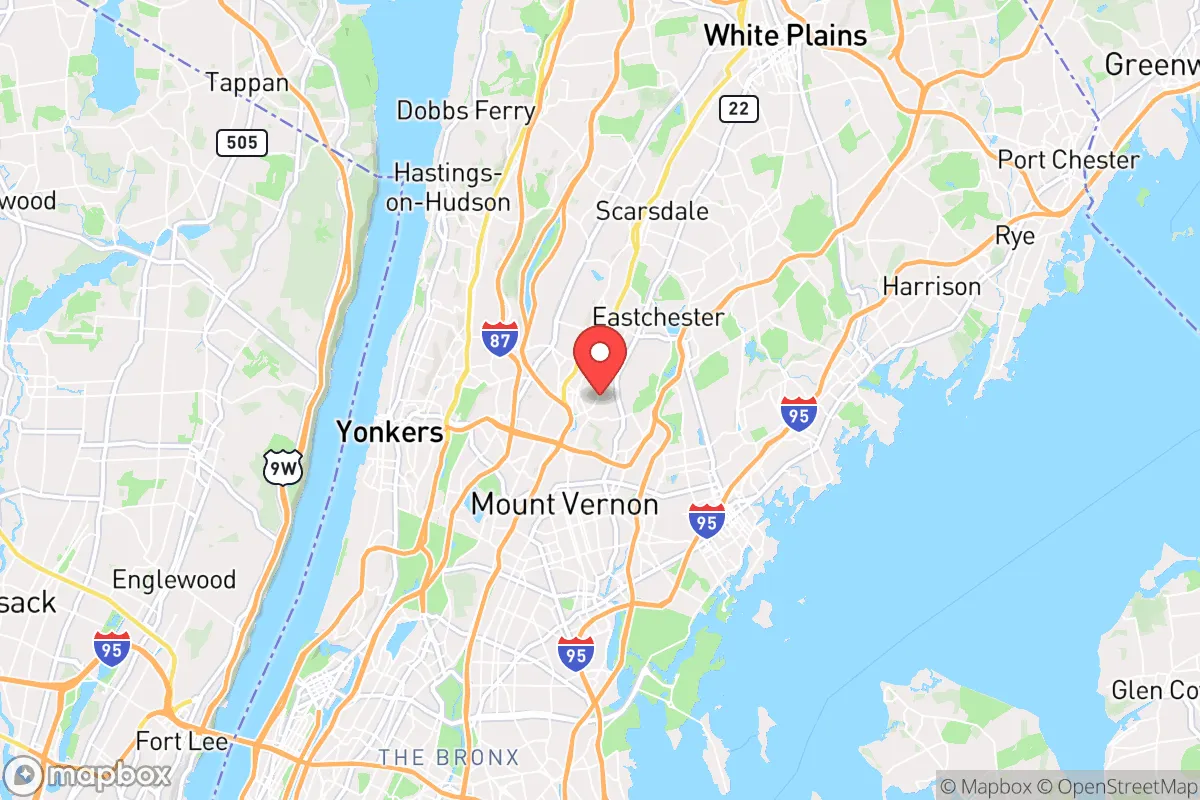
District shown is the primary district for this city’s centroid. Cities may span multiple districts.
Local Political AnalysisPolitical Analysis of Bronxville, NY
Bronxville leans heavily Democratic, with a Cook Partisan Voting Index of D+18, making it one of the most reliably blue villages in Westchester County. That D+18 rating means the village votes about 18 points more Democratic than the national average, a shift that has only deepened over the last decade as younger families and professionals move in from New York City. The local electorate consistently backs Democratic candidates for president, Congress, and state offices, though the village still retains a small but vocal Republican minority, particularly among longer-term residents who remember when the area was more evenly split.
How it compares
Compared to New York City, Bronxville is actually more Democratic-leaning than many parts of the five boroughs. While Manhattan and Brooklyn also vote heavily blue, the city as a whole has a more mixed partisan geography — Staten Island, for example, leans Republican, and parts of Queens and southern Brooklyn have sizable conservative voting blocs. Bronxville, by contrast, is uniformly liberal at the ballot box, with little of the intra-city variation you see in New York. The surrounding towns in southern Westchester, like Scarsdale and Larchmont, are similarly Democratic, but drive 15 minutes north to Eastchester or Tuckahoe and you'll find a slightly more moderate electorate, though still blue overall. The real contrast comes in northern Westchester and Putnam County, where towns like Somers and Carmel lean Republican, offering a clear political boundary just 20 miles up the Saw Mill River Parkway.
What this means for residents
For liberal residents, the political climate is comfortable and affirming. Local government, school board decisions, and village policy all reflect progressive priorities, from sustainability initiatives to inclusive zoning discussions. Conservative residents, while outnumbered, are not marginalized — they participate actively in village affairs, and local issues like property taxes, school funding, and development often transcend party lines. The village's small size means that personal relationships and community involvement matter more than party affiliation, and many residents report that neighborly interactions rarely break down along partisan lines. That said, national politics can feel one-sided here, and conservatives may find themselves in the minority at dinner parties or civic meetings. The practical effect of the D+18 lean is that Democratic candidates can expect to win Bronxville by wide margins, but the village's local governance remains pragmatic and focused on quality-of-life issues rather than ideological battles.
Culturally, Bronxville's political identity is shaped by its role as a bedroom community for New York City professionals. The village has a distinctly suburban sensibility — tree-lined streets, a walkable downtown, top-rated schools — but its politics mirror the urban liberalism of the city many residents commute from. One notable distinction: Bronxville residents tend to be more fiscally moderate than their voting record suggests, often supporting balanced budgets and opposing tax increases even as they back progressive social policies. This creates a unique local dynamic where the village can feel both deeply blue and quietly pragmatic, a blend that sets it apart from both the more activist politics of Brooklyn and the more conservative towns further up the Hudson Valley.

State Political ClimatePolitical Climate in New York
State Political AnalysisPolitical Environment in the State
New York State has been a solidly Democratic stronghold for decades, with no Republican presidential candidate winning its electoral votes since 1984. However, this blue veneer masks a deeply divided state where the political climate is less a monolith and more a tug-of-war between the massive, progressive urban core of New York City and the vast, conservative-leaning rural and suburban regions. Over the last 10-20 years, the state has lurched further left on social and fiscal policy, driven by supermajorities in Albany, even as a growing number of upstate and suburban counties have flipped from purple to reliably red. For a conservative-leaning relocator, the reality is that your experience will be radically different depending on whether you land in Manhattan, Buffalo, or a town like Saratoga Springs.
Urban vs. rural divide
The political map of New York is a textbook example of the urban-rural chasm. New York City, with its roughly 8.5 million residents, is the engine of the state's Democratic dominance, routinely delivering margins of 70-80% for statewide Democrats. The surrounding downstate suburbs—Nassau, Westchester, and Suffolk counties—have trended bluer over the last decade, though they still harbor pockets of moderate Republicanism, particularly in places like Oyster Bay and Smithtown. In contrast, the vast majority of upstate New York is now reliably Republican. Counties like Allegany, Wyoming, and Orleans routinely vote 65-70% for GOP candidates. The real battlegrounds have shrunk to a handful of "collar counties" like Dutchess, Ulster, and Ontario, where the growth of exurbs and remote workers from the city is slowly shifting the balance. The city of Buffalo remains a Democratic stronghold, but the surrounding Erie County suburbs have become increasingly competitive. Meanwhile, Rochester and Syracuse are blue islands in a sea of red upstate, with their respective suburbs leaning more conservative. The divide isn't just political; it's cultural and economic, with upstate residents often feeling ignored or overruled by downstate interests.
Policy environment
New York's policy environment is defined by high taxes, extensive regulation, and a robust social safety net, making it one of the most progressive states in the nation. The state has a progressive income tax structure with rates topping out at 10.9% for the highest earners, and property taxes are among the highest in the country, particularly in the suburbs. The regulatory posture is business-heavy, with strict environmental and labor laws, including a $15 minimum wage that is indexed to inflation. On education, the state has some of the most rigorous standards and highest per-pupil spending in the nation, but also a deeply entrenched system of charter school caps and powerful teachers' unions. Healthcare is heavily regulated, with the state expanding Medicaid and establishing a health insurance exchange under the ACA. Election laws are among the most accessible in the country, with no-excuse absentee voting, early voting, and automatic voter registration. For a conservative, the policy environment can feel stifling, particularly regarding taxes and business regulations, but the state also offers a high level of public services and infrastructure.
Recent policy direction
In the last five years, Albany has moved decisively left on a broad range of issues. On gun policy, the state passed the SAFE Act in 2013 and has since tightened restrictions further, including a 2022 law banning concealed carry in "sensitive locations" like Times Square and public transit, and requiring a "proper cause" for a permit, which was later partially struck down by the Supreme Court. Parental and education rights have been a flashpoint, with the state mandating "CR-S" (Culturally Responsive-Sustaining) education frameworks and expanding gender identity protections in schools, leading to fierce debates in districts like Williamsville and Pittsford. On medical and bodily autonomy, New York has become a "sanctuary state" for abortion, passing the Reproductive Health Act in 2019 and allocating $35 million for abortion providers in anticipation of an influx of out-of-state patients. Property rights are constrained by strict rent stabilization laws in NYC and its suburbs, and by the state's powerful environmental review process (SEQRA), which can delay or kill development projects. Tax burden remains a top concern, with the state's property tax cap providing some relief but being routinely circumvented by local school districts. Voting access has been expanded, but the state's independent redistricting commission has been criticized for partisan gerrymandering. For a relocator, the key takeaway is that the state is actively legislating on the leading edge of progressive policy, with little sign of moderation.
Civil unrest & political movements
New York has a long history of political activism, and recent years have seen intense polarization. The 2020 Black Lives Matter protests were massive and sustained, particularly in NYC, leading to calls to defund the police and subsequent debates over public safety. The state's sanctuary policies, which limit cooperation between local law enforcement and federal immigration authorities, have been a persistent source of tension, especially in upstate communities like Albany and Rochester where the issue is more visible. On the right, there have been organized movements against vaccine mandates, school mask requirements, and critical race theory, with groups like "New York Parents Union" gaining traction in suburban districts. Election integrity has been a hot-button issue, with the state's 2020 election being challenged by Republicans over the handling of absentee ballots, though no widespread fraud was found. Secessionist rhetoric has emerged from both ends of the spectrum, with some upstate counties like Orange and Ulster floating the idea of breaking away from the state to form a new "State of New York" or joining Pennsylvania, though these remain fringe movements. A new resident would notice the palpable cultural divide, with bumper stickers and yard signs often serving as a proxy for deeper political identities.
Projection
Over the next 5-10 years, New York's political trajectory is likely to continue its leftward drift, driven by demographic trends and the outsized influence of New York City. The city's population has rebounded after a pandemic-era dip, and its progressive voting base remains the dominant force in state politics. However, the ongoing exodus of residents to lower-tax states like Florida and Texas, particularly from the suburbs and upstate, could slowly shift the balance. The state's in-migration is largely from international immigrants, who tend to lean Democratic, and from other blue states, reinforcing the existing political alignment. For a conservative moving in now, the expectation should be that the state will remain a Democratic stronghold, with policies that are increasingly at odds with their views. The practical implication is that your vote will have little impact on statewide elections, but local races in upstate counties can still be competitive. The key for a new resident is to choose their location carefully, as the political climate in a town like Canandaigua will be vastly different from that in Brooklyn.
For a conservative-leaning individual or family, moving to New York means accepting a trade-off. You'll be living in a state with high taxes, strong regulations, and a progressive policy agenda that may conflict with your values. However, you'll also find vibrant communities, excellent public services, and, in many upstate areas, a political environment that feels more like a red state. The bottom line is that New York is not a place where you'll find a unified political culture; it's a state of stark contrasts, and your experience will depend almost entirely on where you choose to put down roots. If you're looking for a place where your vote matters in state-level politics, this isn't it. But if you're willing to navigate the complexities, you can find a community that fits your lifestyle, even if the state government doesn't share your priorities.
* Values derived from national, state, county, city and local statistics and may differ in a specific area. Last updated: 2026-10-12T19:38:05.000Z
Narrative content on this page is AI-generated and may contain mistakes. Verify any details that matter before acting on them.
ReloMaps may earn a commission from affiliate links at no extra cost to you.

