Photo: Wikipedia
Demographics of Bronxville, NY
Affluence Level in Bronxville, NY
A wealthy area with high-earning, well-educated households. Incomes, home values, and educational attainment meaningfully outpace national averages.
People of Bronxville, NY
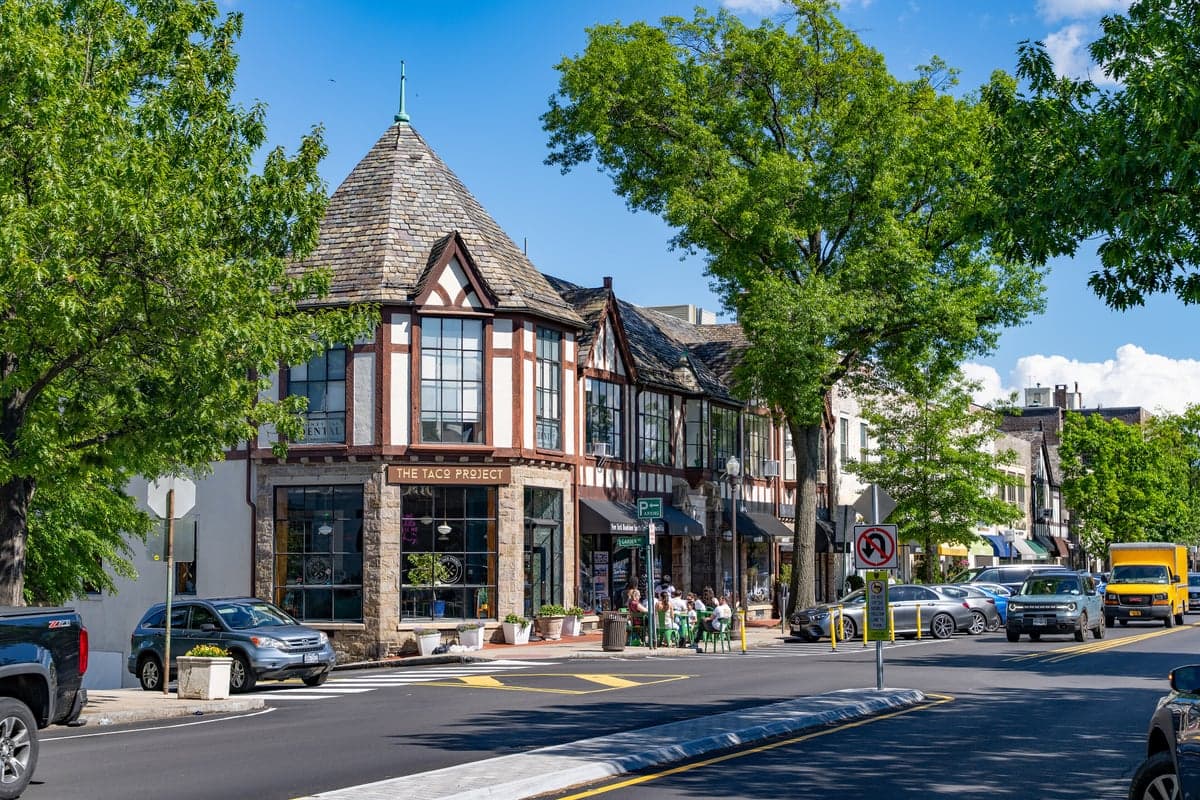
Bronxville, New York, is a small, affluent village of 6,539 residents characterized by its exceptionally high concentration of college-educated professionals (76.9%) and a population that is predominantly White (81.0%). The village maintains a distinctive identity as a tight-knit, family-oriented community with a notably low foreign-born population of just 3.2%, setting it apart from many other New York City suburbs. Its residents are largely drawn from the upper echelons of finance, law, and medicine, creating a dense, walkable village center that feels both exclusive and historically rooted.
How the city was settled and grew
Bronxville’s human history begins not with colonial farming, but with a deliberate, planned development in the late 19th and early 20th centuries. The land was originally part of a large estate owned by the prominent Underhill family, and the village’s modern identity was forged by real estate developer William Van Duzer Lawrence. In the 1890s, Lawrence purchased the estate and envisioned a picturesque, commuter-friendly suburb for New York City’s elite. He built the Lawrence Park neighborhood, a carefully designed enclave of Arts and Crafts-style homes that became the village’s first distinct district. This area attracted wealthy professionals, artists, and academics who valued the scenic landscape and the easy commute via the new Harlem Line railroad. The original population was almost entirely White, Anglo-Saxon Protestant, drawn by the promise of a refined, pastoral life within reach of Manhattan. The village was formally incorporated in 1898, and its early growth was driven by the construction of exclusive homes and the establishment of Sarah Lawrence College in 1926, which further cemented its reputation as a center of culture and education.
Modern era (post-1965)
Following the 1965 Immigration and Nationality Act, Bronxville experienced far less demographic change than many of its neighboring communities in Westchester County. The village’s high property values and lack of large-scale rental housing created a natural barrier to the rapid diversification seen in places like Mount Vernon or Yonkers. Instead, the post-1965 period saw a gradual, selective influx of new residents. The Indian subcontinent community, now at 1.2% of the population, began to settle in the village, often drawn by the top-rated Bronxville School District and the proximity to corporate headquarters in White Plains and Manhattan. These families typically moved into the single-family homes of the Midland Avenue and Pondfield Road corridors, areas that offered larger homes and more privacy. The East/Southeast Asian community, currently at 3.7%, also grew modestly during this period, with families concentrating in the Park Place and Studio Arcade areas, which offered a mix of condominiums and smaller homes. The Hispanic population, now 8.7%, is the village’s largest minority group, and its growth has been more dispersed, with families renting apartments in the Cedar Street and Kraft Avenue sections, areas that provide more affordable entry points into the village. Despite these shifts, the village’s Black population remains very low at 0.6%, a figure that has not changed significantly in decades, reflecting the area’s persistent economic and social barriers to entry.
The future
The demographic trajectory of Bronxville points toward a slow, incremental diversification rather than a rapid transformation. The village’s population is projected to remain stable, with modest growth in the East/Southeast Asian and Indian subcontinent communities as highly educated professionals continue to seek out top-tier school districts. The Hispanic population is likely to grow at a slightly faster rate, driven by families working in the service and healthcare sectors who find housing in the more affordable rental pockets near White Plains Post Road. However, the village’s core identity as a wealthy, predominantly White enclave is unlikely to shift dramatically in the next 10-20 years. The high cost of housing and the limited inventory of multi-family units will continue to restrict large-scale in-migration from lower-income groups. The cultural identity of Bronxville is evolving, but slowly, with new residents from diverse backgrounds integrating into the existing social fabric rather than forming distinct ethnic enclaves. The village’s future will likely see a more cosmopolitan, but still highly exclusive, community that retains its historic character while gradually reflecting the broader diversity of Westchester County.
For someone moving in now, Bronxville offers a stable, high-amenity environment with a population that is becoming slightly more diverse but remains overwhelmingly affluent and White. The village is a place where tradition and exclusivity are valued, and where new residents are expected to integrate into an established social order. It is an ideal choice for families and professionals who prioritize elite public education, walkability, and a safe, manicured environment over ethnic or economic diversity.

* Values derived from national, state, county, city and local statistics and may differ in a specific area. Last updated: 2026-10-12T19:38:05.000Z
Narrative content on this page is AI-generated and may contain mistakes. Verify any details that matter before acting on them.
ReloMaps may earn a commission from affiliate links at no extra cost to you.

