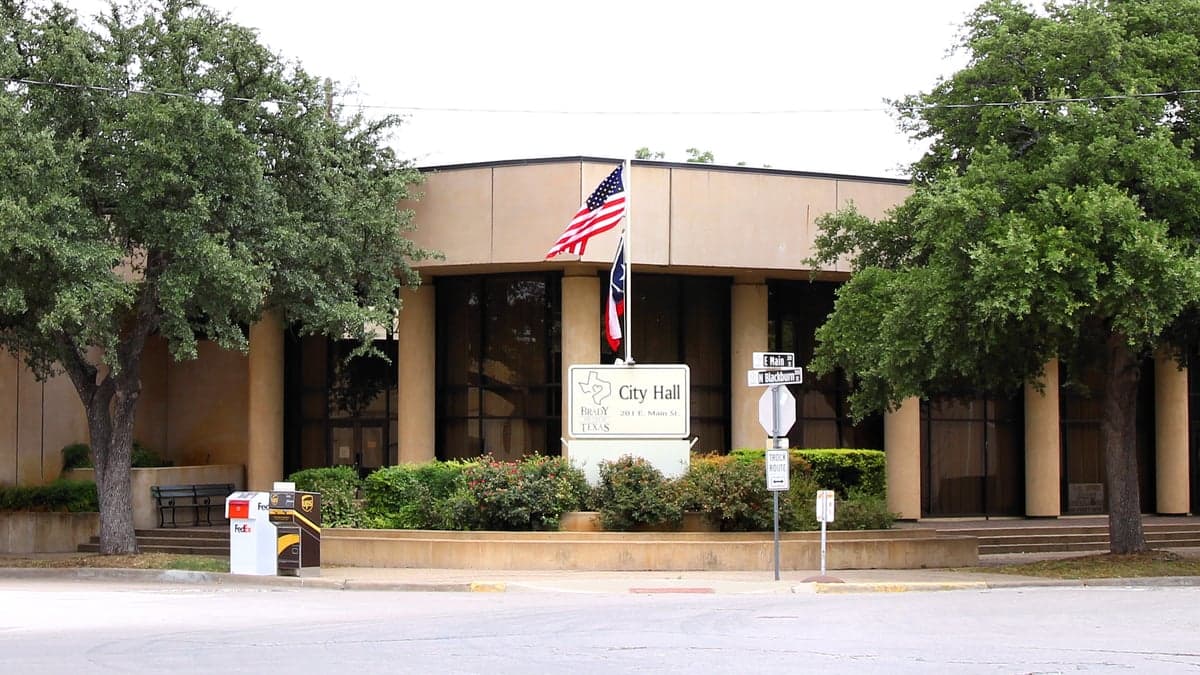
Photo: Wikipedia
Strategic Assessment of Brady, TX
Workable tactical position. Some exposure to population density or targets, but generally defensible in a crisis.
What does the Strategic Assessment tell us?
Our Strategic Assessment grades tactical survivability of an area. Major population centers, military targets, fallout zones, natural disasters, and border exposure all drive risk — lower exposure means a more defensible position in a crisis.
This is heavily inspired by Joel Skousen's Strategic Relocation book. Highly recommended you checkout the book ($)What does this tell us?
Our Strategic Assessment grades tactical survivability of an area. Major population centers, military targets, fallout zones, natural disasters, and border exposure all drive risk — lower exposure means a more defensible position in a crisis.
This is heavily inspired by Joel Skousen's Strategic Relocation book. Highly recommended you checkout the book ($)Strategic Pillars

Key Distances
Regional Safe Places
Below is our recommended "safe zones" in Texas and the surrounding area based on our strategic heuristics. For most people, it's unrealistic to live in a “safe zone” full-time due to work, family or other personal reasons. They tend to be more rural. However, many of these areas are perfect for second homes and retreat properties that double as a vacation home or even a short-term rental.

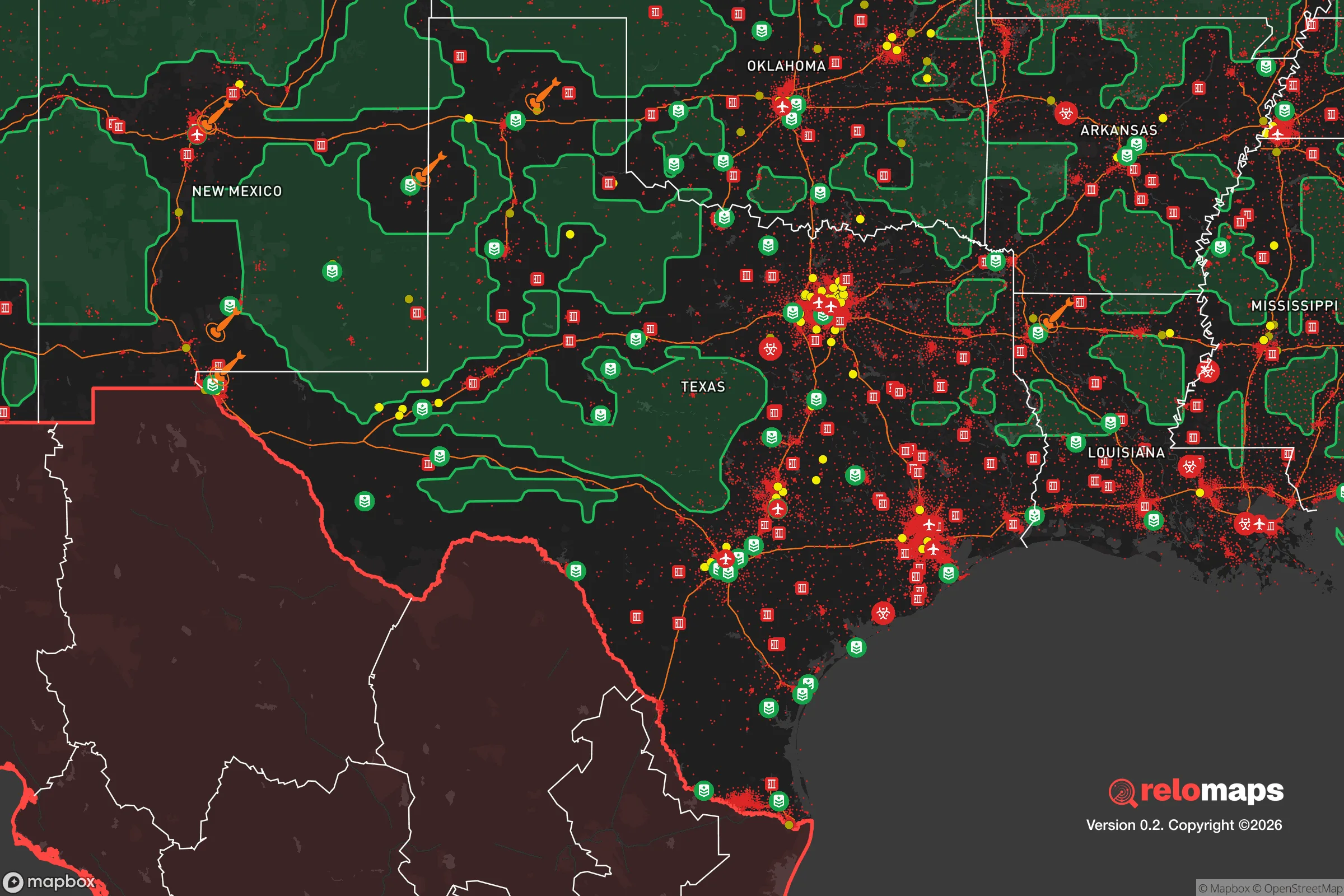


Important Note: For informational purposes only. This does not mean nothing bad ever happens in the green zones. Please use common sense. This is based on public data and modeled with AI. We tried to take a conservative approach but mistakes happen. We update this regularly as new information becomes available.
Solar Generator Recommendations
Backup power matters more here than in safer locations. We've picked three solar generators across budgets and capacity tiers — start with the budget unit if you only need a few essentials, or step up if you want to run a fridge and HVAC for days at a time.

Jackery Portable Power Station Explorer 300
Budget OptionPower on the Go: Weighing only 11 lbs, it's convenient to set up and store with book-sized foldable solar panels

BLUETTI Portable Power Station AC180
Designed for both indoor and outdoor scenarios, AC180 is highly capable as it has a robost capacity and continuous output power.

EF ECOFLOW DELTA Pro Ultra Power Station
Upgraded PickEcoFlow DELTA Pro Ultra is a whole-home energy system designed to grow with your family. Integrated with the Smart Home Panel 2, it scales to meet your evolving energy needs — keeping your home powered, intelligent, and secure through every stage of life.
We earn a commission, at no additional cost to you.
Strategic Assessment Analysis
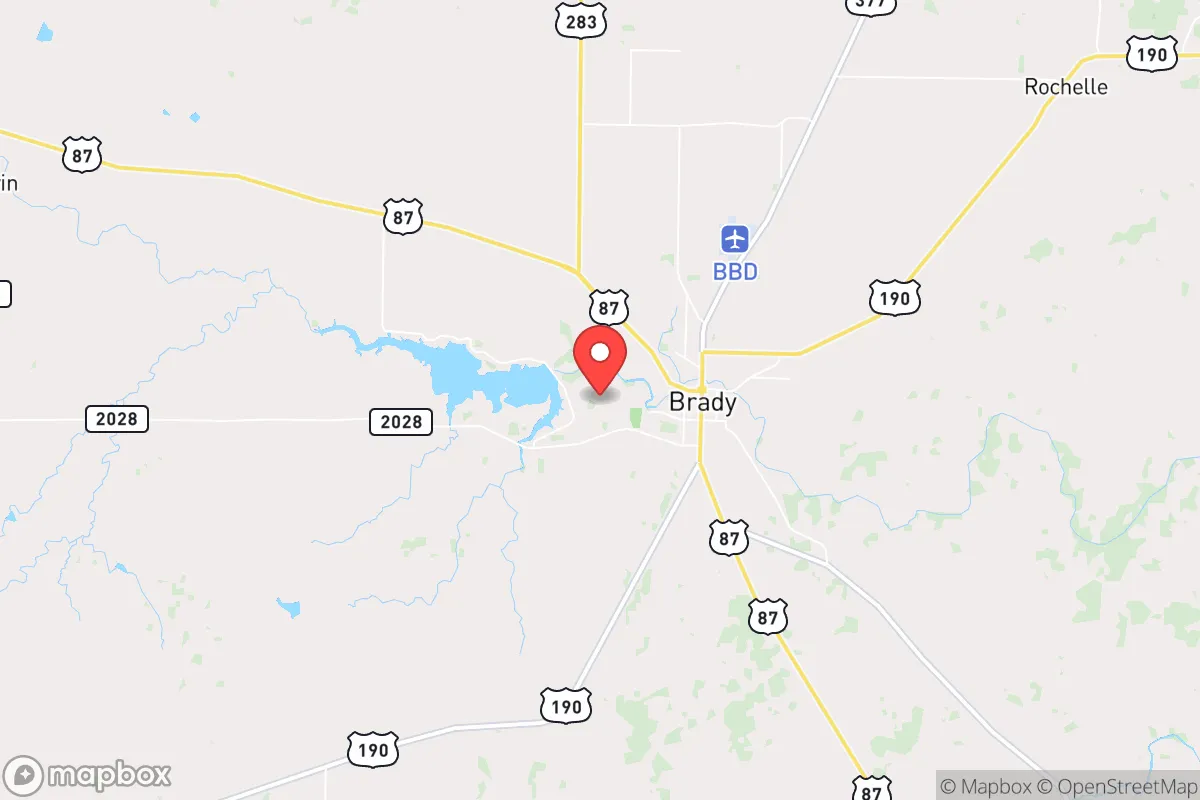
Brady, Texas, offers a compelling mix of geographic isolation and practical self-sufficiency that appeals to those prioritizing disaster readiness and long-term resilience. Located in McCulloch County at the heart of the Texas Hill Country, this community of roughly 5,500 people sits far from major metropolitan targets, yet remains within a manageable distance of essential supply routes and regional medical care. For a relocator weighing strategic advantages against potential risks, Brady presents a balanced profile: low population density, a semi-arid climate that reduces certain natural disaster risks, and a local economy rooted in agriculture and energy production that supports a baseline of self-reliance.
Geographic position and natural advantages for long-term security
Brady's location at the intersection of U.S. Highway 87 and U.S. Highway 190 places it roughly 120 miles northwest of Austin and 140 miles west of Waco, distances that provide meaningful separation from the fallout and secondary effects of a major urban event. The surrounding terrain is rolling limestone hills and rangeland, with elevations around 1,800 feet that offer natural drainage and reduce flood risk compared to low-lying areas. The region's semi-arid climate averages about 24 inches of rainfall annually, which limits the frequency of severe flooding and reduces the humidity-driven mold and decay issues common in wetter climates. The area sits outside the primary hurricane impact zones of the Gulf Coast and is far enough inland to avoid the worst of tornado alley's activity, though severe thunderstorms and occasional hail remain a concern. The Brady Lake reservoir, located just north of town, provides a reliable surface water source that supplements the local aquifer, giving the area a meaningful water security advantage over many West Texas communities that depend entirely on groundwater. The local topography also offers natural defensibility: the surrounding ranchland provides clear sightlines and limited cover for unauthorized approach, while the town's compact layout makes it easier to secure key infrastructure points than a sprawling suburban development.
Risks, exposures, and proximity to fallout-relevant landmarks
While Brady's isolation is a strength, it is not without exposure. The town lies roughly 90 miles from the Fort Hood military installation (now Fort Cavazos), a major Army post that could become a secondary target or staging area during a national security crisis. The nearby Brownwood Regional Airport and the Brady-Gillespie County Airport are small general aviation facilities, but their proximity to military training airspace means occasional overflights and potential for confusion during emergency operations. The area's reliance on a single major highway corridor—U.S. 87 south to San Antonio and north to Lubbock—creates a chokepoint vulnerability; a bridge failure or road blockage could severely restrict evacuation or resupply. The local power grid is served by the Electric Reliability Council of Texas (ERCOT), which has demonstrated fragility during extreme weather events, particularly winter storms. Brady's hospital, the Heart of Texas Healthcare System, is a critical access facility with limited trauma capability; serious injuries would require a 90-minute transport to Austin or San Angelo. The town's proximity to the Permian Basin oil fields, roughly 150 miles west, means that a major industrial accident or pipeline failure could affect air quality and groundwater, though the prevailing winds generally carry emissions away from the town. For the resilience-minded relocator, the primary risk is not a direct strike but the cascading effects of regional infrastructure failure—power outages, supply chain disruptions, and population displacement from larger cities seeking refuge in the Hill Country.
Practical resilience for a relocator: food, water, energy, and defensibility
Brady's agricultural base provides a strong foundation for food security. The surrounding county supports cattle ranching, sheep and goat operations, and some row crops like cotton and grain sorghum. Local farmers' markets and direct-to-consumer meat sales are available, though not at the scale seen in more populated areas. The Brady Lake reservoir and the underlying Edwards-Trinity aquifer offer dual water sources, but well drilling is expensive and subject to local permitting; new residents should budget for rainwater catchment systems as a backup. The area's solar potential is excellent, with over 260 sunny days per year, making off-grid photovoltaic systems a viable option for reducing grid dependence. Local ordinances do not prohibit residential solar or wind installations, though homeowners' association restrictions may apply in newer subdivisions. The town's defensibility is enhanced by its low crime rate—McCulloch County consistently reports violent crime rates well below state averages—and a strong community culture of mutual aid. The local sheriff's office and volunteer fire department are responsive but thinly stretched; a relocator should plan for self-sufficient fire suppression and medical response for at least the first 72 hours of any emergency. The Brady Municipal Airport can serve as a resupply point for light aircraft, and the town's position along major highways makes it a logical staging area for regional relief efforts. For those willing to invest in a well-stocked pantry, a backup power system, and a reliable water source, Brady offers a realistic path to long-term self-sufficiency without the extreme isolation of far West Texas or the resource competition of the Hill Country's more popular towns.
The overall strategic picture for Brady is one of moderate resilience with clear trade-offs. Its geographic isolation from major urban centers and military targets provides a meaningful buffer against the most severe fallout scenarios, while its agricultural economy and water resources support a baseline of self-reliance. The primary vulnerabilities are infrastructure fragility—particularly the power grid and single-road access—and the potential for secondary effects from regional disasters. For the relocator who values a quiet, low-profile existence with room to build redundancy into their daily life, Brady represents a solid, unglamorous choice. It lacks the preparedness infrastructure of a dedicated survivalist community but offers the practical advantage of being a real, functioning town where a family can live normally while maintaining a high degree of readiness. The key is to arrive with eyes open: invest in backup power, secure a private water source, and build relationships with local ranchers and tradespeople before a crisis hits. In a state where many relocation destinations are either too exposed or too remote, Brady strikes a workable middle ground for the serious-minded relocator.

* Values derived from national, state, county, city and local statistics and may differ in a specific area. Last updated: 2026-07-10T00:53:03.000Z
Narrative content on this page is AI-generated and may contain mistakes. Verify any details that matter before acting on them.
ReloMaps may earn a commission from affiliate links at no extra cost to you.

