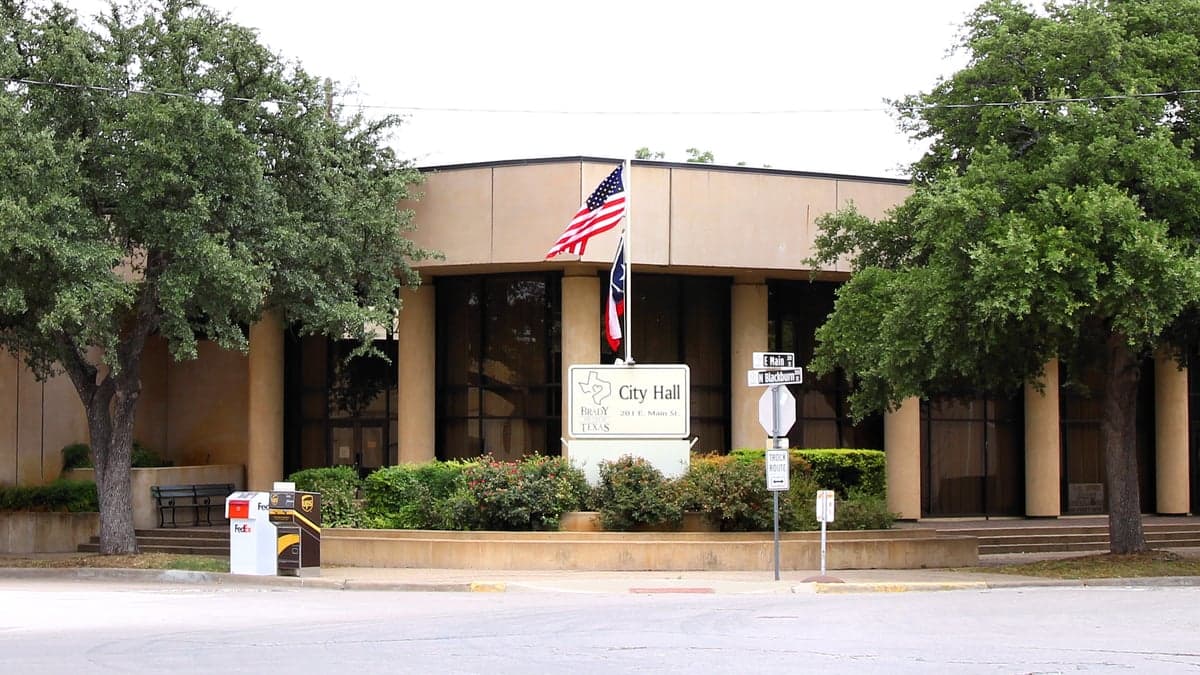
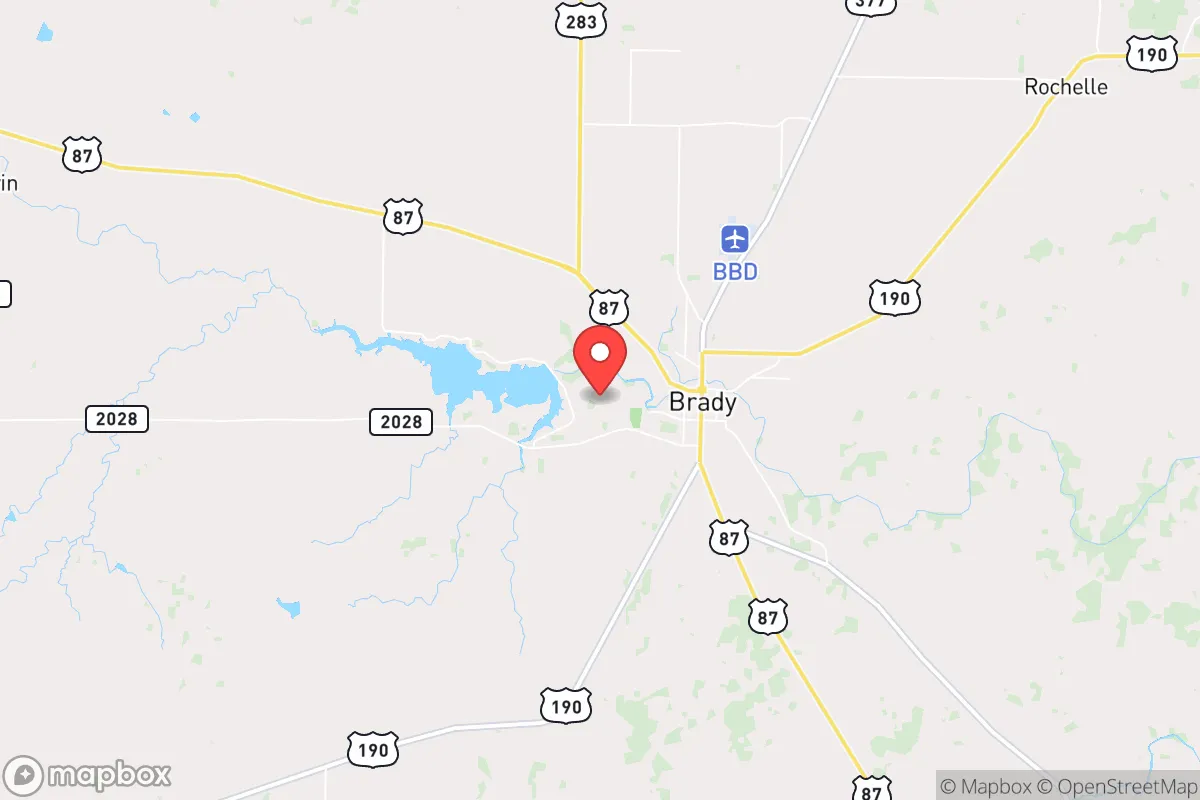
Photo: Wikipedia
Quality of Life in Brady, TX
A high quality of life with strong walkability, manageable living costs, healthy neighborhood signals, and solid amenity access.
What does Quality of Life tell us?
Quality of Life blends cost of living, nearby amenities, socioeconomic signals, and neighborhood character. City-level scores represent the whole municipality; individual neighborhoods can differ.
What does this tell us?
Quality of Life blends cost of living, nearby amenities, socioeconomic signals, and neighborhood character. City-level scores represent the whole municipality; individual neighborhoods can differ.
Cost of Living
42% below national average
The Real Cost of Living in Brady, TX for 2026
| Tier | Individual | Family (4) |
|---|---|---|
| Survival | $13k | $25k |
| Comfortable | $23k | $33k |
| Luxury | $80k+ | $124k+ |
| Elite (Top 5%) | $107k+ | $166k+ |
132%
The Area Signal
A metric tracking the socioeconomic signals of the area.
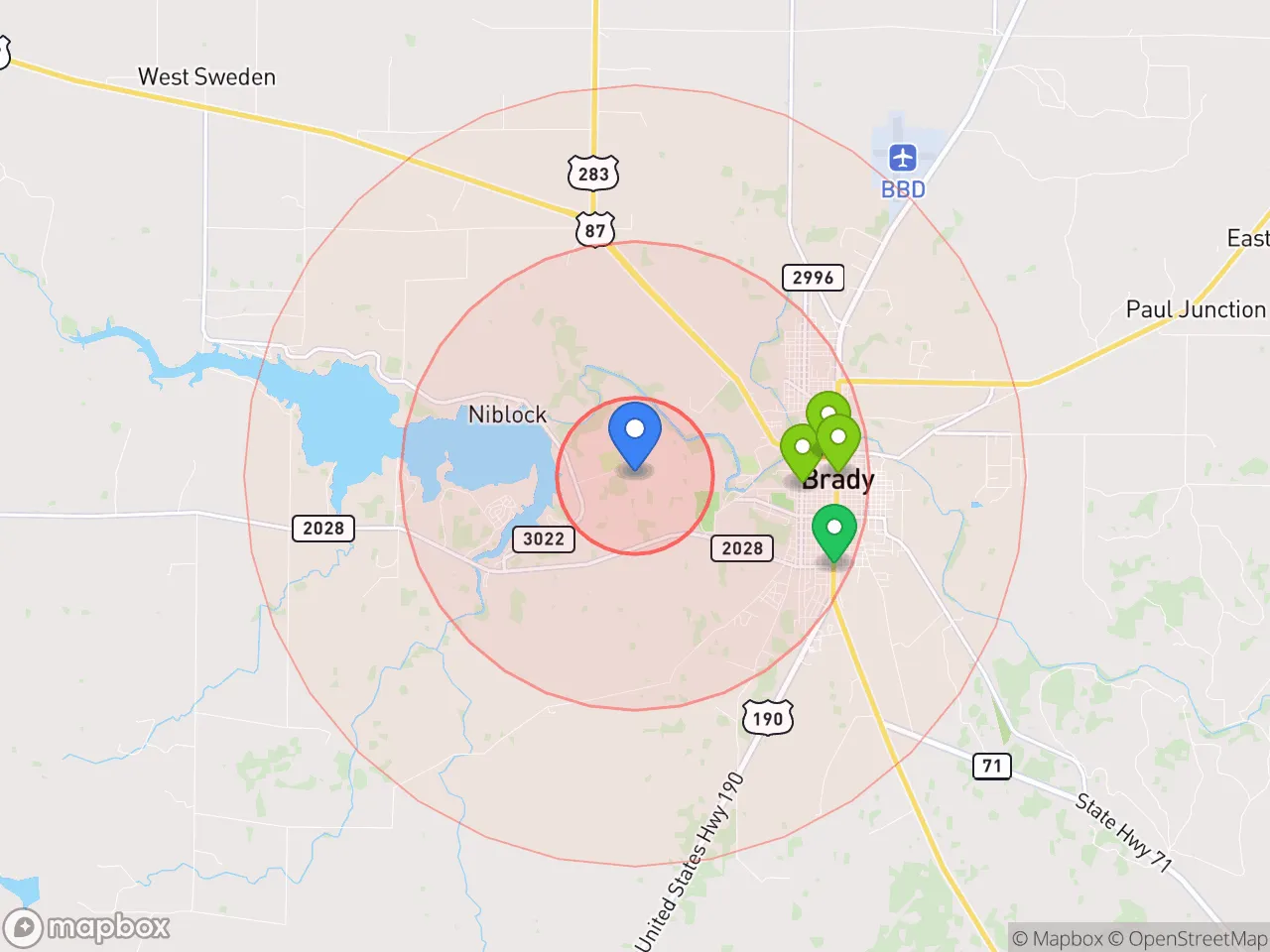
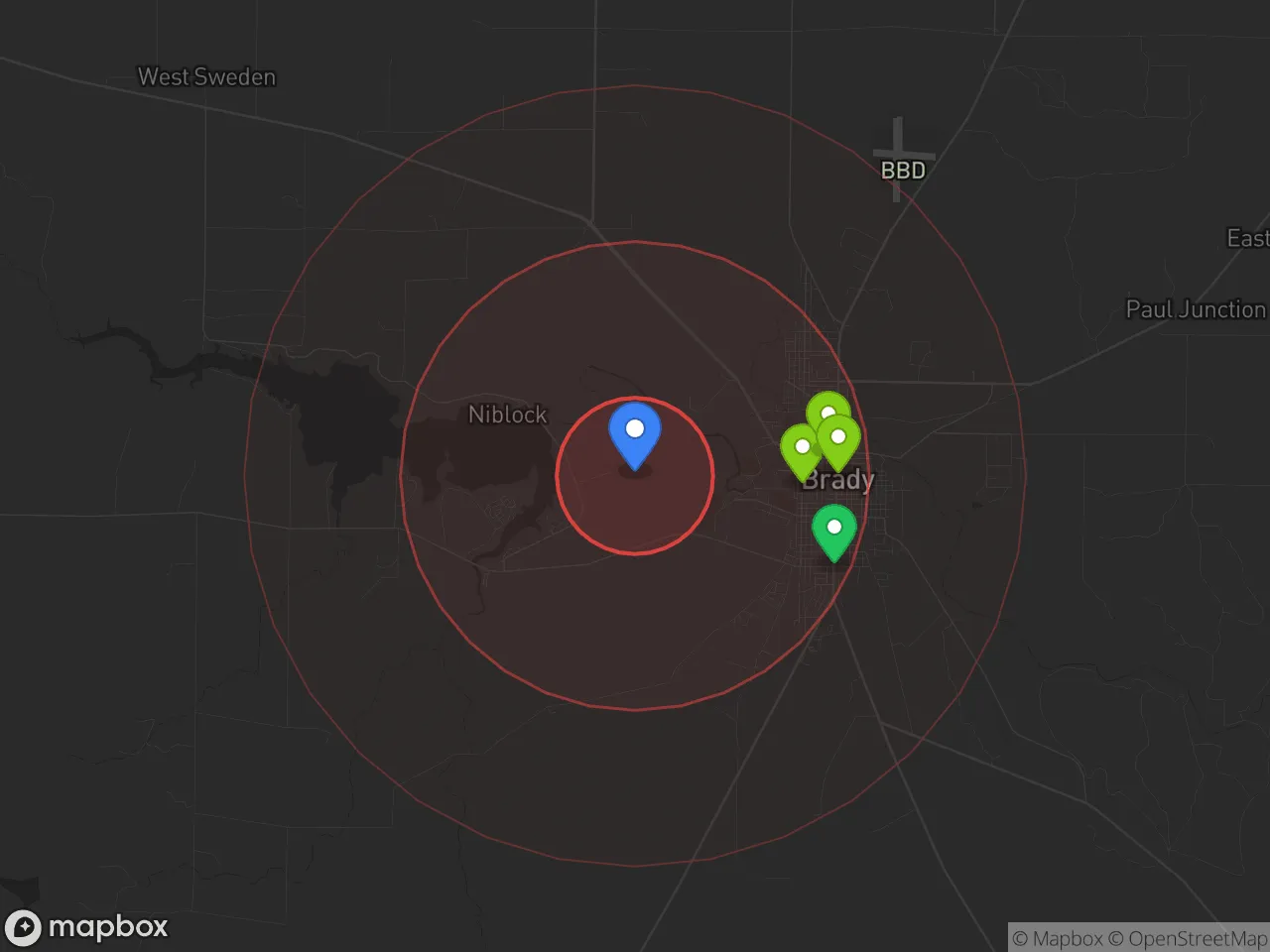
Hobbies
Explore the areaGroceries
1 within 10 miles
Gas
2 within 10 miles
Hospital
1 within 20 miles
Airport
SAN — San Angelo Regional
Post Office
USPS — Brady, TX
Critical Amenities
Quality-of-Life Analysis
Brady, Texas, is a low-cost, family-oriented community in McCulloch County where the cost of living index sits at 58—42% below the national average—making it one of the most affordable places in the state. The population of roughly 5,500 is predominantly working-class and retired, with a median age of 41.5 years and a median household income of $42,000, reflecting a modest but stable economic base. Affluence here is measured in home equity and low debt rather than high salaries, attracting residents who prioritize financial breathing room over urban career opportunities.
Cost of living, housing affordability, and how Brady compares to nearby towns
Housing in Brady is exceptionally affordable by both national and regional standards. The median home value is $102,900, roughly one-third of the Texas statewide median of $300,000, while the median gross rent is $836 per month—well below the state average of $1,200. This affordability extends to utilities, groceries, and transportation, all of which are priced below the U.S. baseline. Compared to nearby cities like San Angelo (COL index 82) or Brownwood (COL index 74), Brady offers a clear cost advantage, though it lacks the retail and dining options those larger towns provide. The average commute time of 26.7 minutes is slightly longer than the national average of 26 minutes, reflecting the rural geography and the fact that many residents drive to jobs in San Angelo (60 miles west) or Brownwood (45 miles east). For buyers, a $100,000 home here would require a monthly mortgage payment of roughly $700 at current rates, making homeownership accessible even for households earning near the median income.
Local amenities, schools, and what daily life feels like in Brady
Daily life in Brady revolves around a compact downtown anchored by the historic McCulloch County Courthouse, a few locally owned restaurants, and basic services like a grocery store, pharmacy, and hardware store. For broader shopping, entertainment, or healthcare, residents drive to San Angelo or Brownwood. The Brady Independent School District serves the area with three campuses: Brady Elementary, Brady Middle School, and Brady High School, which enrolls about 400 students and offers dual-credit courses through Howard College. Outdoor life centers on the nearby Brady Lake and the Colorado River, providing fishing, boating, and hiking within a 15-minute drive. The town hosts the annual Brady Rodeo and the World Championship Goat Cook-Off in September, events that draw visitors from across West Texas and reinforce the community's ranching heritage. Internet access is improving, with fiber-optic service available in parts of town, though rural areas still rely on slower DSL or satellite connections.
Brady is best suited for retirees, remote workers, and families who value low housing costs, a slow pace, and a tight-knit community over urban amenities. It is not a place for those seeking nightlife, diverse dining, or high-end retail, but it offers a safe, affordable environment where a modest income can support a comfortable lifestyle. Anyone considering a move should budget for a 45-minute drive to San Angelo for major errands and medical care, and should verify internet speeds if they work remotely. For the right person, Brady provides a rare combination of financial freedom and genuine small-town character.

Crime in Brady, TX
Lower crime rates than 87% of comparable U.S. locations.
Violent CrimeViolent Crime Analysis
Property CrimeProperty Crime Analysis
Crime Analysis
Brady, Texas, presents a notably safer profile than both state and national averages, with violent crime rates roughly one-third of the U.S. figure and property crime rates well below the Texas median. The city’s violent crime rate of 121.8 incidents per 100,000 residents is significantly lower than the national average of 380 per 100,000, while its property crime rate of 751.3 per 100,000 sits below the Texas average of approximately 2,200 per 100,000. This data positions Brady as a low-crime community within the broader context of rural Central Texas.
Crime in context
Brady’s crime statistics reflect a small-town environment where serious violent offenses are rare. The violent crime rate is roughly 68% lower than the national benchmark, and property crime is about 66% lower than the Texas statewide rate. For comparison, the nearby city of San Angelo reports a violent crime rate near 500 per 100,000, while larger metros like Austin exceed 400 per 100,000. Brady’s figures align more closely with other rural McCulloch County communities, where law enforcement resources are concentrated and community ties remain strong. The city’s low crime rates are consistent with its status as a non-metropolitan area, where the progressive prosecutorial policies seen in larger urban centers—often linked to higher recidivism and reduced public safety—are not a factor.
What residents experience
Residents of Brady typically report feeling safe walking downtown and leaving homes unlocked during the day, a common sentiment in small Texas towns. The most frequent property crimes are theft from vehicles and minor burglaries, often opportunistic rather than organized. Violent crime is almost exclusively interpersonal and rarely random, with incidents typically involving individuals known to one another. The Brady Police Department and McCulloch County Sheriff’s Office maintain a visible presence, and response times are generally under 10 minutes within city limits. Local neighborhood watch programs are active in several subdivisions, and the city’s annual National Night Out events draw strong participation.
Neighborhood-level variation in Brady is minimal but worth noting. The historic downtown core and newer residential areas east of U.S. Highway 87 report the lowest incident rates, while a handful of blocks near the railroad tracks and older rental properties see slightly elevated calls for service, primarily for minor theft and disorderly conduct. Overall, Brady offers a safety profile that appeals to families and retirees seeking a low-crime environment, with no areas that local law enforcement considers high-risk for violent crime.
* Values derived from national, state, county, city and local statistics and may differ in a specific area. Last updated: 2026-07-10T00:53:03.000Z
Narrative content on this page is AI-generated and may contain mistakes. Verify any details that matter before acting on them.
ReloMaps may earn a commission from affiliate links at no extra cost to you.

