Photo: Wikipedia
Demographics of Brady, TX
Affluence Level in Brady, TX
A low-income area with significant economic hardship. Household wealth and educational attainment are well below national averages.
People of Brady, TX
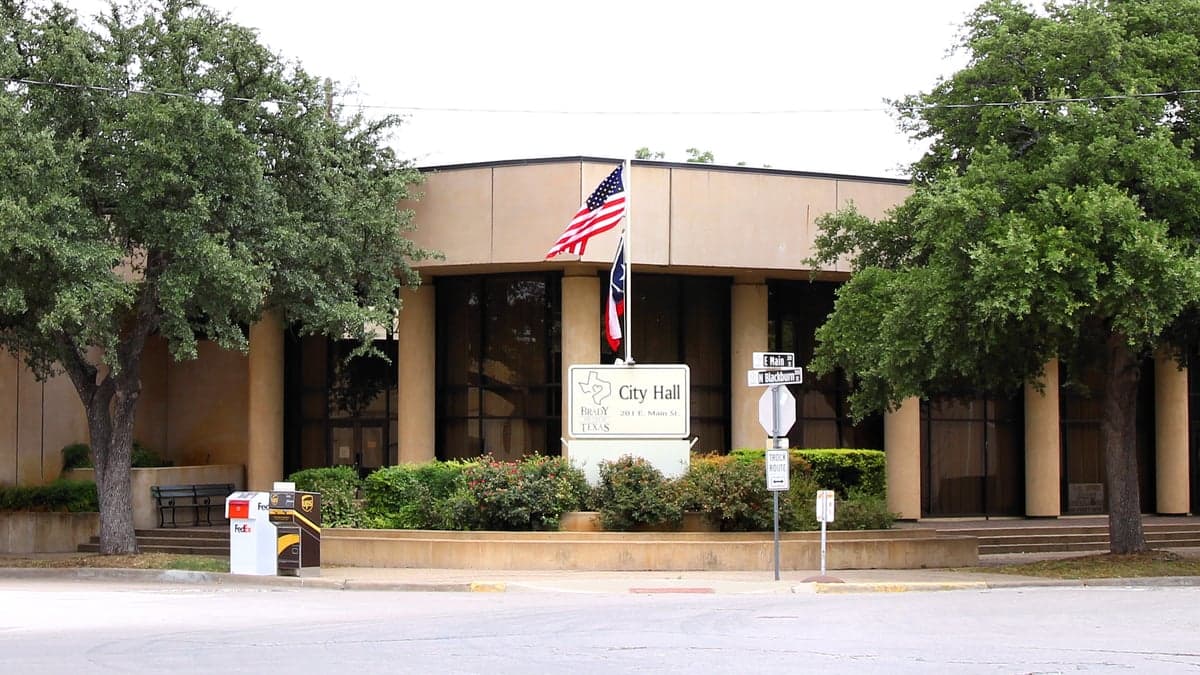
The people of Brady, Texas today form a tight-knit, predominantly White and Hispanic community of 5,215 residents, characterized by a strong ranching and hunting heritage and a deeply rooted sense of local identity. With a population that is 53.9% White and 38.6% Hispanic, the city reflects a classic Central Texas demographic blend, though it remains less diverse than the state average. The foreign-born population stands at just 5.4%, and only 16.6% of adults hold a college degree, underscoring a community built on practical trades, agriculture, and family-run businesses rather than a professional or academic class. Brady’s identity is distinctly rural and conservative, with a population density that feels spacious and a social fabric woven through churches, school sports, and annual events like the World Championship Barbecue Goat Cook-Off.
How the city was settled and grew
Brady was founded in 1876 as a stop on the Fort Worth and Rio Grande Railway, drawing its first wave of settlers primarily from the American South and Midwest. These early arrivals were ranchers and farmers attracted by the open prairie and the promise of rail access to markets. The town was officially incorporated in 1906, and its early growth was fueled by the cattle and cotton industries. The original Anglo settlers clustered around the downtown core, particularly along Commerce Street and the area now known as Old Town Brady, where many of the historic limestone buildings still stand. A second wave arrived during the 1920s and 1930s, when the discovery of oil in nearby McCulloch County brought a transient but economically significant population of roughnecks and drillers, who settled in makeshift camps that later evolved into the Oil Field Addition neighborhood on the city's west side. By mid-century, the population had stabilized around 4,000, with a nearly all-White demographic profile and a small number of Black families living in the Southside District near the railroad tracks.
Modern era (post-1965)
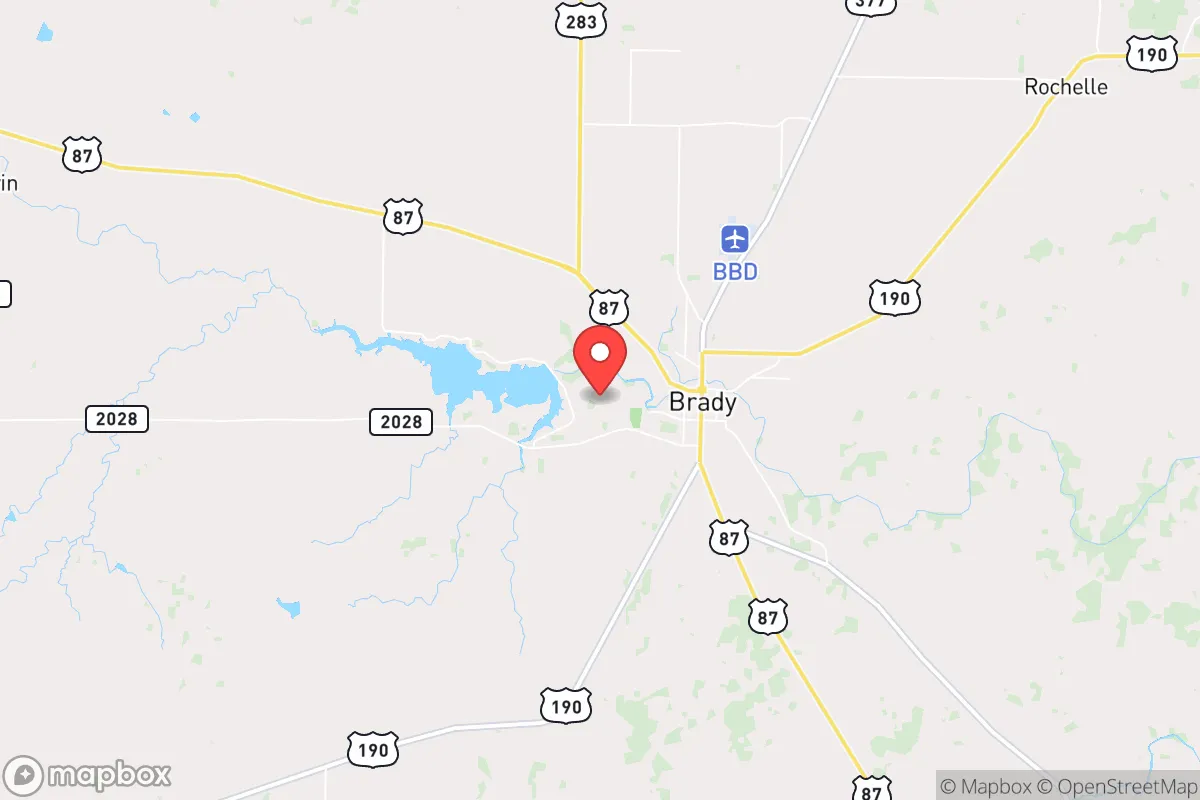
The most significant demographic shift in Brady began in the 1970s and accelerated through the 1990s, as Mexican-American families moved into the city from the Rio Grande Valley and from agricultural labor routes throughout West Texas. This wave was driven by the expansion of the local pecan and goat ranching industries, which required steady labor. These families initially settled in the Barrio de los Pinos neighborhood, a historically Hispanic enclave on the city's east side, and later spread into the North Brady Addition as homeownership rates increased. Today, the Hispanic population of 38.6% is largely concentrated in these eastern and northern quadrants, while the White population remains dominant in the older central and western neighborhoods like Old Town and Oil Field Addition. The Black population, at just 1.1%, has remained small and is mostly located in the Southside District, a legacy of mid-century housing patterns. The East/Southeast Asian and Indian subcontinent populations are negligible (0.2% and 0.4%, respectively), reflecting the city's limited draw for immigrant communities outside of Latin America. The post-1965 era did not bring suburban sprawl to Brady; instead, growth has been infill, with new housing developments like the Hillside Estates subdivision on the southern edge attracting a mix of younger White and Hispanic families seeking newer homes without leaving the community.
The future
Brady's population is projected to remain stable or decline slightly over the next decade, as the city's aging White population is partially offset by a younger, growing Hispanic cohort. The Hispanic share is expected to rise from 38.6% toward 45% by 2040, driven by higher birth rates and continued in-migration from other parts of Texas. This shift is already visible in the North Brady Addition, where new construction is predominantly occupied by Hispanic families, while the Old Town and Oil Field Addition neighborhoods are seeing an aging White population with fewer children. The city's cultural identity is evolving from a strictly Anglo ranching town into a bicultural community where Spanish is increasingly heard in local businesses and at school events. However, Brady is unlikely to become a majority-minority city in the near term, as the White population remains stable in absolute numbers and the foreign-born share is low. For a newcomer, this means moving into a place that is quietly diversifying but still anchored by its conservative, rural traditions — a community where neighborly familiarity and a shared work ethic matter more than demographic labels.
Brady is becoming a more Hispanic-influenced but still predominantly White rural community, where the old ranching culture is blending with a younger, family-oriented Mexican-American presence. For someone moving in now, the city offers a stable, affordable, and safe environment with a clear sense of place, but limited economic opportunity and a population that is slowly aging. The neighborhoods to watch are the North Brady Addition for newer, family-friendly housing and Old Town for historic character, while the Southside District remains the quietest and most affordable pocket of the city.

* Values derived from national, state, county, city and local statistics and may differ in a specific area. Last updated: 2026-07-10T00:53:03.000Z
Narrative content on this page is AI-generated and may contain mistakes. Verify any details that matter before acting on them.
ReloMaps may earn a commission from affiliate links at no extra cost to you.

