Photo: Wikipedia
Find The Best Places To Live
in Biltmore Forest
PRO TIP! You can paste a Zillow or Redfin link to get info on that property.
What It's Like Living in Biltmore Forest, NC
Biltmore Forest feels less like a town and more like a carefully guarded secret—a quiet, wooded enclave of winding lanes and stately homes where the loudest sound at dusk is often the rustle of leaves. With just over 1,500 residents, it’s a place where neighbors know each other by first name, and the pace of life is deliberately slow, even though downtown Asheville is a ten-minute drive away. This is not a destination for tourists or young renters; it’s a community built for those who value privacy, space, and a certain unhurried elegance.
The Daily Rhythm: Quiet Mornings and Long Views
Life here revolves around the home and the immediate outdoors. Mornings often start with a walk or bike ride along the forested roads—there are no sidewalks, so pedestrians and cars share the pavement in a courteous, low-speed dance. The average commute is just under 21 minutes, which for most residents means a short, scenic drive into Asheville or to the Biltmore Park commercial hub. Weekends are for yard work, gardening, or a round at the Biltmore Forest Country Club, a private golf and social club that functions as the community’s de facto living room. Grocery shopping means heading to the Ingles on Hendersonville Road or the Whole Foods in Asheville; there are no strip malls or fast-food chains within the town limits. The median age of 52.1 tells the story: this is a place for empty-nesters, professionals in their peak earning years, and retirees who want proximity to culture without the noise.
Who Fits In—and Who Doesn’t
Biltmore Forest is unapologetically affluent. With a median household income of $172,500 and a median home value of $1.249 million, the cost of living index sits at 243—more than double the national average. The kind of person who thrives here is someone who has already built a career (often in finance, medicine, law, or remote executive roles) and values discretion over display. Families are present but not dominant; the public schools—Estes Elementary, Valley Springs Middle, and T.C. Roberson High—are highly rated and draw from a wider area, but the town itself has few school-age children. Single professionals under 35 may find the social scene thin, as there are no bars, coffee shops, or rental apartments within the town boundaries. This is a place you move to after you’ve arrived, not while you’re still climbing.
Sports, Community, and What People Actually Do
High school sports are a genuine community touchpoint. T.C. Roberson High School’s football and basketball games draw families from across South Asheville, and the Rams’ rivalry with A.C. Reynolds is a local institution. For college sports, UNC Asheville Bulldogs basketball and Western Carolina University athletics get modest attention, but most residents follow the big state schools—UNC Chapel Hill, NC State, and Clemson—on television. The real social calendar, however, revolves around the Biltmore Forest Country Club: golf tournaments, tennis leagues, holiday parties, and summer swim meets. The club is the closest thing the town has to a town square. For outdoor recreation, the nearby Bent Creek Experimental Forest offers miles of hiking and mountain biking trails, and the Blue Ridge Parkway is a five-minute drive from the town’s northern edge. The Biltmore Estate, with its gardens, winery, and seasonal events like Christmas at Biltmore, is a recurring weekend destination—not as a tourist attraction but as a familiar backyard amenity.
Honest Pros and Cons of Living Here
- Pro: Genuine safety and privacy. The violent crime rate of 67.7 per 100,000 is roughly half the national average, and the town’s low traffic and gated subdivisions mean children can play outside without constant supervision. Longtime residents often leave doors unlocked.
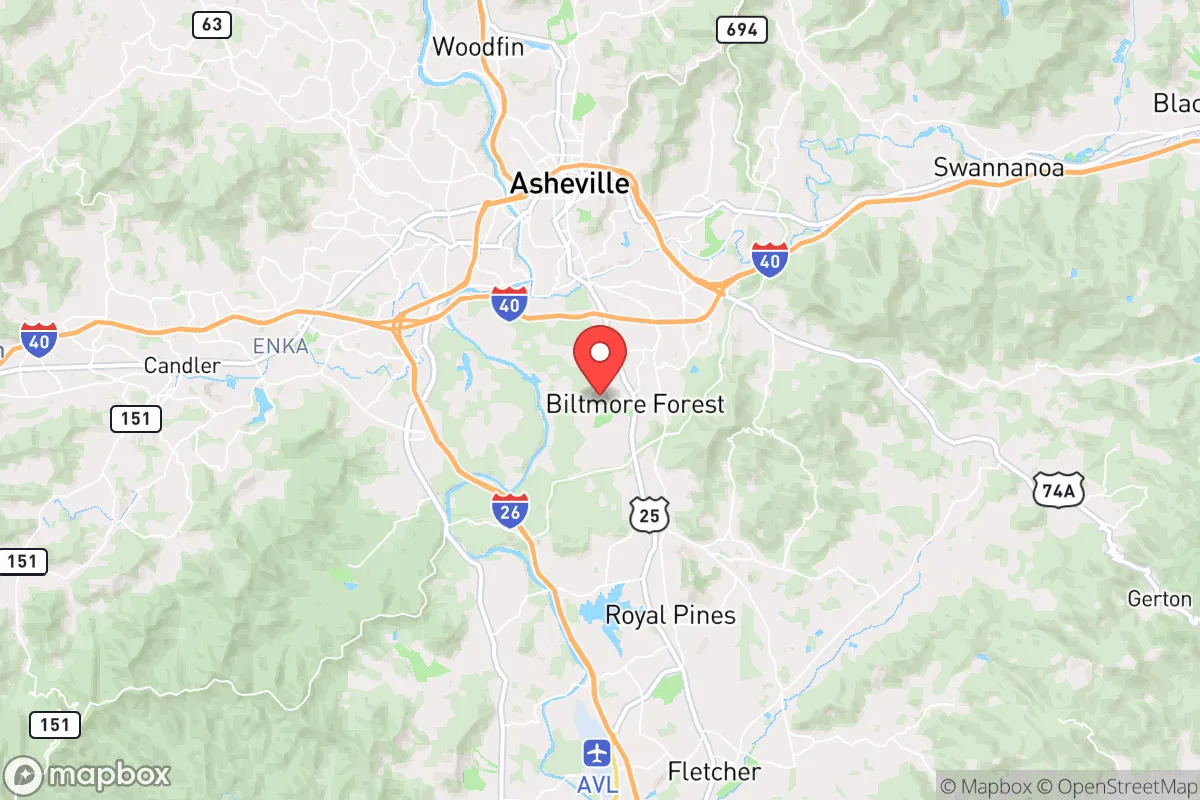
- Pro: Proximity to Asheville without the hassle. You can be at the Asheville Art Museum, the Orange Peel concert venue, or a dozen farm-to-table restaurants in under 15 minutes, yet your home feels remote and wooded.
- Con: Limited social infrastructure for non-golfers. If you don’t belong to the country club, social life can feel isolating. There are no public parks, libraries, or community centers within the town limits—everything requires a car trip.
- Con: High cost of entry and maintenance. With a median home value over $1.2 million, even well-off families may find the property taxes and upkeep burdensome. The cost of living index of 243 means groceries, services, and contractors all carry a premium.
- Con: Seasonal traffic quirks. During leaf season (October) and major Biltmore Estate events, the main arteries—especially Hendersonville Road and I-26—can back up significantly, turning a 10-minute commute into 30 minutes.
Cultural Quirks and Local Identity
One of the town’s defining traits is its deliberate lack of commercial identity. There are no streetlights, no sidewalks, no downtown district—by design. The original 1920s development plan, tied to the Vanderbilt estate, prioritized preserving the forested landscape over commercial convenience. This means residents take pride in the fact that you can live here for years and never see a delivery truck or a neon sign. The town’s annual Fourth of July parade is a low-key affair—kids on decorated bikes, a few classic cars, and neighbors chatting on lawns—rather than a large public spectacle. The unspoken rule is that wealth is understated: you’re more likely to see a Subaru Outback than a Lamborghini in a driveway. For those who value that kind of quiet, understated affluence, Biltmore Forest feels less like a suburb and more like a permanent retreat.

Similar small towns to Biltmore Forest

* Values derived from national, state, county, city and local statistics and may differ in a specific area. Last updated: 2026-10-15T16:38:07.000Z
Narrative content on this page is AI-generated and may contain mistakes. Verify any details that matter before acting on them.
ReloMaps may earn a commission from affiliate links at no extra cost to you.

