Photo: Wikipedia
Quality of Life in Biltmore Forest, NC
A high quality of life with strong walkability, manageable living costs, healthy neighborhood signals, and solid amenity access.
What does Quality of Life tell us?
Quality of Life blends cost of living, nearby amenities, socioeconomic signals, and neighborhood character. City-level scores represent the whole municipality; individual neighborhoods can differ.
What does this tell us?
Quality of Life blends cost of living, nearby amenities, socioeconomic signals, and neighborhood character. City-level scores represent the whole municipality; individual neighborhoods can differ.
Cost of Living
143% above national average
The Real Cost of Living in Biltmore Forest, NC for 2026
| Tier | Individual | Family (4) |
|---|---|---|
| Survival | $38k | $71k |
| Comfortable | $243k | $357k |
| Luxury | $312k+ | $483k+ |
| Elite (Top 5%) | $572k+ | $887k+ |
48%
* median rent substituted from county-level data — local Census figures unavailable for small populations
The Area Signal
A metric tracking the socioeconomic signals of the area.
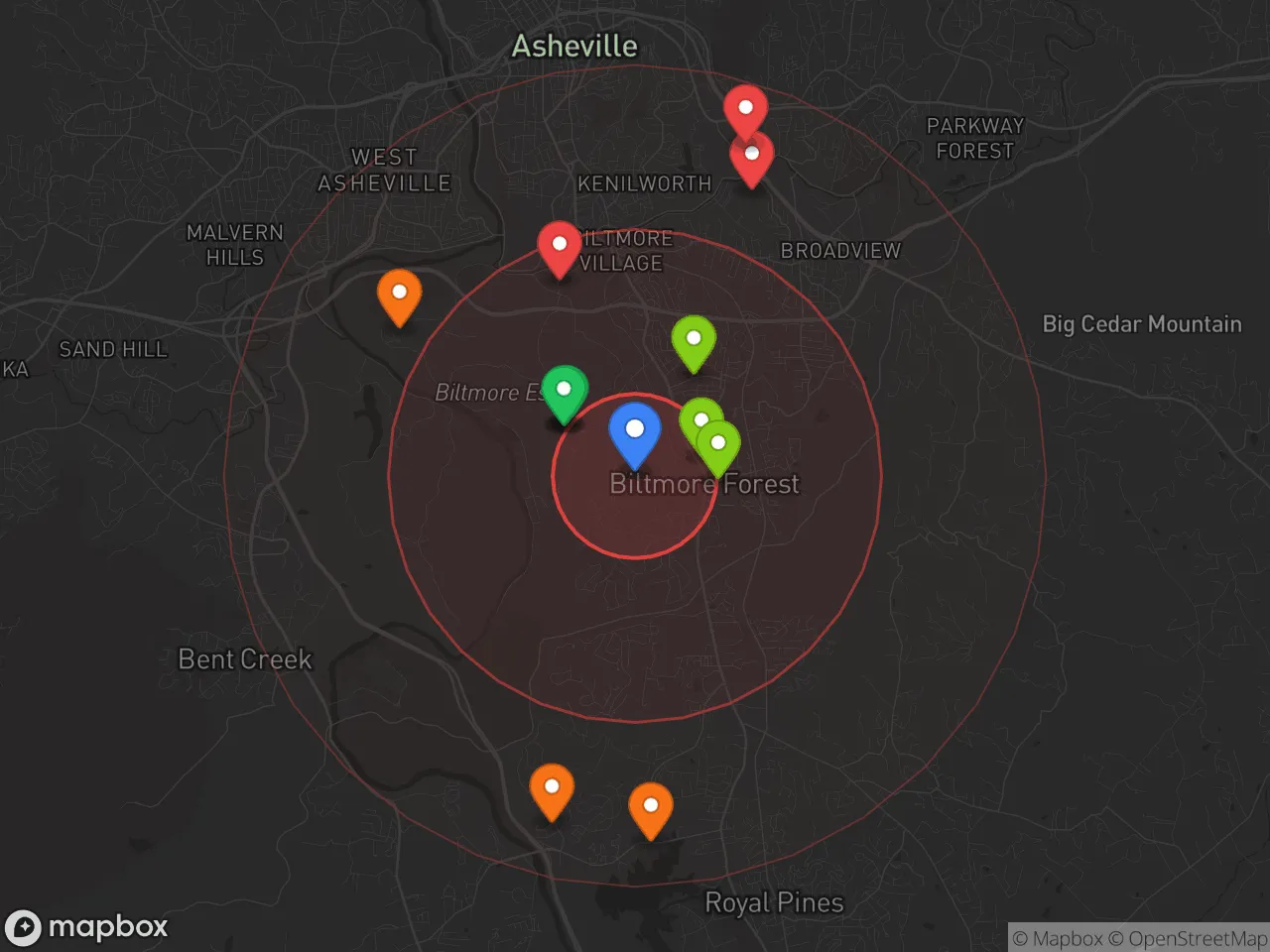
Hobbies
Explore the areaGroceries
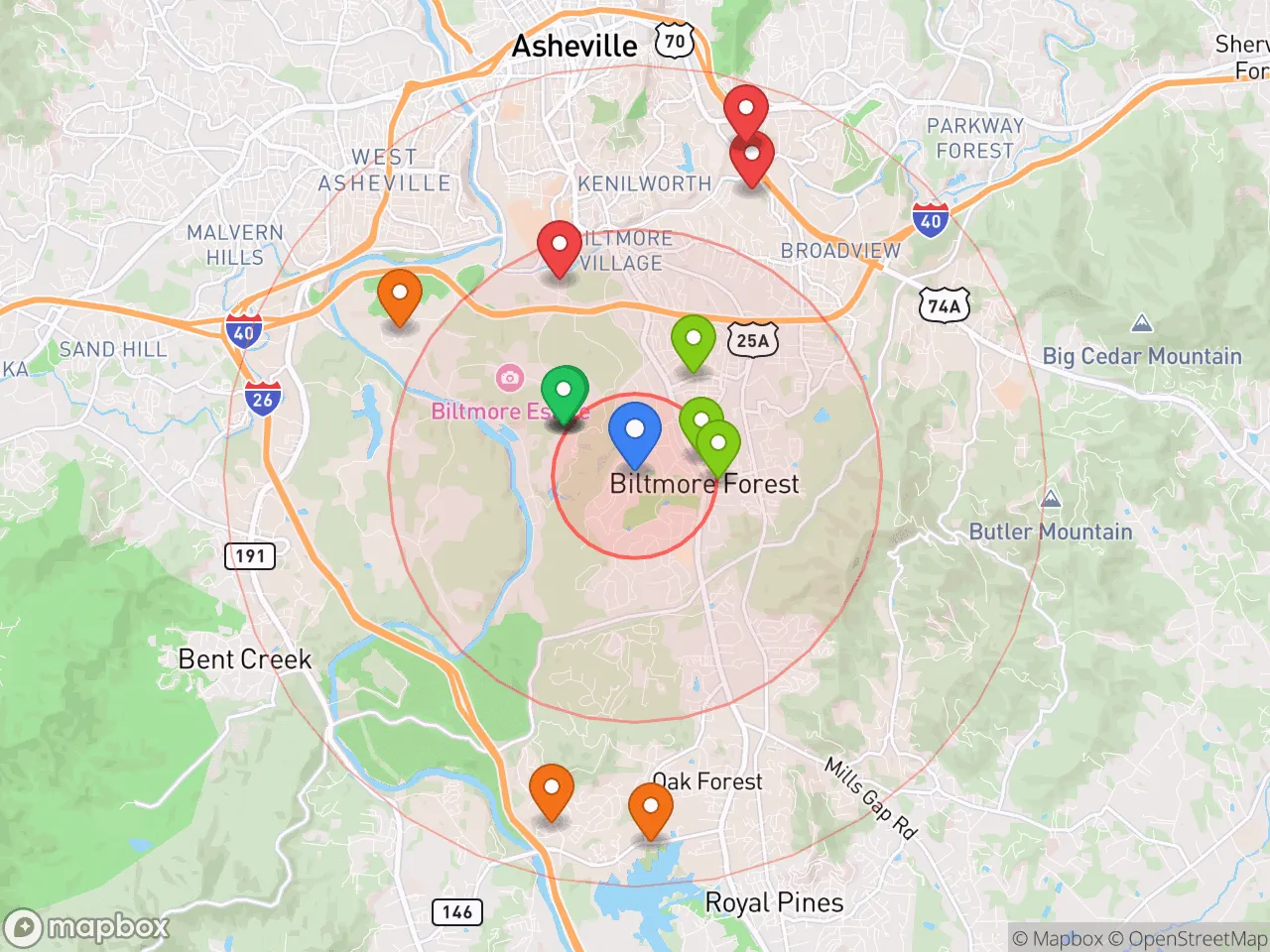
0 within 10 miles
Gas
0 within 10 miles
Hospital
0 within 20 miles
Airport
CLT — Charlotte Douglas International
Post Office
Critical Amenities
Quality-of-Life Analysis
Biltmore Forest, North Carolina, is one of the wealthiest and most exclusive towns in the Southeast, with a cost of living index of 243 (more than double the U.S. average of 100). The roughly 1,400 residents are predominantly high-net-worth professionals, corporate executives, and retirees who prioritize privacy, low density, and proximity to Asheville’s cultural and medical amenities. The town’s gated character and strict zoning create a deliberately quiet, affluent enclave rather than a bustling suburban community.
What it costs to live in Biltmore Forest and how it compares to Asheville
Housing is the primary driver of Biltmore Forest’s extreme cost of living. The median home value sits at $1,249,000, roughly three times the median for Asheville proper and more than four times the national median. Renters, however, find a relative bargain: the median rent is $1,281, which is below the Asheville citywide median and reflects the town’s small rental stock (mostly older homes or guest cottages). For context, a comparable home in nearby Biltmore Lake or Kenilworth would cost 30–40% less, while a similarly sized property in downtown Asheville’s historic district might run 15–20% less but with far less land. Property taxes in Buncombe County are moderate (around 0.56% of assessed value), but the high entry price means annual tax bills often exceed $7,000. The average commute of 20.8 minutes is shorter than the national average (26 minutes), with most residents driving into Asheville or to the Biltmore Park corporate hub for work.
Schools, amenities, and the daily rhythm of life in Biltmore Forest
Daily life in Biltmore Forest revolves around privacy and outdoor recreation. The town has no commercial district—no grocery stores, restaurants, or gas stations—so residents drive 5–10 minutes to Asheville’s Biltmore Village or Hendersonville Road for errands. The public schools serving the area are among the best in western North Carolina: Estes Elementary, Valley Springs Middle, and T.C. Roberson High all earn 8–10/10 ratings on GreatSchools, and the town is zoned for the academically competitive Buncombe County Early College program. Private options include the all-girls St. Genevieve/Gibbons Hall and the progressive Carolina Day School, both within a 15-minute drive. Amenities are limited to the town’s own parks and the private Biltmore Forest Country Club (golf, tennis, swimming, and dining), which requires membership. The Biltmore Estate’s 8,000 acres of gardens and trails are adjacent, offering residents de facto access to world-class walking and cycling routes. The rhythm is slow and quiet—no sidewalks, few through streets, and a strict 25 mph speed limit enforced by the town’s own police force.
This environment suits a specific type of buyer: those who can afford the steep entry price and who value seclusion, top-tier schools, and low crime (the town consistently reports near-zero violent crime) over walkability or urban energy. Retirees downsizing from larger estates, executives at Mission Hospital or the Grove Park Inn, and remote workers in finance or tech are the most common profiles. Families with school-age children are drawn by the school district and the safety of a gated community, though the lack of neighborhood play streets or commercial hubs means most social life happens at the country club or in Asheville proper. Anyone seeking a vibrant downtown, diverse housing options, or a lower cost of entry should look instead to Asheville’s Montford or West Asheville neighborhoods, where homes cost half as much and daily errands are walkable.

Crime in Biltmore Forest, NC
Lower crime rates than 83% of comparable U.S. locations.
Violent CrimeViolent Crime Analysis
Property CrimeProperty Crime Analysis
Crime Analysis
Biltmore Forest, North Carolina, is one of the safest communities in the Asheville metropolitan area, with crime rates dramatically lower than both state and national averages. The village reported a violent crime rate of just 67.7 incidents per 100,000 residents and a property crime rate of 744.2 per 100,000, figures that place it among the most secure enclaves in Western North Carolina. These numbers reflect a community where serious crime is rare and residents enjoy a high degree of personal safety.
Crime in context
To understand Biltmore Forest’s safety profile, it helps to compare its data against broader benchmarks. The national violent crime rate hovers around 380 per 100,000, meaning Biltmore Forest’s rate is roughly 82% lower than the U.S. average. Property crime nationally sits near 2,000 per 100,000, making the village’s rate about 63% lower than the typical American community. Even within Buncombe County, which includes Asheville, Biltmore Forest stands apart: Asheville’s violent crime rate is approximately 600 per 100,000, nearly nine times higher. The village’s low density, private policing through the Biltmore Forest Police Department, and high property values all contribute to this exceptional safety record. However, residents should note that the broader Asheville metro area has seen rising property crime in recent years, and some progressive policy shifts in the county’s justice system—including a district attorney’s office that has emphasized diversion programs and reduced incarceration for non-violent offenses—have raised concerns among homeowners about recidivism and enforcement consistency.
What residents experience
Daily life in Biltmore Forest is defined by an absence of the street-level disorder common in urban centers. The village’s violent crime is almost entirely limited to isolated domestic incidents or thefts from vehicles, with no reported homicides in recent years and only occasional aggravated assaults. Property crime, while higher than violent crime, typically involves unlocked car break-ins or package thefts rather than burglaries of occupied homes. The Biltmore Forest Police Department maintains a visible presence with proactive patrols, and the village’s gated or semi-private road network naturally limits through traffic. For families and retirees, the primary safety concern is not crime itself but the potential for spillover from Asheville, where a progressive district attorney’s office has faced criticism for declining to prosecute certain low-level property offenses, potentially emboldening offenders who target wealthier adjacent communities.
Neighborhood-level variation within Biltmore Forest is minimal due to the village’s small size and uniform socioeconomic profile. Homes along main thoroughfares like Biltmore Forest Road or Vanderbilt Road may experience slightly more vehicle traffic and opportunistic theft, while interior cul-de-sacs and gated lanes offer near-complete privacy. The village’s homeowners’ association and neighborhood watch programs are active, and most residents report feeling safe walking or jogging at any hour. For those considering relocation, the trade-off is clear: Biltmore Forest provides elite-level security within a metro area where progressive justice policies have created measurable public safety challenges in surrounding communities.
* Values derived from national, state, county, city and local statistics and may differ in a specific area. Last updated: 2026-10-15T16:38:07.000Z
Narrative content on this page is AI-generated and may contain mistakes. Verify any details that matter before acting on them.
ReloMaps may earn a commission from affiliate links at no extra cost to you.

