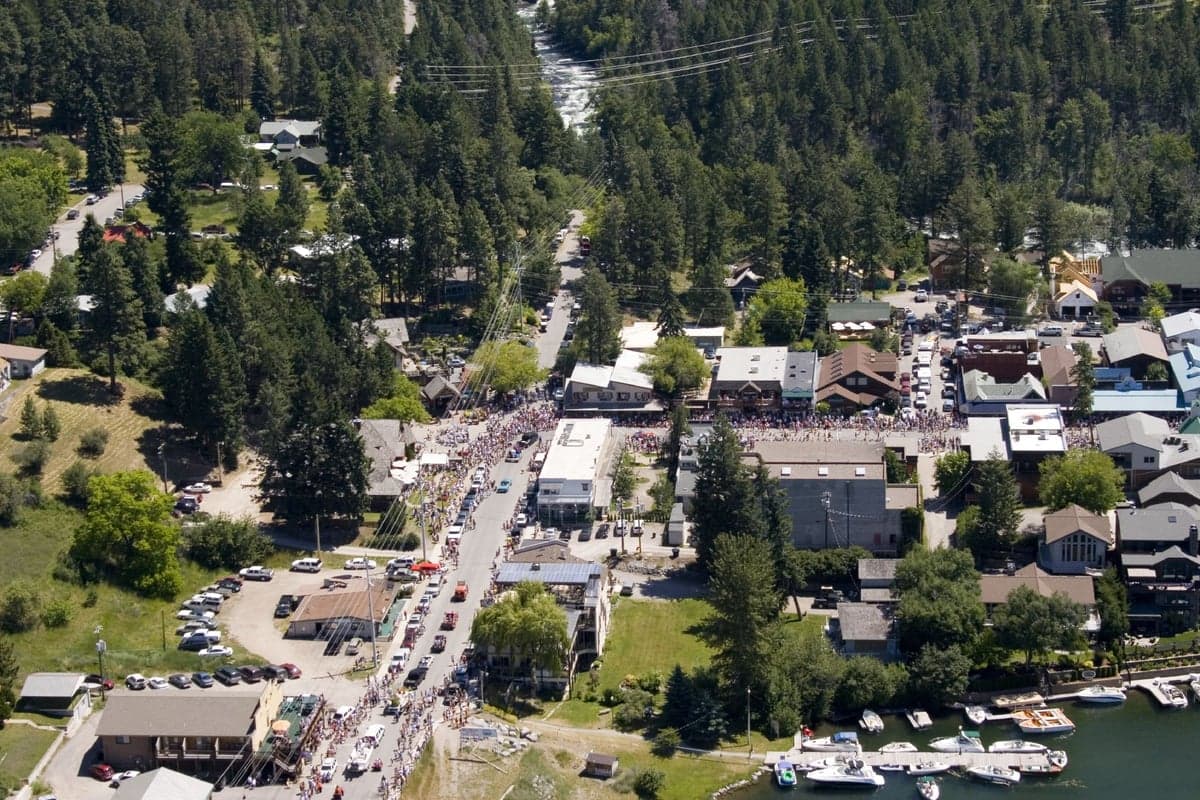
Photo: Wikipedia
Political ClimatePolitical Climate in Bigfork, MT
District shown is the primary district for this city’s centroid. Cities may span multiple districts.
Inherited from parent county — no local data available.
* Lean and PVI are calculated from the surrounding county’s 2020 and 2024 presidential results, Cook-style — a finer measure here than its congressional district (MT-1).
Political rankings in Montana
- Most Conservative Cities in Montana
- Most Liberal Cities in Montana
- Best Liberal-Leaning Towns in the Mountain West
- Safest Liberal-Leaning Towns in the Mountain West
- Safest Conservative-Leaning Cities in the Mountain West
- Affordable Small Towns for Conservatives
- Most Affordable Liberal-Leaning Small Towns in the U.S.
- Safest Conservative-Leaning Cities in the U.S.
- Most Conservative Counties in Montana
- Most Liberal Counties in Montana
Local Political AnalysisPolitical Analysis of Bigfork, MT
Bigfork leans heavily Republican, with a Cook PVI of R+17 that makes it one of the more conservative pockets in an already red state. That number isn't just a statistic—it reflects a long-standing cultural and political identity rooted in the area's ranching, logging, and outdoor-recreation heritage. Over the past decade, the influx of out-of-state retirees and remote workers has nudged the politics slightly, but the core remains solidly right-leaning. If you're looking at the broader Flathead Valley, Bigfork sits to the right of Kalispell (which is itself R+14) and is noticeably more conservative than Whitefish, where a growing arts and tourism scene has created a more mixed, sometimes purple, political vibe.
How it compares
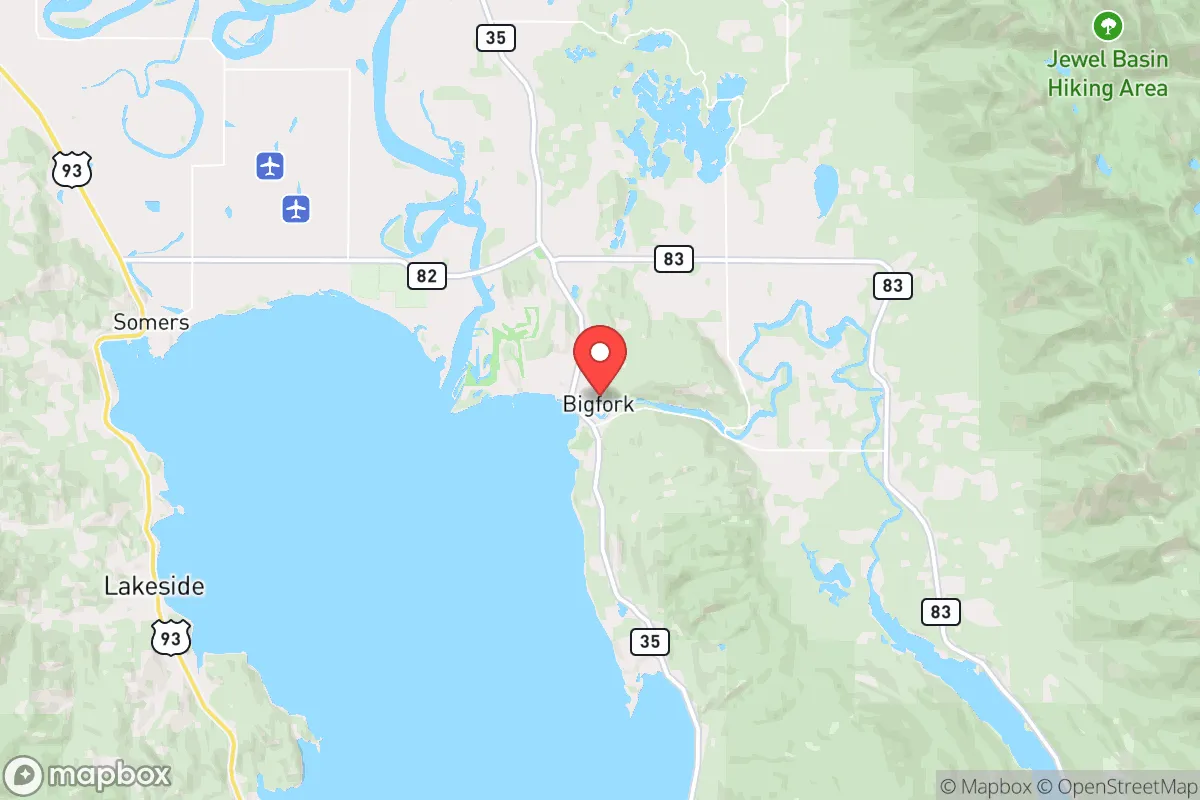
Montana as a whole carries a Cook PVI of R+10, so Bigfork is about seven points more Republican than the state average. That gap matters in practical terms. In statewide races—like the 2024 Senate contest that went Republican by roughly 12 points—Bigfork's precincts often delivered margins closer to 20 points. The surrounding Flathead County is the engine of this conservatism: it's one of the fastest-growing counties in the state, and new arrivals tend to be conservative-leaning retirees or second-home owners from places like California or Washington. By contrast, Missoula County (D+12) and Gallatin County (Bozeman, lean R but with a strong Democratic minority) offer the main political counterweights. Within the valley, you can drive 20 minutes south to Lakeside and find a similar R+15 vibe, or head 30 minutes north to Columbia Falls, which is slightly more moderate due to a working-class, union-heavy timber history.
What this means for residents
For conservative residents, Bigfork is a comfortable fit. Local government, school board meetings, and county commission decisions generally align with small-government, pro-business, and Second Amendment priorities. You'll find plenty of Trump signs in yards during election season, and the local Republican Party is active and well-organized. For liberal residents, the reality is more about finding your niche. There's a quiet but present Democratic-leaning community, especially among younger families and artists drawn to the lake and mountains. They tend to focus on local issues like water quality, growth management, and school funding rather than national politics. Socially, most folks get along fine—politics rarely comes up at the grocery store or boat launch. The real friction point is growth: both sides agree that development is changing the character of the area, but they disagree on how fast and how much regulation is needed.
Culturally, Bigfork stands apart from Montana's more progressive enclaves. There's no city-wide mask mandate or plastic bag ban here, and the local paper's letters to the editor lean heavily toward property rights and skepticism of federal land management. The arts scene—anchored by the Bigfork Summer Playhouse and local galleries—tends to be apolitical, focusing on community and tourism rather than activism. Looking ahead, the trajectory is toward more of the same: continued in-migration of conservative-leaning newcomers, a slow but steady increase in property values, and a political climate that will remain deeply red for the foreseeable future. If you're moving here, the key is understanding that the politics are baked into the landscape, but daily life is far more about the lake, the trails, and the neighbors than about any party line.

State Political ClimatePolitical Climate in Montana
State Political AnalysisPolitical Environment in the State
Montana has shifted from a purple swing state to a solidly Republican stronghold over the past two decades, with a Cook Partisan Voting Index of R+10. The dominant coalition is a mix of rural conservatives, libertarian-leaning ranchers, and a growing influx of out-of-state transplants, many of whom are drawn by low taxes and a perceived "free" lifestyle. While Democrats still hold a few local offices and the state has a populist streak that occasionally bucks party lines, the overall trajectory has been a steady march rightward since 2008, when the state last voted for a Democratic presidential candidate.
Urban vs. rural divide
The political map of Montana is a textbook study in the urban-rural split. The state's largest population centers, Missoula and Bozeman, are the primary blue dots in a sea of red. Missoula, home to the University of Montana, is a reliably Democratic stronghold with a strong environmentalist and progressive activist scene. Bozeman, while also blue, is more of a purple-to-blue city, driven by a younger, educated workforce in tech and outdoor recreation; its surrounding Gallatin County has been trending left, though it still has a significant conservative presence. In contrast, Billings, the largest city, is a conservative anchor, with a strong oil, gas, and agriculture base. Great Falls and Butte are historically union-heavy and Democratic, but have shifted right in recent cycles, especially on cultural issues. The rural counties—like McCone, Garfield, and Petroleum—routinely vote 80-90% Republican. The key dynamic is that the growth in Bozeman and Missoula hasn't been enough to offset the deep-red rural vote, and many of the new arrivals in those cities are actually moderate conservatives fleeing blue states, further complicating the political picture.
Policy environment
Montana's policy environment is defined by a low-tax, limited-government ethos, but with some notable populist exceptions. There is no state sales tax, a major draw for relocators, and property taxes are moderate. The state has a Republican-controlled legislature and governor's office, which has passed a series of conservative priorities. Education policy is a flashpoint: the state has expanded school choice options, including charter schools and education savings accounts, but also faces chronic underfunding in rural districts. Healthcare is a mixed bag; Montana expanded Medicaid under the Affordable Care Act, a decision that remains popular even among many conservatives, but the state has also passed laws restricting abortion access. Election laws have tightened: the state now requires a photo ID to vote, and same-day voter registration was eliminated in 2021. The regulatory posture is generally business-friendly, especially for agriculture, energy, and mining, though environmental regulations on water and land use are still significant, particularly in the western part of the state.
Recent policy direction
The last five years have seen a sharp conservative turn in state law. On gun and self-defense law, Montana is a constitutional carry state, and in 2021 it passed a law prohibiting local enforcement of federal gun laws, a direct challenge to federal authority. Parental and education rights have been a major focus: the 2023 "Parents Bill of Rights" requires schools to notify parents about curriculum and medical services, and the state has banned critical race theory and transgender athletes from competing in women's sports. On speech and privacy, Montana passed one of the nation's strictest laws on data privacy for minors, but has also targeted social media platforms for alleged censorship, with a law that allows users to sue platforms for "deplatforming." Medical and bodily autonomy is a stark divide: the state has a near-total ban on abortion after 20 weeks, and a 2023 law restricts gender-affirming care for minors. Property rights are generally strong, with a "right to farm" law protecting agricultural operations from nuisance lawsuits, but the state has also seen fights over water rights and land use planning, especially in fast-growing areas like Gallatin County. Taxation remains a selling point: the state has cut income taxes in recent years, with a flat rate of 5.9% as of 2024. Voting and ballot access have been tightened, with the elimination of same-day registration and stricter ID requirements, though mail-in voting remains popular and widely used.
Civil unrest & political movements
Montana is not a state known for large-scale civil unrest, but there are visible political movements. The most prominent is the anti-government and "constitutional sheriff" movement, which has a strong foothold in rural counties like Ravalli and Flathead. These groups have been vocal about election integrity, with some counties conducting hand-count audits of ballots in 2022 and 2024. On the left, environmental activism is the main driver, with groups like the Montana Environmental Information Center (MEIC) organizing protests against mining and fossil fuel projects, particularly around the Smith River and the Yellowstone River. Immigration politics are less of a flashpoint than in border states, but there is a growing tension around the influx of out-of-state residents, which has driven up housing costs and fueled a "locals vs. newcomers" dynamic. There have been no serious secession or nullification movements, though the state has passed laws asserting its sovereignty over federal lands. A new resident would notice the prevalence of political signage, especially in rural areas, and the strong presence of local talk radio and conservative media.
Projection
Over the next 5-10 years, Montana is likely to become more Republican, but also more internally divided. The in-migration from California, Washington, and Oregon is not a monolith; many of these new residents are conservatives or libertarians seeking lower taxes and less regulation, which will reinforce the state's rightward tilt. However, the growth in Bozeman and Missoula will also bring more progressive voters, potentially making those cities even bluer and creating a sharper urban-rural divide. The key battleground will be the state legislature, where redistricting after 2030 could shift the balance. The biggest wildcard is the housing crisis: if affordability continues to deteriorate, it could fuel a populist backlash against both parties, potentially leading to more independent or third-party candidates. A relocator moving in now should expect a state that is culturally conservative, with a strong libertarian streak, but with a growing tension between the old Montana of ranching and mining and the new Montana of tech and tourism.
For a new resident, the bottom line is that Montana offers a low-tax, high-autonomy environment that is generally welcoming to conservatives and libertarians. Liberal residents will find safe havens in Missoula and Bozeman, but will face a state government that is actively hostile to many of their policy priorities. The practical takeaway is that your day-to-day life will be shaped more by local politics than state-level ones: the county you choose—whether it's progressive Missoula County or conservative Gallatin County—will determine your experience with schools, land use, and local law enforcement. The state is not a monolith, and the political climate varies dramatically depending on whether you're in a mountain town, a prairie county, or a city on the Yellowstone River.
* Values derived from national, state, county, city and local statistics and may differ in a specific area. Last updated: 2026-11-14T13:40:14.000Z
Narrative content on this page is AI-generated and may contain mistakes. Verify any details that matter before acting on them.
ReloMaps may earn a commission from affiliate links at no extra cost to you.

