Photo: Wikipedia
Strategic Assessment of Bigfork, MT
Strong survivability profile. Good buffer from population centers, with manageable environmental and tactical risks.
What does the Strategic Assessment tell us?
Our Strategic Assessment grades tactical survivability of an area. Major population centers, military targets, fallout zones, natural disasters, and border exposure all drive risk — lower exposure means a more defensible position in a crisis.
This is heavily inspired by Joel Skousen's Strategic Relocation book. Highly recommended you checkout the book ($)What does this tell us?
Our Strategic Assessment grades tactical survivability of an area. Major population centers, military targets, fallout zones, natural disasters, and border exposure all drive risk — lower exposure means a more defensible position in a crisis.
This is heavily inspired by Joel Skousen's Strategic Relocation book. Highly recommended you checkout the book ($)Strategic Pillars
Key Distances
Regional Safe Places
Below is our recommended "safe zones" in Montana and the surrounding area based on our strategic heuristics. For most people, it's unrealistic to live in a “safe zone” full-time due to work, family or other personal reasons. They tend to be more rural. However, many of these areas are perfect for second homes and retreat properties that double as a vacation home or even a short-term rental.
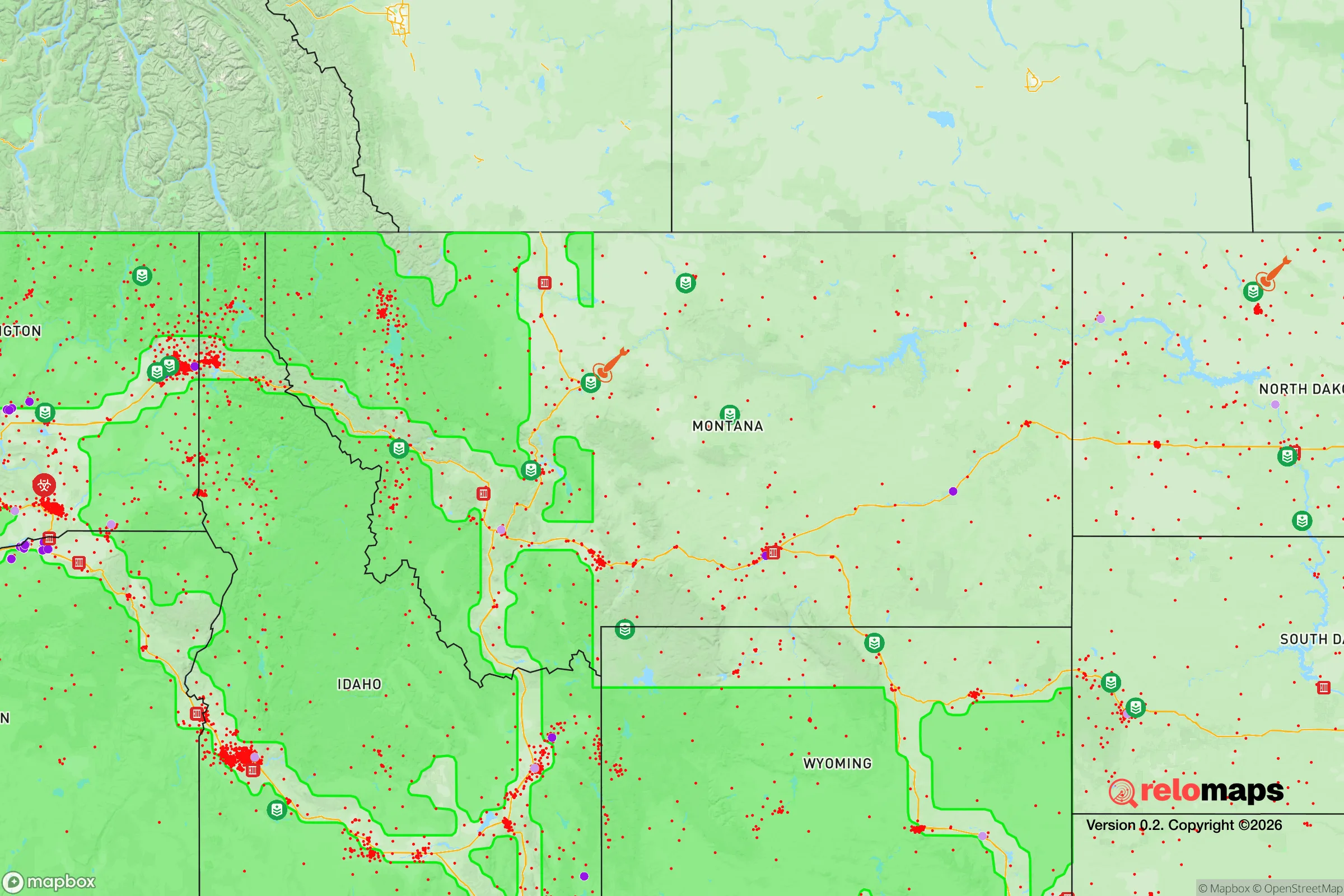


Important Note: For informational purposes only. This does not mean nothing bad ever happens in the green zones. Please use common sense. This is based on public data and modeled with AI. We tried to take a conservative approach but mistakes happen. We update this regularly as new information becomes available.
Solar Generator Recommendations
Backup power matters more here than in safer locations. We've picked three solar generators across budgets and capacity tiers — start with the budget unit if you only need a few essentials, or step up if you want to run a fridge and HVAC for days at a time.
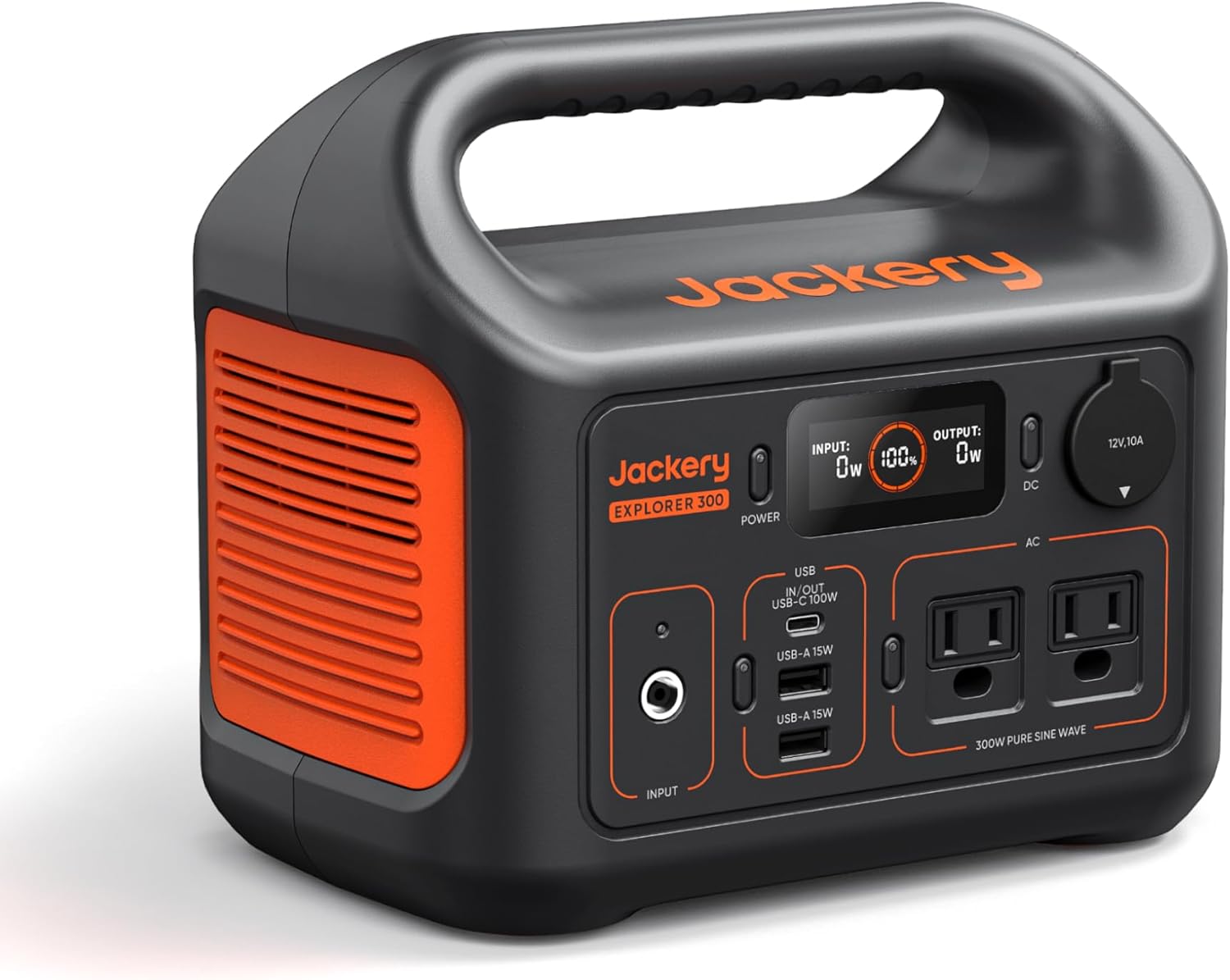
Jackery Portable Power Station Explorer 300
Budget OptionPower on the Go: Weighing only 11 lbs, it's convenient to set up and store with book-sized foldable solar panels

BLUETTI Portable Power Station AC180
Designed for both indoor and outdoor scenarios, AC180 is highly capable as it has a robost capacity and continuous output power.

EF ECOFLOW DELTA Pro Ultra Power Station
Upgraded PickEcoFlow DELTA Pro Ultra is a whole-home energy system designed to grow with your family. Integrated with the Smart Home Panel 2, it scales to meet your evolving energy needs — keeping your home powered, intelligent, and secure through every stage of life.
We earn a commission, at no additional cost to you.
Strategic Assessment Analysis
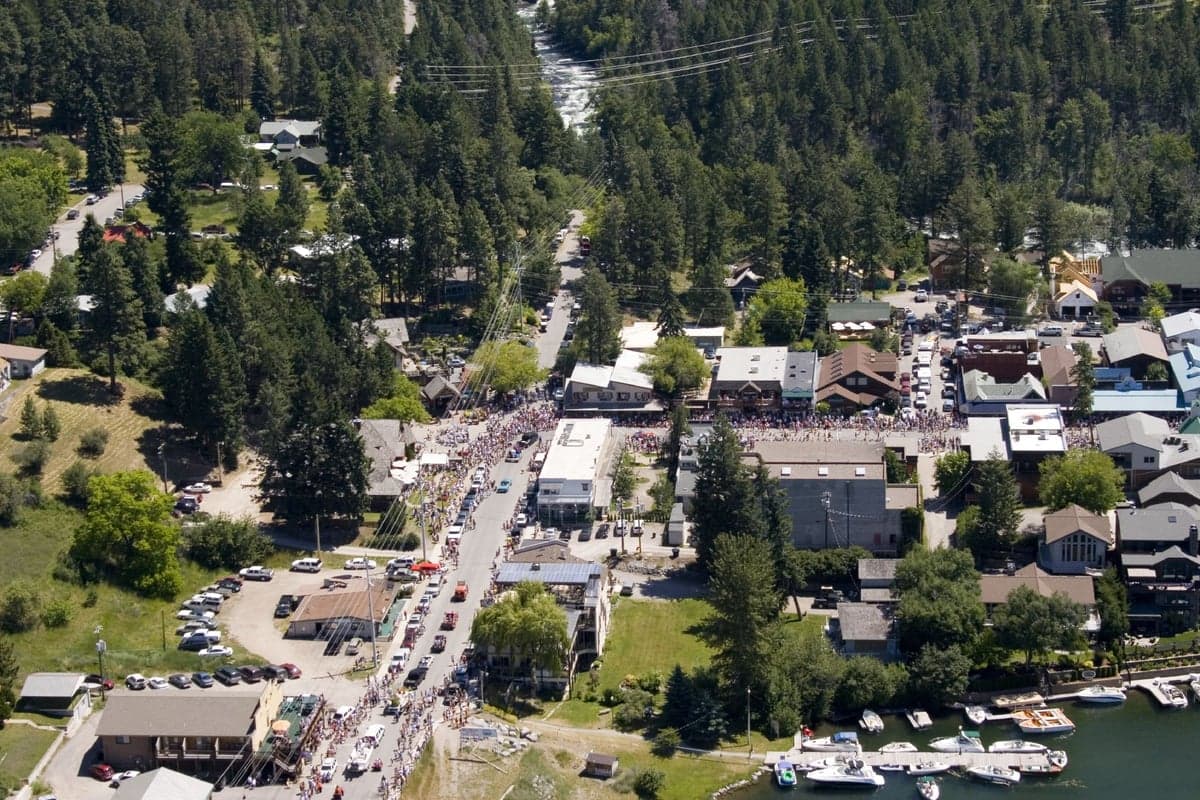
Bigfork, Montana, offers a compelling mix of geographic isolation and practical self-sufficiency that appeals to relocation-minded individuals and families prioritizing resilience. Nestled on the northeast shore of Flathead Lake and flanked by the Swan and Mission mountain ranges, the area combines natural defensibility with access to the resources of the broader Flathead Valley. For a reader weighing disaster readiness and long-term stability, Bigfork’s strategic value lies in its balance of remoteness from major metropolitan targets and its proximity to essential infrastructure — though it is not without significant exposure to natural and man-made risks.
Geographic position and natural advantages for long-term stability
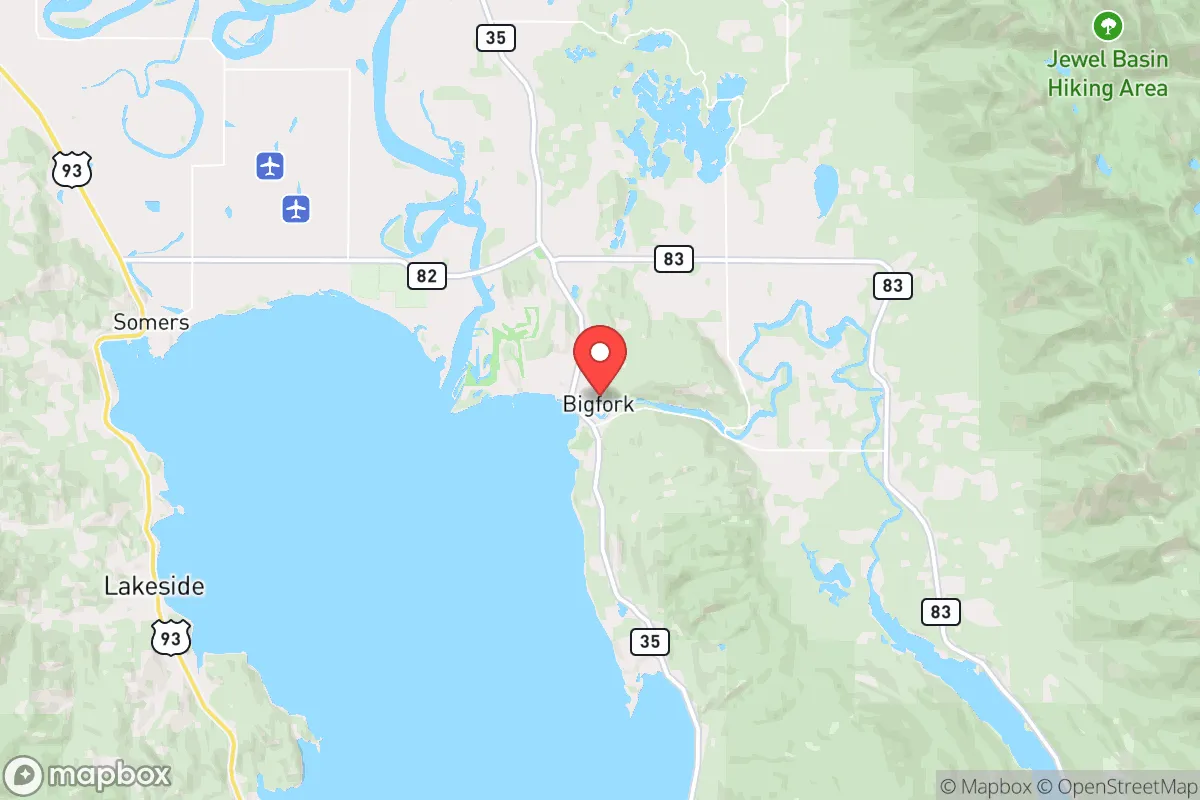
Bigfork’s location is defined by its position at the mouth of the Flathead River, where it drains Flathead Lake. This places the community in a valley corridor that is both sheltered by mountains and connected to the larger Flathead region. The surrounding topography — the Swan Range to the east and the Mission Mountains to the west — provides natural barriers that slow access from the east and south, offering a degree of defensibility against large-scale population movement or cascading disruptions from urban centers. The area sits at roughly 2,900 feet elevation, which moderates summer heat and ensures reliable winter snowpack for water storage. The Flathead Lake itself, the largest natural freshwater lake west of the Mississippi, serves as a massive thermal buffer, moderating extreme temperature swings and providing a year-round water source. For a relocator, this means a climate that supports four-season living without the extremes of the high plains or the wildfire-prone dry interior. The region’s forested slopes and abundant wildlife also support subsistence hunting and foraging, though these should not be relied upon as primary food sources without significant local knowledge.
Risks, exposures, and proximity to fallout-relevant landmarks
While Bigfork’s remoteness is an asset, it is not immune to risks. The most immediate natural threat is wildfire. The surrounding forests, particularly in the Swan Valley and along the Flathead River corridor, have a history of large-scale burns, and the 2017 Sprague Fire near Glacier National Park and the 2021 Trail Creek Fire serve as recent reminders. Bigfork’s interface with wildland means that a major fire event could threaten homes and infrastructure, especially during dry, windy autumns. Flooding is a secondary concern: the Flathead River can rise rapidly during spring snowmelt or heavy rain, and low-lying properties near the lake’s shoreline or along the river’s floodplain face periodic inundation. Earthquake risk is low but not zero — the area sits in a seismically quiet zone, though the nearby Rocky Mountain Trench fault system to the west could produce a significant event on a multi-century timescale.
From a man-made risk perspective, Bigfork’s distance from major targets is a double-edged sword. The nearest city of any strategic significance is Kalispell, 15 miles west, which has a regional airport and a hospital but no major military or industrial targets. The closest large metropolitan area is Spokane, Washington, roughly 200 miles southwest — well outside the blast radius of a nuclear event but within the fallout plume zone depending on wind patterns. More concerning is the proximity to the Columbia River corridor and the Hanford Site in Washington, a decommissioned nuclear production facility that, while not a target itself, could be a secondary concern in a large-scale conflict. Bigfork is also roughly 150 miles from the Canadian border, which could be a factor in cross-border migration or supply chain disruptions. For a relocator, the key takeaway is that Bigfork is far enough from primary targets to avoid direct blast effects but close enough to experience secondary effects like refugee movement, supply shortages, or fallout if prevailing winds align unfavorably.
Practical resilience for a relocator: food, water, energy, and defensibility
Bigfork’s practical resilience is strong but requires active preparation. The area’s water supply is exceptional: Flathead Lake and the Flathead River provide abundant surface water, and groundwater is generally accessible via wells in most residential areas. However, reliance on municipal water systems in the village core could be a vulnerability during a prolonged power outage or contamination event. A private well with a hand pump or a backup generator is a wise investment. Food resilience is moderate. The growing season is short — roughly 90 to 110 frost-free days — but the fertile valley soils support gardens, orchards, and small-scale livestock. Local farmers’ markets and CSAs are robust in summer, but winter food security depends on storage, preservation, and supply chains from the Flathead Valley. Bigfork’s grocery options are limited to a single full-service store (the Bigfork IGA), so a relocator should plan for bulk storage and a diversified food supply.
Energy resilience is a mixed picture. The area is served by Flathead Electric Cooperative, which sources power from hydroelectric dams on the Flathead River and the Columbia River system. This provides relatively stable and renewable electricity, but the grid is vulnerable to wildfire-related outages and winter storms. Solar potential is moderate — the valley receives about 160 sunny days per year, less than the national average, but enough for a well-sized off-grid system with battery storage. Wood heating is common and practical, given the surrounding forests, but requires proper stove installation and a sustainable fuel source. Defensibility is one of Bigfork’s strongest attributes. The valley’s narrow access points — primarily Highway 83 from the south and Highway 35 from the west — can be monitored and, in a worst-case scenario, controlled by a prepared community. The terrain limits approach vectors, and the lake provides a natural barrier to the north. However, the community’s small size (roughly 2,000 year-round residents) means that collective security depends on neighborly cooperation rather than formal infrastructure. A relocator should invest in community relationships as much as in physical preparations.
Overall, Bigfork presents a strong strategic picture for a relocator who values natural resources, geographic isolation, and a manageable risk profile. Its primary weaknesses — wildfire exposure, a short growing season, and dependence on a single grocery store — are manageable with planning and investment. Its strengths — abundant water, defensible terrain, and distance from major targets — make it one of the more resilient options in the northern Rockies. For a family or individual willing to prepare actively and integrate into a small, self-reliant community, Bigfork offers a solid foundation for long-term stability without the extreme isolation of more remote Montana locations. The key is to treat it as a base for self-sufficiency, not a turnkey solution, and to remain aware of the regional risks that no location in the lower 48 can fully escape.

* Values derived from national, state, county, city and local statistics and may differ in a specific area. Last updated: 2026-11-14T13:40:14.000Z
Narrative content on this page is AI-generated and may contain mistakes. Verify any details that matter before acting on them.
ReloMaps may earn a commission from affiliate links at no extra cost to you.

