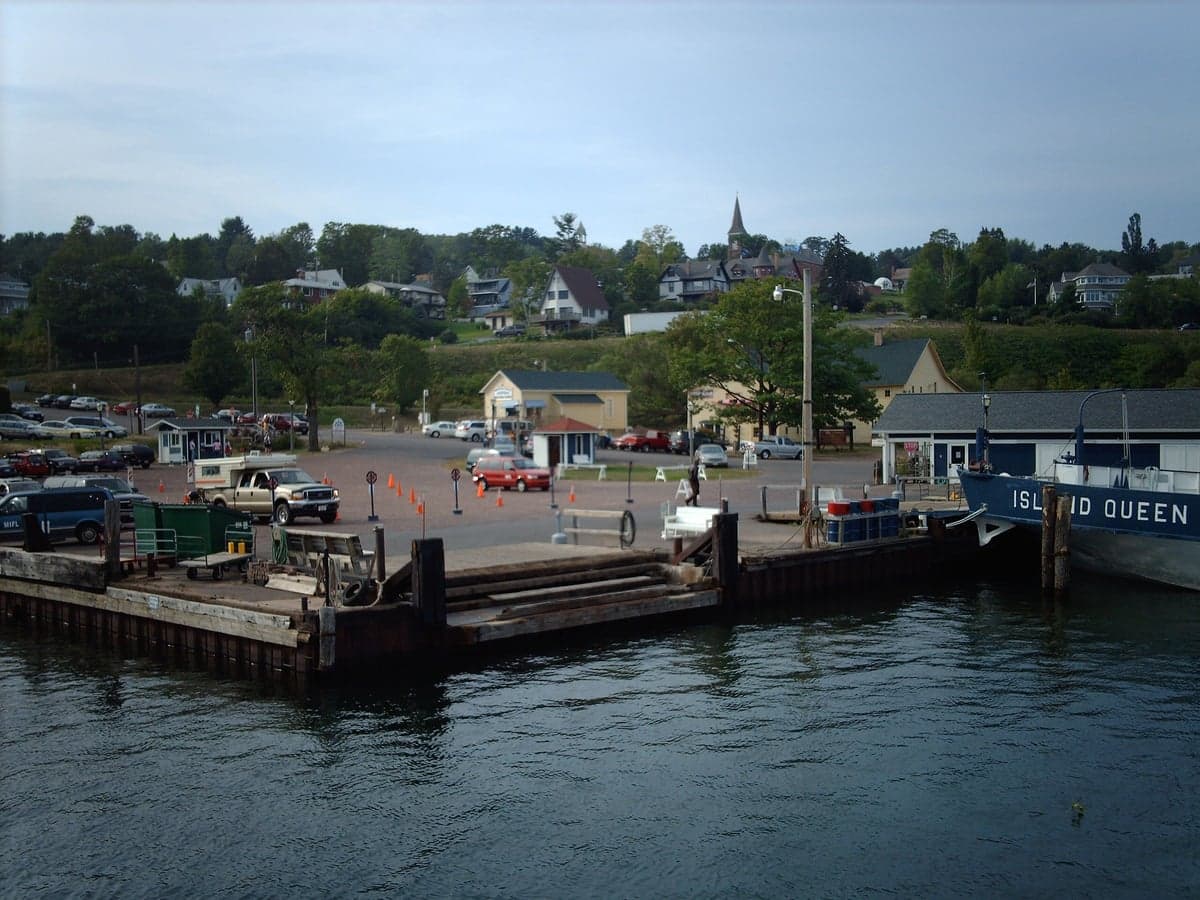
Photo: Wikipedia
Political ClimatePolitical Climate in Bayfield, WI
District shown is the primary district for this city’s centroid. Cities may span multiple districts.
Local Political AnalysisPolitical Analysis of Bayfield, WI
Bayfield, Wisconsin, is a fascinating political outlier in a deeply red region. While the surrounding Bayfield County has trended more conservative in recent cycles, the city itself leans reliably Democratic, a dynamic that creates a distinct local political climate. The area’s Cook Partisan Voting Index (PVI) of R+11 reflects the broader county’s lean, but that number masks the sharp contrast between the liberal-leaning waterfront town and the more conservative rural townships that surround it. This isn’t a place where politics is a monolith; it’s a place where you’ll find a mix of environmentalists, small-government advocates, and seasonal residents, all coexisting in a small, tight-knit community.
How it compares
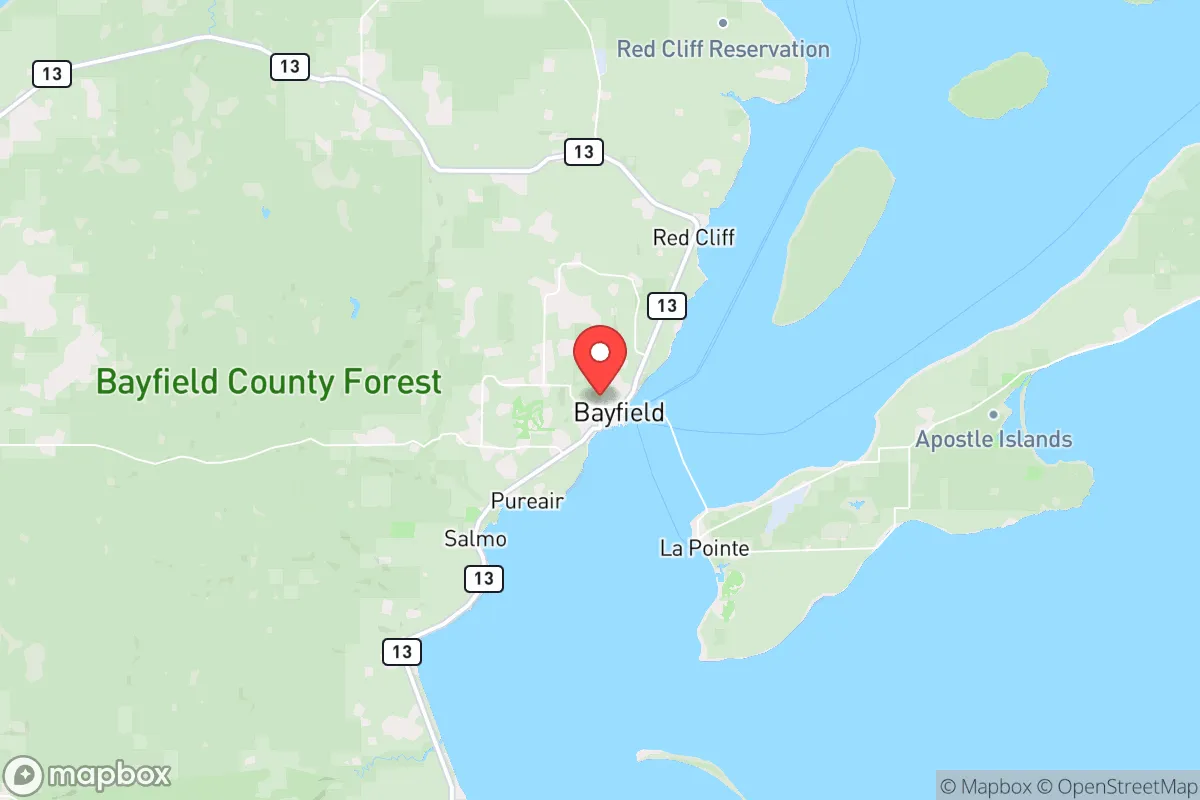
To understand Bayfield’s politics, you have to look at the map. The city itself, with its artists, retirees, and tourism-driven economy, votes reliably blue, often by margins of 20 points or more in local and presidential races. Drive 15 minutes south to Washburn or 20 minutes east to the town of Cable, and you’ll find more purple territory. But head further inland, into the farm country and smaller unincorporated communities like Iron River or Grand View, and the landscape turns deeply red. This makes Bayfield County as a whole a classic “donut” pattern: a blue dot in a red county, which itself sits in a state that’s a pure toss-up. Wisconsin statewide has a Cook PVI of EVEN, meaning it’s a perfect bellwether. Bayfield’s local politics, however, feel far removed from the swing-state drama of Milwaukee or Madison. Here, the conversation is less about national culture wars and more about local issues like lake access, tourism development, and the balance between conservation and economic growth.
What this means for residents
For a conservative resident, Bayfield is a place where you can still find like-minded neighbors, especially if you live just outside the city limits. The local Republican Party is active, and you’ll see plenty of yard signs for conservative candidates in the surrounding townships. The practical reality is that local government—the county board, the school board, the town councils—tends to be pragmatic, not hyper-partisan. For a liberal resident, Bayfield offers a comfortable social bubble within the city, with a strong progressive presence in local businesses, the farmers market, and the arts scene. The tension that does exist is usually over development: how much to allow, where, and at what cost to the environment. That’s a debate that cuts across party lines, with some conservatives favoring less regulation and some liberals pushing for stricter protections. The long-term trajectory feels stable; the city’s identity as a tourist and retirement destination reinforces its blue lean, while the surrounding rural areas hold firm. Don’t expect a dramatic shift either way.
Culturally, Bayfield stands apart from much of northern Wisconsin. The strong presence of the Red Cliff Band of Lake Superior Chippewa shapes local politics, with tribal sovereignty and natural resource management being perennial issues. The city’s reliance on tourism and second-home owners means there’s a noticeable seasonal shift in the political conversation—summer brings more progressive voices from the Twin Cities and Chicago, while winter sees a more year-round, locally focused electorate. Policy-wise, you’ll find a local government that prioritizes walkability, public access to Lake Superior, and small-scale economic development over big-box retail or industrial projects. It’s a place where a zoning variance for a new bed-and-breakfast can spark more debate than a presidential election. For anyone moving here, the key takeaway is simple: Bayfield is a blue island in a red sea, and that makes for a unique, often thoughtful, political culture where your vote matters more than your party label.

State Political ClimatePolitical Climate in Wisconsin
State Political AnalysisPolitical Environment in the State
Wisconsin is the truest swing state in the country, with a Cook PVI of EVEN that perfectly captures its knife-edge balance. Over the last 20 years, the state has shifted from a reliably blue-leaning presidential battleground to a dead-even toss-up, driven by the collapse of Democratic support in the rural north and west and the explosive growth of the Democratic vote in Dane County and the Milwaukee suburbs. The result is a state that feels like two different countries sharing a border, where statewide elections are decided by margins thinner than a cheese curd, and where the political mood can flip from red to blue in a single election cycle.
Urban vs. rural divide
The political map of Wisconsin is a study in extremes. Milwaukee County and Dane County (home to Madison) are the Democratic strongholds, delivering margins of 60-70% for Democratic candidates. In 2020, Dane County alone gave Joe Biden a net gain of over 200,000 votes, more than enough to offset Republican gains elsewhere. On the other side, the rural northern and western counties — places like Marathon County (Wausau), Brown County (Green Bay), and the Driftless Region — have swung hard to the right. The WOW counties (Waukesha, Ozaukee, Washington) outside Milwaukee are among the most Republican suburban areas in the nation, routinely delivering 65-70% for GOP candidates. The real battleground is the Fox Valley (Appleton, Oshkosh, Green Bay), where working-class voters have trended Republican, and the Kenosha-Racine corridor, which has become a bellwether for statewide elections. In 2024, Brown County flipped back to Trump after supporting Biden in 2020, while Dane County continued its blueward march, now voting over 75% Democratic in presidential races.
Policy environment
Wisconsin’s policy environment is a patchwork of divided government. The state has a flat income tax rate of 4.4% (down from 7.65% in 2011), a 5% state sales tax, and property taxes that are moderate by Midwest standards. The regulatory posture is generally business-friendly, with a right-to-work law passed in 2015 and a tort reform system that caps noneconomic damages. Education policy is a flashpoint: the state has a robust school choice program (the Milwaukee Parental Choice Program, the nation’s oldest), but also some of the highest per-pupil spending in the region. Healthcare is dominated by two major systems — Froedtert & the Medical College of Wisconsin and UW Health — and the state expanded Medicaid under the Affordable Care Act in 2014. Election laws are a constant battleground: Wisconsin has no-excuse absentee voting, same-day voter registration, and voter ID requirements, a mix that both parties attack depending on the cycle. The state’s legislative maps, drawn by Republicans in 2011 and upheld by the conservative-controlled state Supreme Court, have given the GOP a structural advantage in the Assembly and Senate even when Democrats win statewide races.
Recent policy direction
The last five years have seen Wisconsin lurch between conservative and liberal policy directions, often in the same session. On gun and self-defense law, Wisconsin is a shall-issue state for concealed carry (permits are issued to anyone who passes a background check and completes a training course), and in 2023 the legislature passed a bill allowing permitless carry, though it was vetoed by Democratic Governor Tony Evers. On parental and education rights, the state has seen fierce fights over school library books and transgender athlete policies, with conservative groups pushing for transparency laws and liberal groups defending local control. On speech and privacy, Wisconsin has no broad surveillance law, but local police departments use license plate readers and drones with minimal oversight. On medical and bodily autonomy, abortion is legal up to 20 weeks (a 2023 state Supreme Court ruling overturned an 1849 ban), and the state has a robust medical marijuana program but no recreational cannabis. On property rights, Wisconsin is a strong property-rights state with limited eminent domain, but local zoning can be restrictive, especially in the Milwaukee suburbs. On taxation, the trend is toward lower rates: the 2023-25 budget cut the top income tax rate from 5.3% to 4.4% and expanded the child tax credit. On voting and ballot access, the state has seen a tug-of-war: the GOP-controlled legislature passed bills to tighten absentee ballot deadlines and ban drop boxes, while Governor Evers vetoed them; the state Supreme Court is currently weighing a case that could overturn the current legislative maps.
Civil unrest & political movements
Wisconsin has been a flashpoint for political movements on both sides. The 2020 Kenosha unrest — sparked by the police shooting of Jacob Blake — led to nights of rioting, arson, and the killing of two protesters by a 17-year-old from Illinois, Kyle Rittenhouse, who was later acquitted on self-defense grounds. The event polarized the state and became a national symbol of the divide over policing and self-defense. On the left, the Wisconsin Democratic Party has been energized by grassroots organizing in Madison and Milwaukee, while the Wisconsin GOP has seen a surge in rural and exurban activism, particularly around election integrity and school board races. The Waukesha Christmas parade attack in 2021, where a man drove an SUV through a parade, killing six, further inflamed debates over bail reform and mental health. Immigration politics are less intense than in border states, but the Kenosha-Racine corridor has seen tensions over migrant labor in the dairy industry. There is no serious secession or nullification movement, but the state’s election integrity controversy — including the 2020 audit by the conservative Wisconsin Institute for Law & Liberty and the ongoing investigation by former state Supreme Court Justice Michael Gableman — has kept the issue alive. A new resident will notice the ubiquity of political yard signs and the intensity of local news coverage of school board and county board races, which are often proxies for national fights.
Projection
Over the next 5-10 years, Wisconsin is likely to remain a toss-up, but the demographic trends favor a slow blueward shift. The Milwaukee suburbs are becoming more diverse and more Democratic, while the Fox Valley is aging and shrinking. The Madison metro continues to grow, driven by tech and biotech jobs, and the Driftless Region is attracting remote workers from Chicago and Minneapolis, many of whom lean left. However, the rural north and west are depopulating, and the GOP’s structural advantage in the legislature is likely to persist unless the state Supreme Court orders new maps (a decision expected in 2025). The 2024 presidential election will be a key test: if Democrats can hold the WOW counties’ margins under 60% and turn out Madison and Milwaukee, they can win statewide; if Republicans can flip the Fox Valley back to 2016 levels, they can hold. A new resident moving in now should expect a state that is politically exhausting but stable — no one party will dominate, and every election will feel like a knife fight. The practical reality is that your vote matters more here than in almost any other state, and the political climate will be a constant topic of conversation, from the barbershop to the PTA meeting.
For a new resident, the bottom line is this: Wisconsin offers a genuine swing-state experience where your political views will be challenged and your vote will count. If you lean conservative, you’ll find a strong rural and suburban base, a business-friendly tax environment, and a legislature that reflects your values — but you’ll also live under a Democratic governor who can veto your priorities. If you lean liberal, you’ll find vibrant urban centers, a strong labor movement, and a governor who protects abortion rights and expands healthcare — but you’ll face gerrymandered maps and a legislature that blocks most of your agenda. The state is not for the politically faint of heart, but for those who want to live in a place where their voice actually matters, it’s one of the best choices in the country.
* Values derived from national, state, county, city and local statistics and may differ in a specific area. Last updated: 2026-10-20T08:04:13.000Z
Narrative content on this page is AI-generated and may contain mistakes. Verify any details that matter before acting on them.
ReloMaps may earn a commission from affiliate links at no extra cost to you.

