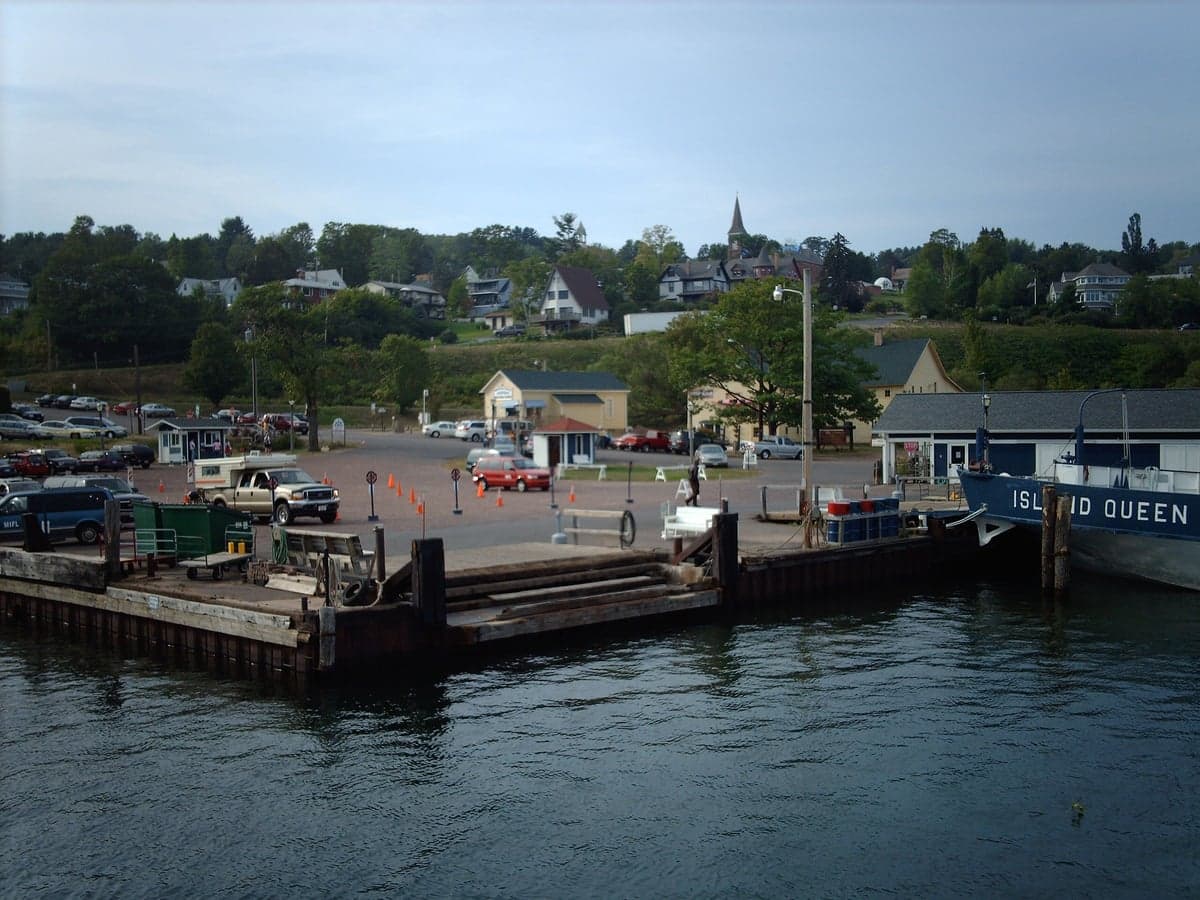
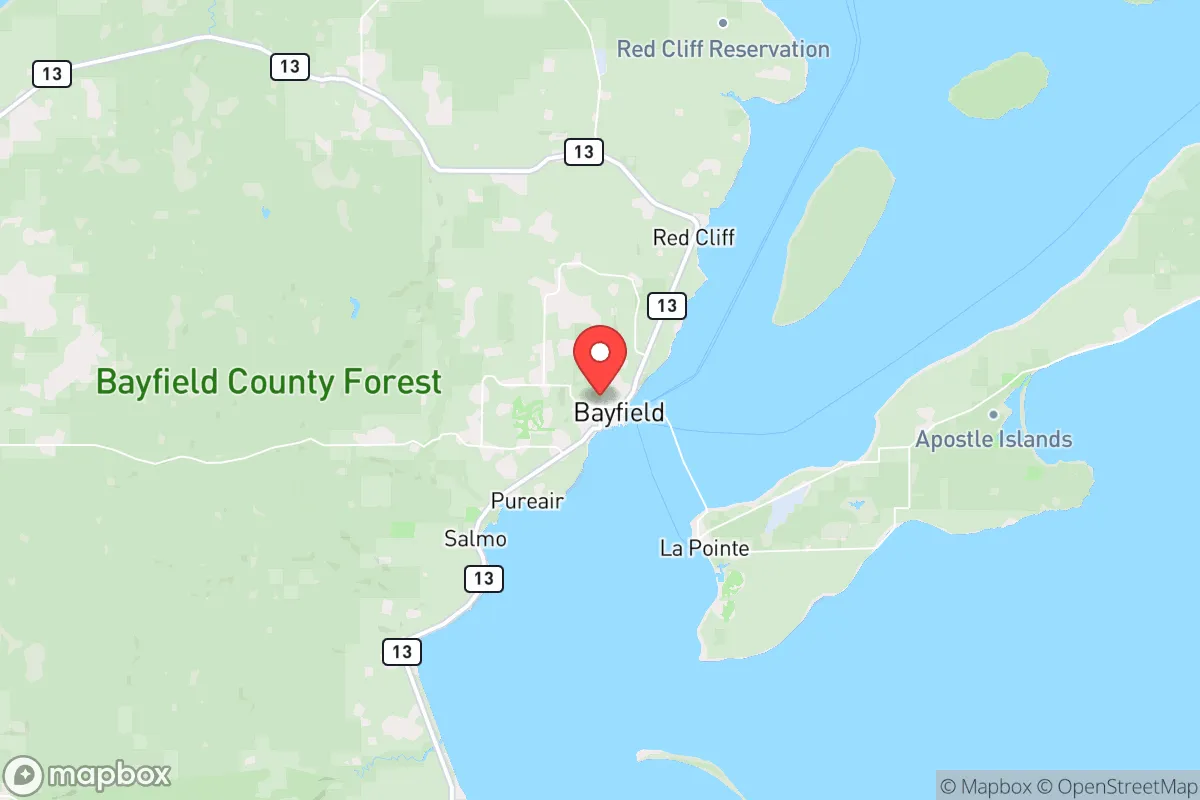
Photo: Wikipedia
Demographics of Bayfield, WI
Affluence Level in Bayfield, WI
A middle-class area roughly in line with national averages across income, home values, education, and employment.
People of Bayfield, WI
Bayfield, Wisconsin, is a small, tight-knit community of 590 residents on the shores of Lake Superior, characterized by its overwhelmingly white population (77.1%) and a notably high educational attainment rate, with 49.0% holding a college degree. The city’s identity is deeply rooted in its Ojibwe heritage and its historic role as a fishing and shipping hub, giving it a distinctive, slow-paced character that attracts retirees, artists, and outdoor enthusiasts. With no foreign-born residents and negligible racial diversity, Bayfield remains one of the most homogenous communities in the region, a demographic reality shaped by its remote location and limited economic expansion.
How the city was settled and grew
Bayfield’s human history begins with the Ojibwe people, who established seasonal fishing and wild rice camps along the Apostle Islands shoreline long before European contact. The first permanent non-Native settlers arrived in the 1850s, drawn by the promise of the Lake Superior copper boom and the federal land grants that followed the 1854 Treaty of La Pointe, which created the Red Cliff Reservation just north of the present-day city. These early Euro-American settlers—mostly Yankees, Irish, and German immigrants—built the first homes in what is now Old Bayfield, the historic district along Rittenhouse Avenue and Washington Avenue, where clapboard houses and commercial buildings from the 1880s still stand. The fishing industry, particularly the herring and whitefish runs, drew Scandinavian immigrants (Norwegians and Swedes) in the 1880s and 1890s, who settled in the Fish Camp area along the waterfront, a neighborhood of modest cottages and net sheds that remains a working fishing enclave today. By 1900, the population had peaked at around 1,200, supported by lumber mills and a bustling port, but the decline of the timber industry and the shift of rail traffic to Ashland caused a steady population drop through the mid-20th century.
Modern era (post-1965)
After the 1965 Immigration and Nationality Act, Bayfield saw virtually no new foreign-born arrivals—the city’s foreign-born population remains at 0.0% today. Instead, the modern era has been defined by domestic in-migration: retirees from the Twin Cities and Chicago, second-home buyers, and a small wave of counterculture artists and craftspeople who arrived in the 1970s and 1980s. These newcomers gravitated toward East Bayfield, the area along Highway 13 east of the marina, where newer homes and seasonal cabins dot the shoreline, and to the Rittenhouse Avenue corridor, where former commercial spaces were converted into galleries, bed-and-breakfasts, and seasonal restaurants. The city’s racial composition has remained static: the 2020 Census recorded a 77.1% white population, with 2.4% Hispanic (mostly mixed-race individuals from nearby Ashland), and no Black, Asian, or Indian residents. The Red Cliff Band of Lake Superior Chippewa, whose reservation abuts the city’s northern boundary, maintains a significant cultural and economic presence—the tribe operates the Apostle Islands Marina and the Legendary Waters Resort & Casino—but tribal members primarily reside on the reservation rather than within Bayfield’s city limits.
The future
Bayfield’s population is projected to remain stable or decline slightly over the next decade, constrained by a lack of affordable housing, limited year-round employment, and an aging demographic (the median age is approximately 55). The city is not becoming more diverse: the 0.0% foreign-born and near-zero minority shares are expected to persist, as the area offers few economic opportunities for younger, more diverse populations. New construction is concentrated in the Bayfield Highlands subdivision, a small development of single-family homes on the bluffs west of town, which is attracting affluent retirees and remote workers—but these buyers are overwhelmingly white and over 50. The cultural identity of Bayfield is evolving from a working fishing village to a seasonal tourism and recreation destination, with the Apostle Islands National Lakeshore driving summer crowds and a growing winter sports scene (skiing, fat-tire biking) extending the shoulder season. For a new resident, this means joining a community that values quiet, natural beauty, and neighborly familiarity, but one that offers little racial or ethnic diversity and limited social infrastructure for families with children.
Bayfield is becoming a curated enclave for those who can afford its high property values and seasonal economy—a place where the past is preserved but the future is narrow. For someone moving in now, the city offers a safe, scenic, and intellectually engaged environment, but one that demands self-sufficiency and a tolerance for homogeneity. The population is not heading toward greater diversity or growth; it is consolidating around a core of affluent, older, white residents who value the area’s isolation and natural heritage above all else.

* Values derived from national, state, county, city and local statistics and may differ in a specific area. Last updated: 2026-10-20T08:04:13.000Z
Narrative content on this page is AI-generated and may contain mistakes. Verify any details that matter before acting on them.
ReloMaps may earn a commission from affiliate links at no extra cost to you.

