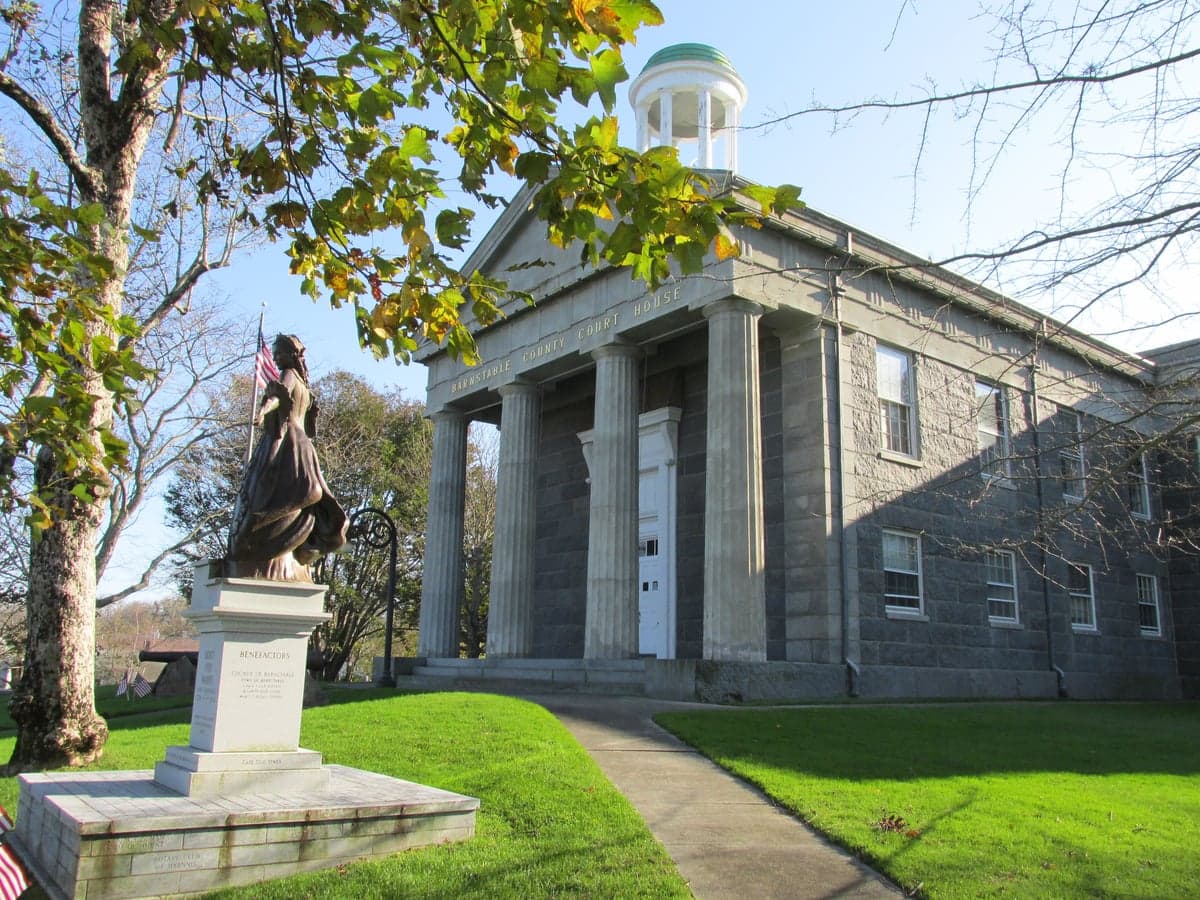
Photo: Wikipedia
Political ClimatePolitical Climate in Barnstable Town, MA
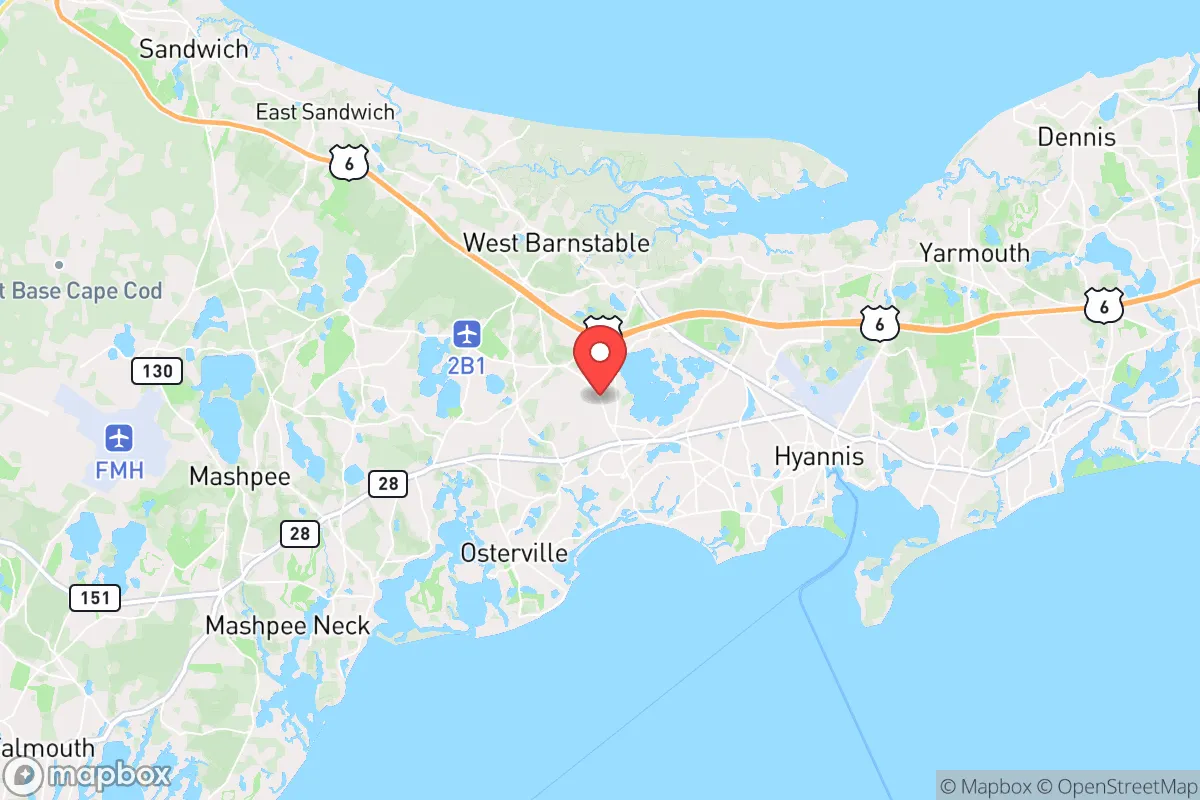
District shown is the primary district for this city’s centroid. Cities may span multiple districts.
Local Political AnalysisPolitical Analysis of Barnstable Town, MA
Barnstable Town, the beating heart of Cape Cod, has drifted steadily leftward over the past decade, and its current Cook PVI of D+6 tells you everything you need to know about where the political winds are blowing. It wasn't always this way—this used to be a place where common-sense independence mattered more than party loyalty, where folks voted for the person, not the platform. But the last few election cycles have cemented a shift that feels less like a natural evolution and more like a coordinated push, with progressive candidates sweeping local offices and the town's delegation in the state legislature reliably voting for the full Boston agenda. If you're looking for a place where fiscal restraint and individual liberty still hold sway, you're going to find that harder to come by here than you would just a few miles up the road.
How it compares
The contrast with the rest of the Cape is stark and telling. Drive west to Sandwich or east to Yarmouth, and you'll find a much more balanced political landscape—those towns still have a healthy conservative presence, with town meetings that actually debate spending rather than rubber-stamping it. But Barnstable Town itself, especially the village of Hyannis, has become a progressive stronghold that votes more like Cambridge or Newton than a coastal community. The surrounding towns of Mashpee and Bourne are more mixed, but Barnstable's sheer population size means it drags the entire region's politics leftward. What's really concerning is how quickly this happened: as recently as 2012, the town was a true swing area, and now it's reliably blue in every race from school committee to president. That kind of rapid shift suggests a fundamental change in who's moving in and who's leaving, and it's not a trend that shows any sign of reversing.
What this means for residents
For the people who actually live here year-round—not the summer folks or the recent transplants from New York and Boston—the practical effects are starting to bite. Property taxes have climbed steadily as the town government expands its reach, with new zoning overlays, environmental regulations, and affordable housing mandates that sound good on paper but land squarely on the backs of homeowners. The school system has embraced progressive curriculum changes that many parents find intrusive, and there's a growing sense that local government is more interested in social engineering than in fixing the potholes and keeping the beaches clean. Small business owners are feeling the squeeze from new labor rules and permitting delays that favor big developers over the mom-and-pop operations that used to define the Cape Cod character. It's not that Barnstable is unlivable—far from it—but the margin for error is shrinking, and the people who remember when this town was more about freedom than mandates are getting quieter every year.
One cultural distinction that still sets Barnstable apart from the more extreme progressive enclaves is the stubborn presence of the fishing and maritime community, which hasn't fully bought into the new orthodoxy. The working waterfront in Hyannis still has a salt-of-the-earth feel, and those families tend to vote their pocketbooks and their traditions rather than following the latest ideological trend. But that's a shrinking demographic, and the town's policy direction—from plastic bag bans to energy codes to short-term rental restrictions—reflects the priorities of the newer, wealthier arrivals who see government as a tool for social change rather than a necessary evil. If you're considering a move here, understand that the political climate is increasingly one-size-fits-all progressive, and the days of live-and-let-live Cape Cod are fading fast. The next few election cycles will tell us whether there's enough pushback left to slow the momentum, but right now, the smart money is on more of the same.

State Political ClimatePolitical Climate in Massachusetts
State Political AnalysisPolitical Environment in the State
Massachusetts has long been one of the most reliably Democratic states in the nation, but don’t let the blue veneer fool you—the political landscape here is far more fractured than the presidential vote totals suggest. Over the past 20 years, the state has shifted from a moderate, “Republican-lite” New England tradition to a solidly progressive stronghold, with Democrats holding every statewide office and supermajorities in both legislative chambers. The 2024 election saw Kamala Harris carry the state by over 25 points, but that masks deep internal divides: the Boston metro area and its inner suburbs drive the leftward march, while the western and central parts of the state—places like Worcester, Springfield, and the Berkshires—have grown increasingly skeptical of one-party rule.
Urban vs. rural divide
The political map of Massachusetts is a tale of two worlds. Greater Boston—including Cambridge, Somerville, and Brookline—is the engine of the state’s progressive tilt, with precincts routinely voting 80-90% Democratic. These areas are dense, highly educated, and heavily influenced by university and tech-sector politics. In contrast, the western and central regions tell a different story. Worcester County, once a swing area, has shifted rightward in recent cycles; in 2024, Donald Trump improved his margin there by 4 points compared to 2020. The small towns of the Berkshires—like Great Barrington and Lenox—remain liberal, but the rural hill towns and farming communities, such as Charlemont and Heath, are increasingly voting Republican. The Cape Cod region is a mixed bag: the outer Cape leans left, but towns like Sandwich and Bourne have trended red. The real outlier is Fall River and New Bedford in the southeast, where working-class voters have drifted toward the GOP, driven by economic anxiety and cultural conservatism.
Policy environment
Massachusetts’ policy environment is a case study in progressive governance, with consequences that conservatives find troubling. The state has a flat income tax rate of 5%, but a 2022 ballot question (the “Millionaires Tax”) added a 4% surcharge on income over $1 million, pushing the top rate to 9%—one of the highest in the nation. Property taxes are moderate by national standards, but the state’s regulatory burden is among the heaviest, particularly in housing, energy, and healthcare. The Massachusetts Health Connector remains a model for the Affordable Care Act, but mandates and subsidies drive up costs for small businesses. Education policy is dominated by the Massachusetts Comprehensive Assessment System (MCAS), which has been a flashpoint: progressives want to eliminate it, while conservatives see it as a last bastion of accountability. Election laws are among the most liberal in the country—no-excuse mail-in voting, same-day registration, and automatic voter registration are all law. The state also has a sanctuary state policy (the 2017 “Safe Communities Act”), limiting local cooperation with federal immigration enforcement.
Trajectory & freedom
On the freedom front, Massachusetts is moving in a direction that alarms many conservatives. The 2022 “Work and Family Mobility Act” granted driver’s licenses to undocumented immigrants, a policy that critics argue undermines rule of law. Gun rights have been steadily eroded: the 2024 “Massachusetts Gun Safety Act” expanded the state’s assault weapons ban, required microstamping on new handguns, and created a state-level “red flag” law that allows for firearm confiscation without a criminal conviction. Parental rights took a hit with the 2023 “Parentage Act”, which legally recognized multiple parents and removed gendered language from birth certificates, raising concerns about parental notification in schools. Medical autonomy is also constrained: the state’s COVID-19 vaccine mandate for healthcare workers remains in effect, and a 2023 law expanded the state’s authority to mandate vaccines during public health emergencies. On the plus side, Massachusetts has no state-level rent control (a 1994 ballot measure banned it), and property rights are relatively strong compared to states like California. But the overall trajectory is toward more government control, not less.
Civil unrest & political movements
Massachusetts has a long history of political activism, but the flashpoints have intensified. The 2020 Black Lives Matter protests in Boston were large and occasionally violent, leading to curfews and property damage. The “Stop the Steal” movement had a small but vocal presence, particularly in western Massachusetts, where a 2021 rally in Springfield drew several hundred. Immigration politics are a constant source of tension: the Martha’s Vineyard migrant flights in 2022 (when Florida Governor Ron DeSantis sent migrants to the island) sparked a national debate, with local officials scrambling to provide services. The “Massachusetts Coalition for Immigration Reform” has pushed for further sanctuary protections, while groups like “Massachusetts Citizens for Immigration Enforcement” advocate for stricter enforcement. Election integrity remains a concern for conservatives: the state’s universal mail-in voting system, expanded in 2020 and made permanent in 2022, has been criticized for lacking robust voter ID requirements. A 2024 audit found that over 10,000 ballots were returned with signature discrepancies, though no widespread fraud was proven.
Projection
Looking ahead 5-10 years, Massachusetts is likely to become even more progressive, but with growing friction. Demographic trends favor the left: the state’s population is aging, but in-migration from younger, college-educated workers—especially to Boston and Cambridge—reinforces the liberal base. However, the exodus of middle-class families to lower-tax states like New Hampshire and Florida is accelerating, driven by housing costs and the policy environment. The 2025 census estimates show Massachusetts losing population for the third straight year, with the biggest losses in the western and central counties. This could create a political feedback loop: as the state becomes more uniformly liberal, the remaining conservatives will have less influence, potentially leading to even more aggressive progressive policies. The Massachusetts Republican Party is in disarray, with no clear leader or strategy; the last Republican governor, Charlie Baker, was a moderate who often sided with Democrats. The next decade will likely see continued fights over education reform, housing policy, and energy mandates, with the left holding the upper hand.
For a conservative considering a move to Massachusetts, the bottom line is this: you’ll find like-minded communities in the western hill towns, parts of the Cape, and working-class cities like Fall River, but you’ll be swimming against a strong political current. The state’s tax burden, regulatory environment, and cultural drift are real challenges. If you value low taxes, gun rights, and local control, Massachusetts is a tough sell. But if you’re willing to fight for your values in a blue state, you’ll find a vibrant, if embattled, conservative network—and some of the best public schools and healthcare in the country. Just know that the political winds are blowing against you, and they’re getting stronger every cycle.
* Values derived from national, state, county, city and local statistics and may differ in a specific area. Last updated: 2026-05-01T11:08:36.000Z
Narrative content on this page is AI-generated and may contain mistakes. Verify any details that matter before acting on them.
ReloMaps may earn a commission from affiliate links at no extra cost to you.

