
Photo: Wikipedia
Quality of Life in Auburn Hills, MI
Above-average quality of iife. The area offers a reasonable cost of living, decent mobility, and a mix of neighborhood amenities.
What does Quality of Life tell us?
Quality of Life blends cost of living, nearby amenities, socioeconomic signals, and neighborhood character. City-level scores represent the whole municipality; individual neighborhoods can differ.
What does this tell us?
Quality of Life blends cost of living, nearby amenities, socioeconomic signals, and neighborhood character. City-level scores represent the whole municipality; individual neighborhoods can differ.
Cost of Living
6% above national average
The Real Cost of Living in Auburn Hills, MI for 2026
| Tier | Individual | Family (4) |
|---|---|---|
| Survival | $23k | $42k |
| Comfortable | $45k | $67k |
| Luxury | $128k+ | $199k+ |
| Elite (Top 5%) | $151k+ | $234k+ |
118%
The Area Signal
A metric tracking the socioeconomic signals of the area.
Hobbies
Explore the areaGroceries
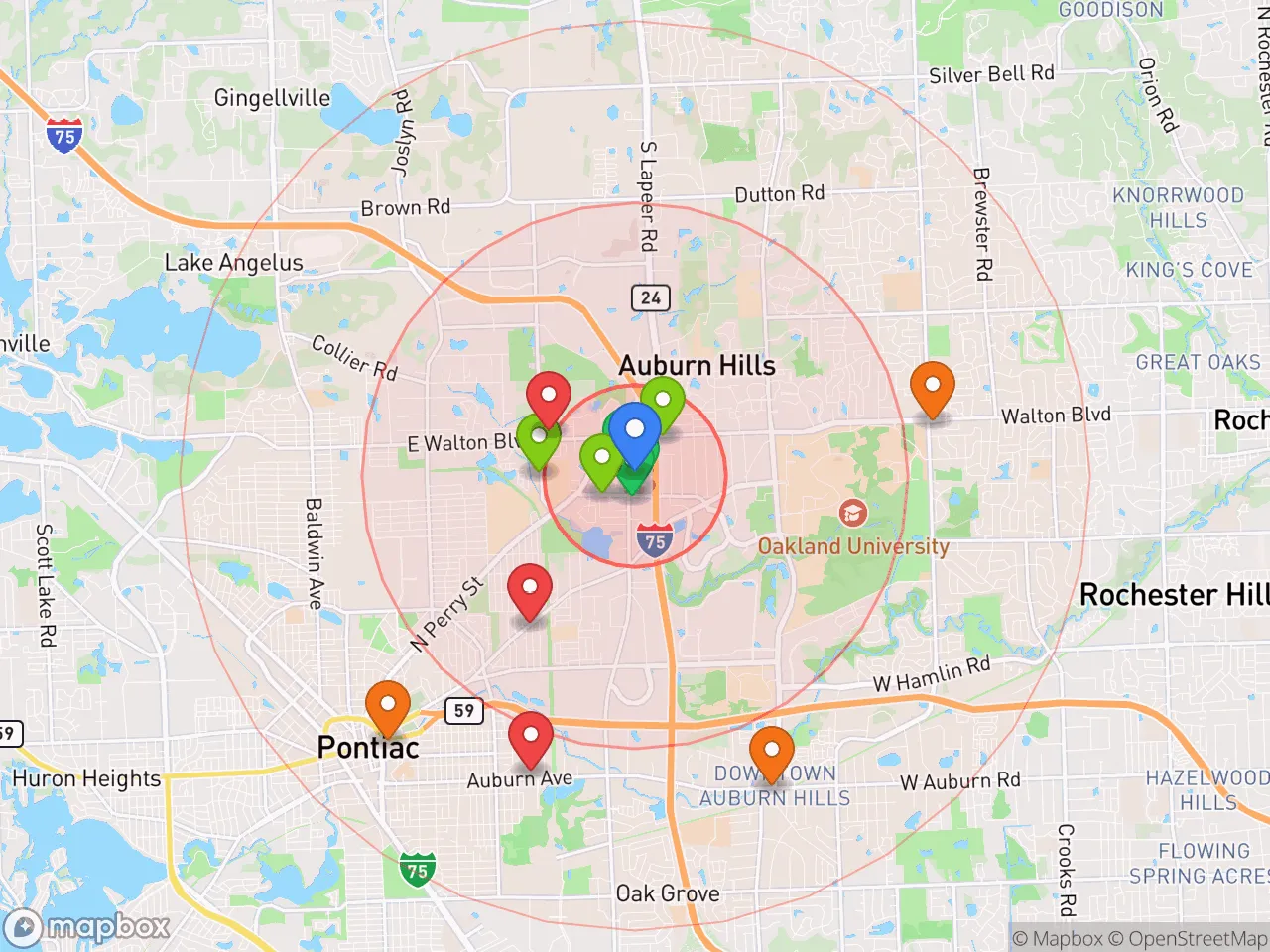
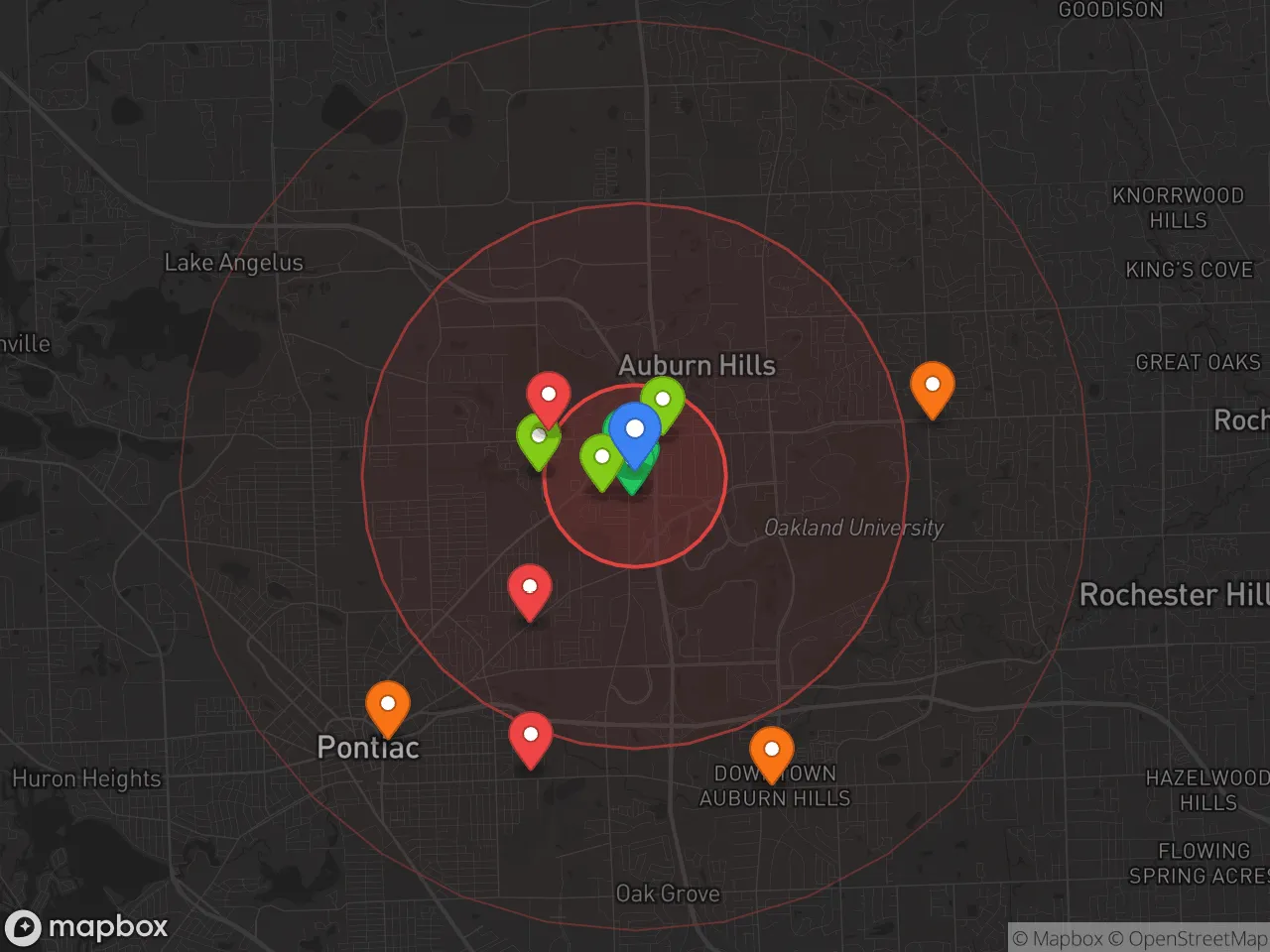
9 within 10 miles
Gas
20 within 10 miles
Hospital
20 within 20 miles
Airport
DTW — Detroit Metropolitan Wayne County
Post Office
USPS — Auburn Hills, MI
Critical Amenities
Quality-of-Life Analysis
Auburn Hills presents a distinctly affluent quality of life shaped by its role as a corporate and technological hub in Oakland County. With a cost of living index of 106—six percent above the national average—the city attracts a mix of automotive engineers, tech professionals, and executives drawn to employers like Stellantis (headquarters), Comerica Bank, and the Oakland University research corridor. The population skews toward higher education levels and median household incomes well above the Michigan state average, creating a community that values professional opportunity, suburban stability, and access to metropolitan Detroit's cultural assets without the daily congestion of a major urban core.
Cost of living, housing affordability, and how Auburn Hills compares to nearby cities
Auburn Hills sits at a moderate price point relative to its affluent Oakland County neighbors. The median home value of $233,900 is significantly lower than in adjacent Bloomfield Hills (where median values often exceed $400,000) or Birmingham, yet it is notably higher than in Pontiac just to the south or Waterford Township to the west. Median rent of $1,411 aligns closely with the Detroit metro average, making the city a practical middle-ground option for renters who work in the area but cannot justify the premium pricing of Troy or Royal Oak. The average commute of 23.4 minutes is shorter than the national average of roughly 26 minutes, a reflection of the city's position at the junction of I-75 and M-59, which provides direct access to major employment centers without requiring long highway slogs. Property taxes in Oakland County are among the highest in Michigan—typically 1.5 to 2.0 percent of assessed value—which adds a meaningful cost layer for homeowners that renters avoid. Overall, the city offers a relative value play within the high-cost tier of southeast Michigan, trading some prestige for better square footage and newer housing stock than pricier inner-ring suburbs.
What daily life is like: amenities, schools, and local rhythm
Daily life in Auburn Hills revolves around a blend of corporate campus culture, university activity, and big-box retail convenience. The Auburn Hills Community Schools district serves most of the city, with Auburn Hills Elementary and Avondale High School drawing generally positive ratings for academics and extracurricular programs; families also have access to several charter options and the nearby International Academy, a top-ranked public magnet school in Bloomfield Hills. The city's amenity anchor is Great Lakes Crossing Outlets, a major shopping and entertainment complex that draws visitors from across the region, but residents also rely on the downtown districts of Rochester and Royal Oak for independent dining and nightlife. Oakland University adds a collegiate dimension—public lectures, Division I athletics, and the Meadow Brook Hall historic estate provide cultural programming that a typical suburb of 24,000 would lack. Outdoor recreation centers on the Clinton River Trail, which runs through the city, and nearby Stony Creek Metropark for hiking and boating. The overall rhythm is car-dependent suburban, with most errands requiring a vehicle, though the city's compact geography keeps drive times short for daily needs like groceries and medical appointments.
The ideal resident for Auburn Hills is a professional or family who prioritizes job proximity, good schools, and modern housing over urban walkability or historic charm. Singles and couples working in the automotive or tech sectors will find the commute to Stellantis headquarters or Oakland University's tech park nearly unbeatable, while families benefit from the school options and relative safety of the area. Retirees may prefer quieter nearby communities like Rochester Hills, and those seeking a vibrant downtown scene will likely gravitate toward Royal Oak or Ferndale. For the right demographic—career-focused, car-oriented, and comfortable with suburban retail convenience—Auburn Hills delivers a balanced, low-friction quality of life at a price that undercuts its more prestigious neighbors.

Crime in Auburn Hills, MI
Crime rates similar to the national median for U.S. locations.
Violent CrimeViolent Crime Analysis
Property CrimeProperty Crime Analysis
Crime Analysis
Auburn Hills, Michigan, presents a mixed safety profile for potential residents. The city's violent crime rate of 408.1 incidents per 100,000 residents is notably higher than the national average, while its property crime rate of 1,238.7 per 100,000 also exceeds typical benchmarks for communities of its size. These figures warrant careful consideration, particularly given the city's location within the broader metropolitan area's justice system, where progressive prosecutorial policies have raised concerns about public safety outcomes.
Crime in context
When compared to statewide and national averages, Auburn Hills' crime statistics reveal a challenging environment. The violent crime rate of 408.1 per 100,000 is approximately 17% higher than the national average of roughly 380 per 100,000, and significantly exceeds Michigan's statewide rate. Property crime in Auburn Hills, at 1,238.7 per 100,000, is about 15% above the national average of roughly 1,100 per 100,000. These numbers place Auburn Hills in a less favorable position than many of its suburban counterparts in Oakland County, though the city does benefit from a strong police presence due to its role as a major employment and retail hub. The presence of large corporate campuses and the Great Lakes Crossing Outlets contributes to a higher volume of property crime, particularly theft and vehicle break-ins, which inflates the city's overall rate compared to purely residential suburbs.
What residents experience
For those living in Auburn Hills, the day-to-day safety experience varies significantly by neighborhood and time of day. The city's violent crime is not uniformly distributed; incidents tend to cluster in areas with higher population density and commercial activity. Aggravated assault accounts for the majority of violent crimes, while robbery and homicide occur less frequently but remain a concern. Property crimes like larceny and motor vehicle theft are the most common offenses residents encounter, particularly in parking lots of shopping centers and apartment complexes. The broader regional context is important: as part of the Detroit metropolitan area, Auburn Hills is subject to the policies of county prosecutors who have adopted progressive stances on criminal justice reform. These policies, which emphasize diversion programs and reduced sentencing for non-violent offenders, have been criticized for contributing to higher recidivism rates and a perception that the justice system prioritizes offender rehabilitation over victim protection and public safety.
Neighborhood-level variation
Safety in Auburn Hills is not monolithic. The area around Oakland University and the northern residential sections near the Palace of Auburn Hills site generally experience lower crime rates, while the southern corridor along I-75 and the commercial zones near the outlet mall see more frequent incidents. Property crime rates in the southern commercial districts can be 2-3 times higher than in the northern residential neighborhoods. Prospective residents should research specific block-level data and consider that the city's proximity to Detroit and its position within a metropolitan area with progressive justice policies means that regional crime trends can spill over into local communities. The overall safety picture requires balancing the city's economic vitality and police resources against the statistical reality of above-average crime rates and a justice system whose ideological leanings may not prioritize the security of law-abiding residents.
* Values derived from national, state, county, city and local statistics and may differ in a specific area. Last updated: 2026-10-13T16:28:29.000Z
Narrative content on this page is AI-generated and may contain mistakes. Verify any details that matter before acting on them.
ReloMaps may earn a commission from affiliate links at no extra cost to you.

