Photo: Wikipedia
Demographics of Auburn Hills, MI
Affluence Level in Auburn Hills, MI
A middle-class area roughly in line with national averages across income, home values, education, and employment.
People of Auburn Hills, MI
The people of Auburn Hills, Michigan, form a notably diverse and highly educated community of 24,911 residents, shaped by successive waves of industrial employment and professional migration. The city is characterized by a significant foreign-born population of 13.1% and a high college attainment rate of 47.0%, reflecting its role as a hub for automotive engineering and technology firms. Racially and ethnically, the city is a mosaic: 56.0% White, 11.0% Hispanic, 11.8% Black, 4.0% East and Southeast Asian, and a substantial 10.4% Indian (subcontinent). This demographic profile distinguishes Auburn Hills from many older, more homogeneous Rust Belt suburbs, positioning it as a dynamic, globally-connected community within Oakland County.
How the city was settled and grew
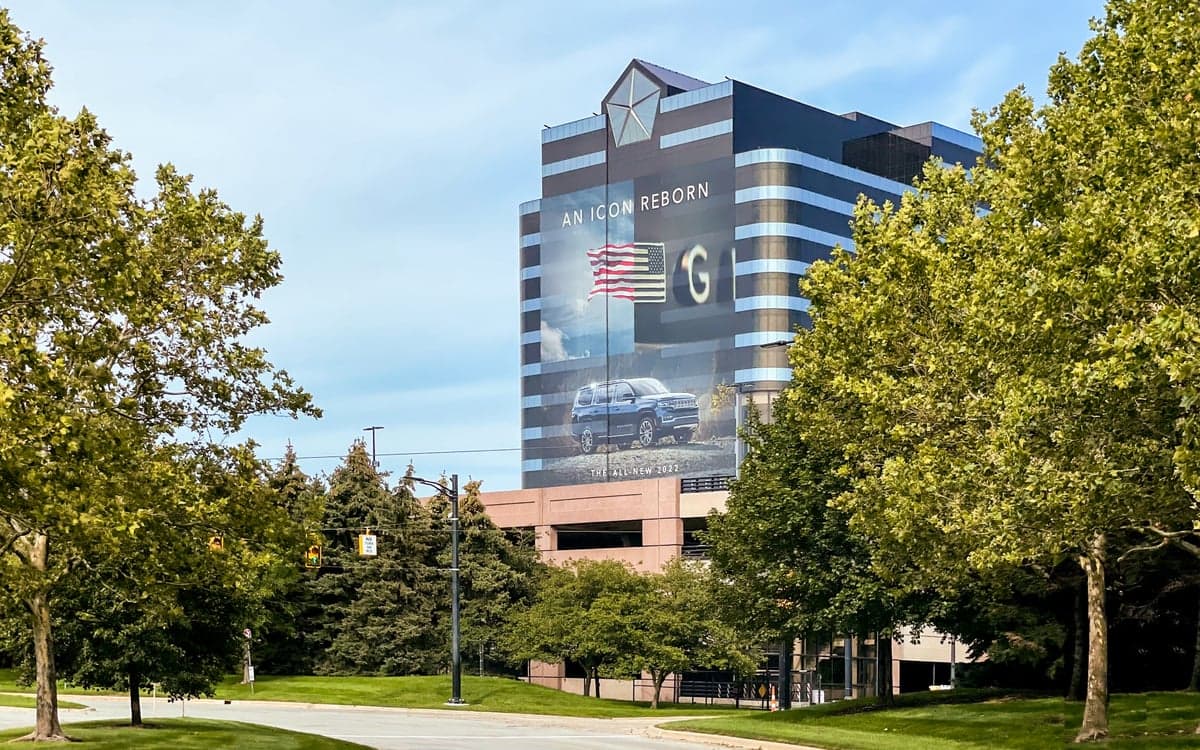
Auburn Hills was originally part of Pontiac Township, settled by European-American farmers of primarily English, German, and Irish stock in the early 19th century. The area remained sparsely populated agricultural land for over a century, with the first major population shift occurring in the 1950s and 1960s as Detroit's auto industry expanded northward. The construction of Interstate 75 and the arrival of Chrysler's world headquarters (now Stellantis) in the 1950s transformed the landscape. The original farming community was concentrated around what is now the Auburn Village neighborhood, while the first wave of auto-industry workers and their families settled in the Westview and North Auburn subdivisions, which were built out with single-family homes during the 1960s and 1970s. These early residents were overwhelmingly White, middle-class families drawn by good-paying factory and engineering jobs.
Modern era (post-1965)
The post-1965 immigration reforms and the continued growth of the automotive and technology sectors dramatically reshaped Auburn Hills' population. The opening of Oakland University in 1957 and the establishment of the Oakland Technology Park in the 1980s created a demand for a highly skilled, professional workforce. This drew significant numbers of Indian (subcontinent) engineers and IT professionals, who began settling in the Meadowbrook Estates and Brookwood neighborhoods near the university and tech park. Today, the Indian community represents 10.4% of the city's population, one of the highest concentrations in the region. Simultaneously, East and Southeast Asian communities (4.0%)—including Chinese, Korean, and Vietnamese families—also arrived for similar professional opportunities, often settling in the same areas. The Black population (11.8%) grew steadily from the 1980s onward, with many families moving from Detroit into subdivisions like Woodland Estates and Orchard Ridge, seeking better schools and safer neighborhoods. The Hispanic population (11.0%), largely of Mexican and Central American heritage, grew through both direct immigration and domestic migration, forming a visible community in the South Auburn area near the city's industrial corridor. The White population, while still the largest single group at 56.0%, has declined proportionally as the city has diversified.
The future
Auburn Hills is projected to continue its trajectory of moderate population growth and increasing diversity. The city's strategic focus on attracting tech and engineering firms, coupled with its proximity to Oakland University, will likely sustain demand from highly educated immigrants, particularly from the Indian subcontinent and East/Southeast Asia. The foreign-born share, already at 13.1%, is expected to rise. New residential development is concentrated in the University Ridge district and along the Lapeer Road corridor, where mixed-use apartments and townhomes are attracting younger professionals and families. The Hispanic and Black populations are also expected to grow, though at a steadier pace, dispersing across the city rather than clustering in a single neighborhood. The cultural identity of Auburn Hills is evolving from a classic auto-centric suburb into a more cosmopolitan, multi-ethnic city, though it retains a family-oriented, suburban character. The main challenge will be maintaining affordable housing options as demand drives up prices.
For someone moving to Auburn Hills today, the city offers a rare combination: a safe, well-managed suburb with excellent schools and a genuinely diverse, globally-connected population. It is a place where a family can find both a strong sense of community and exposure to a wide range of cultures and perspectives, anchored by a robust local economy. The city is not becoming a melting pot in the traditional sense, but rather a mosaic of distinct, thriving communities living side-by-side.

* Values derived from national, state, county, city and local statistics and may differ in a specific area. Last updated: 2026-10-13T16:28:29.000Z
Narrative content on this page is AI-generated and may contain mistakes. Verify any details that matter before acting on them.
ReloMaps may earn a commission from affiliate links at no extra cost to you.

