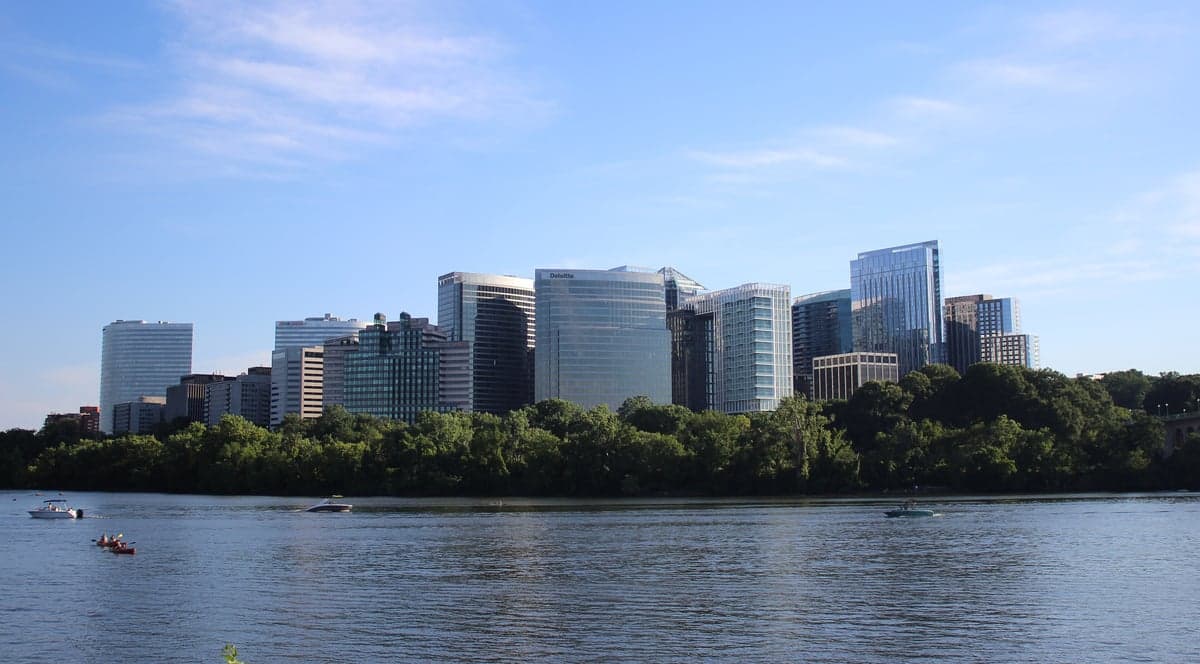
Photo: Wikipedia
Quality of Life in Arlington, VA
A livable area that tracks near national norms for affordability, walkability, and neighborhood health.
What does Quality of Life tell us?
Quality of Life blends cost of living, nearby amenities, socioeconomic signals, and neighborhood character. City-level scores represent the whole municipality; individual neighborhoods can differ.
What does this tell us?
Quality of Life blends cost of living, nearby amenities, socioeconomic signals, and neighborhood character. City-level scores represent the whole municipality; individual neighborhoods can differ.
Cost of Living
140% above national average
The Real Cost of Living in Arlington, VA for 2026
| Tier | Individual | Family (4) |
|---|---|---|
| Survival | $36k | $68k |
| Comfortable | $168k | $247k |
| Luxury | $249k+ | $387k+ |
| Elite (Top 5%) | $294k+ | $455k+ |
57%
The Area Signal
A metric tracking the socioeconomic signals of the area.
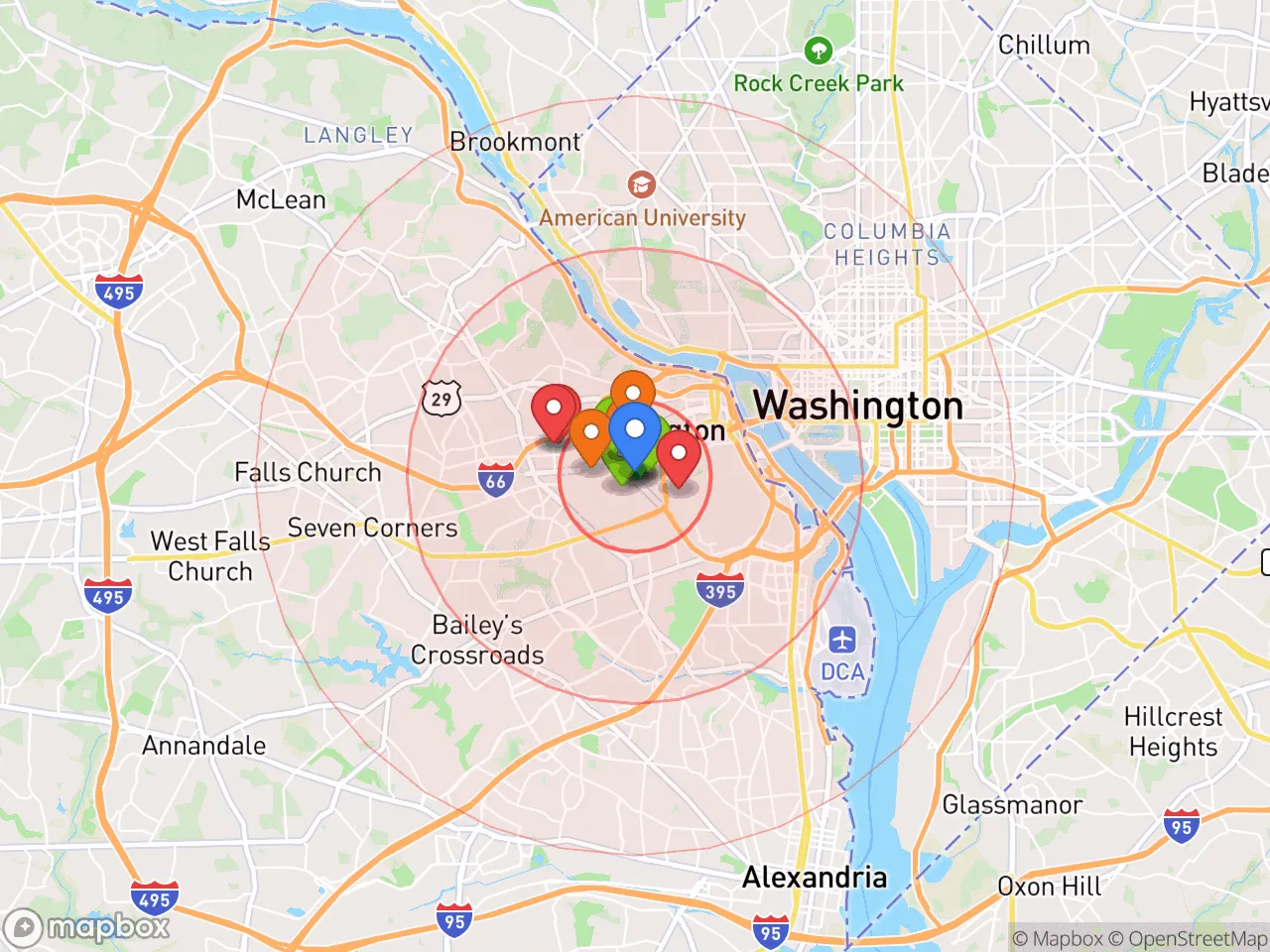
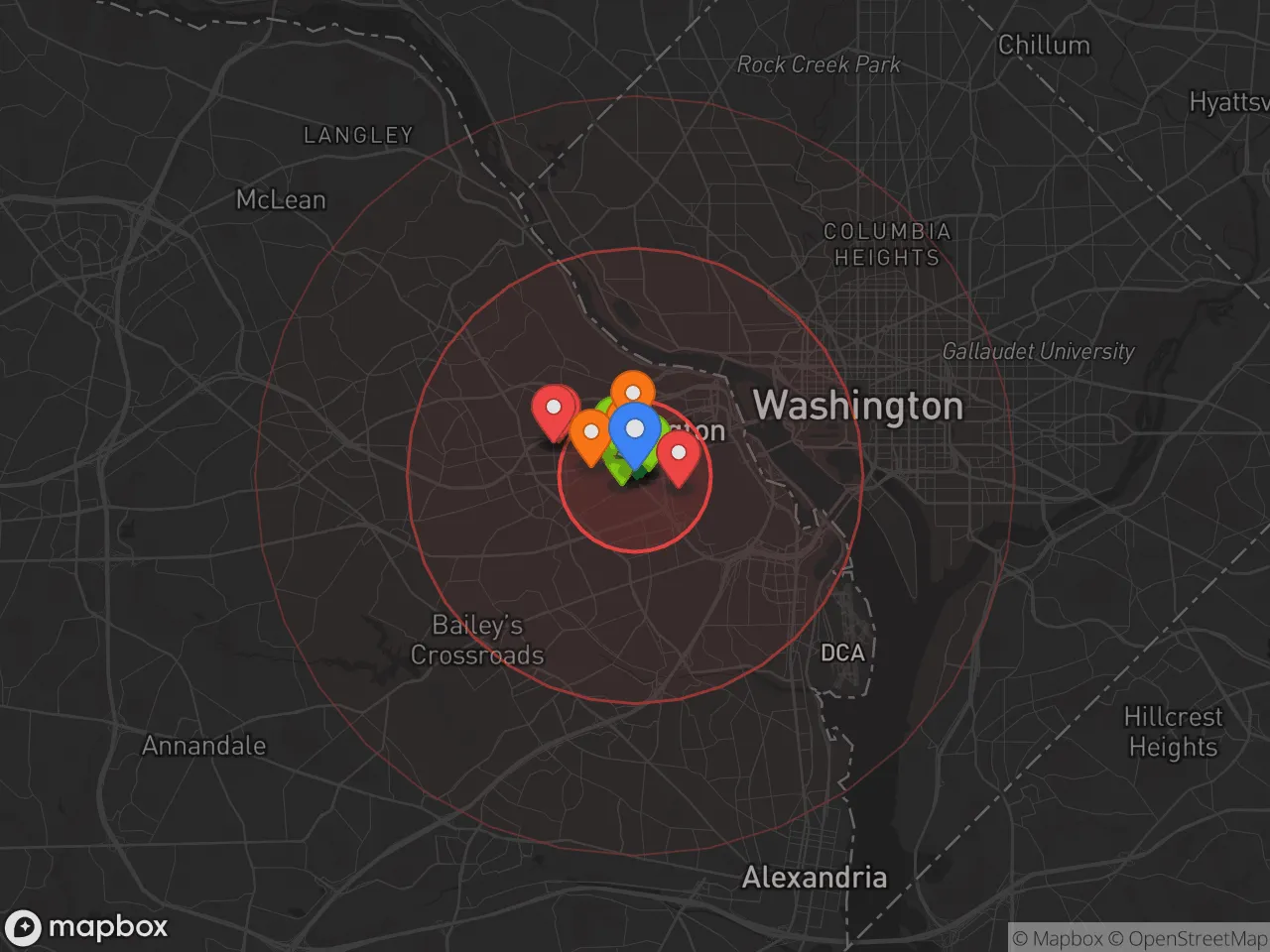
Hobbies
Explore the areaGroceries
6 within 10 miles
Gas
20 within 10 miles
Hospital
20 within 20 miles
Airport
DCA — Ronald Reagan Washington National
Post Office
USPS — Arlington, VA
Critical Amenities
Quality-of-Life Analysis
Arlington, Virginia, is one of the most affluent and educated communities in the United States, with a cost of living index of 240 (more than double the national average) that reflects its premium location directly across the Potomac River from Washington, D.C. The population skews young, professional, and highly transient, dominated by federal employees, defense contractors, lobbyists, and tech workers drawn by the region's stable job market. Nearly 75% of adults hold a bachelor's degree or higher, and the median household income exceeds $120,000, creating a dense corridor of high-earning singles and dual-income couples with few children relative to the national average.
Cost of living, housing, and affordability compared to D.C. and Bethesda
Arlington's cost of living index of 240 is roughly 40% higher than the Virginia state average and on par with Manhattan's outer boroughs, driven overwhelmingly by housing. The median home value sits at $864,800, making single-family homeownership out of reach for most renters; a 20% down payment alone requires over $172,000. Median rent for a one-bedroom apartment is $2,275, though units in newer high-rises near Rosslyn or Clarendon often command $2,800–$3,500. Compared to neighboring Bethesda, MD (index ~250), Arlington is slightly cheaper for renters but similar for buyers. Versus D.C. proper (index ~230), Arlington offers newer housing stock and lower property taxes (Virginia's effective rate is ~0.9% vs. D.C.'s ~0.6%), but the trade-off is a longer commute for those working on the D.C. side of the river. The average one-way commute is 26.6 minutes, shorter than the regional average of 34 minutes, thanks to the dense Metro system and walkable urban villages like Ballston and Courthouse.
Walkability, schools, and daily life for professionals and families
Arlington is one of the most walkable large suburbs in America, with a Walk Score of 74 and a Transit Score of 68. The county's 26 "urban villages" each center on a Metro station, creating self-contained neighborhoods where residents can walk to grocery stores, coffee shops, and gyms without a car. The Arlington Public Schools system is consistently ranked among the top 5% nationally, with Washington-Liberty High School and Yorktown High School both earning Blue Ribbon designations. Daily life revolves around the Metro's Orange, Silver, and Blue lines, which carry workers to Pentagon City, the Pentagon itself, and downtown D.C. in under 20 minutes. Weekend rhythms include the Arlington Farmers Market (year-round at Courthouse), the Mount Vernon Trail for cycling along the Potomac, and the dining scene in Clarendon, which offers 40+ restaurants within a half-mile radius. For families, the county operates 23 community centers and 150 parks, including the 400-acre Potomac Overlook Regional Park.
Arlington is best suited for high-income professionals who prioritize short commutes, walkable urbanism, and top-tier public schools over square footage or yard space. Singles and couples without children will find the social density and nightlife of Clarendon and Rosslyn appealing, while families with school-age children will benefit from the county's exceptional education system and low crime rates (violent crime is 60% below the national average). However, the extreme cost of housing and the transient, career-focused culture can feel isolating for retirees or those seeking a slower pace. Anyone earning under $100,000 annually will likely need roommates or a long commute from more affordable suburbs like Falls Church or Annandale to make the numbers work.

Crime in Arlington, VA
Generally safer than 60% of comparable U.S. locations.
Violent CrimeViolent Crime Analysis
Property CrimeProperty Crime Analysis
Crime Analysis
Arlington, Virginia, presents a mixed safety profile: its violent crime rate of 210.4 per 100,000 residents is notably lower than the national average, yet its property crime rate of 1,393.7 per 100,000 exceeds both state and national benchmarks. This contrast means that while serious violent incidents are relatively rare, residents face a higher-than-average risk of theft, burglary, and vehicle break-ins. The county’s proximity to Washington, D.C., and its dense, transit-oriented neighborhoods contribute to these dynamics, making property crime the primary safety concern for most households.
Crime in context
Arlington’s violent crime rate sits well below the U.S. average of roughly 380 per 100,000 and is also lower than Virginia’s state rate of about 240 per 100,000. However, its property crime rate of 1,393.7 per 100,000 is significantly higher than the national average of approximately 1,954 per 100,000 and the Virginia average of around 1,500 per 100,000. A critical factor here is the local justice system’s ideological lean: Arlington County and the surrounding Northern Virginia region are known for progressive prosecutors and judges who prioritize diversion programs, reduced sentencing, and alternatives to incarceration. While these policies aim to address root causes of crime, they also result in more offenders remaining on the street rather than being held accountable, directly undermining public safety and victim justice. This approach is a legitimate concern for anyone considering relocation, as it can embolden repeat property offenders and reduce the deterrent effect of law enforcement.
What residents experience
Daily life in Arlington is shaped by the prevalence of property crime. Residents frequently report package thefts from apartment lobbies, bicycle thefts from locked racks, and car break-ins, particularly in high-foot-traffic areas like Clarendon, Rosslyn, and Courthouse. Violent crime, while less common, does occur—often in the form of aggravated assaults linked to disputes or late-night incidents near bars. The Arlington County Police Department maintains a visible presence and offers community programs like Neighborhood Watch, but the underlying challenge remains the revolving-door justice system. Progressive policies that prioritize offender rehabilitation over incarceration mean that many property criminals face minimal consequences, leading to high recidivism rates. For families and professionals, this translates into a need for constant vigilance: securing vehicles, using package lockers, and avoiding isolated areas after dark.
Neighborhood-level variation
Safety varies notably across Arlington’s neighborhoods. Areas like Lyon Village, Cherrydale, and Country Club Hills consistently report the lowest crime rates, benefiting from quieter, single-family-home layouts and strong community watch groups. In contrast, Columbia Pike, Pentagon City, and parts of Crystal City see higher property crime volumes, driven by dense apartment complexes, transit hubs, and transient populations. The Ballston and Virginia Square areas fall in the middle, with moderate property crime but very low violent crime. Regardless of neighborhood, the county’s progressive judicial philosophy applies uniformly, meaning that even in safer enclaves, residents should not expect swift or severe consequences for property offenders. This systemic factor is a key consideration for anyone weighing a move to Arlington, as it directly impacts long-term safety and quality of life.
* Values derived from national, state, county, city and local statistics and may differ in a specific area. Last updated: 2026-10-01T19:42:59.000Z
Narrative content on this page is AI-generated and may contain mistakes. Verify any details that matter before acting on them.
ReloMaps may earn a commission from affiliate links at no extra cost to you.

