Photo: Wikipedia
Personal Sovereignty in Arlington, VA
Viable for self-reliance. Generally workable, though some barriers may limit total independence.
What does Personal Sovereignty tell us?
Personal Sovereignty measures your capacity for self-reliance and independence with minimal government friction. Higher scores mean fewer barriers between you and the way you want to live... but it assumes you have the space you need and good neighbors.
What does this tell us?
Personal Sovereignty measures your capacity for self-reliance and independence with minimal government friction. Higher scores mean fewer barriers between you and the way you want to live... but it assumes you have the space you need and good neighbors.
State Policy
Energy independence: Importer (20% of energy produced in-state)
Personal Liberty
Homesteading

Personal Liberty Analysis
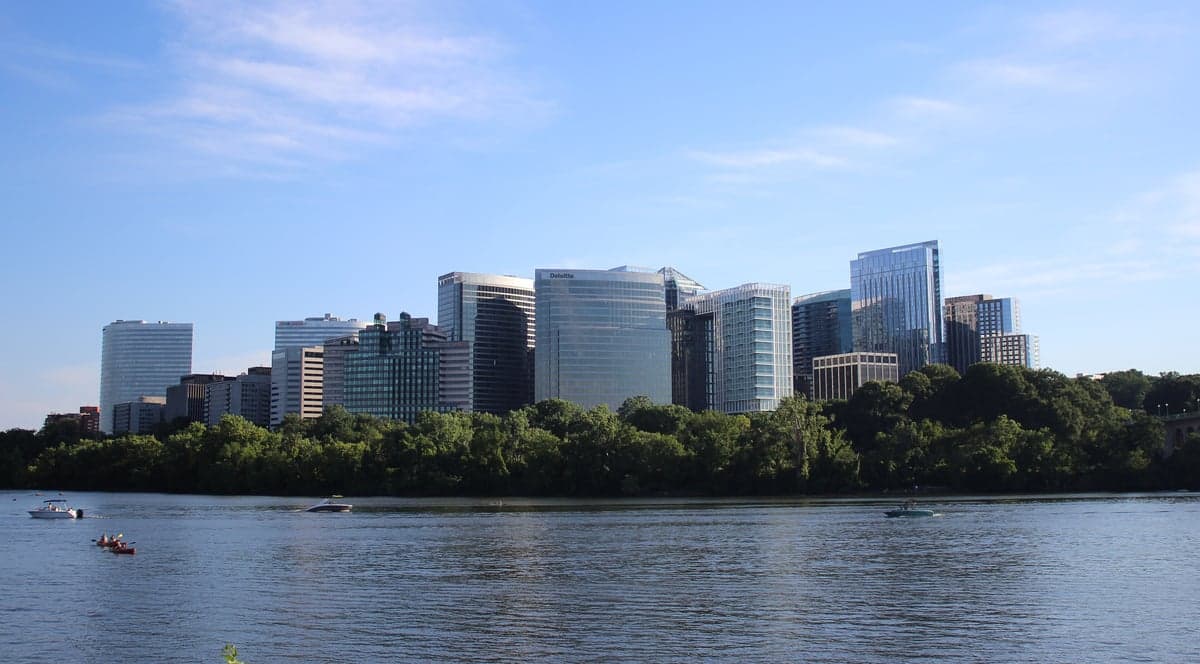
Arlington, Virginia presents a complex environment for personal sovereignty, where individual autonomy is shaped by a dense, highly regulated urban setting that prioritizes collective governance over self-reliance. As a county just across the Potomac from Washington, D.C., Arlington operates under Virginia's Dillon Rule, meaning local governments only have powers explicitly granted by the state, which limits municipal experimentation but also creates a uniform regulatory baseline. For a conservative-leaning reader valuing independence, Arlington offers strong property rights and a relatively business-friendly state tax climate compared to neighboring Maryland, but the trade-offs come in the form of high housing costs, strict land-use controls, and a political culture that leans heavily toward progressive policy preferences. The area's sovereignty profile is best understood as a trade-off: you gain proximity to federal power and economic opportunity, but you sacrifice the low-regulation, high-autonomy lifestyle found in more rural parts of Virginia.
Tax burden and regulatory posture in Arlington
Virginia's overall tax burden is moderate compared to the national average, but Arlington's local add-ons push the combined burden higher. The state income tax is flat at 5.75% for most earners, and sales tax is 6% (5.3% state plus 0.7% local). However, Arlington County imposes a real estate tax rate of $1.013 per $100 of assessed value (2025 rate), which on a median home value of roughly $750,000 translates to an annual property tax bill of about $7,600 — significantly above the national median. The county also levies a personal property tax on vehicles at 100% of assessed value, with a rate of $5.00 per $100, though the first $3,000 of value is exempt. Regulatory posture is heavy-touch: Arlington enforces strict zoning codes, building permits, and environmental regulations, including a mandatory green building program for new construction. The county's zoning ordinance runs over 400 pages, and any home-based business, fence, or shed requires a permit. For a reader seeking low regulatory friction, Arlington is not that place — it's a jurisdiction where nearly every modification to your property requires county approval.
Self-defense and gun law specifics in Arlington
Virginia is a shall-issue state for concealed carry permits, meaning the county sheriff must issue a permit if the applicant meets statutory requirements, but Arlington's local culture and enforcement practices can create friction. The state allows open carry of handguns without a permit for anyone 18 or older who can legally possess a firearm, but Arlington County has a local ordinance prohibiting firearms in county parks and community centers. Virginia law preempts most local gun regulations, so Arlington cannot enact its own bans on assault weapons or magazine capacity, but the county does enforce state-level restrictions: universal background checks on all firearm transfers (private sales included), a one-handgun-per-month purchase limit, and a 3-day waiting period for handgun purchases. Stand-your-ground laws do not exist in Virginia; the state uses a duty-to-retreat standard in public spaces, though the Castle Doctrine applies inside your home. For self-defense-minded residents, the practical reality is that Arlington's dense urban environment and proximity to D.C. mean you're unlikely to encounter situations requiring defensive firearm use, but the legal framework is more restrictive than in 40 other states. The county's police department is well-funded and responsive, with an average response time of under 8 minutes for priority calls.
Self-reliance and homesteading viability in Arlington
Homesteading and off-grid living are effectively non-viable in Arlington due to extreme land costs and dense zoning. The median lot size for a single-family home is 0.14 acres (about 6,000 square feet), and most residential lots are between 5,000 and 7,000 square feet. Zoning is primarily R-6 (6,000 square foot minimum lot size) and R-8 (8,000 square foot minimum), with no agricultural zoning districts. Keeping chickens is allowed on lots of 6,000 square feet or more, but only up to four hens (no roosters), and you need a permit. Beekeeping is permitted with registration, but no livestock, goats, or pigs are allowed. Off-grid systems like solar panels are legal but require building permits and must connect to the grid — net metering is available through Dominion Energy, but completely disconnecting from the grid is not permitted for residential properties. Rainwater collection is legal but limited to 1,000 gallons per property, and you cannot use it for potable purposes without a permit. For a reader seeking self-sufficiency through gardening, the short growing season (zone 7a) and limited space mean you can grow tomatoes and peppers in raised beds, but you won't be feeding a family from your backyard. Arlington is fundamentally a commuter suburb, not a homesteading destination.
Personal liberties in Arlington: parental rights, medical autonomy, speech, and property
Parental rights in Virginia are generally strong under state law, with a presumption that parents have the right to direct their children's upbringing, education, and healthcare. Virginia Code § 1-240.1 explicitly states that parents have a fundamental right to make decisions concerning their children, and Arlington Public Schools (APS) follows state law on parental notification for health services. However, APS has adopted policies that some conservative parents find concerning: the school board allows students to use their chosen name and pronouns without parental consent, and sex education curriculum includes LGBTQ+ content starting in middle school. Medical autonomy is moderate — Virginia does not have a religious or philosophical exemption to vaccine mandates for school entry, though medical exemptions are available. The state does not have a right-to-try law for terminally ill patients, but it does allow direct primary care agreements. Free speech is protected under the First Amendment, but Arlington's public spaces are heavily managed: protesting on county property requires a permit for groups of 25 or more, and the county has designated "free speech zones" in some public areas. Property rights are constrained by the county's strict zoning and historic preservation ordinances — the Arlington County Board has the power to designate historic districts, which can restrict exterior modifications to homes. For a reader prioritizing personal liberties, Arlington offers a mixed bag: strong state-level protections for parental rights and property, but local policies that can feel intrusive, especially around education and land use.
Overall, Arlington's personal sovereignty environment ranks as moderately restrictive compared to other parts of Virginia and the broader United States. The county's tax burden is high, its regulatory apparatus is dense, and its political culture leans progressive, which limits certain freedoms like off-grid living and unfettered gun carry. However, Virginia's state-level framework provides meaningful protections for property rights, parental authority, and self-defense that are stronger than in neighboring Maryland or D.C. For a conservative-leaning individual or family, Arlington works best as a compromise: you accept higher taxes and more regulation in exchange for proximity to federal employment, excellent schools, and a walkable urban environment. If your priority is maximum personal sovereignty — low taxes, minimal regulation, and the ability to live as you see fit — you would be better served by moving 60 miles west to Fauquier County or 100 miles south to Pittsylvania County, where land is cheap, zoning is light, and the political culture aligns more closely with self-reliance values. Arlington is a place to thrive if you value community infrastructure and economic opportunity over individual autonomy; it is not a place for those who want to be left alone.

* Values derived from national, state, county, city and local statistics and may differ in a specific area. Last updated: 2026-10-01T19:42:59.000Z
Narrative content on this page is AI-generated and may contain mistakes. Verify any details that matter before acting on them.
ReloMaps may earn a commission from affiliate links at no extra cost to you.

