Photo: Wikipedia
Demographics of Johnson County
Affluence Level in Johnson County
A below-average socioeconomic profile. Incomes, home values, and educational attainment trail the U.S., with higher poverty and unemployment.
People of Johnson County
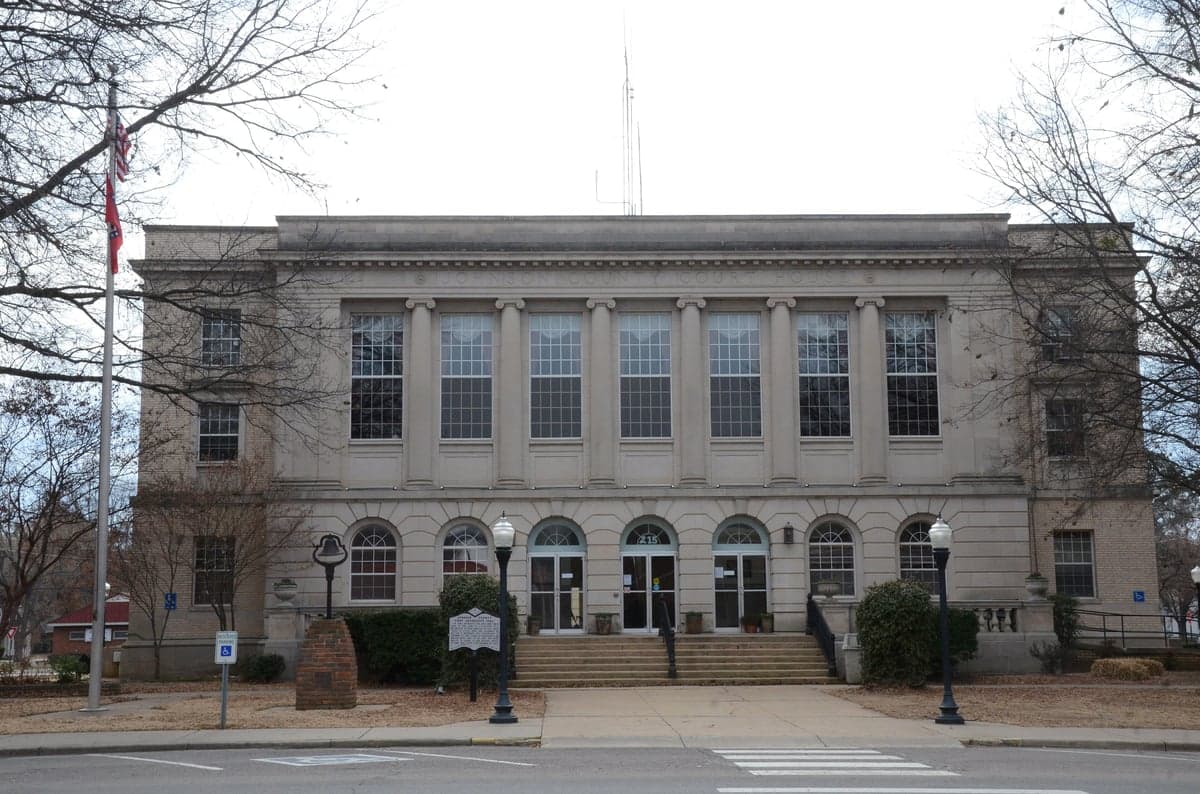
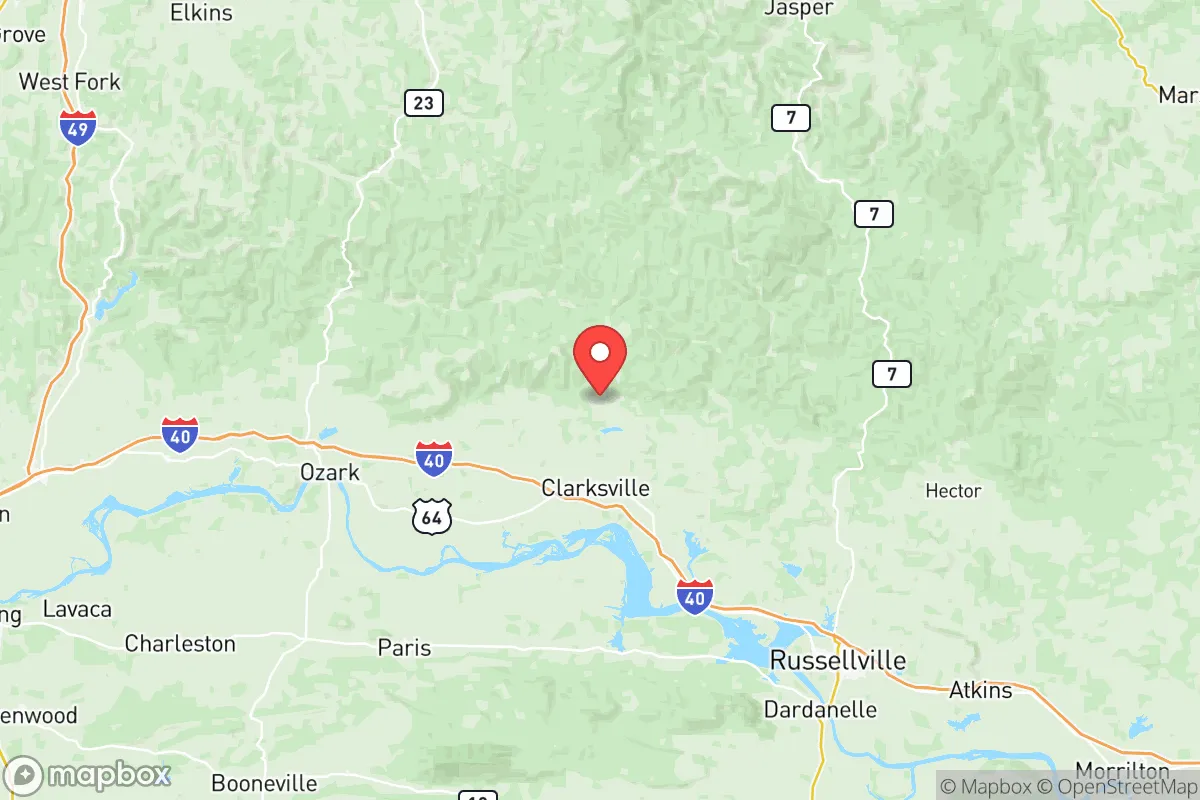
The people of Johnson County, Arkansas today number 25,932, forming a predominantly white (77.4%) and increasingly Hispanic (13.6%) population spread across the Arkansas River Valley and the Boston Mountains. The county is notably less diverse than the national average, with a small Black population (1.5%) and a modest East/Southeast Asian community (3.1%), while the foreign-born share sits at 5.9%. With a college education rate of just 18.1%, the county's identity is rooted in rural working-class traditions, conservative values, and a strong sense of local community centered around the county seat of Clarksville and the smaller towns of Lamar, Coal Hill, and Knoxville.
Settlement & growth (pre-1960)
Long before European settlement, the area now known as Johnson County was home to the Osage Nation, who used the Arkansas River Valley as hunting grounds, and the Cherokee, who were forcibly relocated through the region on the Trail of Tears in the 1830s. The first permanent American settlers arrived in the 1810s and 1820s, primarily Scots-Irish and English families migrating from Tennessee, Kentucky, and Missouri. These early pioneers were drawn by the promise of cheap, fertile land in the Arkansas River bottomlands and the timber-rich slopes of the Ozark foothills. The county was formally established in 1833, named for Benjamin Johnson, a territorial judge, and Clarksville was platted as the county seat in 1836.
The antebellum period saw a modest influx of slaveholding planters who established cotton plantations along the river bottoms, bringing enslaved Black laborers who made up roughly 10% of the county's population by 1860. After the Civil War and emancipation, many freedmen remained in the area as sharecroppers and tenant farmers, though their numbers declined steadily through the early 20th century as agricultural mechanization reduced labor demand. The post-Reconstruction era also brought a small wave of German and Irish immigrants who worked in the coal mines that opened around Coal Hill and Spadra in the 1880s and 1890s, creating a brief but significant mining boom that attracted European laborers.
The early 20th century saw Johnson County's population peak at around 21,000 in 1910, driven by coal mining and timber industries. However, the decline of mining after World War I, combined with the Great Depression and Dust Bowl conditions, triggered a steady outmigration of residents seeking work in California and other western states. The county's population stagnated through the 1930s and 1940s, with many young people leaving for defense industry jobs during World War II. The post-war period brought little change, as the county remained overwhelmingly agricultural and rural, with Clarksville serving as the primary commercial and administrative hub.
Modern era (post-1965)
The 1965 Hart-Cellar Act had a minimal direct impact on Johnson County, as the area attracted very few of the new immigrant waves that transformed urban America. Instead, the county's modern demographic story is one of gradual Hispanic growth driven by agricultural labor demand. Beginning in the 1980s and accelerating through the 2000s, Mexican and Central American immigrants arrived to work in the poultry processing plants and farms that dominate the local economy. Today, the Hispanic population stands at 13.6%, with the largest concentrations in Clarksville, where many families have established small businesses and churches, and in the rural areas around Altus and Wiederkehr Village, where grape-growing and wine production have created year-round agricultural jobs.
The East/Southeast Asian community, now at 3.1%, is a more recent phenomenon, largely tied to the arrival of Vietnamese and Lao refugees in the late 1970s and 1980s, many of whom were resettled by church groups and found work in manufacturing and poultry processing. This community remains small but visible in Clarksville, with several families operating restaurants and nail salons. The Black population, now just 1.5%, has continued its long decline from the post-Civil War era, as younger African Americans have left for larger cities with more economic opportunities. Domestic migration since 2000 has been modest, with some retirees and remote workers drawn by the county's low cost of living and scenic beauty, settling in the Lake Dardanelle area near Knoxville and the mountain communities of Oark and Hagarville.
The future
Johnson County is projected to become more diverse over the next two decades, driven primarily by continued Hispanic population growth. The Hispanic share could reach 20-25% by 2040, as younger families have higher birth rates and continued immigration from Mexico and Central America fills labor needs in agriculture and manufacturing. The East/Southeast Asian population is likely to remain stable or grow slowly, while the Black population may continue its gradual decline. The white population, while still the majority, will shrink as a share of the total due to lower birth rates and outmigration of young adults seeking higher education and urban careers.
The county's cultural identity is evolving, with Clarksville becoming a more bilingual community and Hispanic-owned businesses increasingly visible along Main Street and Highway 64. However, the county remains politically conservative and culturally traditional, with little of the polarization seen in larger metropolitan areas. The biggest demographic wildcard is the potential for growth in remote work and retirement migration, which could bring more educated and affluent newcomers to the Lake Dardanelle and Ozark National Forest areas, slowly raising the college education rate from its current 18.1%.
For someone moving to Johnson County now, the area offers a stable, family-oriented community with a growing Hispanic presence that is gradually reshaping local culture, but remains overwhelmingly rural, white, and conservative. The county is not experiencing rapid transformation, but rather a slow, organic diversification that will make it a more varied place to live over the coming generation.

* Values derived from national, state, county, city and local statistics and may differ in a specific area. Last updated: 2026-07-15T15:51:37.000Z
Narrative content on this page is AI-generated and may contain mistakes. Verify any details that matter before acting on them.
ReloMaps may earn a commission from affiliate links at no extra cost to you.

