
Photo: Wikipedia
Quality of Life in Pinal County
A livable area that tracks near national norms for affordability, walkability, and neighborhood health.
What does Quality of Life tell us?
Quality of Life measures an area by evaluating factors like cost of living, nearby amenities, country club access, airport proximity, socioeconomic signals and neighborhood character. For large states, this is a general average — quality of life can vary dramatically between metro areas, suburbs, and rural communities within the same state.
What does this tell us?
Quality of Life measures an area by evaluating factors like cost of living, nearby amenities, country club access, airport proximity, socioeconomic signals and neighborhood character. For large states, this is a general average — quality of life can vary dramatically between metro areas, suburbs, and rural communities within the same state.
Cost of Living
17% above national average
87%
The Real Cost of Living in Pinal County for 2026
| Tier | Individual | Family (4) |
|---|---|---|
| Survival | $23k | $43k |
| Comfortable | $61k | $89k |
| Luxury | $122k+ | $190k+ |
| Elite (Top 5%) | $144k+ | $223k+ |
Quality-of-Life Analysis
Pinal County, Arizona, offers a broad quality-of-life spectrum that spans from fast-growing suburban hubs to quiet agricultural communities and remote desert homesteads, attracting everyone from Phoenix commuters to retirees and off-grid homesteaders. The county's character is defined by its position between the metropolitan energy of Maricopa County and the open landscapes of southern Arizona, creating a patchwork where daily life can mean a 30-minute commute to a high-tech job or a life centered around a small-town main street. With a cost of living index of 117 (above the national average of 100), a median home value of $312,100, and a median rent of $1,417, the county provides a relative value proposition compared to metro Phoenix, though prices vary significantly by location.
Largest town(s) & population centers
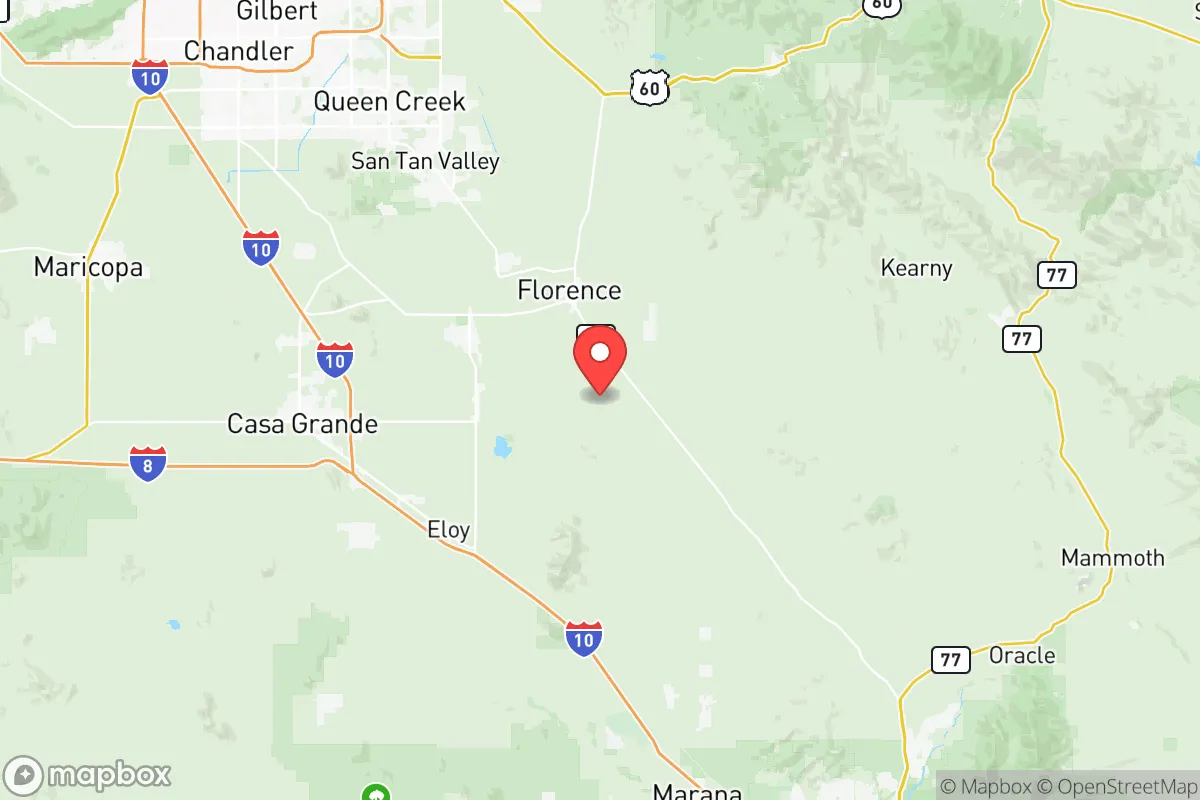
The primary population centers are Casa Grande, Maricopa, and Florence, each offering distinct lifestyles. Casa Grande, the county's largest city, functions as a regional hub with a growing retail sector, a historic downtown, and proximity to the Casa Grande Ruins National Monument. Daily life here is car-dependent but increasingly suburban, with new master-planned communities like those near the Promenade attracting families and commuters to Phoenix (a roughly 45-minute drive). Maricopa, the fastest-growing city in the county, is largely a bedroom community for Phoenix and Tucson, with a median home value around $340,000 and a heavy reliance on State Route 347. Its lifestyle is defined by new subdivisions, chain retail, and a young family demographic, though traffic congestion on the single highway is a noted drawback. Florence, the county seat, blends historic Western architecture with a growing population, anchored by the county government and the Arizona State Prison Complex. Life here is quieter and more traditional, with a small-town feel and a slower pace than Casa Grande or Maricopa.
Smaller towns & rural pockets
Beyond the population centers, Pinal County contains numerous smaller communities that offer a markedly different quality of life. Oracle, nestled in the foothills of the Santa Catalina Mountains, is a historic mining town turned artist enclave, with cooler temperatures and a rural, off-grid character. Kearny and Superior are former copper mining towns with aging infrastructure and very low housing costs, attracting those seeking extreme affordability and isolation. Eloy, known for its skydiving center and agricultural base, offers a working-class, desert lifestyle with a median home value well below the county average. Unincorporated areas like Red Rock and Aravaipa Canyon provide true rural living, with large lots, limited services, and a strong sense of self-sufficiency. These communities appeal to retirees, artists, and those seeking land and privacy, but come with trade-offs in access to healthcare, grocery stores, and employment.
Cost & lifestyle range
The cost of living and available amenities vary dramatically across Pinal County. On the higher end, Maricopa and newer sections of Casa Grande (e.g., the Villago or Promenade areas) have home values approaching $350,000–$400,000, with HOAs, community pools, and proximity to chain restaurants and big-box stores. These areas attract commuters willing to trade a longer drive for newer, larger homes than what Phoenix offers at the same price. On the lower end, Kearny and Superior have median home values under $150,000, with older housing stock and minimal retail options. Eloy and Coolidge sit in the middle, with home values around $250,000 and a mix of agricultural and suburban character. The average commute of 31.9 minutes reflects the county's dispersed nature, with many residents driving to jobs in Phoenix, Tucson, or the copper mines. Amenities like healthcare are concentrated in Casa Grande, while rural residents may drive 30–45 minutes for a hospital or major grocery store.
Pinal County is best suited for those who value space, affordability relative to metro Phoenix, and a slower pace, but who are willing to accept longer commutes and fewer urban amenities. Families seeking new subdivisions and good schools often gravitate to Maricopa or Casa Grande, while retirees and remote workers find appeal in Oracle's mountain views or Florence's historic charm. Those prioritizing extreme low cost and isolation may thrive in Kearny or Superior, though they should be prepared for limited services and a harsh desert climate. The county's diversity means that "quality of life" here is highly dependent on which specific community a resident chooses, making local research essential before relocating.

Crime in Pinal County
Crime rates similar to the national median for U.S. locations.
Violent CrimeViolent Crime Analysis
Property CrimeProperty Crime Analysis
Crime Analysis
Pinal County, Arizona, presents a mixed safety picture that varies dramatically depending on where you live. The county's overall violent crime rate of 373.5 incidents per 100,000 residents and property crime rate of 1,504.5 per 100,000 place it above national averages, but these figures mask significant differences between its fast-growing suburban communities and its more rural, isolated areas. Residents in towns like Maricopa and San Tan Valley often report different day-to-day safety experiences than those in Casa Grande or Florence, making neighborhood-level research essential for anyone considering a move to the region.
Crime in context
Pinal County's violent crime rate of 373.5 per 100,000 is roughly 7% higher than the national average of approximately 350 per 100,000, and significantly above the Arizona state average of around 430 per 100,000. The property crime rate of 1,504.5 per 100,000 sits about 15% above the national average of roughly 1,300 per 100,000, but below the Arizona state figure of approximately 1,800 per 100,000. These numbers place Pinal County in a middle tier among Arizona's 15 counties — safer than Maricopa County (which includes Phoenix) and Pima County (Tucson), but more dangerous than rural counties like Graham or Greenlee. The county's rapid population growth — it was one of the fastest-growing counties in the U.S. over the past decade — has strained law enforcement resources, with some communities reporting slower response times as new subdivisions outpace police staffing.
What residents experience
The most common crimes in Pinal County are property-related: vehicle theft, burglary, and larceny. Casa Grande, the county's largest city, has historically reported higher property crime rates than the county average, driven in part by its location along the I-10 corridor, which provides easy access for transient criminal activity. Florence, home to several state prisons, experiences a unique crime dynamic — while the prison population inflates the town's statistical crime rate, the actual threat to residents is lower than the numbers suggest. Maricopa and San Tan Valley, bedroom communities serving Phoenix commuters, tend to report lower violent crime rates but still face property crime challenges common to suburban sprawl. Residents in these areas frequently cite package theft, vehicle break-ins, and occasional gang-related activity as their primary safety concerns. The county's rural areas, including parts of Eloy and Apache Junction, face different challenges: higher rates of drug-related crime and domestic violence, coupled with longer emergency response times due to distance from sheriff's substations.
Neighborhood-level variation
Within individual cities, safety varies block by block. In Casa Grande, neighborhoods south of Florence Boulevard and near the historic downtown tend to report more incidents, while newer master-planned communities on the city's west side — such as those near the Villago development — see fewer crimes. Maricopa's gated communities and newer subdivisions like those around the Copper Basin area generally report lower crime rates than the city's older, non-gated neighborhoods. San Tan Valley, which is unincorporated and relies on the Pinal County Sheriff's Office rather than its own police department, sees slower response times than incorporated cities, a factor residents should weigh when choosing a specific home location. The Pinal County Attorney's Office has faced criticism for a progressive approach to prosecution, with some observers arguing that lenient plea deals and diversion programs have contributed to repeat offending, particularly in property crime cases. This prosecutorial philosophy, combined with the county's rapid growth and limited law enforcement resources, means that residents in higher-crime areas may experience a justice system that prioritizes rehabilitation over incarceration, potentially reducing the deterrent effect for property criminals.
* Values derived from national, state, county, city and local statistics and may differ in a specific area. Last updated: 2026-07-17T22:43:09.000Z
Narrative content on this page is AI-generated and may contain mistakes. Verify any details that matter before acting on them.
ReloMaps may earn a commission from affiliate links at no extra cost to you.

